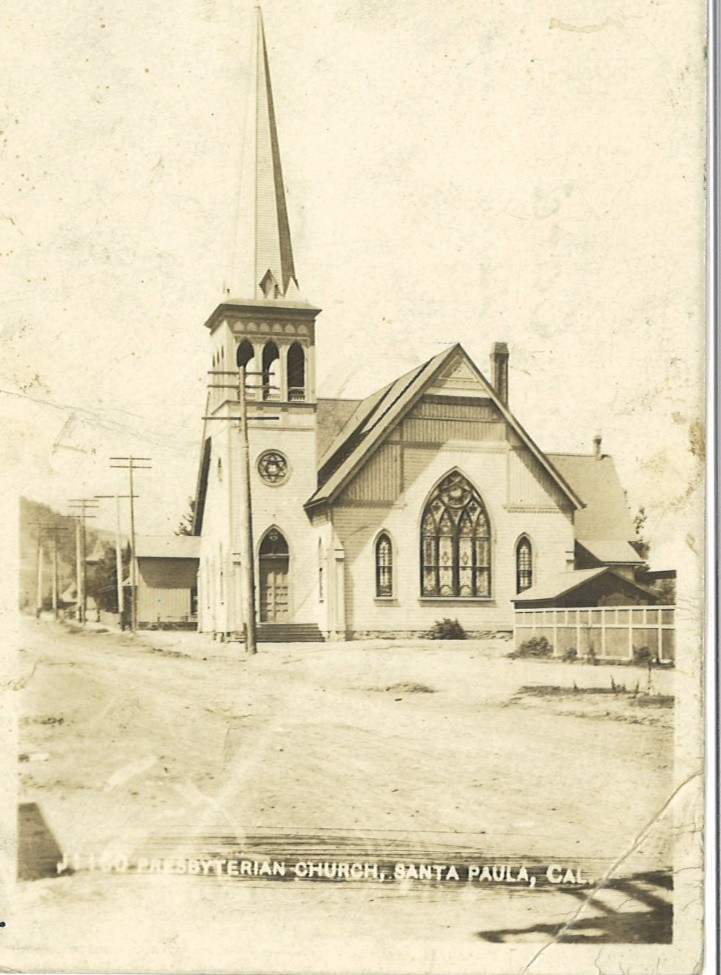
The founding partners of Union Oil Company – Lyman Stewart, Thomas Bard, Wallace Hardison, Frank Hill, and William Orcutt – were all religious men as well as shrewd oil entrepreneurs. Stewart, Bard, and Hill were all enthusiastic Presbyterians, as were Orcutt’s and Hardison’s wives. Hardison was a Universalist.
Religious, often fundamentalist, theology directed their thinking and influenced company policies and practices. Looking back 150 years ago, we can see the profound impact these men had on the petroleum industry. We can also ask to what degree religion influenced their lives, the lives of their families, the success of Union Oil Company and the direct and indirect consequences to Union’s international legacy.
Lyman Stewart
Born in 1840, Lyman Stewart survived the Civil War and began dowsing in the Pennsylvania petroleum fields in 1882. He lost his entire savings of $125 in oil speculation when he was 19 years old but went on to be a successful wildcatter. Stewart helped to raise funds to build the first Presbyterian church in Titusville, Penn., a tradition that he would continue throughout his life. He became an advocate of capitalist Christian fundamentalism and ideas that more recent academics have coined the “prosperity gospel.”
Stewart was cofounder of the Bible Institute of Los Angeles (now known as Biola University) with T.C. Horton. He and his brother Milton Stewart also anonymously paid $300,000 for the publication of The Fundamentals, a 12-volume history and defense of Christian fundamentalism. Stewart co-founded Occidental Presbyterian College with James George Bell and Thomas Bard and helped found the Union Rescue Mission in Los Angeles.
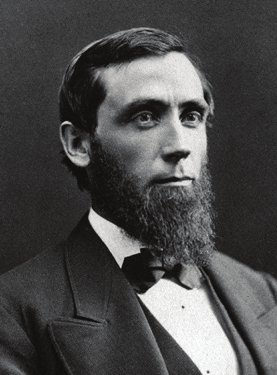
Religious studies professor Brendan Pietsch said:
“An analysis of Lyman Stewart, California oilman and patron of early American fundamentalism, reveals much about the mutual transformations of American religion and capitalism in the early twentieth century. As an expositor of Victorian moralism and California Progressivism, as a missionary for dispensational fundamentalism, and a leader in industrial extraction, Stewart applied the logics of supernatural religion to his oil speculation and the logics of industrial capitalism to his religious work. As one of the chief architects of twentieth-century fundamentalist aspirations, Stewart pursued dueling objectives. On the one hand, he fought for empire and cultural custodianship; on the other hand, he argued for purity and cultural separatism. It was not theological or ecclesiological beliefs that produced this dual aim, but the commodification of religious work. As oil became transmuted into religious capital, religious work – particularly pastorates, missionary work, and theological education – became commodities that could be bought and sold, regulated, and appraised in terms of both purity and production.”
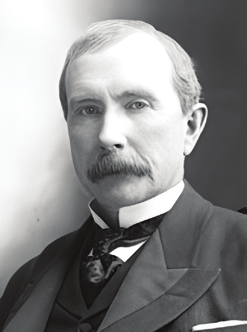
In 1877, Stewart was introduced to Wallace Hardison, a relative of one of Stewart’s friends. Hardison agreed to support Stewart financially, so they purchased some land where they hoped to find oil, and they enjoyed some moderate success. When John D. Rockefeller started to consolidate oil holdings in the eastern United States, Hardison and Stewart sold their oil interests to Standard Oil and moved to California. There, Hardison and Stewart joined with Thomas Bard to form the Union Oil Company in 1890.
While developing the Torrey Canyon field (10 million barrels of oil) between Fillmore and Santa Clarita in southeastern Ventura County, in 1900, Stewart visited a lease and encountered a young man who used profanity while older men slept. Following this encounter, Stewart ordered that a chapel be built near the leases, and he hired a certain Reverend Johnson to conduct services in it. This religious fervor was not shared by Stewart’s son Will, who had a much more tolerant attitude toward impious behavior on the jobsite.
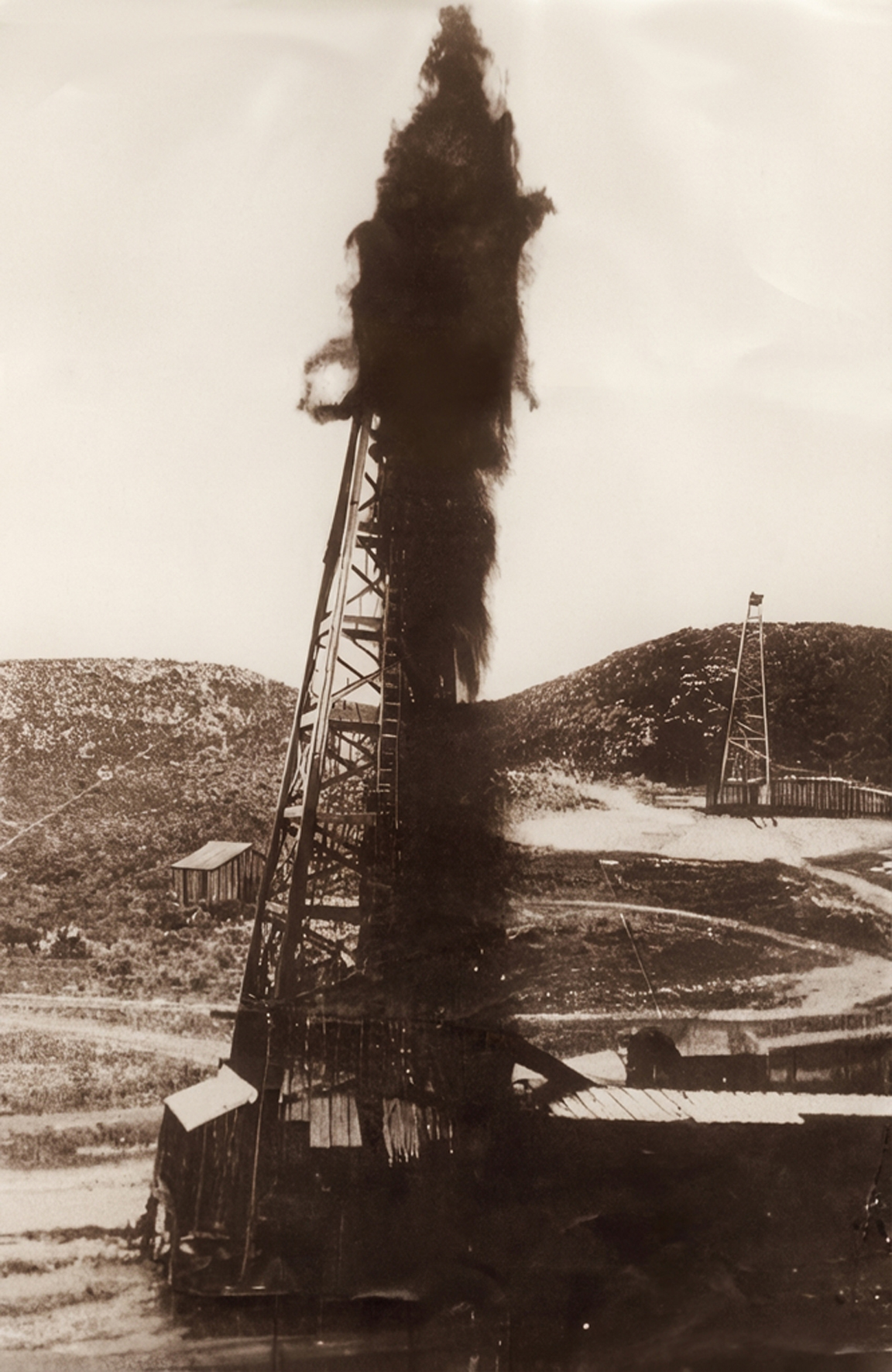
The discovery well for what became the Orcutt oil field between Santa Maria and Lompoc in Santa Barbara County came in as a gusher on a Saturday in 1901. The telegram announcing the situation to Stewart only said “All is well,” to avoid the impression that the Sabbath was being violated.
A lifelong advocate for the Presbyterian church, Stewart’s religion motivated him to keep going when facing repeated fiscal and health difficulties. He died Sept. 28, 1928, but Union grew to be a major company with international holdings and influence. It was purchased by Chevron Corporation in 2005 for about $18 billion.
William Warren Orcutt
William “Bill” Orcutt was born in Dodge County, Minn. on Feb. 14, 1869. His family moved west and settled in Ventura, Calif., when he was 12 years old. He graduated from Stanford University with a degree in geology and engineering in 1895 with classmate Herbert Hoover, who later became America’s 31st president. Orcutt was employed as a civil and hydraulic engineer and as a U.S. deputy surveyor until 1899. He lost his arm in an automobile mishap. In 1897, Orcutt married Mary Logan in Santa Paula, Calif. Orcutt was also a member of the Masonic Lodge.
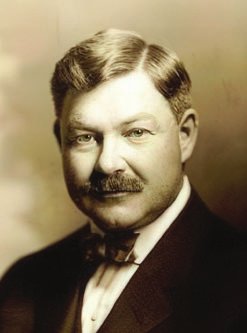
Orcutt was hired by Union Oil Company on May 2, 1899, to look after the company’s interests in Fresno and San Benito counties. At the same time Frank F. Hill was hired for his geological experience and knowledge of the geography of California. Together they made oil history. Orcutt mapped and described the oil mines of Adams Canyon on the south flank of Sulfur Mountain. His field notes have sketches and descriptions of those oil drainage tunnels. Among the geologic and mine engineering notes are references to worker behaviors. Noted infractions of company policy included profanity, smoking and drinking – some of which were real safety issues for all oil field operations. Apparently, Orcutt also functioned as a kind of morality police.
Orcutt published a history of early California oil development in AAPG Bulletin Vol. 8, No. 1 in 1924. He was also the first to catalogue and identify the importance of the late Pleistocene fauna and flora of the La Brea tar pits.
After the discovery of the Santa Maria oil field in Santa Barbara County near the town of Santa Maria in 1887, Orcutt’s maps of the surface geology of the field lead to a flurry of leasing and drilling. Fields in the Santa Maria Valley have produced about 900 million barrels of oil. Orcutt retired as vice president of Union Oil Company in 1939 and died in 1942 at the age of 83.
Frank Fletcher Hill
Frank F. Hill was born in Carrolton, Carrol County, Mo. on Jan. 25, 1878, where his family had moved after his mother died. Later, young Hill was sent to California along with his older niece (my great grandmother) Gertrude Hill Decker, who raised him. In Santa Paula, as a teenager, Hill worked as a horse and mule wrangler for Union Oil Company. Stewart was impressed by him and paid for his education. Hill worked his way up to drilling superintendent for the company and invented several improvements for oil well drilling and production operations.
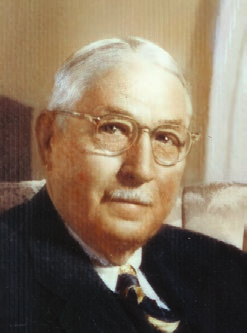
In 1896, Union began drilling on leases in the San Joaquin Valley near Maricopa, Calif. Hill took a drilling crew to a lease and was confronted by armed men demanding that they leave the area. He and his crew departed only to return after the minerals had been re-leased from the very people that had confronted them with shotguns.
In the Lompoc Field, north of the town of Lompoc in Santa Barbara County, the Hill No. 1 well came in on Saturday July 14, 1902, just three days prior to lease expiration. Desiring secrecy about the discovery, Hill took a train to Los Angeles and reported to Stewart that the well was a good one. Not another word was spoken as Stewart walked down the street to attend church. Discussions concerning the future of the well were delayed until Monday.
Between June and December 1904, Hill was superintendent for the “Old Maud” well in the Santa Maria oil field. When it came in, one of the workmen closed a valve and oil began gushing out of every gopher hole in the area. When the valve was reopened and pressure was released, the well flowed 12,000 barrels a day. It produced 1 million barrels in the first 150 days and kept flowing at high rates, having produced 3 million barrels when it had to be put on pump.
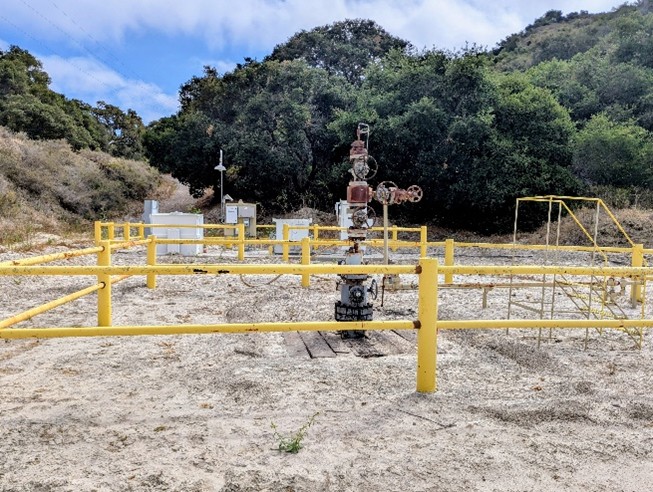
In 1905 and 1906 Hill conducted the first well-cementing operation to isolate fresh water and oil zones, in the Hill No. 4 well. This was part of a multiwell drilling program which the company named for him. There is a monument to this water shut-off experiment in the Lompoc field in the Mission Hills District, 1.6-miles north of the old Union Oil Co. production office, five-miles northeast of Lompoc. The monument was dedicated Sept. 20, 1952, by Union Oil Company and Petroleum Pioneers Incorporated.
It reads: “Spudded September 26, 1905 and completed April 30, 1906, is the first oil well in which a water shut-off was attained by pumping cement through the tubing and behind the casing-forerunner of the modern cementing technique. It was drilled by Union Oil Company of California to a total depth of 2507 feet, and 1872 feet of 10-inch casing and 2237 feet of 8-inch casing were so securely cemented off that the well subsequently produced for over 45 years. The development of oil well cementing was one of the most significant events in the history of petroleum technology. It has increased the productive life of thousands of oil wells and has thereby made available for the good of humanity millions of barrels of oil that might otherwise have remained in subterranean storage. This monument is also a tribute to a worthy pioneer, Frank F. Hill, under whose direction Hill No. 4 was drilled, and to whom the petroleum industry is indebted for initiating the oil well cementing process.”
This cementing innovation rapidly spread throughout the oil industry. Originally intended to keep water from polluting the oil, it became a regulatory requirement to cement wells to keep the oil from contaminating freshwater aquifers.
In 1907, Hill developed the first successful combination cable and steam rotary drilling operation, in the Santa Fe Springs oil field (cumulative production 650 million barrels of oil) between the cities of Downey and Whittier in west-central Los Angeles County. The new technique quickly replaced the older cable tool drilling method and permitted the drilling of much deeper wells. Hill and his crews set several drilling depth records between 1900 and 1935, and this innovation also spread quickly throughout the drilling industry.
On Jan. 1, 1909, the Lakeview No.1 well was spudded between the present towns of Taft and Maricopa in the Midway-Sunset oil field. This well encountered oil on March 15, 1910, and unleashed a gusher that at its peak flowed 90,000 barrels per day. It produced 3.5 million barrels within two and a half months. A giant lake of oil formed, and the oil was flowing down into an area of fruit trees on the shores of Buena Vista Lake.
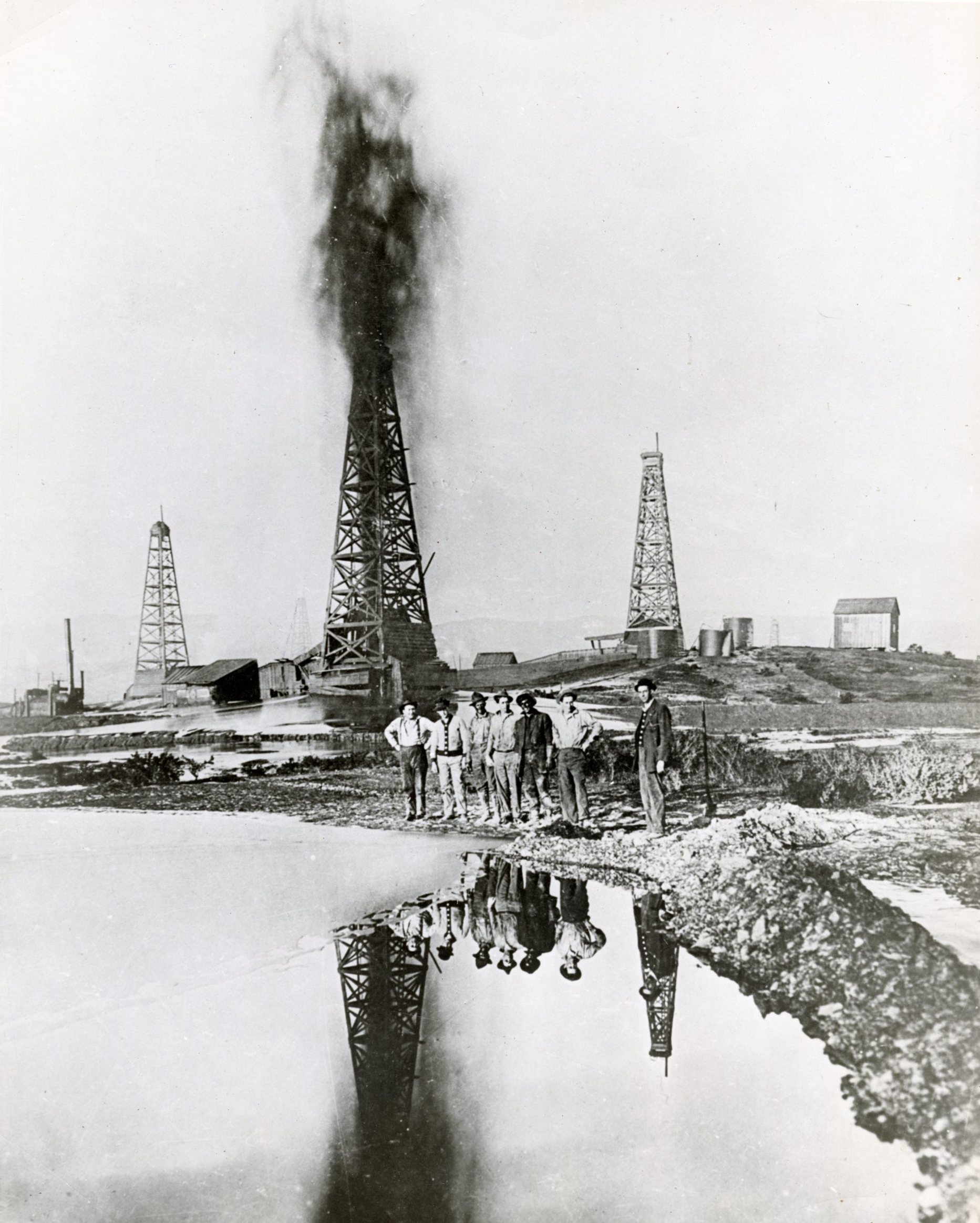
Hill was immediately dispatched from Santa Maria to investigate and take charge of the cleanup. He ordered earthen dikes to stop the flow of oil by workers who were brought in from worksites that were up to 100 miles away. Many men were burned by the hot oil. Twenty sumps were dug to collect the oil which was then pumped to tank wagons and taken to the Buena Vista oil refinery in north Bakersfield near the Kern River oil field. Four hundred men built a sandbag and plank dam around the well and eventually a wooden roof was built over it. This cap eventually failed, but while it functioned, oil was diverted to a stockade where more pumps delivered the oil to more tank wagons. The well caved in on Sept. 9, 1911, having produced 9 million barrels of oil, of which only 4 million were saved.
Frank Hill spoke at the 1952 dedication of a bronze plaque on the site of the Lakeview Gusher in the four-billion-barrel Midway-Sunset field between the towns of Taft and Maricopa in Kern County. The Miocene Parlor No. 228 of the Native Daughters of the American West sponsored the dedication. A devout Presbyterian and a nondrinker, Hill died March 18, 1961 in Studio City, Calif. at the age of 87.
Wallace Libby Hardison
Wallace L. Hardison was born Aug. 26, 1850, in Caribou, Aroostook County, Maine. Hardison followed his brother Harvey to the oil fields of western Pennsylvania and became business partners with Lyman Stewart, forming Hardison and Stewart Oil Company. Hardison later sold his interests and invested in the Inca Mining Company of Peru, which developed the Santo Domingo mine.
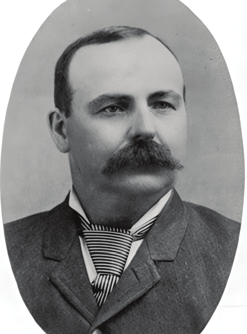
Hardison, like Stewart, was a religious man. His flavor of religion was inclined to the Santa Paula Universalist Church. His wife Clara, however, was a member of the First Presbyterian Church of Santa Paula. Hardison and Stewart participated in civic and cultural affairs in what was described by Frank Taylor and Earl Welty as “kind of stained-glass window competition.”
Hardison, Stewart and Thomas Bard experimented with transporting oil by ship. The “W.L. Hardison” was the first oil freight tanker to be built. Unfortunately, it burned to the water line when a cook spilled a pan of burning fat in the galley on June 25, 1889.
Early oil development in California extracted oil from oil seeps using underground mining technologies. In Adams Canyon, north of Santa Paula in central Ventura County, the seeps were developed by horizontal oil mine excavation tunnels. On April 4, 1890, Harvey Hardison and three others were killed in an oil mine explosion in the Boarding House Tunnel in Adams Canyon. Wallace L. Hardison was killed when his car was struck by a train in Roscoe near Sun Valley, Los Angeles, April 10, 1909. He was 58.
Thomas Robert Bard
Thomas R. Bard was born Dec. 8, 1941, in Chambersburg, Pa. He attended the common schools there and graduated from the Chambersburg Academy in 1858. Bard studied law in school, and before his graduation, he secured a job with Pennsylvania Railroad. Later, he became an assistant to the superintendent of the Cumberland Valley Railroad. During the early part of the Civil War, Bard served as a volunteer Union scout during the invasions of Maryland and Pennsylvania by the Confederates.
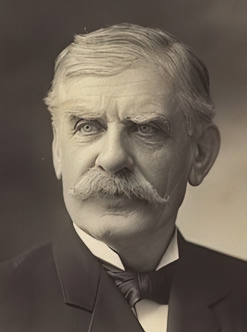
In 1865, Bard arrived in Ventura County, Calif., to develop properties in Ojai belonging to his uncle Thomas A. Scott. In 1867, Bard became the first person in California to produce oil from a drilled well. He shipped steam engines and other components to San Pedro harbor and then transported them 100 miles to Ojai. The wells were spudded in Sisar Canyon on the Ojai Ranch and yielded 6 barrels a day from a depth of 100 feet and 15 to 20 barrels per day from 530 feet.
Bard began investigating oil prospects in the Santa Maria area, Santa Barbara County, Calif., that included lands that later included the Lompoc, Cat Canyon and Orcutt fields. He served as a member of the board of supervisors of Santa Barbara County from 1868 to 1873. In 1871, he was appointed a commissioner to organize Ventura County. During this time, he purchased and subdivided Rancho El Rio de Santa Clara o la Colonia and laid out the plans for Port Hueneme, Calif., the future site of his Berylwood estate.
Bard was the California delegate to the 1884 Republican National Convention and later served as the director of the California state board of agriculture from 1886 to 1887. He became a founding board member of Occidental College, which was established in Los Angeles on April 20, 1887, by a group of Presbyterian clergy, missionaries, and laymen, including James George Bell, Lyman Stewart and Thomas Bard. Occidental became non-sectarian in 1910 and is one of the oldest liberal arts colleges on the West Coast of the United States.
Bard partnered with Lyman Stewart and Wallace Hardison to form the Union Oil Company in 1890. They had different temperaments, and were often at odds about company policy, plans and activities. Bard was conservative and short-sighted while Steward was risk-taking and planned for the long-term future success of the company. They eventually became rivals and then competitors. This corporate in- fighting lasted eight years, despite their similar religious convictions.
When the Santa Maria field was discovered in 1902, Lyman Stewart leased several thousand acres (originally identified by Bard) the profits from which financed the early development of the Union Oil Company. Bard was elected as a Republican to the United States Senate on Feb. 6, 1900, and he served for five years. This political power, going back to 1868 when he was on the board of supervisors for Santa Barbara County, benefited the Union Oil Company. In 1891 California Assembly Bill 210 established new specifications for kerosene that only eastern producers (Standard Oil) could meet. Its passage would have doomed West Coast producers. Bard’s political acumen resulted in the defeat of this bill.
Bard’s eight-year battle with Stewart for control of Union Oil Company came to a head Nov. 28, 1899. Stewart and his allies had secured and manipulated various stockholding companies to outmatch the wealth and shares of Bard and his associates. Upon becoming a U.S. senator in 1900, Bard and his associates liquidated their interests in Union Oil Company.
The Congressional Record for 1903 notes that Bard “has engaged in wharfing and warehousing, banking, petroleum mining, sheep grazing, and dealing in real estate.” This included the development of what would become Port Hueneme, a small beach city in Ventura County. Thomas Bard died March 5, 1915.
In 1965 William Hutchinson wrote a Pulitzer Prize-nominated two-volume history (“Oil, Land, and Politics”) about Thomas Bard that yields a critical and uncomplimentary impression of him. It differs substantially from the positive depiction that Taylor and Welty provided in their 1950 volume, “Black Bonanza.”
Presbyterian and Oil-Industry Values
Recent scholarship sheds a light on the relationship between religious beliefs and petroleum industry history. Biola University lecturer Paul Rood made a review of Lyman Stewart’s and Thomas Bard’s religious passions and practices in 2022. He asserts that Union’s theological policies translated into real differences in the way the company operated that distinguished it from and gave it an advantage over other oil companies.
Historian Darren Dochuk characterized Stewart in 2012 as an exemplar of “millennial capitalism” and “fanatical wildcat Christianity” who combined with his “speculative, fiercely free market, wildcatting ethic … would imprint oil culture for good … but, in doing so, they also laid bare the dark side of the oiler’s contract: the inescapable violence that made the pursuit of earth’s blood itself a bloody affair.”
A modern adaptation of this violence was depicted in the Academy Award- winning movie “Let There Be Blood.”
Brendan Pietsch described Stewart as one who used “voracious business practices” and the “enchantment of spiritualism” in the pursuit of underground oil reserves, in order to build an “empire of Christian morals in the United States and abroad.”
History professor W. Clark Davis compared Stewart in 1994 to other late-19th century and early-20th century industrialists (Andrew Carnegie was also a Presbyterian; Rockefeller, a Baptist). He described Stewart “in sharp contrast to the confrontational images of many industrial leaders in the late nineteenth century, personified by Carnegie Steel’s notorious manager Henry Frick … the personal correspondence of Union Oil president Lyman Stewart contains numerous letters exhorting managers and department heads to treat employees well and nurture morale.”
Davis concluded his dissertation with these words: “So were Union Oil leaders, managers, and supervisors just a bunch of nice guys?”
He notes that pragmatic considerations concerning employee morale must surely have played a part in explaining management philosophy in this highly competitive industry, continually challenged by labor strikes, industrial accidents, and the fluctuating economic conditions that continually challenge management. Davis believed that “Stewart’s interactions with subordinates suggests that he lived up to the ideals that he preached.”
Ethical practices in the oilpatch probably reflect cultural shifts. Looking back 150 years requires that we distinguish between what the actors and their associates thought themselves and not try to impose our 21st-century dysfunctional politics and fractionated culture upon them.
The Calvinistic Scottish Presbyterianism of Stewart, Lyman, Orcutt, Wallace, and Hill contributed to Union’s success in a way that could be interpreted as “predestined.” It was based on a Protestant work ethic (2 Thessalonians 3:10: “The one who is unwilling to work shall not eat.”) combined with a genuine altruistic concern for others and a commitment to magnify the talents God gave them. This is what drove them during and between times of prosperity and several episodes of near-bankruptcy.
The lesson that the founders of Union Oil have given to us is that faith matters. Have faith in yourselves. Do your best. Care for others. Tell the truth. Take prudent chances. We are all in this together. That is their wisdom for the ages.
Acknowledgements
Much information in this article came from family histories of Julia Wilkerson (my mother) and Joanna Romersa (my aunt). They were the great-nieces of Union’s cementing pioneer Frank F. Hill. Larry Vredenburgh assisted with newspaper article citations and recovery. Chris Buchanan of the First Presbyterian Church of Santa Paula provided historic church membership information. Tony Pedia provided access to the Hill No. 4 well and memorial in the Lompoc oil field.