
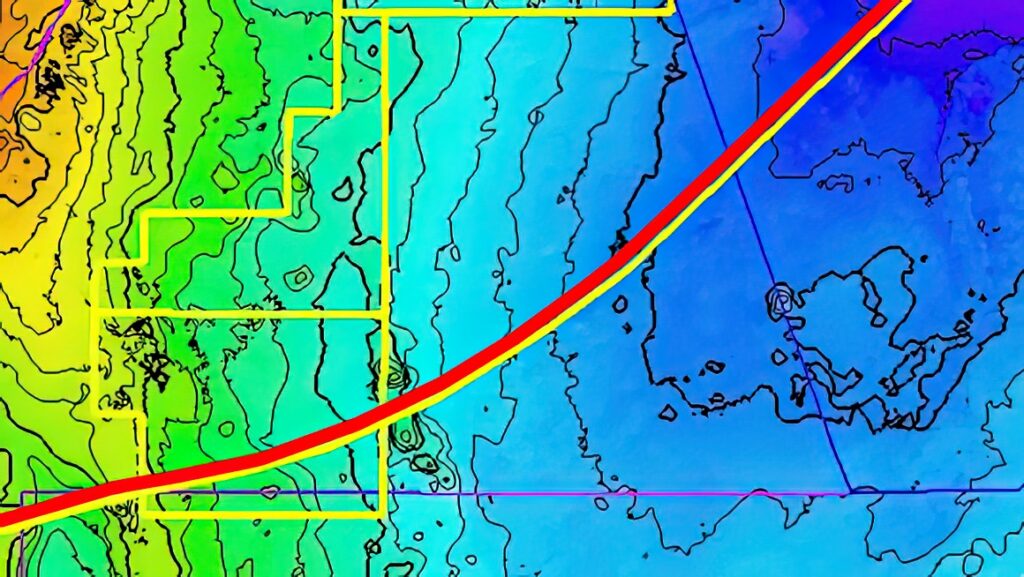
A little success has generated a whole lot of speculation about exploration prospects in the offshore Andaman area of Southeast Asia.
Surprisingly, in this case the hope might justify the hype.
In September, Oil India announced a natural gas discovery with its Sri Vijayapuram-2 well in Indian waters in the Andaman and Nicobar Islands area. The company did not provide a total reserves estimate, but the gas reportedly tested at about 87-percent methane.
Just to the south, Harbour Energy and Mubadala Energy have made recent, large gas discoveries off north Sumatra. The finds drew attention to offshore prospects in the region – and gave India a reason to celebrate.
Hardeep Singh Puri, India’s minister of petroleum and natural gas, compared the area’s potential to the prolific wells that have been drilled offshore Guyana in South America.
“We have the potential for several Guyanas in the Andaman Ocean,” Puri said.
“Here there is reasonable expectation, because we found it in all those sediments in the basin,” he added.
The Andaman Basin’s High Potential
Rampant hyperbole? Maybe not, according to David W. Hume, who adds India’s near-shore Mahanadi and Bengal basins to the picture.
“What we’re starting to see over there is that it could be an oil-prone area, and the potential has a lot of similarities with Guyana, to tell you the truth,” said Hume, manager of the Center for Hydrocarbon Exploration at the University of Houston and a former head of Integrated Reservoir Solutions at Core Lab.
The center is a collaboration with India’s Directorate General of Hydrocarbons, part of the Indian Ministry of Petroleum and Natural Gas. Its mission is to conduct research on deep Andaman waters and the Mahanadi/Bengal area. Hume said students, faculty and staff at the center have been analyzing “multi-terabytes of data provided by the Indian government” for more than two years.
“Our students are given real problems to solve using real data. They will graduate with an unmatched skill set as they embark on their careers,” he said.
“Every little bit of research we do sort of de-risks the play, in our opinion,” Hume added.
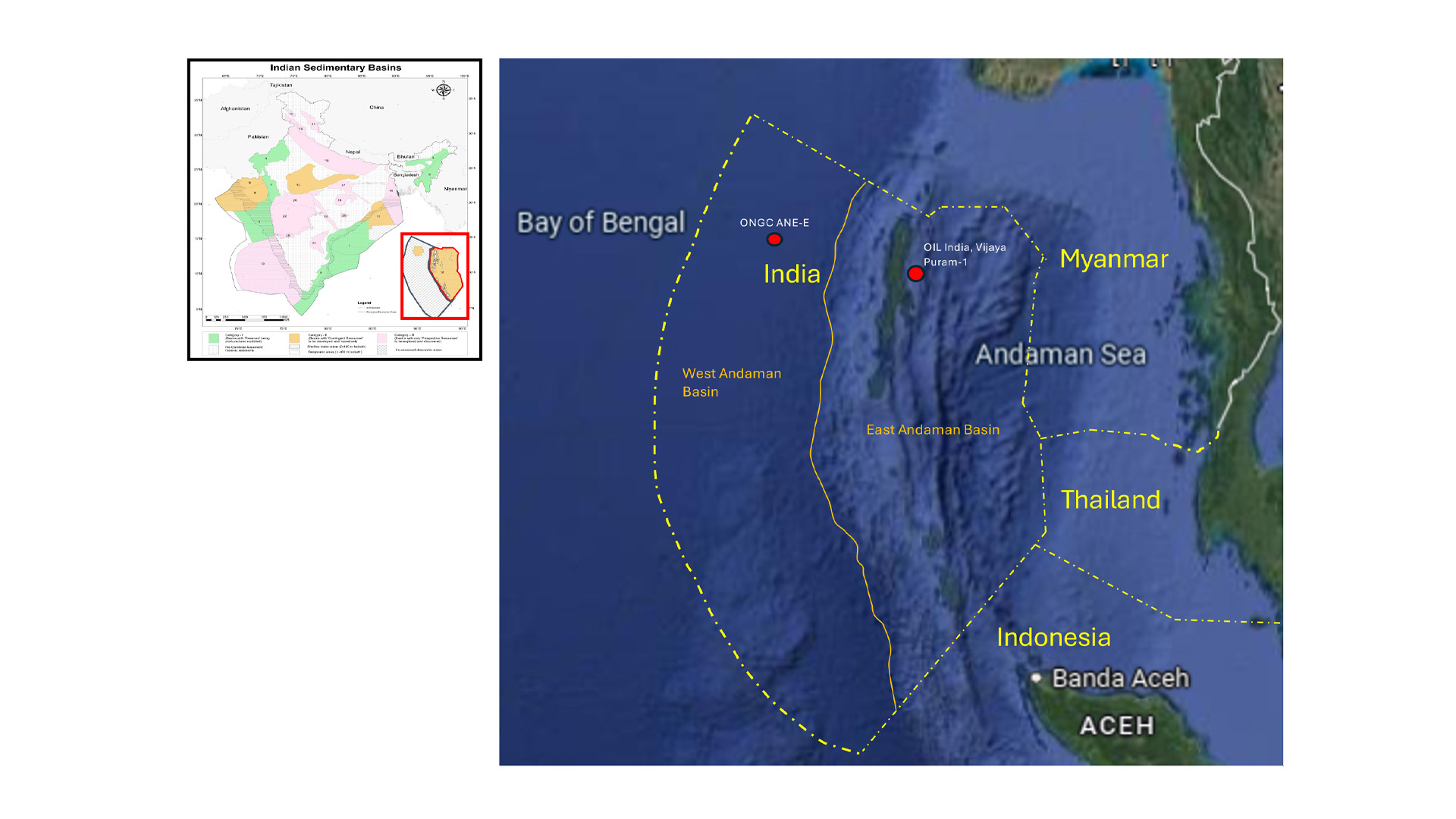
The Andaman and Nicobar Islands are a union territory of India, with most of the prospective Andaman Basin in Indian waters, abutted by offshore territorial waters of Myanmar, Thailand and Indonesia. The island chain stretches between the Bay of Bengal to the west and the Andaman Sea.
“There is a passive part, the West Andaman Basin, and an active part, the East Andaman Basin. The difference between them is the major subduction zone between the Indian plate and the Burma plate. Both basins have potential,” Hume said.
Still tectonically active, the basin area was formed by converging Indian oceanic and southeast Asian tectonic plate boundaries, beginning in the Cretaceous. According to the DGH, “as subduction progressed, the Outer High Arc complex started rising steeply, thereby creating a depression or a forearc basin between the Volcanic Arc and the Outer High Arc. Continued thrusting caused uplift and formation of the Andaman-Nicobar Ridge as a chain of islands.”
Hume noted that “oblique subduction began in the Eocene, but by the early Miocene the plate movements became strike-slip, creating a very complex tectonic setting for the East Andaman Basin.”
He said Oil and Natural Gas Corp. is currently exploring in the West Andaman while Oil India is drilling on the eastern side of the Andaman Islands. The Vijayapuram discovery was drilled in 295 meters of water, just 17 kilometers from the coast.
“We think the recent discoveries – and these were pretty big gas discoveries – that were made off Indonesia have the same geology extending up into the Indian Andaman area,” Hume said.
“We see a lot of the same potential that Harbour Energy and Mubadala (Energy) are drilling down there,” he added.
Policy Changes to Capture Geologic Potential
Andaman gas made big news in India, which imports more than 80 percent of its crude oil supply and about 45 percent of its natural gas. The country has introduced initiatives to develop local resources, aimed at reducing its dependence on foreign hydrocarbon supplies.
Hume said the recent discovery is good news, but won’t be a quick fix.
“LNG will probably be needed to move gas out of the Andaman area, so that commercial gas might be 10 years out, but oil could be 5 years or less,” he noted.
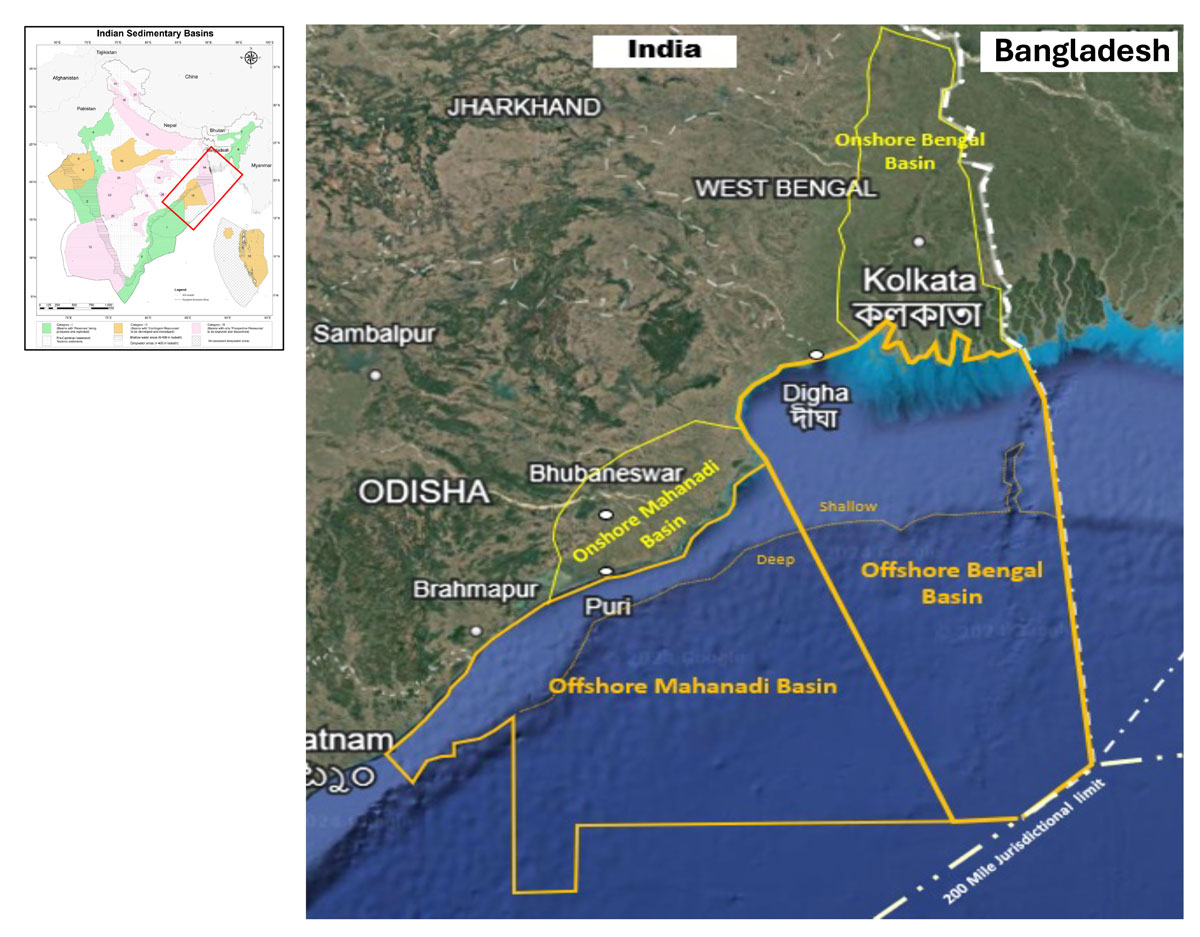
Oil prospects are more tied to the Mahanadi and Bengal basins in the offshore eastern continental margin of India, according to Hume. He said several play types have been identified, ranging from shallow-water channel complexes to deepwater turbidites and biothermal carbonate build-ups.
“Preliminary volumetric estimates show there is the potential for billions of barrels of oil,” Hume said.
“We’ve only been working on these volumetric estimates for the Mahanadi Basin for about a month, and it’s been kind of a ‘wow’ factor,” he said.
Analysis to understand the region’s hydrocarbon potential and exploration outlook remains in the preliminary stage. Hume said the UH center is “still defining source rock, maturity, structures, traps and seals.”
“We look at analogs, obviously. The geology itself is appealing because it looks like Guyana or Suriname, Brazil, or even Namibia,” he said.
In addition to the recent discoveries, the Indian government’s new outlook on oil and gas activity could help vitalize more exploration in the Andaman region. India’s parliament has passed legislation lifting previous drilling restrictions and easing entry into the energy sector.
“The North Sumatran-Andaman Basin area has been very active with three consecutive discoveries in the past three years. We haven’t seen the same activity in India, and the reason isn’t so much geology as policy,” Hume said.
The country’s current Hydrocarbon Exploration and Licensing Policy seeks to encourage oil and gas development. Recent reforms include allowing 100-percent direct foreign investment in most Indian energy segments.
“It’s changed from maybe one of the worst places to do offshore exploration to one of the better,” he observed.
Hume said Indian deepwater exploration will require foreign expertise and investment – “deep pockets.” India’s petroleum and gas ministry estimates a deep exploration well in the Andaman could cost up to $100 million to put together and drill.
“However, the more we look at it, the more we see there’s opportunity for medium-sized companies as well, more on the continental (Mahanadi Basin) side as opposed to the island side,” he said.
To bolster its offshore technical resources, ONGC signed a memorandum of understanding with BP this summer. Plans include drilling evaluation wells to determine and explore the potential of both the Andaman and Mahanadi/Bengal areas, Hume said.
“This may take some compromise. The best place to test source rock is not necessarily the best place to drill a discovery,” he noted.
Commercial drilling in deeper Indian waters would also be helpful in an area where gaining more well data and results is essential, according to Hume.
“There’s been a fair amount of drilling in shallow water, so on the shelf, but the shallow and onshore discoveries are biogenic gas. Our opinion is that nobody has stepped out far enough into the basin,” he said.
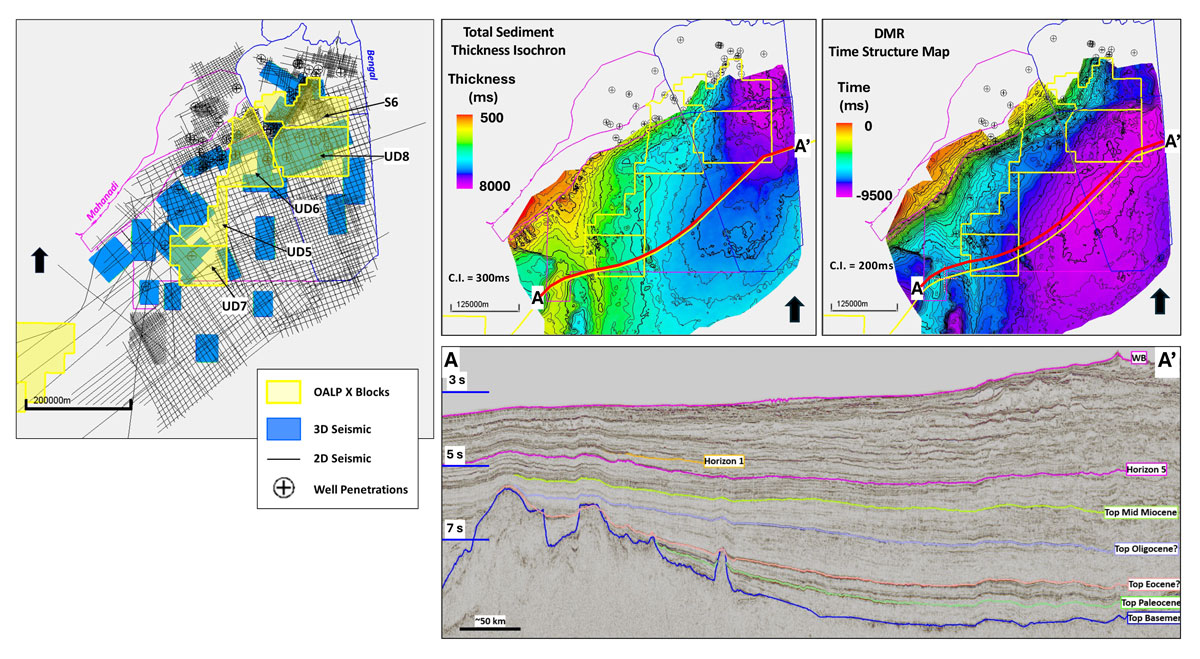
India’s bid round 10, its largest ever, began early in 2025. OALP Round-X offered 25 blocks, 19 of them offshore, including 12 in ultra-deepwater, in an area of almost 192,000 square kilometers. Bid submissions closed at the end of October and results are expected to be announced before the end of the year.
“I predict that within 5 to 10 years, everyone will be exploring India.” Hume said. “When somebody cracks the code on this one, the whole area’s just going to heat up.”