
Geothermal energy stands at a critical juncture in the global energy transition. Once limited to regions with high heat flow and natural permeability, the sector is expanding globally through next-generation technologies. Enhanced geothermal systems and advanced geothermal systems unlock geothermal potential in previously inaccessible areas. New developments are driven by strategic partnerships, policy reforms and surging drilling activity.
Geoscience and geospatial data serve as the foundation for successful geothermal development. These technologies enable developers to identify promising sites, assess resource quality and mitigate exploration risks. Advanced geological surveys, seismic imaging and thermal mapping provide crucial insights into reservoir characteristics. Temperature gradients and fluid flow patterns become visible through systematic data collection.
As a subsurface industry, geothermal already has a foothold in the extensive knowledge base and technological innovations developed through decades of oil and gas exploration and production. Wood Mackenzie’s quarterly and annual geothermal market reports track the trajectory of this burgeoning sector while spotlighting the evolving geoscience landscape, where comprehensive subsurface data and expertise underpin successful geothermal ventures.
Geothermal Project Tracking
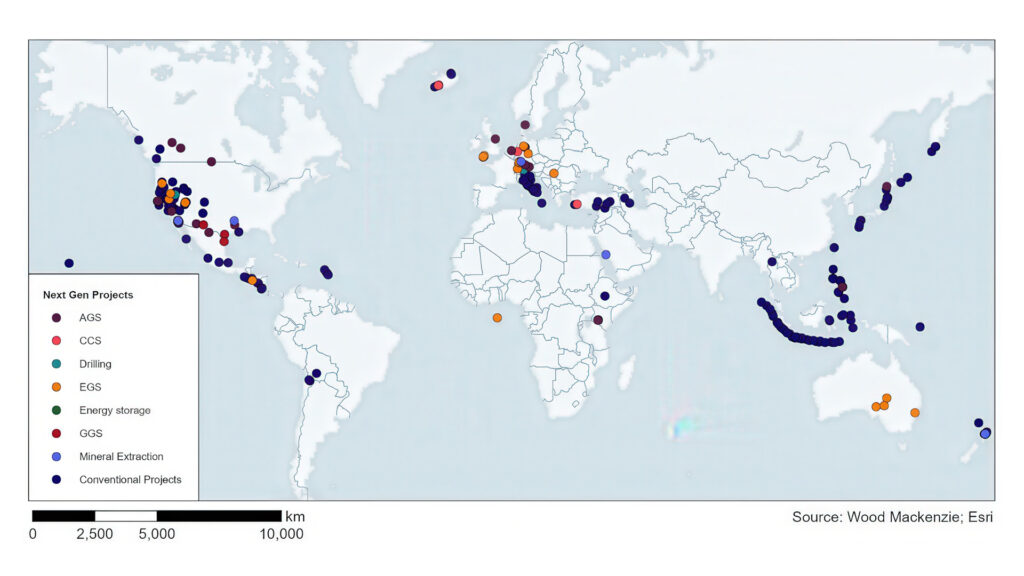
Geospatial tracking systems enable developers to analyze regional trends and optimise site selection strategies. Mapping project locations against geological features, temperature gradients and infrastructure proximity helps prioritize high-potential areas. Our data reveals where projects advance through development pipelines and identifies technologies scaling up capacity.
The next-generation geothermal project pipeline is expanding rapidly. In 2024, announced power capacity grew by 80 percent from 600 megawatts to more than 1.1 gigawatts. In 2025, announced power capacity has so far increased by a further 40 percent to more than 1.5 gigawatts.
Globally, 63 next-generation projects are currently in development. North America and Europe lead this development with 53 projects, representing 84 percent of the global pipeline. These regions have emerged as market leaders due to supportive government policies, available funding, and – in the United States specifically – a mature onshore unconventional oil and gas industry (Editor’s note: See related article in Enspired on page 36.).
While the ultimate aim of next-generation technologies is to enable geothermal energy production regardless of location, project developers are primarily targeting acreage close to existing power plants and proven resources. The growing power demands of global data centers present a significant opportunity for geothermal energy, with collaborations between major technology companies and emerging geothermal startups accelerating project development. By leveraging historic exploration and subsurface data collection, technologies can be proven in low-risk areas before establishing feasibility in unproven greenfield sites.
Key developments in the first and second quarters this year include:
- Fervo Energy announced new power purchase agreements, drilling activity and an expansion of its flagship enhanced geothermal systems project, Cape Station. Based in Utah, the project now aims to deliver 500-megawatt capacity by 2028.
- A new entrant in Denmark, Green Therma, is developing the Heat4Ever advanced geothermal system to support district heating.
- Exceed Geo Energy signed a 110-megawatt power purchase agreement for an AGS project in Texas.
- XGS and Meta signed an agreement for an AGS project in New Mexico developing 150 megawatts for data center power generation.
With rapid capacity growth, strategic geographic concentration and major commercial agreements now being signed, the next-generation geothermal sector is progressing from experimental technology to a commercially viable energy solution poised for mainstream deployment.
Monitoring Geothermal Drilling Activity
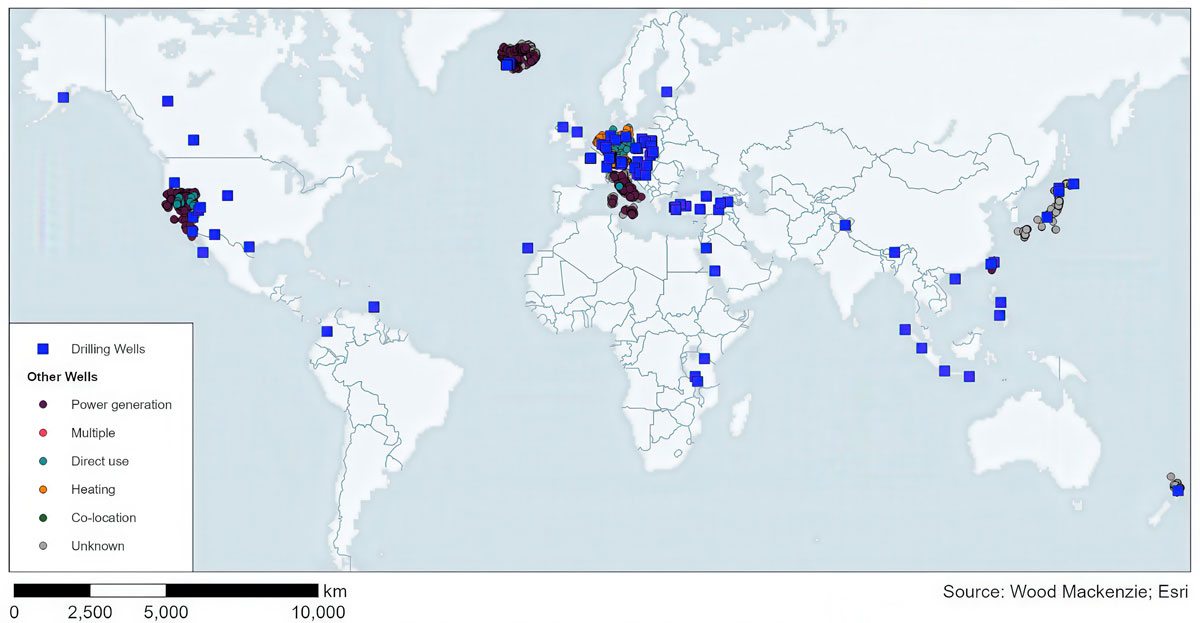
Drilling represents the highest-risk phase of geothermal development, where geological theory meets subsurface reality. More than 18,000 geothermal wells have been drilled globally. Wood Mackenzie estimates at least 35,000 new wells will be needed by 2050 to support industry expansion and meet net-zero ambitions.
Data from historical wells supports early-stage desk studies through depth, temperature, deviation and flow-rate information. Monitoring current drilling activity provides key insight on how and where markets are evolving. In 2024, 146 wells were planned, with 53 scheduled to spud – 34 of which were drilled, mostly in Europe. By second-quarter 2025, drilling announcements surged to 88 wells globally, driven by conventional heating and power projects.
Highlights include:
- Germany’s Lionheart project: five wells drilled to date and 24 additional wells planned for lithium extraction and heating.
- Saudi Arabia’s shallow well program: 25 wells completed for district cooling.
- Fervo Energy’s Sugarloaf appraisal well: reached 4,805 meters in just 16 days, showcasing advanced drilling efficiencies.
Our analysis shows drilling activity remains concentrated in proven geothermal provinces where geological understanding reduces exploration risks. The United States leads global drilling activity with more than 200 wells drilled annually. Iceland, Indonesia and Turkey follow with significant programs. Germany, France, Poland and Croatia are becoming regional hotspots.
Emerging technologies expand drilling opportunities into previously unsuitable areas. Fervo Energy achieved 60-percent reduction in drilling times between Project Red and Cape Station. These efficiencies are critical for scaling geothermal, especially in hard rock environments.
The convergence of oil and gas expertise with geothermal development creates significant opportunities for technology transfer and operational efficiency. Both sectors rely on shared foundations including seismic imaging and well logging. Oil and gas companies possess extensive geological databases, seismic libraries, and drilling capabilities that directly support geothermal exploration.
Resource Identification and Characterization
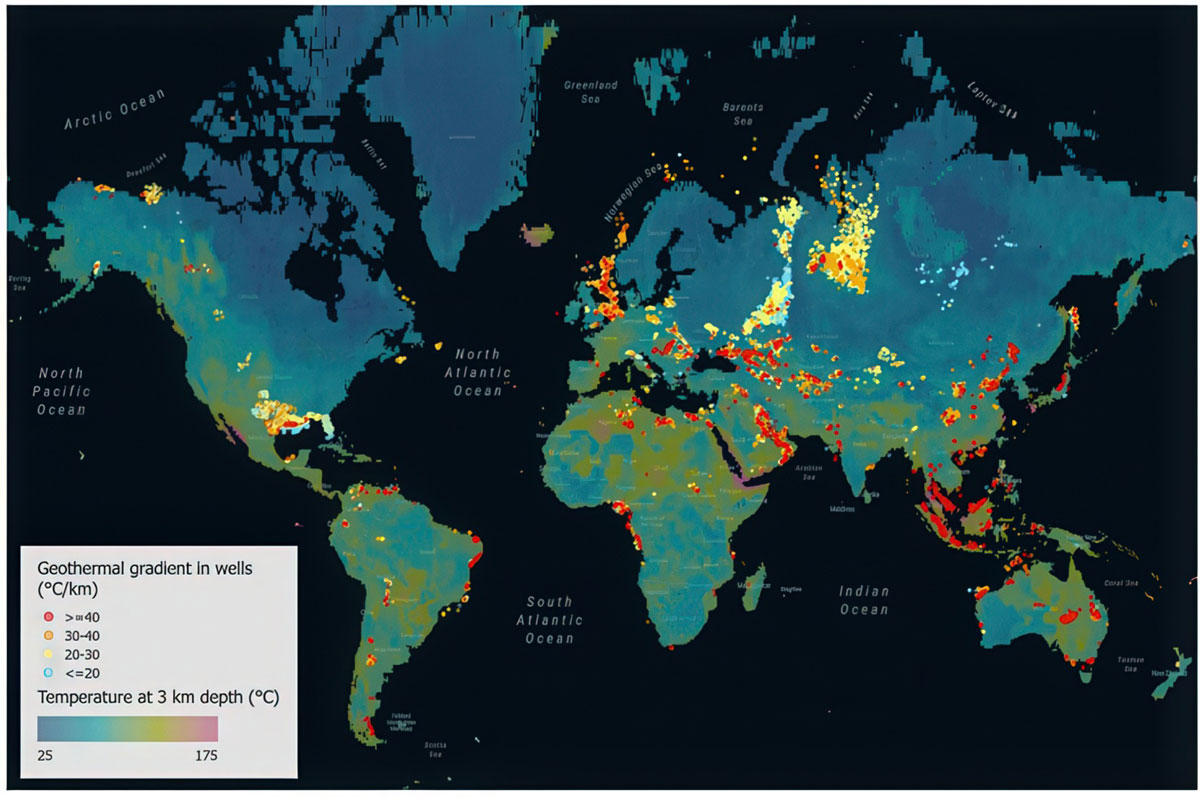
The initial phase of any project involves delineating the resource and its physical properties. Oil and gas exploration focuses on locating hydrocarbon traps and reservoirs and analyzing fluid composition and behavior. Geothermal exploration seeks heat-bearing reservoirs, characterizing host rock, heat sources, stress regimes and fracture networks. Once a resource is identified, the focus shifts to sustained management. Oil and gas workflows optimize hydrocarbon recovery from finite, depleting assets. Geothermal reservoir management centers on sustainable production, maintaining flow rates and fluid temperature for consistent energy output.
Shared Technical Foundations
Both sectors rely on similar technologies:
- Subsurface imaging: seismic surveys are extensively employed in exploration to map subsurface structures, evaluate geological hazards and track fluid migration. Geothermal uses seismic data to locate faults, fractures and stratigraphic features. However, considerations must be made for seismic data collection in high-temperature, fractured geothermal environments.
- Well logging: petrophysical data acquisition determines rock properties including porosity, permeability, pressure, temperature and lithology.
- Geochemical and geophysical data: oil and gas analyses examine hydrocarbon composition, viscosity and fluid flow properties under reservoir conditions. Geothermal analyses assess mineral-rich brines to predict scaling and corrosion. Magneto-telluric surveys are particularly common in hydrocarbon and geothermal exploration. These surveys prove especially valuable in areas where seismic surveys deliver poor data quality or prove less effective.
- Geospatial data integration: oil and gas exploration data reveal geothermal potential through temperature measurements and formation water analysis. Existing wells provide valuable geological information and potential conversion opportunities for geothermal applications. This data integration reduces exploration costs and accelerates resource assessment by leveraging decades of subsurface investigation.
- Directional drilling and reservoir stimulation: directional drilling capabilities improve reservoir access in complex geological settings. Hydraulic fracturing techniques enhance permeability in tight formations. Well completion designs optimize fluid production and injection systems, reducing operational costs.
Technology Transfer Drives Innovation
Next-generation geothermal companies increasingly apply oil and gas expertise to geothermal challenges. EGS companies like Fervo Energy and AltaRock Energy use frac’ing-inspired techniques to stimulate permeability in hot, dry rock. Multistage reservoir frac’ing and hydroshearing are adapted from shale gas operations. AGS firms like Eavor and GreenFire Energy deploy closed-loop systems that mimic oilfield heat exchangers, often repurposing end-of-life oil wells.
Strategic partnerships demonstrate growing industry confidence. Oil and gas companies are increasingly investing in geothermal ventures, with BP, Chevron, Devon and OMV backing AGS and EGS startups. Petrobras and GA Drilling are collaborating on offshore geothermal drilling. Baker Hughes, SLB, Halliburton and Weatherford are adapting their drilling, completion and subsurface technologies for geothermal applications. These partnerships bring decades of subsurface expertise, global infrastructure, and advanced tools and instruments to the geothermal sector.
Data-Driven Development
Machine learning presents significant opportunities for geothermal development. Oil and gas uses algorithms to interpret geology and characterise basins with reduced trial and error. This approach applies to geothermal, where advanced algorithms identify new resource locations, leading to higher exploratory drilling success rates.
Benefits extend beyond exploration. Oil and gas leverages machine learning to optimize drilling parameters, manage well delivery and schedule maintenance. Geothermal adopts machine learning for similar goals, using reservoir simulations to create training data for machine learning models.
Startups like Zanskar demonstrate these approaches by collecting and analyzing subsurface data at unprecedented scales. Their workflows mirror oil and gas exploration but focus on thermal modelling and resource estimation.
The integration of geospatial analytics with geological expertise transforms resource assessment approaches. Play Fairway Analysis techniques are being adapted to geothermal, combining satellite imagery, geological databases and thermal measurements to create comprehensive resource maps. This data-driven approach, paired with techno-economic assessments can accelerate project development timelines and improve investment decision-making.
Convergence and Synergy
Geoscience is the backbone of geothermal innovation. From exploration to drilling, subsurface and geospatial data are unlocking new frontiers for clean energy. The convergence with oil and gas expertise is accelerating next-generation geothermal technologies and redefining how we harness Earth’s heat.
As governments and industry invest in data-driven approaches, geothermal is poised to become mainstream energy – powered by the same geoscience that built the hydrocarbon economy. The synergy between sectors is more than technological; it’s strategic, enabling geothermal to scale faster, reach deeper and become more economically viable.