
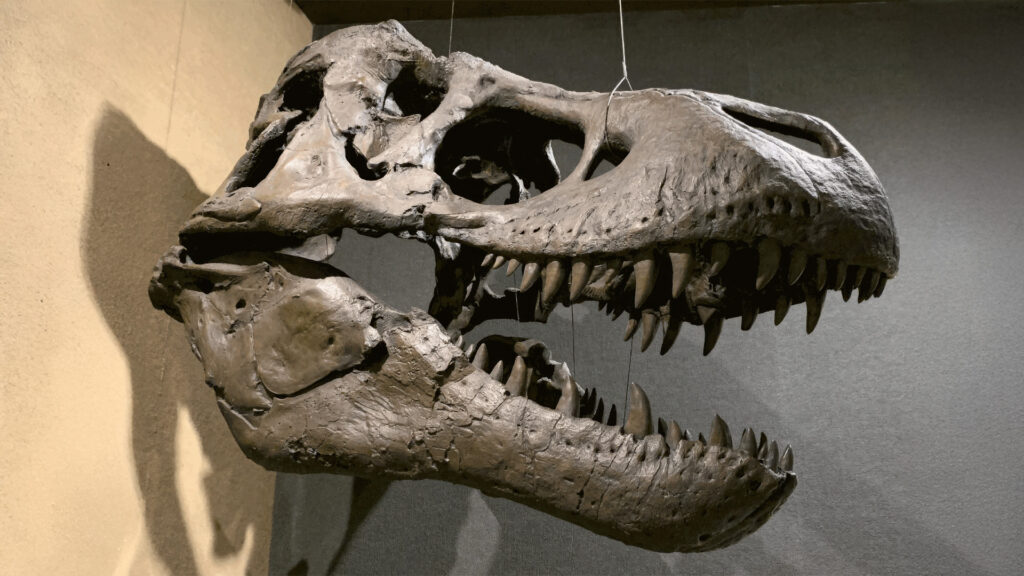
The Paleontological Research Institution’s financial predicament underscores a national dilemma: Can science thrive when government retreats and private philanthropy falters?
When it comes to natural wonders in upstate New York, Niagara Falls comes quickly to mind, as well it should, as it was declared one of the Seven Natural Wonders of North America by the International Union for the Conservation of Nature.
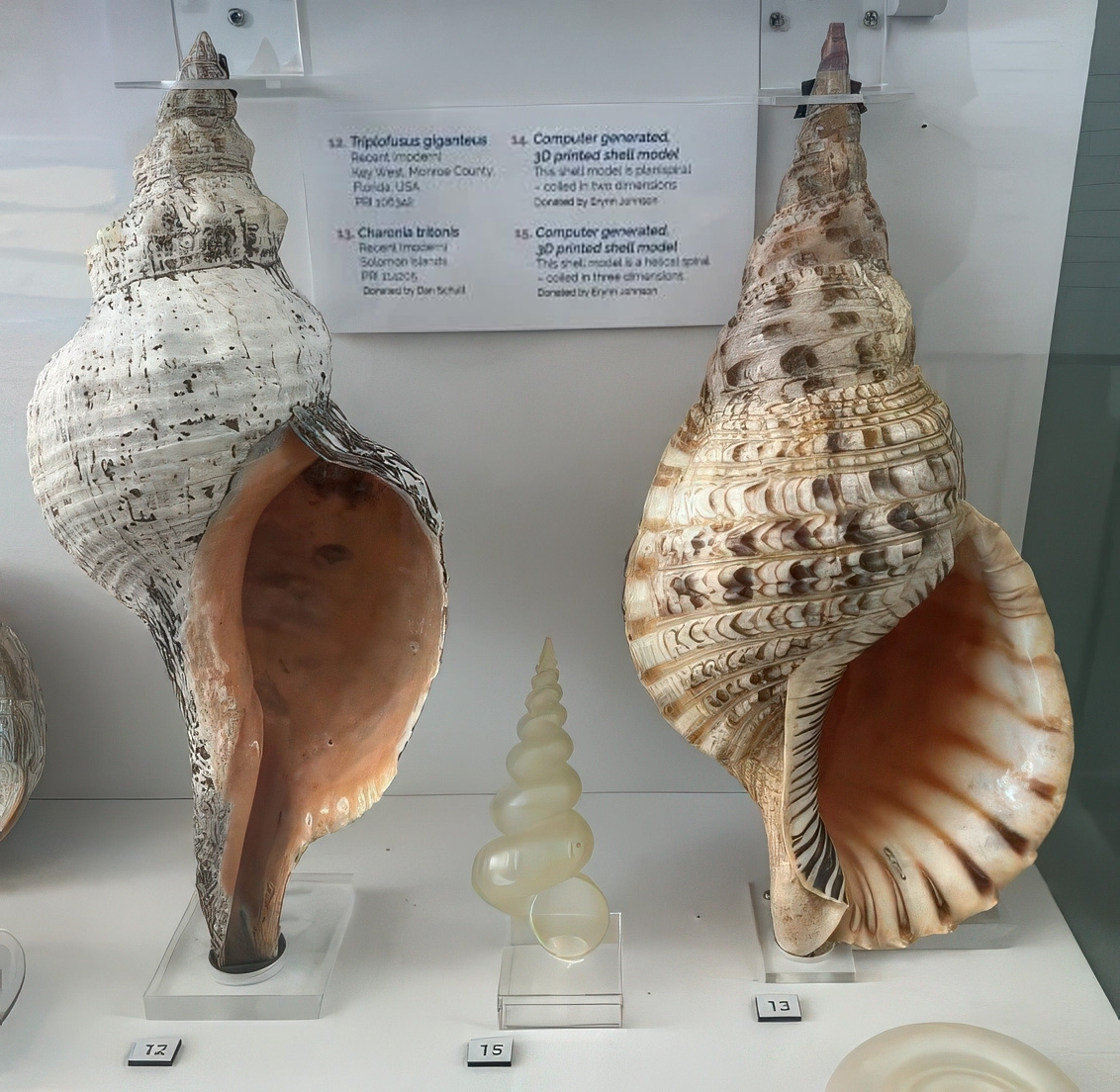
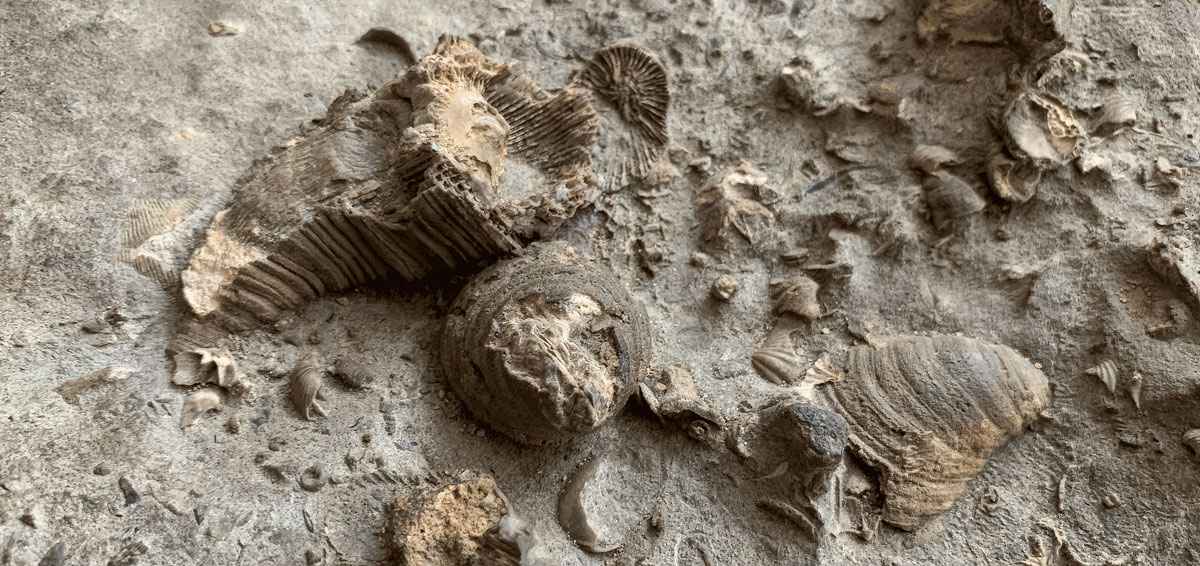
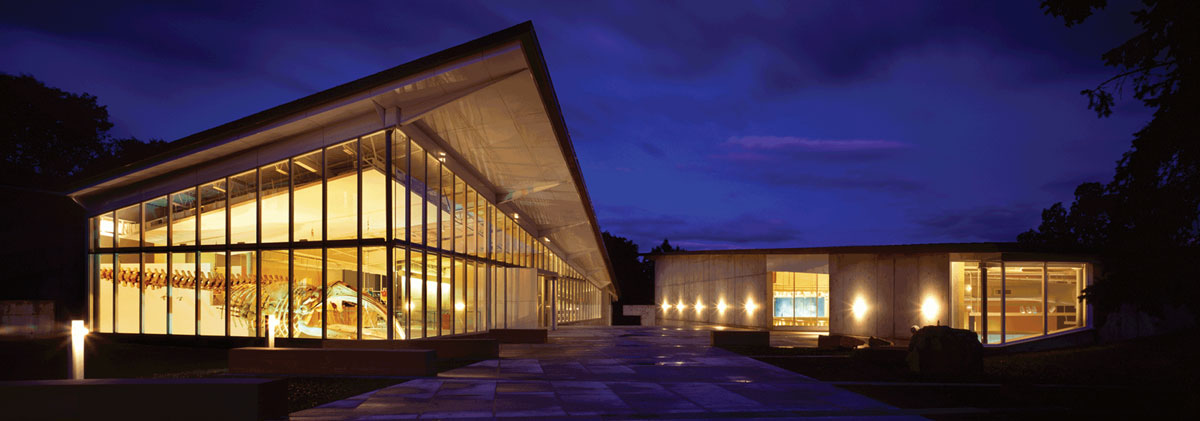
But about 160 miles east-southeast of the Falls, in Ithaca lies another wonder, a natural history museum, the Paleontological Research Institution. It is a repository that holds the largest collection of invertebrates from the Cenozoic era in North America, as well as an enormous cache of fossils from Antarctica, Venezuela, the Dominican Republic and a half a million specimens of modern mollusks.
Almost as important to those collections and PRI’s comprehensive online portal and education outreach programs is the museum’s goal of keeping alive the very notion and accessibility of scientific education.
The Germ of Geology
It has deep roots – as does all paleontology – in geology.
“The museum is important for anyone who has ever picked up a rock or a fossil or a shell and wondered why it looks like it, what it does, or how it formed or where to find more like it would benefit from such a place,” said PRI Director Warren Douglas Allmon.
Geologists, he added, would not have been able to do what they did without fossils to tell them the age/ relative position of the rocks that hold petroleum reservoirs. PRI, in fact, was founded in 1932 by paleontologist and geologist Gilbert Harris of Cornell University, who did foundational work on salt domes, which are sources for much of the petroleum in the U.S. Gulf Coast region.
“Today there are many other tools in the explorationist’s too box,” Allmon said, “but fossils are still the fundamental – and most widely used — indicator of age of rocks for all geological research.”
Up until the 1980s, the majority of paleontologists in the world worked in the petroleum industry.
But that changed, he said, when much of the oil industry disinvested in primary research by closing its labs, libraries and collections and laying off staff paleontologists.
Instead, they outsourced paleo to consultants.
“But that didn’t change the centrality of paleontology in the search for resources. It is central to training geologists and is essential to doing geology,” said Allmon.
A Mission of Earth Education
The scope of PRI goes beyond the inside world of the petroleum industry, though.
“It is also a collection, a resource for educators from pre-K to post-grad who use it to teach Earth and climate science, evolution, ecology and environmental science, but it is also a place for those who want to understand the diversity of life and why it matters, which anyone who has ever wondered where they or the landscape around them came from, how the planet works or how to sustainably use its resources, which absolutely requires an understanding of its history,” said Allmon.
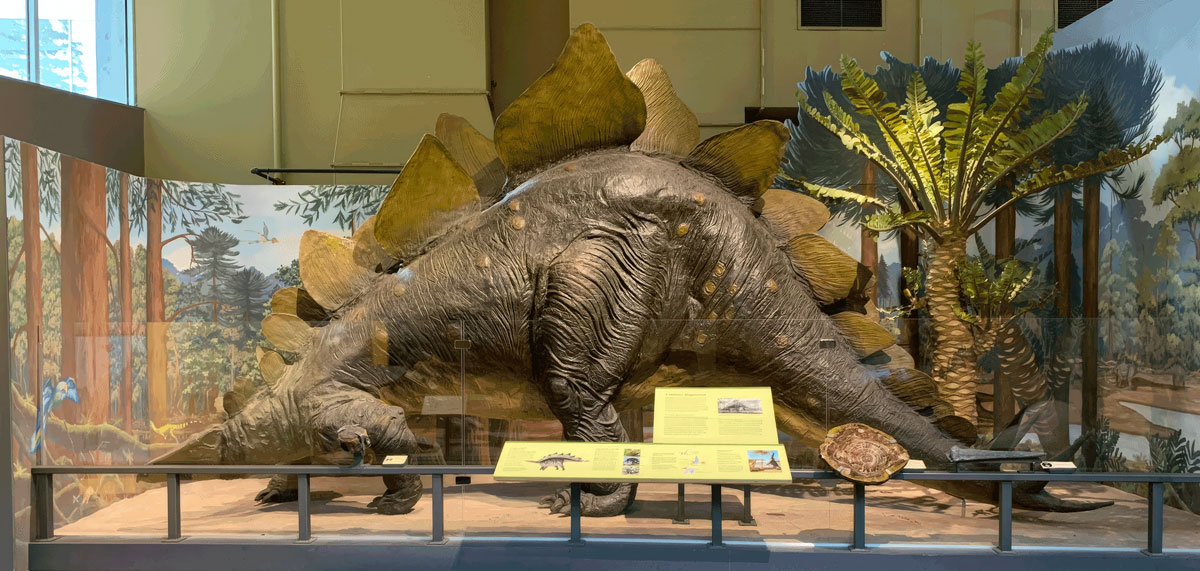
Scientists from around the world have come to Ithaca or accessed its online portal for studies of evolution, climate change, Earth history, biodiversity and ecology. PRI has welcomed tens of thousands of visitors to its Museum of the Earth – an 8,000-square-foot permanent exhibition, which takes them through the 4.5 billion years of history, from the Earth’s origin to the present day with hands-on, visual exhibitions and outreach.
The good news is that this vibrant, diverse, educationally positive resource is still very much a reality.
The bad news is that the reality of scientific exploration in America is not what it used to be.
Science Funding at a Crossroads
In recent years, after PRI’s largest donor who had supported it for more than 20 years – more than $30 million over that time – abruptly became insolvent and was unable to honor his pledges.
This threw a major wrench in PRI’s mission.
How major?
“We are currently trying to raise enough funds to stay open while we work to restructure and seek partnership with another organization,” said Allmon.
The loss of the largest donor could not have come at a worse time because cuts in federal support for basic scientific research and science education also occurred. These costs affected PRI, Allmon contends, but the real damage could be what such cuts will mean to America’s decades of scientific leadership and the economic and social advantages that leadership has provided.
Specifically, about 20 percent of PRI’s budget comes from these federal sources. Specifically, the National Science Foundation, the National Oceanic and Atmospheric Administration and the Institute of Museum and Library Services grants – the latter which were cancelled. After states whose institutions were affected by the cancellation sued, though, those grants were reinstated.
The larger issue for Allmon, as mentioned, though, is the notion of what place science plays in America.
More than 1.2 million people online, “as well as tens of thousands of people in this very underserved part of upstate New York” avail themselves of PRI’s resources, Allmon said.
“We are the principal natural history museum between New York City and Buffalo and if we’re not here, then all those people will not benefit from what we provide,” he added.
On this issue, he feels that PRI, like the country, is at a crossroads.
“If the society doesn’t value that, then so be it, but there will be costs not valuing it: lack of literacy about how the world works, how the planet works, how to do things with the planet, and how” – he takes a beat here – “to keep the planet from killing us.”
But there is hope PRI’s work will continue.
Cornell University, down the street in Ithaca and with which the museum is affiliated, has donated more than $1 million. Additionally, 4,000 people signed a petition, including 60 Cornell faculty, to continue PRI’s work. There has also been an increase in retail sales, namely, believe it or not, in its popular “Paleozoic Pals,” a line of anatomically accurate plush fossils, which grossed close to $80,000.
“There’s waiting lists for nearly all of the plushies,” said Allmon.
A Precarious Landscape
Allmon mentioned also the work of Carlton E. Brett, distinguished research professor at the Department of Geology at the University of Cincinnati, who has a special connection to PRI. Brett’s own stratigraphic collections of Ordovician to Devonian fossils amassed over the past five decades at PRI (and those of a colleague, Gordon Baird), totaling more than 20,000 specimen lots, are housed at PRI.
Brett, a former recipient of AAPG’s Grover Murray Outstanding Geological Educator Award, has issued a challenge for those who will contribute to PRI and has even offered to take those who help PRI to join him on a stratigraphic field trip,
He reiterated the importance of it all.
“Science and science education in our country are under the gun, with federal funding to all types of research heavily cut, many labs and research programs are in peril,” said Brett.
He said we must make sure that the country’s fundamental research and educational institutions survive, especially “when interest and understanding of science is low in this country.”
And while the work to stay open continues, so does the reality of what will happen if it can’t.
“While we work hard to stay open,” said Allmon, “we are also making plans to re-home the collection to other museums around the country (no one institution can take it all). This remains a work in progress that we hope we do not have to implement.”
Both Allmon and Brett underscore that the loss of PRI, and institutions like it, would mean a crippling of new discoveries, new solutions to pressing technological and environmental problems, and training for future generations of scientists.
“If people care about knowing how earth science is done,” Allmon said, “then you have to care about the infrastructure for teaching.”
And infrastructure is more than just science textbooks – scientific literacy, he said, is about a country’s identity, as well.
“American science is one of the crown jewels of our society of the last 80 years. It’s made American science the leader in the world,” he said.
“But we are in the process of disassembling that,” he added.
This is not, he reiterated, just about any one institution, but across-the-board earth science education and earth science literacy.
“If people don’t understand how the Earth works, then you make dumb decisions,” said Allmon.
Brett, too, said this is a unique time, a unique opportunity.
Neither Allmon nor Brett want to make this political – “PRI was never dependent,” said Brett, “upon government funding for its day-to-day operations.” — but they both want to stress how precarious the landscape is.
“It is a time,” said Brett, “when we must act together in a unified way to help paleontology and the earth sciences, more generally, thrive.”