
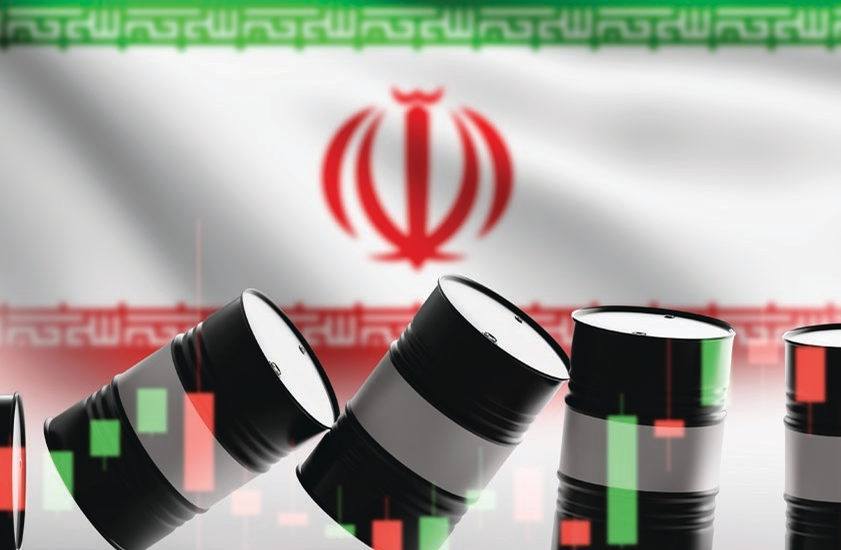
Less than two months after capturing President Nicolas Maduro, President Trump executed Operation Epic Fury with Israel to bomb Iran. The mission killed Supreme Leader Ayatollah Ali Khamenei and many of Iran’s senior political and military leaders.
Commercial shipping across the Hormuz Strait virtually stopped, major oil- and gas-producing countries in the Middle East decreased production, and global financial markets dipped.
In turn, the oil market reacted with volatility. Brent rose above $120 per barrel briefly on 9 March. WTI increased to more than $110 per barrel. According to one account, the $35 intra-day Brent price swing was the largest ever recorded.
Iran said that the world should expect oil prices to reach $200 per barrel. It wants to see higher oil prices negatively impact the world economy and financial markets, which would pressure President Trump to end the war.
Iran’s new Supreme Leader Mojtaba Khamenei, the former leader’s son, said Iran will continue to attack U.S. bases in the Middle East and use the “lever of blocking the Strait of Hormuz.” He tried to pull his Middle East neighboring countries to his side, saying, “We share land or maritime borders with 15 neighboring countries and have always sought warm and constructive relations with all of them,” said Khamenei. “These countries must clarify their stance toward the aggressors against our homeland and the killers of our people.”
How long will the conflict last? How might it impact the world of energy geopolitics?
Tapping Strategic Stockpiles, while the European Union Maintains Sanctions on Russia
On 11 March, the International Energy Agency said its 32 member countries would collectively release 400 million barrels from their strategic oil reserves. This is the “largest release ever” by IEA member countries and more than double the 182 million barrels that of 2022 after the Russian invasion of Ukraine.
The release is roughly equivalent to four days of global oil consumption, or 20–27 days of oil volume lost due to the closure of the Strait of Hormuz, representing 1/3 of IEA strategic reserves. The IEA member countries hold 1.2 billion barrels of emergency oil reserves, with an additional 600 million barrels in private industry stockpiles.
The United States announced that it will release 172 million barrels from its roughly 400-million-barrel strategic petroleum reserve over the next four months as part of the IEA’s coordinated effort. France has said it will release 14.5 million barrels of oil, and the United Kingdom plans to release 13.5 million barrels.
In the meantime, the United States announced that it will relieve some sanctions on Russian oil trade, allowing countries including India to buy millions of barrels of Russian oil. The European Union will continue its sanctions on Russian oil.
Despite the IEA announcement, the Brent price climbed from $86 per barrel on Tuesday, 10 March, to $93 per barrel on Wednesday, 11 March, more than 50 percent higher than the $60 per barrel at the beginning of 2026. As of 19 March, Brent was trading at $114 per barrel. WTI was trading at $97 per barrel, significantly higher than the average $60-per-barrel breakeven price for many shale producers.
Middle Eastern Countries Cut Production by More than 5 million Per Day
Major oil-producing countries in the Middle East have been reducing their oil production significantly due to oil field safety, the closure of the Strait of Hormuz, and the inability to load production as countries run out of storage space.
As of 13 March, Iraq reduced production to 2.9 million barrels per day; Saudi Arabia reduced its production by 2.5 million barrels per day; and the United Arab Emirates and Kuwait each reduced production by more than 500,000 barrels per day. Qatar, one of the world’s biggest LNG producers and a key supplier to Asian customers, stopped producing LNG entirely.
Asian Countries React
Asian countries are most directly impacted by the closure of the Strait of Hormuz: Eighty percent of oil and 90 percent of gas that passes through the strait goes to Asian customers.
China, the world’s largest oil and gas importer, imported 5 million barrels per day from Middle Eastern countries, led by Saudi Arabia, Iraq, and Iran, via the Strait of Hormuz. Because of its close ties to Iran, Chinese ships were initially reported to be sailing through the channel safely. According to Reuters, the Chinese tried to make arrangements with Iran, but the situation is too dangerous.
Now, most of the Chinese oil and gas tankers and container ships are also struck in the Persian Gulf. So, with the United States lifting sanctions on Russian oil, China is likely to import more Russian oil to make up the shortfall from the Persian Gulf and Venezuela. China has strategic oil reserves of about 1.2 billion barrels, which can last 120 days, according to Rystad. China has also requested its refineries not export refined products overseas for now.
India is the world’s third-largest oil consumer at 5.6 million barrels per day, and 88 percent of its oil needs come from imports. India and Iran are friendly. As of 12 March, Iran said that Indian tankers will be allowed to ship through the Strait of Hormuz. Several oil tankers sailed through the strait to reach Mumbai’s port on India’s west coast after the war broke out.
Japan, the world’s fifth-largest economy and an IEA member, consumes about 3.4 million barrels of oil per day and relies heavily on foreign imports: Ninety-five percent of its oil imports are from Middle Eastern countries, namely the United Arab Emirates and Saudi Arabia.
Prime Minister Sanae Takaichi announced that the country will release 80 million barrels of strategic reserves, or about 15 days’ worth of crude, beginning 16 March. Japan has one of the biggest strategic reserves with 254 days of domestic use (146 days in national reserves, and 101 days in industrial reserves). Japan has virtually stopped importing Russian oil.
Similarly, South Korea depends almost entirely on oil and gas imports. South Korea is also an IEA member country and has 150–230 million barrels of strategic reserves. On 12 March, South Korea announced that it would draw down 22.46 million of oil from its strategic reserves as part of the IEA’s coordinated effort.
South Korea is a major LNG importer, and its gas stockpile can only last 50 days. A prolonged Iran war will impact its power industry, as more than 25 percent of electricity generation is gas-fired.
Other Southeast Asian countries are quickly feeling the pressure from the gasoline shortage, with long lines at the pumps and governments trying to provide some relief to impacted citizens.
Questions Remain: What May Lie Ahead?
The Iran conflict has shaken the energy sector worldwide, as oil security and diversification become front and center, especially for Asian customers. Several key questions remain:
- What will Japan do to reduce its high dependency upon Middle Eastern oil? Will it significantly increase imports from the United States? Will it again import Russian oil? Will Japanese companies invest in upstream oil and gas sectors in the Americas to have more options from the Pacific Basin?
- Will Saudi Arabia and the United Arab Emirates expand their oil pipeline constructions to bypass the Strait of Hormuz?
- Will independent producers encourage U.S. shale producers to add rigs and completion crews to increase their production, now that WTI is way above the average breakeven price of $60 per barrel? Or will they continue to be cautious in case the price escalation is short-lived?
- Will the oil and gas price spike and supply concerns lead countries to become more determined to choose renewable energy? Or alternatively, will coal-rich countries tap into their own resources to avoid the Strait of Hormuz?
- European countries are discussing how to bring nuclear energy back. Will the Iran conflict add significant momentum to move the European Union away from oil and gas and toward nuclear energy?
- China already has strong energy ties with Brazil. Which other Latin American countries might China develop energy collaboration to balance the uncertainty from the Middle East and Russia?