
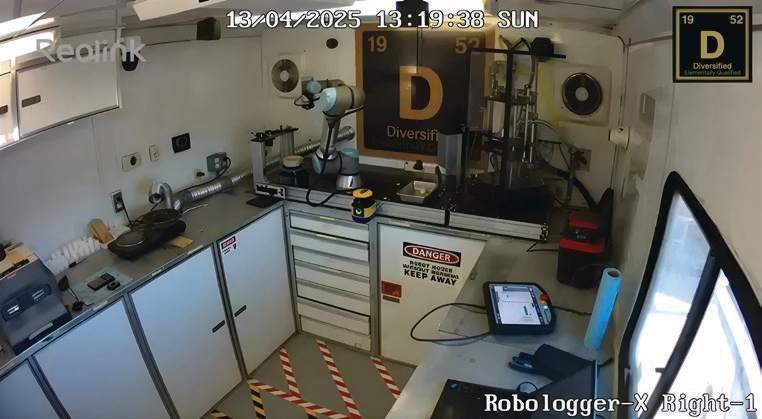
Automated mineral classification has moved from a specialized laboratory capability into a fast-evolving decision engine for subsurface and mining workflows. What began as “automated mineralogy,” based largely on scanning electron microscopy-energy dispersive x-ray spectroscopy (SEM-EDS) mapping and rule-based phase identification is now converging with machine learning, rapid surface scanning, and increasingly continuous downhole measurements. The result is a step-change in how teams quantify mineralogy, textures, and rock fabric at scale – and, importantly, how they translate those measurements into predictions for reservoir quality, geomechanical behavior, stimulation outcomes, and the timing of diagenetic events.
For petroleum geoscientists, the most important shift is not simply speed. It is that automated mineral classification turns mineralogy into a searchable, consistent dataset tied directly to pore architecture and rock behavior. In the same way that modern seismic interpretation depends on repeatable attribute extraction, mineralogical interpretation is increasingly moving toward repeatable, computable descriptors – enabling interpretation across hundreds or thousands of samples without the “single thin section” bias that can quietly distort subsurface models.
From Mineral Identification to Decision-Grade Mineral Intelligence
Automated mineral classification is best understood as a pipeline rather than a single instrument. A sample or scanned surface yields signals that represent composition and texture. Those signals are then converted into mineral labels, spatial distributions, and quantitative descriptors such as modal mineralogy, mineral associations, grain size, cement patterns and the location of pore space relative to framework grains. The “classification” step – once a manual interpretive task – is now increasingly automated through mineral libraries, rule sets, and AI-enhanced segmentation.
In its most mature form, automated mineral classification does not simply state “quartz, calcite and illite are present.”
It answers operational questions: Which minerals are associated with pore throats? Which cements occlude connected pore networks? Where do swelling clays cluster relative to permeable intervals? Which phases dominate fracture fill, and which are likely to react under stimulation fluids?
Those answers are tied to both the composition and the spatial context of minerals, and that is what makes automated classification operationally powerful.
The Technology Stack Behind Automated Mineral Classification
Most practicing geoscientists recognize automated mineralogy through the lens of SEM-based platforms that map polished mounts or thin sections at high resolution. In these workflows, a scanning electron microscope collects backscattered electron contrast and X-ray spectral signals, which are used to assign mineral identities across a mapped area. The output is a mineral map and a statistical report: mineral abundance, mineral adjacency, particle characteristics, and often liberation-style metrics that reveal which minerals are spatially locked together. These outputs have long been central in mining and process mineralogy, but they are increasingly being reinterpreted as digital rock descriptors for petroleum and geothermal applications.
A second wave of technology is focused on speed and scalability. LIBS-based scanning systems, for example, collect dense elemental measurements along a surface using laser-induced breakdown spectroscopy, then infer mineralogy through classification algorithms. LIBS scanning moves automated mineral classification toward an “industrial cadence” in which core, cuttings, and rock surfaces can be assessed rapidly and continuously enough to change sampling plans and interpretation priorities in near real time. Machine learning, meanwhile, is pushing automated classification into whole-slide thin-section imagery, enabling automated grain segmentation, mineral class inference, and pore-space quantification over large numbers of samples that previously would have been interpreted only selectively.
The modern “stack,” therefore, is not a single brand or machine. It is a connected ecosystem: automated acquisition, consistent classification, quality-assurance/quality-control tools, and analytics that connect mineral and texture outputs to engineering decisions. The disruption is coming not from one technology, but from the convergence of multiple measurement modalities with automated interpretation.
Who’s Driving Innovation and Why It Matters
Several organizations and platforms are pushing automated mineral classification forward in ways that change workflows rather than simply improving instrumentation. Incubator and service-centered approaches have emerged because the barrier to adoption is often not access to an instrument, but the ability to interpret and integrate mineral outputs into real business decisions. Teams need repeatable protocols, training, and interpretation frameworks that connect mineral maps to reservoir quality and completion outcomes.
One example is the Automated Mineralogy Incubator, which has that blends mineralogy expertise, instrumentation access, and workflow integration. AMI’s framing reflects a wider trend: mineral classification is becoming part of an operational decision loop rather than a specialized post-study performed late in a project.
The processes used by Canadian company, ELEMISSION, show how ultra-fast, AI-powered automated chemical microanalyses using LIBS can be disruptive. The implication for subsurface workflows is profound. In the past, it took too much time and money to scan long intervals, resulting in sparse data sampling and interpretive interpolation. If teams can scan long intervals rapidly, mineral boundaries, heterogeneity, and subtle transitions can be captured as continuous features rather than inferred ones.
In the oilfield domain, SLB has long pursued the goal of continuous subsurface property streams. Spectroscopy-based services such as Litho Scanner reflect a “mineral classification at the well scale” model, where elemental yields and mineral solving translate measured signals into mineral volumes and matrix properties. Although this differs from SEM-based automated mineralogy, the operational intent is similar: deliver consistent mineralogy at decision-making cadence. SLB’s Global Business Development Manager – Surface Logging Ben Geaghan has pointed out that downhole mineral classification is particularly powerful when it is coupled to laboratory calibration, enabling improved multimineral petrophysical solutions, facies interpretations, and geomechanical constraints.
Meanwhile, wellsite-focused service companies are exploring the value of mineral classification in the drilling workflow itself. DWL’s CEO Dave Tonner has described efforts to provide near real-time insights into rock composition and clay mineralogy, explicitly tying these to wellbore stability, completion design, and production understanding. The significance here is cultural as much as technical. Mineralogy is no longer treated as a post-drill report card; it becomes an active input to decisions made during drilling and completion planning.
The Industries Seeing the Fastest ROI
Mining has historically realized the fastest and most visible returns from automated mineral classification, because mineralogy controls metallurgy. Liberation, gangue associations, penalty minerals, and deportment drive recovery. Automated classification helps mining teams reduce uncertainty early and optimize processing later, and the economic outcomes are easy to measure: recovery, throughput, energy use, and reagent consumption.
In petroleum and geothermal settings, the value is equally real but often indirect. Automated mineral classification improves the reliability of reservoir characterization and reduces ambiguity in the link between observed rock fabric and predicted behavior. It strengthens petrophysical interpretation by providing mineral constraints, and it strengthens geomechanical models by clarifying clay type, cementation state, and brittle-ductile proportions. In unconventional reservoirs, where mineralogy and texture strongly influence frac behavior and production response, automated classification can reduce interpretive variance and help build more stable completion strategies.
Environmental and tailings workflows also benefit, particularly in mapping element hosts and reactive phases. As critical minerals projects expand and regulatory scrutiny increases, the ability to quantify mineral hosts and weathering behavior becomes essential for planning and risk management.
Where Automated Mineral Classification Fits in the Subsurface Workflow
In subsurface energy workflows, automated mineral classification commonly enters at three points: calibration, prediction, and optimization.
In calibration, classification provides ground truth for logs and models. Mineral volumes measured from XRD, automated SEM mapping, or scanning approaches constrain petrophysical solutions and sharpen facies interpretation. In prediction, mineral classification supports reservoir quality forecasting, brittleness mapping, and fluid-rock interaction planning. In optimization, the outputs guide choices in completion design, stimulation fluid selection, and operational risk mitigation.
The most consequential workflow change is that automated mineral classification makes it realistic to treat mineralogy as a “population-level dataset” rather than a handful of samples. That shift supports statistical descriptions of heterogeneity, which is exactly what reservoir models need when scaling from thin sections to fields.
Pore Architecture Becomes Quantifiable at Scale
Pore architecture is where automated mineral classification becomes transformative for petroleum geoscience. Traditional petrography can describe pore types, but it struggles to deliver repeatable, field-scale quantification. Automated classification changes that by tying pores to minerals and textures in ways that are measurable across thousands of observations.
Instead of reporting porosity as a single scalar, classification-based workflows can quantify what kind of porosity is present and what controls it. Intergranular pores bounded by stable framework grains behave differently from pores narrowed by clay rims or occluded by late-stage cement. Dissolution pores could add bulk porosity while contributing little to permeability if they are poorly connected. Automated maps allow teams to quantify not just pore abundance, but pore placement, pore throat controls, and mineral-specific causes of occlusion or preservation.
This mineral-context pore mapping is especially important in reservoirs where small differences in pore throat geometry drive large differences in permeability, saturation distribution, and capillary behavior. In practice, it helps teams define rock types in terms that are closer to flow behavior than to purely descriptive facies.
Fracture Overgrowths and Fill Add the ‘Why’ to Fracture Behavior
Fracture characterization is often fragmented between disciplines: structural interpretation, image logs, petrophysics, and core description. Automated mineral classification provides a bridge by mapping fracture-filling minerals, lining phases, and overgrowth fabrics with quantitative consistency.
This matters because fractures are not just geometric features; they are diagenetic features. A fracture lined with chlorite or quartz overgrowths implies a different history and a different permeability evolution than a fracture filled with late carbonate, sulfate, oxide, or sulfide cements. Automated classification supports inventories of fracture-fill mineralogy, zonation across veins, and the mineral associations that signal fluid pathways and chemical environments.
For unconventional reservoirs, where fracture propagation and proppant placement are central, the mineralogical nature of fracture surfaces can influence frictional behavior, embedment risk, and reactivity. Automated classification does not replace structural interpretation – it adds the compositional “why” behind fracture behavior and evolution.
Diagenesis and Mineralization Sequences Become Evidence-Rich
Diagenesis is a narrative built from textures, cross-cutting relationships, and cement sequences – but it is often based on limited sampling and subjective weighting of evidence. Automated mineral classification increases the evidence base by enabling consistent, repeated observation of mineral relationships across large datasets.
The key contribution is quantifying overprinting relationships and spatial distributions. When classification is tied to textural segmentation, teams can identify which phases dominate pore-lining versus pore-filling positions, which cements bridge pores, and which alterations correlate with specific lithofacies. Combined with targeted high-resolution tools such as cathodoluminescence, isotopes, or electron backscatter diffraction, automated classification provides statistical support for paragenetic models that once relied heavily on a small number of “representative” images.
In mineral systems and critical minerals exploration, the same principles apply. Mineralization sequences are defined by the order of phase deposition and replacement. Automated classification contributes by mapping element deportment and mineral associations at scale, which supports recovery predictions and strengthens geologic models of metal transport and deposition.
What Makes This Disruptive Right Now
The disruptive power of automated mineral classification is rooted in three converging trends. The first is speed: classification is becoming fast enough to influence sampling and decision-making timelines. The second is consistency: mineral and texture outputs can be standardized across analysts and projects, improving reproducibility. The third is integration: outputs can feed directly into digital subsurface models rather than remaining in isolated petrographic reports.
The optimism is justified because automated mineral classification is now crossing the threshold from “interesting characterization” to “operationally decisive measurement.” In petroleum systems, the payoff is improved confidence in reservoir quality prediction, stronger geomechanical constraints, and clearer understanding of diagenetic evolution. In mining and critical minerals, it is the ability to connect mineralogical variability to processing outcomes and project economics early enough to change plans.
A Practical Path Forward for Operators and Service Providers
For teams evaluating automated mineral classification, the most productive approach is to start with a focused pilot aligned to an operational decision. The objective should not be “produce mineral maps.” The objective should be “reduce uncertainty in a decision that matters,” such as defining rock types tied to permeability, refining brittle-ductile models for stimulation, identifying cement patterns that explain production variability, or constraining mineral hosts that drive scaling and reactivity.
A high-impact pilot pairs automated classification with a calibration dataset: selected XRD or SEM-EDS reference samples, petrophysical measurements, and a defined interpretation question. The workflow then expands once repeatability, quality control, and decision relevance are proven. Organizations that treat this as a cross-disciplinary integration project – involving petrophysics, geology, geomechanics, and operations – will realize value faster than those that treat it as a petrography upgrade.
The Next Frontier: Texture-Aware Mineralogy as a Standard Subsurface Data Stream
The future of automated mineral classification is moving toward texture-aware mineralogy integrated into subsurface digital workflows. The goal is not to replace human interpretation, but to amplify it by generating consistent, queryable mineral and pore descriptors across large datasets. That creates a foundation for better reservoir models, better completion decisions, and better understanding of how mineral fabrics evolve through diagenesis and fluid-rock interaction.
For geoscientists, this is a moment to watch closely. Automated mineral classification is not just another analytical capability – it is a shift in how rock information is captured, quantified, and operationalized. It is turning mineralogy into a scalable data stream, and that is changing what “actionable geology” looks like in exploration, appraisal, development, and production.