
“New tech, new skills – workforce transformation isn’t optional.”
• Growth priorities
• Cost pressures
• Scaling U.S. LNG
• Digital transformation
• Rebuilding downstream
Uncertainty over U.S. tariffs and increased costs are both having a significant impact, said Zillah Austin, vice chair, U.S. energy and chemicals leader for Deloitte Consulting LLP.
“We’re starting to see changing trade rules alter investment timelines. Another major area is cost,” Austin noted.
“We’re seeing that materials and services (costs) could rise 4 to 40 percent in some parts of the oil and gas sector. The overall cost impact depends on kind of project, project location, timeline and other factors,” she said.
Deloitte does expect moderate overall growth for the industry, but its analysis projects that only 15 to 25 percent of listed U.S. oil and gas companies will be able to achieve revenue growth above 5 percent. Natural gas and U.S. LNG are the strongest areas.
“U.S. natural gas and liquefied natural gas companies will likely boost their capital expenditure and expand their shale acreage, driven by rising data center demand and supportive LNG export policies,” Deloitte’s outlook predicted.
“But U.S. oil companies could remain cautious, awaiting a structural change in global demand-supply fundamentals, before boosting investments,” it observed.
Austin said keywords for oil and gas this year are “resilience” and “agility.” As energy companies respond to challenges, they are “compressing the time from signal to decision,” she noted.
“They’re figuring out how to do quick pivots in a short time period,” Austin said.
Her third keyword is “discipline.”
“We’re seeing a lot of capital discipline. Cash discipline is a main priority. Many (companies) are continuing to do a lot more with less,” Austin said. “Companies are trying to figure out how to get their costs down, and they’re using generative AI and real-time analytics to increase operational efficiency.”
Whatever started last year looks likely to continue for the energy industry in 2026. Forecasts call for a continued decline in oil prices, limited growth, rising costs, additional asset sales, and more industry restructuring.
In the view of most analysts, the year will shape up to be a challenging 12 months for oil and gas.
Consulting and financial firm Deloitte highlighted five key industry trends in its 2026 Oil and Gas Industry Outlook:
Price Decline
In its Short Term Energy Outlook, the U.S. Energy Information Administration forecast lower 2026 oil prices, with the decline somewhat moderated by China’s continuing oil inventory build-up and OPEC’s ongoing production curtailment.
“We expect global oil inventories to continue to rise through 2026, putting downward pressure on oil prices in the coming months. We forecast the Brent crude oil price will fall to an average of $55 per barrel in the first quarter of 2026 and remain near that price” for the rest of the year, the EIA reported.
In the United States, it predicted that “milder-than-normal weather in early 2026 and rising production will help moderate natural gas prices following the winter, with the Henry Hub price averaging about $4.00/MMBtu (million Btu)” for the year.
JPMorgan, Goldman Sachs and Bank of America forecast similar 2026 oil prices, with Brent slightly above $55/barrel. Analysts agreed that a supply surplus carryover will continue to depress market prices. Rystad Energy predicted a surplus of as much as 3.75 million barrels per day of liquids.
“A supply overhang could outpace demand in 2026, putting extra pressure on prices – and tightening margins across the board,” said Austin.

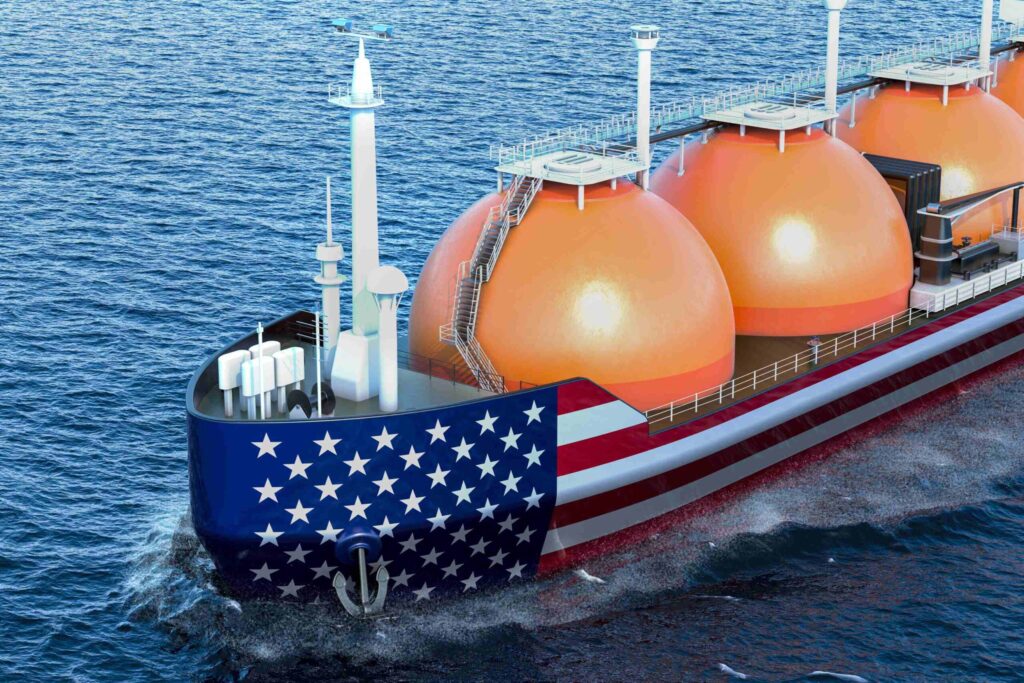
U.S. LNG’s Growing Supply, Strategic Importance
U.S. exports of LNG jumped significantly last year. The EIA predicts another large increase this year, to an average 16.3 billion cubic feet/day. Analysts expect firm world LNG prices with a possible dip later in 2026, as the market absorbs the supply increase.
“LNG is gaining strategic importance for meeting the rising global energy demand from data centers and big industrial projects. Global LNG demand is projected to rise by 60 percent between 2024 and 2040,” Austin noted.
“With the U.S. fast-tracking LNG export approvals and permitting, LNG is increasingly central to U.S. energy strategy and trade balance,” she said. “U.S. LNG exports could potentially double by 2030 if all approved projects proceed.”
Mergers and Acquisitions Won’t Slow Down
Large mergers and asset sales continued in the industry throughout last year, and Deloitte expected the trend to keep going in 2026. Its outlook included “accelerated internal restructuring,” noting that “policy changes could incentivize buyers and sellers, revitalizing asset-level mergers and acquisitions.”
“Facing price and cost pressures, nearly 70 percent of the U.S. oil and gas companies analyzed plans to restructure portfolios, optimize costs and divest noncore assets,” Deloitte reported.
Several deals were in progress in late 2025 and even more potential sales were rumored. Those included a sale or transfer of Lukoil’s foreign assets, in response to sanctions on Russia and pressure from the U.S. Treasury Department. Shell was tied to acquisition of Gulf operator LLOG Exploration Offshore. Additional asset sales were under consideration in the Permian Basin, and analysts predicted increased M&A activity in the African energy sector.
“In a more interesting way, we are seeing M&A activity already happening,” Austin said.
This M&A cycle “will see both caution and boldness – some will pursue tech-smart, disciplined deals, as others seize growth” from digital and physical infrastructure investments, she added.
The Year(s) of AI
If 2025 was the Year of AI, 2026 looks like the Year of AI, Part 2. Deloitte reported that about half of energy AI spending targets process optimization, with much of the rest going to integrating operations and improving asset performance.
“Digitally enabled operations are becoming the next frontier for competitiveness,” Deloitte reported.
Austin noted that AI-related expenditures currently make up less than 20 percent of total IT spending by U.S. oil and gas companies, but are projected to reach more than 50 percent by 2029.
“Rising costs and slowing productivity gains will drive companies to accelerate AI-powered operations and digital transformation,” she said, adding that “generative AI, agentic AI and real-time analytics will likely be integrated and implemented at scale in 2026 and beyond.”
Everyone working in the energy industry will be affected by the technology transition and the growing implementation of AI tools, analysts agree. It’s now a familiar refrain: Employees can expect more reskilling and upskilling, acquiring enhanced skills to deal with advancing technology.
“New tech, new skills – workforce transformation isn’t optional,” Austin said.
“Upskilling fuels resilience in an age of constant disruption,” she observed. “Our research shows that 60 percent of people working in oil and gas may require some kind of upskilling.”
Asked what people in the oil and gas industry will find most surprising about 2026, Austin predicted it will be the incredible pace of change.
“The rate of constant change is higher and faster than it has ever been. In today’s energy landscape, unpredictability isn’t a disruptor – it’s the baseline,” she said.