
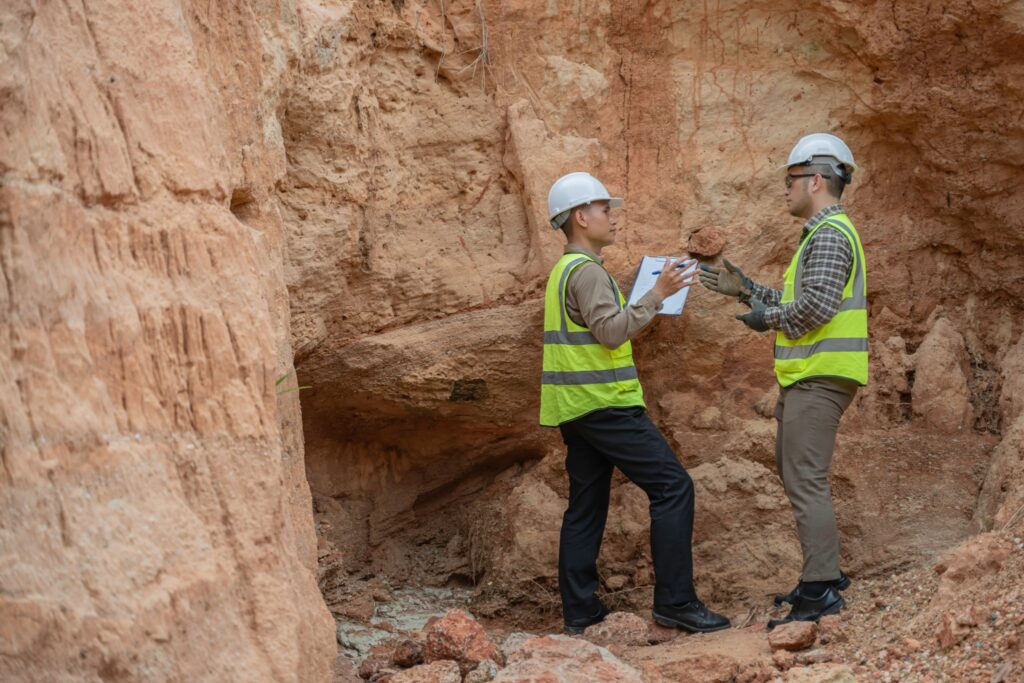
The world needs more geoscientists. The field is expected to expand 3 percent before 2030, according to data from the Bureau of Labor Statistics. That’s on par with growth in other industries. But the field has shifted. An active drill site once required sign-off and oversight from a geologist, engineer, data analyst, seismologist, and more. Now, roles have consolidated and become interdisciplinary.
That has had upstream—no pun intended—effects for budding geoscientists. University geoscience curricula have shifted to reflect the multidisciplinary nature of the modern geoscientist’s job. How can students best navigate required courses in new disciplines? And how can young professionals continue to round out their skill sets even after graduating?
We asked Professor and Interim Director of the Hunt Institute for Engineering and Humanity at Dallas’ Southern Methodist University, Saeed Salehi, to provide some context around shifting geoscience curriculum and offer advice for how students and YPs. Here are some of the key takeaways from the insights he shared.

1. The problem geoscientists are asked to solve has changed.
Geoscience has always required foundations in math, physics, chemistry, and increasingly engineering and computing. The difference is that the boundaries of work for a modern geoscientist are less distinct than they once were.
“Today, a geoscientist may work alongside petroleum, environmental, civil, or chemical engineers, as well as data scientists, economists, and other specialists,” Salehi says. Each university has responded to this shift differently—some via closer collaboration with neighboring disciplines and others by adding more interdisciplinary coursework. “The goal is not to turn every geoscientist into an engineer, physicist, or mathematician. It is to give geoscientists enough fluency in these areas to understand complex problems and work effectively with specialists from other disciplines,” Salehi says.
2. The relevance of course material may not seem obvious without application.
“Calculus becomes more meaningful when you see how rates of change describe physical processes. Physics becomes more tangible when it explains seismic waves or rock mechanics. Chemistry becomes more relevant when applied to mineral reactions or groundwater. Statistics becomes much more interesting when you use it to interpret real geological data,” Salehi explains.
And students don’t need to become experts in every area. “What matters is developing a strong enough foundation to understand the underlying principles, ask good questions, recognize when a particular method is appropriate, and communicate effectively with colleagues who have different expertise,” Salehi says. “That ability to work across disciplines is increasingly one of the most valuable skills a geoscientist can have.”
3. Beyond the science, budding geoscientists should understand the business and economics behind projects to which they are assigned.
“Technical decisions have economic consequences,” says Salehi. Geoscientists must be able to assess more than the technical aspects of a project. They need to be able to advise on its commercial viability. “Whether we are discussing oil and gas development, geothermal energy, carbon capture and storage, critical minerals, groundwater, or environmental remediation, there are costs, risks, regulations, timelines, and economic trade-offs associated with the technical decisions we make,” Salehi adds.
That doesn’t mean the modern geo needs an MBA or a minor in business or economics, but a basic understanding of project economics, risks and uncertainties, cost-benefit analyses, and corporate decision-making can make for a more effective professional. It can also help geos communicate their work and decisions to stakeholders, who may not have technical expertise. “Being able to explain the significance, uncertainty, risk, and potential value of your work to engineers, managers, investors, policymakers, or the public is an extremely valuable skill,” Salehi says.
4. Students and YPs should aim to develop a “T-shaped skill set” through continuous education.
Emerging geos should work on developing deep expertise in one area while building enough breadth across adjacent disciplines to collaborate effectively, Salehi says. He calls this a “T-shaped” skill set.
Even after graduating, pursuing proficiency in the most up-to-date technology, industry trends, and best practices can help emerging geoscientists differentiate themselves from the pack. “Short courses, professional workshops, certificate programs, online courses, technical conferences, and training offered through professional organizations can all be excellent ways to build targeted skills,” Salehi says.
Connecting with professionals in other specialties can also add depth. “If you are a geoscientist working with engineers, for example, ask them to explain how they approach a problem. If you work with economists or commercial teams, learn how they evaluate projects,” Salehi says.
Membership to a professional society can also help, Salehi emphasizes. “Professional societies such as AAPG can play an important role here because conferences, technical communities, mentoring, short courses, and networking expose young professionals to expertise that they may not encounter in their day-to-day jobs,” he explains.
5. Struggle does not imply career fit.
“Students should recognize that struggling with a difficult quantitative course does not necessarily mean they are poorly suited for geoscience,” Salehi says. Mastery of math, physics, chemistry, and engineering comes with repetition, and getting reps in may extend beyond graduation.
While students are still in the academic world, getting assistance early is essential. Students shouldn’t wait until they are behind to ask for help, Salehi says. “Attend office hours. Form study groups. Work problems repeatedly rather than simply rereading notes. Ask professors why a particular concept matters and where it appears later in the curriculum or in professional practice,” he explains.
Rather than simply aiming to pass a course, students should be working to understand the material. Salehi notes that a grade is a snapshot of a student’s understanding during a short moment of time. “It does not define your potential as a geoscientist,” he says. “Some of the subjects students find most difficult can eventually become some of the most useful tools in their careers.”