Exploration expertise isn’t developed in isolation. The explorer’s mindset is shaped not only by personal experience, but by learning from the discoveries, failures and insights of others – and by passing those lessons along.
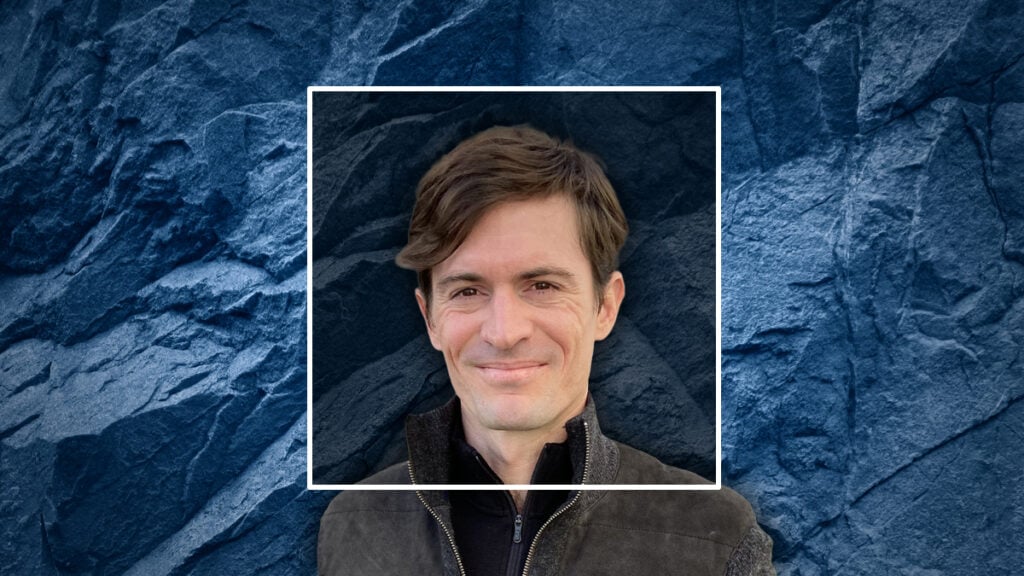
Few people have done more to create those opportunities than Charles Sternbach. Through decades of volunteer leadership with AAPG, he’s brought explorers together to share case studies, study analogs and preserve hard-won exploration knowledge for the next generation. His example illustrates another dimension of the explorer’s mindset: The pursuit of discovery can strengthen not only the individual explorer, but the exploration community itself. Readers will likely recognize his name as synonymous with the Discovery Thinking forum that has become a fixture at the annual convention, the Global Super Basins Leadership Conference he created during his AAPG presidency, and more recently receiving the Michel T. Halbouty Outstanding Leadership Award.
“Pack the house, make money and leave a legacy,” is his message to explorers, and it is the result of those decades of experience.
To know Charles’ distinguished contributions to the AAPG community, we need to look back to look forward.
“Charles, how did you begin giving back to AAPG?” I ask during our deep dive into his volunteer history.
“When I started organizing technical programs as a young geoscience professional, I sought analogs, stories, and experiences to assist my own exploration efforts. I realized that case studies of success accelerate wisdom, and I sure needed help. I wanted more opportunities to interact with discoverers, but they were rare or didn’t exist. So, I gathered my friends and we went to work. Feeding the pipeline of these programs enabled me to make many new friends along the way,” he answered.
That was just the beginning. This installment examines a core element of AAPG’s ethos: making a positive difference in our very own exploration community.
The best explorers, first, expand geoscience knowledge with the goal of improving exploration success.
Secondly, they also use their talents more broadly to bring prosperity to humanity (a topic that will be explored more fully in a future post).
Get on the Fast Track
Building on June’s installment of The Explorer’s Mindset, explorers are competitive. They want to win. “Winning,” in our business, is finding profitable resource plays.
As Charles has often said, “The best way to gain more experience is by studying decades of available analogs.”
His contribution to AAPG specializes in one particular theme that has “packed the house, made (a ton of) money and left a legacy.” That theme is: Case studies of oil and gas fields.
“Case studies of success are a fast track to creativity. Explorers who seek the proverbial ‘30 years of experience’ can accelerate their journey by binge-watching, power mentoring, and studying common motifs in archival exploration programs. The prospect is the fundamental unit of thought – storytellers teach us lessons in the language of discovery,” Charles explained.
One example Charles cites often is from John Amoruso (circa 2010) regarding the giant Bossier gas field in East Texas: “When I see a river-incised notch in a shelf, I immediately look down-dip for a potential clastic fan deposit on the slope, possibly charged with gas. When I find one, I say, ‘That could be the next Amoruso.’”
A successful explorer craves new analogs to better understand their prospect.
As Charles said in a July 2019 AAPG Explorer interview, “The explorer holds up a prospect alongside an enviable field, weighing similarities and differences, and finally must decide – using all available information and intuition, to risk capital, to drill, and with (some) luck – to discover a new analog for the next explorer.”
“Analogs are an accelerant, and they give you courage,” he said. “If it has happened, it can happen again.”
Throughout his career, Charles has taken case studies to unprecedented heights with his Discovery Thinking forums. So what is “Discovery Thinking” and how do great explorers use it to their advantage?
Discovery! Discovery!
Anyone who has read Wallace Stegner’s “Discovery,” a book describing Max Steineke’s trials, tribulations and success in finding Ghawar, understands the broad and diverse skillset an explorer develops in finding giant fields in frontier regions.
Over the years, Discovery Thinking has had several chapters. Charles has been at the podium for all 31 programs since 2008 with exceptional co-chairs. It takes a huge effort to keep a program like DT packing the house for nearly 20 years, all with the help of volunteers who view this as a practical contribution to society. Audience sizes consistently range from 250 to 800 (as mentioned in last month’s installment), totaling about 15,000 in person and many more online through the recorded programs.
Previous chapters in DT history have included famous wildcatters, the hottest new discoveries, giant fields, exploration paradigms, and, recently, for the International Meeting for Applied Geoscience and Energy, the challenging but critical integration of geology and geophysics.
“For me, seeing what others miss requires a continuously updated play-based evaluation (or play maps) that records every piece of valuable data. It is important to have an up-to-date context to recognize a valuable clue when you see one,” added Charles.
This IMAGE, Mike Forrest and Charles will focus on major discoveries and the importance of recognizing subtle clues.
“We’re really going to explore clues that others might overlook in the hunt for giants,” said Charles.
The Value Proposition
Explorers who attend DT sessions describe the value proposition to future participants as a triad – “The Value Triad”: information, inspiration and methodology.
As explorers, the more examples we see, the larger our personal database of experience grows. Whether the examples are in areas we are currently exploring, might explore in the future, or are perhaps drawn from a “lateral thinking” idea we might never work on, all can be extremely valuable. Marlan Downey summarized: “A study of history is valuable, additive to personal experience.”
The exploration pyramid was featured a few installments ago (see “100 percent-itis”).Charles said, “Most people who contribute to the pyramid don’t see the whole pyramid. You have methods used in petrophysics, but they often don’t appreciate the methodology of the sedimentologist; you have regional mappers, but they often don’t see the mechanics of the prospect or methods for well design. The best explorers are constantly changing scales. DT talks specifically to methodology and the heroic contributions to all parts of the pyramid.”
Charles offers a powerful conclusion in the book, “The Explorer’s Mindset,” “As we recognize the successful among us, we celebrate the potential of all of us.” The inspiration comes from participants thinking, “If they could do it, why can’t we?” said Charles.
Grind Your Own Paints
Charles possesses the rare ability to bring together the best explorers and showcase what they’ve done to make a discovery. As such, Charles has created a rich repertoire of colorful analogies used to communicate exploration knowledge and volunteer leadership.
“Professional society volunteer leadership positions offered essential relationships and platforms to create learning opportunities from successful explorers,” he explained. “These programs flourished with improved understanding of the professional society platforms that delivered them. To master creating programs, it helps to know a lot about societies, their levers, the venues, member needs, and to have a lot of practice organizing programs. I liken this to Leonardo grinding his own pigments to make better paintings.”
“The greatest motivator for me was seeing other people benefit from these programs. It continues to be gratifying to pack the house consistently, raise significant revenue for host societies, and leave a written or video legacy for others. Multimedia broadband has enabled on-demand team learning from the video legacy, and I see this likely growing with AI, perhaps scripting this legacy into educational modules,” he added.
So, why contribute to AAPG exploration initiatives when you hear on the street:
“We don’t have time.”
“Nobody cares anymore.”
“Why would I do that?”
“It doesn’t make a difference.”
From his Halbouty Award acceptance speech in 2024, Charles outlined with the volunteer paradox for AAPG programming: “The more you give, the greater personal reward you reap.”
“I have heard many members ask, ‘Where are my benefits?’ It always sounds to me as if they are expecting an Amazon truck to deliver them. What I have found is that the greatest benefit of volunteering for professional societies, like AAPG, is in the doing. Volunteering with other geoscientists helps each of us build our brand and develop talent, productive capacity, intellectual and professional muscles, and relationships of deep and timeless value,” he explained.
“Linda (my spouse) and I have been asked many times, ‘How do you motivate so many people to volunteer?’ The answer is simple: ‘Plan, provide a positive vision, and organize worthwhile programs that people want to attend and volunteer to fulfill,” he continued.
“Like in the eyes of the lead singer of a rock band, ‘There’s no turning back after seeing packed audiences,’” Charles added.
Delivering on the Energy of Now: The Super Basin Initiative
What’s the story behind the super basin initiative?
“In 2017, as the incoming president of AAPG, I looked to my predecessors for guidance on member value and relevance. The landscape at the beginning of AAPG’s second century was a new golden age. Unconventional onshore basins, re-explored with hydraulic fracturing and horizontal drilling, and global deepwater basins, with discoveries fueled by improved seismic imaging revealed previously hidden sub-salt provinces. I created a presidential strategic initiative for AAPG to form a programmatic alliance with Bob Fryklund and Pete Stark, leaders in understanding super basins,” said Charles.
“Many contributors created an analog playbook for approximately 20 global super basins in four AAPG Bulletin Special Issues. Know these basins. This was a massive project with co-editors Claudio Bartolini and Robert Merrill. More than 5,700 geoscientists attended 20 AAPG super basin-themed events from 2018 and more than 200 speakers and authors contributed to these conferences and publications. Presentations and papers were from every AAPG section and region,” he recounted.
Bottom Line: Make a Difference by Getting Involved and Giving Back to AAPG
Charles’ contributions to AAPG exploration programming provide a roadmap for our membership on how to give back. He and his team of discovery thinkers have realized their exploration knowledge is a hard-won talent. They’ve worked creatively to effectively share this knowledge, giving AAPG membership what we want. This is evident because Charles’ team has packed the house, made money for AAPG and built a legacy. This is just one story. There are countless examples of great explorers though AAPG’s history who made and are making a positive difference in their own communities. It is part of who they are, core to their being.
I hope this installment of The Explorer’s Mindset has inspired to define your own route to providing a positive impact to your local, regional or international exploration programs. A future installment will examine how the best explorers use their talents more broadly to bring prosperity to humanity.
This article is the eighth of the monthly articles on The Explorer’s Mindset prepared for AAPG Explorer. This column is based on the second edition of the book “The Explorer’s Mindset: Lessons in Leadership in Applied Geoscience and the Energy Industry.” Over the course of the series, we’ll be looking at the traits of the successful explorer, their leadership qualities and what has enabled them to make game changing discoveries.