
Is the time ripe for a new Louisiana Deep play? An even deeper Deep play?
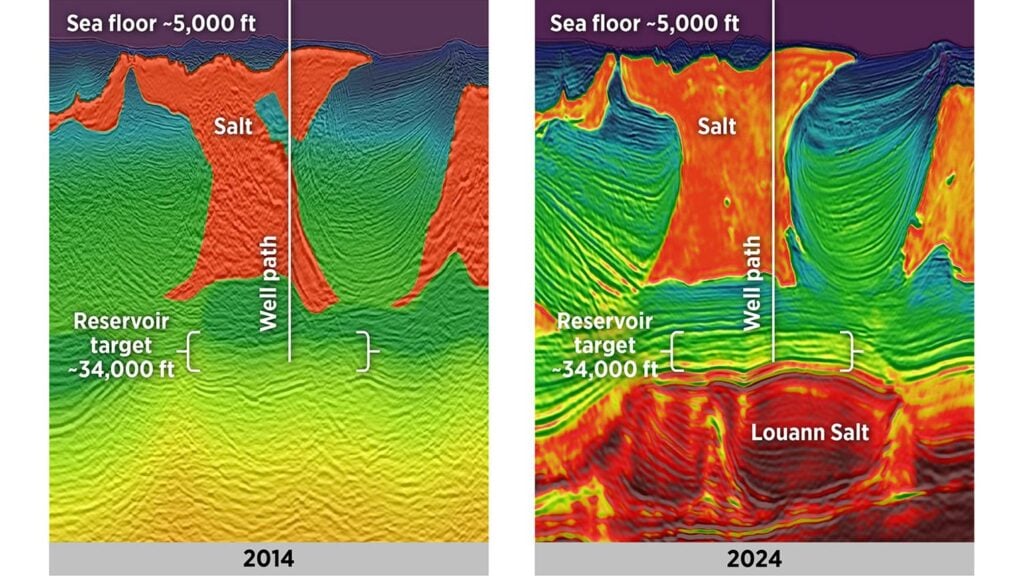
Earlier this year, Moncrief Oil of Fort Worth reported reaching a record well depth in Louisiana at 30,862 feet. The drilling project in Saint Martin Parish took almost 390 days and required a reported investment close to $300 million.
Louisiana’s deep natural gas and condensate play in the mid-1970s typically targeted reservoirs between 15,000 and 22,000 feet, seeking Miocene or Cretaceous production. Drilling capabilities have advanced and the deeper prospects remain. Will the industry be interested in another go-round?
“Technically, the time may be riper than it has ever been. But technology alone doesn’t create a play. You need reservoir quality, sustained deliverability and economics to line up,” said David Schechter, chair of the Petroleum Engineering Department at Louisiana State University in Baton Rouge.
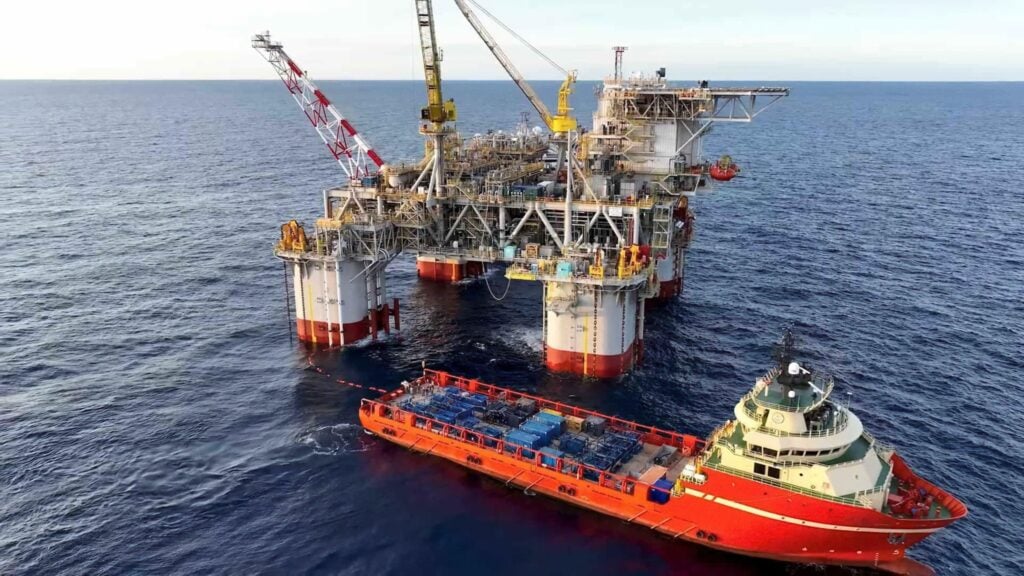
Offshore operators including Chevron, especially, have ushered in a new era of ultra-deep drilling. They introduced what is now known as “30K technology”: the ability to drill and complete wells in high-pressure, high-temperature (HPHT) environments below 30,000 feet.
“The technical envelope has moved well beyond the 15,000- to 20,000-foot level. Today, engineers have much better information about what is happening downhole at depths approaching 30,000 feet,” Schechter noted.
“It’s another step forward for drilling engineers and for HPHT well construction,” he said.
A History of Deep Discoveries
History also argues for the Louisiana Deep.
Starting 50 years ago, a series of discoveries in the Lower Cretaceous Tuscaloosa sands led to monster fields like Port Hudson and Judge Digby. According to industry estimates, Port Hudson alone had produced more than 800 billion cubic feet of natural gas and about 91 million barrels of condensate by the end of 2010.
“Louisiana has been known for this for a long time. Some of those old reservoirs were really fantastic,” Schechter said.
Joe Vaughan is a retired 94-year-old wildcatter who lives in Dallas. He recalled working wells in the Louisiana Deep play area, first for Conoco and then other companies.
“That’s the first, actual Cretaceous sands drilling. So, yeah, the ’75 to 2010 (period), I’m going to say, that was the exciting, really hot Cretaceous sands drilling. And I was right in the middle of it,” he said.
Vaughan believes the oil and gas industry needs to get back to drilling high-production, long-life wells – exactly the kind of wells generated by the first Louisiana Deep play.
“In this age of horizontal shale units, the industry has been forced to get away from good reservoir rock. What’s not been drilled is this good Cretaceous sand,” Vaughan observed.
“The lesson is, we need to look at the deeper zones in the Earth’s crust,” he said.
Vaughan is a runner and sprinter who has competed in the USA Track and Field nationals. He calls himself “the second-fastest 90-plus-year-old in America” in his age group.
He spelled out his argument for conventional drilling in a treatise available online, “America’s Inflation Control by Energy Dominance.” Vaughan called for a plan to create spare production capacity owned or controlled by the U.S. government, and lamented the move away from wildcatting for high-quality reservoirs.
“The truth is, when shale frac came along in 2000 it kind of saved us. But we’re sort of at the point now when we’re beginning to pay the piper,” he said.
Natural gas demand and location also favor a Louisiana Deep play. Feedgas demand from LNG production facilities along the Gulf Coast has neared 19 billion cubic feet per day, according to the Natural Gas Intelligence service, a level projected to increase over the next two years. The Haynesville Shale and other Louisiana gas sources are seeing a significant development boom.
The Economics of Going Deeper
There is an irony here. Demand economics might be seen as favoring deeper drilling. But money might not. That’s “money” as in drilling costs and capital availability.
“The real cons are the well costs. Costs can increase dramatically as you get to those depths, and the long drilling cycles add substantially to both cost and risk,” Schechter noted.
“I would say the reservoir quality is more important than drilling technology. The question is, can those wells have enough continuous production to offset the tremendous costs?” he said.
Vaughan contends the deep well costs aren’t necessarily out of line with production possibilities. He contrasted the onshore Louisiana drilling with much more expensive deepwater wells offshore in the Gulf.
“In the north end (of the play), we could drill those 20,000-foot wells for $20 million,” he said.
“The wells are easier to drill – a lot easier than offshore wells in the Gulf. And that also helps with the economics,” he observed.
Schechter said “a well at these depths can easily become a tens-of-millions-of-dollars project, depending on drilling time, pressure and temperature, casing design, testing and completion requirements.”
“You need significant gas deliverability, especially early on in the project, to pay off that kind of cost,” he added.
Operators can’t expect every reservoir to have optimum production characteristics. Many of the wells in the 1970s Louisiana Deep play were gas-condensate producers, and that also can affect the production picture, Schechter said.
“If it’s a gas-condensate reservoir, that’s another consideration. As near-wellbore pressure falls below the dew point, condensate can build up around the well and reduce gas relative to permeability and deliverability,” he explained.
The Financing Challenge
The biggest obstacle to a new Louisiana Deep play might simply be getting the money to drill. Financing in the United States has largely shifted to an unconventional resources model, with continuous drilling, familiar production patterns and comparatively minimal risk.
“Conventional drilling has dry holes. That’s one thing that has to be mentioned,” Vaughan said.
“Getting conventional financing from banks is impossible because you can’t guarantee there won’t be dry holes,” he said.
“The industry today is generally much more capital disciplined, so a high-cost frontier play has to compete for investment against lower-cost, repeatable unconventional opportunities,” Schechter observed.
“Eventually, the deep stuff in Louisiana would have to compete with those unconventional wells,” he said.
Vaughan thinks the answer is government funding to help build American reserves under some form of shared partnership. That would help the country compete with National Oil Companies that already subsidize industry activity, he reasons.
“For American wildcatters to be rejuvenated, we’re going to need some government assistance. It’s not a fair game right now for American geologists,” Vaughan said.
Schechter and Vaughan would agree that reservoir quality and continuous production capacity are two essential factors for a new Louisiana Deep pay. Vaughan said excellent reservoir rock solves a lot of cost problems in deep drilling.
Schechter cautioned that the high costs involved in deep drilling won’t be easy to overcome.
“Louisiana has already demonstrated successful HPHT gas development at depths exceeding 20,000 feet. Extending that capability toward 30,000 feet is technically feasible, but whether it is commercially successful depends on what reservoir you find when you get there,” Schechter observed.
“The technology exists. The question is, what is the resource?”