Premise: Geological applications
of well logs are as broad as geology itself and petroleum geologists
can learn from their colleagues in other disciplines.
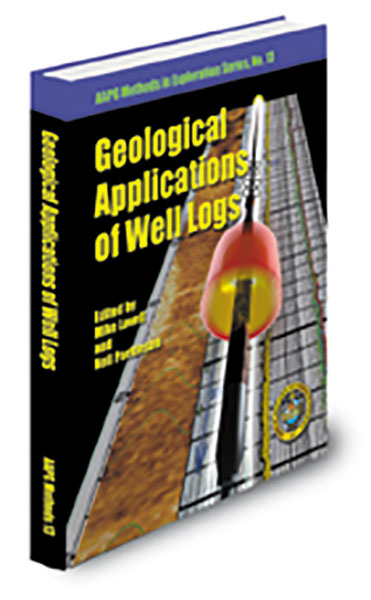
Realization: The Geological
Applications of Wireline Logs, a 1999 conference sponsored by
the Geological Society of London, used that premise as its theme.
Result:
The newest volume in AAPG’s
Methods in Exploration Series, No. 13, includes papers from
that conference in a publication that offers good reading as well
as a chance for geologists — even the most veteran — to get a
fresh look at well logs.
The papers were intended to promote cross-fertilization
among the three geological constituencies: practicing petroleum
geologists, log users in other industries and academic researchers.
The book is divided into three sections (each introduced
by an overview paper describing the principles involved). They are:
Technology and techniques, featuring NMR,
real-time measurement, thin-bed analysis and the ability to
“geo-steer” the drill stem to a precise target.- Sedimentology, introduced by John Doveton
(University of Kansas), a section that emphasizes rock features
that can be determined by using well logs.The section also includes papers on resistivity images, paleocurrents
and stratigraphy of the oceanic crust. - Stratigraphy and fractures in the stress
field. Covered are fluid flow, fracture networks, crustal features
and discussions on underground storage of nuclear waste and development
of geothermal energy.
AAPG Methods in Exploration No. 13 is $54 for AAPG
members ($79 to nonmembers). Catalog 524-03.