
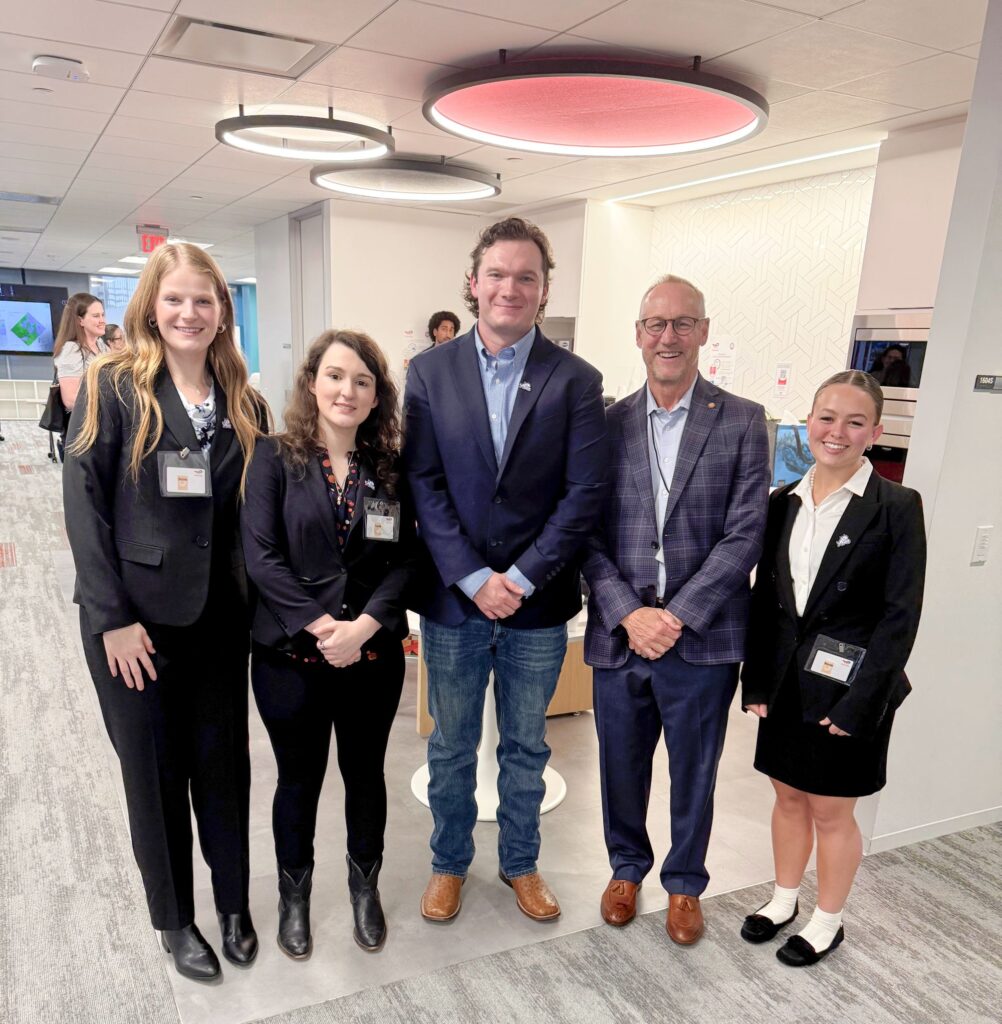
This month my focus has been on two critical areas in the three-year strategy: Engagement with AAPG student membership at universities and student participation in the IBA. The first two weeks of April, I traveled to four universities in the Rocky Mountain Section, meeting with students and faculty and speaking about AAPG. What we dubbed as the “President’s Tour,” in reality, was a listening and learning trip for me. In the post-COVID world, I believe the energy industry and AAPG have lost momentum when it comes to engagement with the next generation of geoscientists. I wanted to spend time listening to what the students and professors had to say to chart a path forward for AAPG and continue to bring new geoscientists into the organization.
The measure of AAPG’s greatness and legacy is not what we’ve done or currently have. The true measure is in what we give away.
I was impressed with the quality of students pursuing geoscience careers. The interest and commitment by many schools and states to fund energy projects and research is remarkable. Many students have great passion for geoscience, embrace new learning and want to make a difference in society. Faculty want to give their students the best opportunities and education they can provide with the resources available.
One obstacle in educating future geoscientists is the number of students who are enrolling in these types of courses. The fundamentals are still critical – structure, stratigraphy, petrology, sedimentology, and mineralogy, to name a few. Yet there are universities that are not teaching these core courses due to lack of enrollment. This is a result of several factors: retirement of faculty being replaced with other sub-specialties, lack of students interested in taking these courses, and even graduate requirements by university programs. All these factors (and many others) have led to a decline in many universities’ geoscience education curricula, or a focus on other disciplines, such as climate-focused studies and surface geology.
I also learned there are a fixed number of credit hours for an undergraduate degree and so adding extra courses implies that other requirements must be cut. There is not a simple solution.
Building on the IBA
So how can AAPG participate and engage with these schools? In North America we are formalizing alumni engagement, giving graduates the opportunity to speak at their former universities. It is another way for members to give back to the school they attended and provide a broad range of industry members the opportunity to speak directly to students and share their experiences, career path and ideas about what kind of education is most valuable for the discipline they were able to pursue. I hope the young professionals network in AAPG would be at the forefront of this program. Your recent connection to programs, faculty and students is perhaps the most powerful communication.
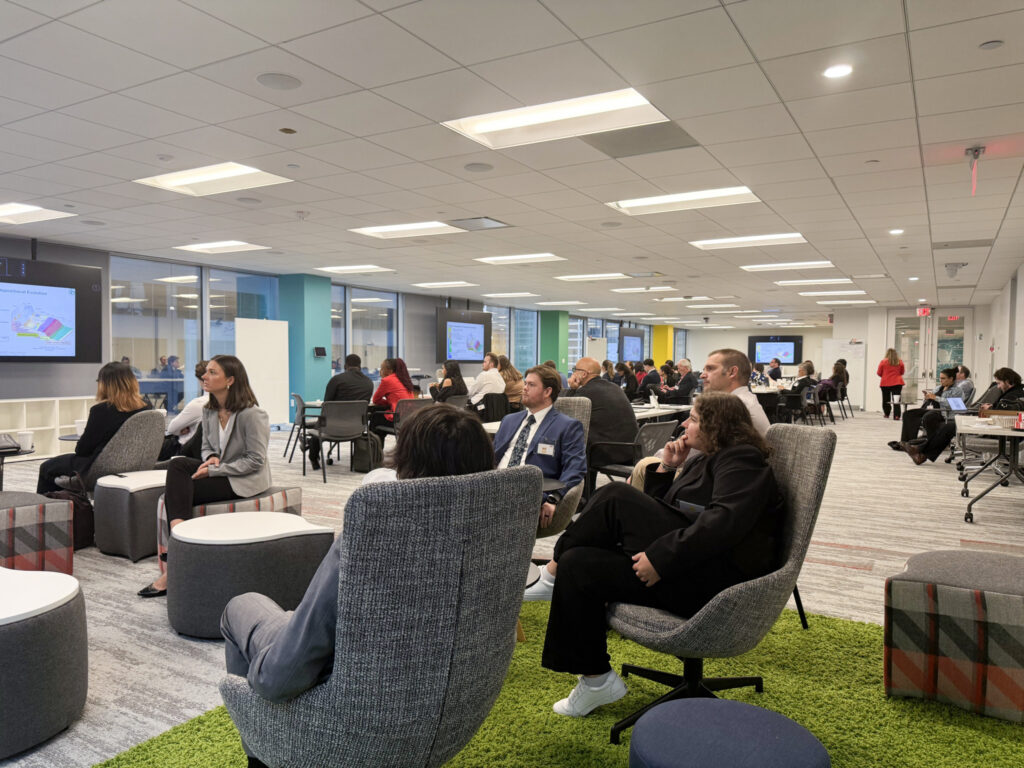
This program dovetails with AAPG’s Imperial Barrel Award competition. This capstone program brings students, faculty, and industry mentors together to evaluate and analyze real world data to find a solution for energy. I had the privilege to attend the North American semifinal held in Houston at the TotalEnergies offices. Twelve teams and more than 70 students and faculty participated in the event. The IBA Committee led by Catie Donohue (Murphy Oil) and Amanda Johnson (TotalEnergies) were two of the Committee members, in addition to numerous industry participants, judges and volunteers. It was an inspiring event and the long hours of research and preparation by each team was obvious to all who attended.
The IBA is about energy resources and practical methods of environmental mitigation. Currently, we have three modules: petroleum exploration, geothermal, and carbon sequestration. Teams choose their area of interest and work on a dataset to provide a solution. It provides students with the opportunity to work on an applied problem using their training and insight as well as learning new skills. The goal is to expand this program and include a critical minerals module, as well as a merger and acquisition project. The purpose is to engage a broader audience of subsurface scientists and integrate a commercial and engineering discipline. Hopefully we will have these additions operational by next year.
Keep the Main Thing the Main Thing
“It doesn’t help if you have the tallest ladder when you are going to the moon.”
–Demis Hassabis
The expression “horses for courses” was a comment I heard often in exploration excellence reviews during my days working for BP. It was used to emphasize different tools for different problems and that you need to keep the main thing the main thing! Employ people for tasks that best suit their talents and interests – use the right tool for the job, to keep everyone on-mission.
What is the main thing for AAPG membership, regarding the IBA and education? AAPG membership is blessed with great abundance. The question is how best to use it. We need more member support and participation. Financial support is a key component as we strive to get back to in-person competitions. We will likely be holding the global finals overseas next year as travel restrictions impact the participants’ ability to attend the in-person competitions.
We also want to expand the audience. This year all the teams were able to listen to the other presentations, which was not the case previously. The Committee leadership believes this is a great learning experience for everyone as well as an opportunity to evaluate work and gain insight into how other geoscientists approached problems. It is also a networking and recruiting event. We want energy companies who hire geoscientists to be part of the event as judges, mentors, or sponsors, and I see the IBA as a key event for geoscience recruiting. Our goal is to grow the IBA as a world-class global competition.
Depending on the energy “horse” your discipline rides, be part of this event. The Global Final will be held in Houston in August with the IMAGE Meeting. Put it on your calendar; you won’t want to miss the opportunity to see the next generation of energy geoscientists!