Following the hydrogen article in the July EXPLORER’s “Searching the Archives” column, the topic of helium prospecting seemed a logical next step in the quest to spotlight the Datapages Archives. The Archives has hundreds of articles about helium and the companies that are prospecting or producing helium for the global market. The Archives also has thousands of articles about the basement rocks where helium originates. The market for helium is growing because of the demand from the technology sector. The price for helium gas is typically between $400 and $500 per thousand cubic feet.
What is Helium?
Helium is the inert, lighter-than-air gas used in party balloons and airships. It has the lowest melting point and boiling point of the elements. It is helium’s low liquid temperature, however, that makes it invaluable for cancer research, as a cooling agent for communications, plasma containment chambers and materials for creating superconductors. It is also used in arc-welding, breathing mixtures for divers, leak detection, rocket engines, as a heat transfer medium in reactors and in a growing list of other emerging technologies.
Where Does Helium Come From?
Nearly all the helium discovered coincided with the drilling of hydrocarbons. Because of its lightweight, small diameter and buoyancy, it is accompanied to the reservoirs by one or more gases, such as nitrogen, carbon dioxide, hydrogen and methane. There are trace amounts of helium in all natural gases, but usually less than 0.1 mole percent. To be profitable, the concentration should be at least 0.3 mole percent.
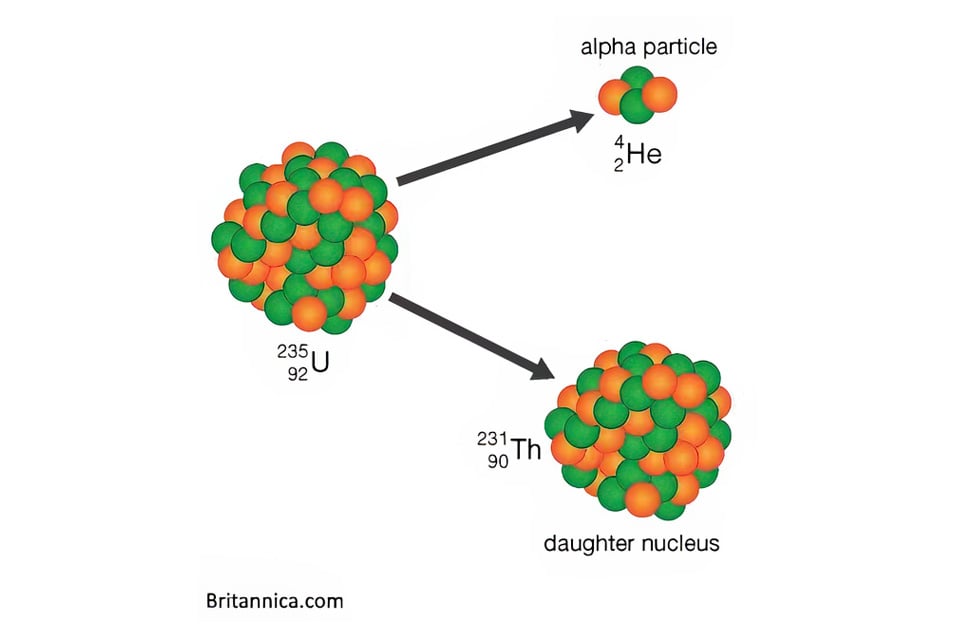
Helium has two isotopes, 3He and 4He. 3Helium is primordial and is derived from the Earth’s mantle, which originated from the formation of Earth. 4Helium is created by the radioactive decay of uranium and thorium, whose alpha particles become 4helium atoms. Uranium to thorium decay results in seven helium atoms.
Who Are the Suppliers?
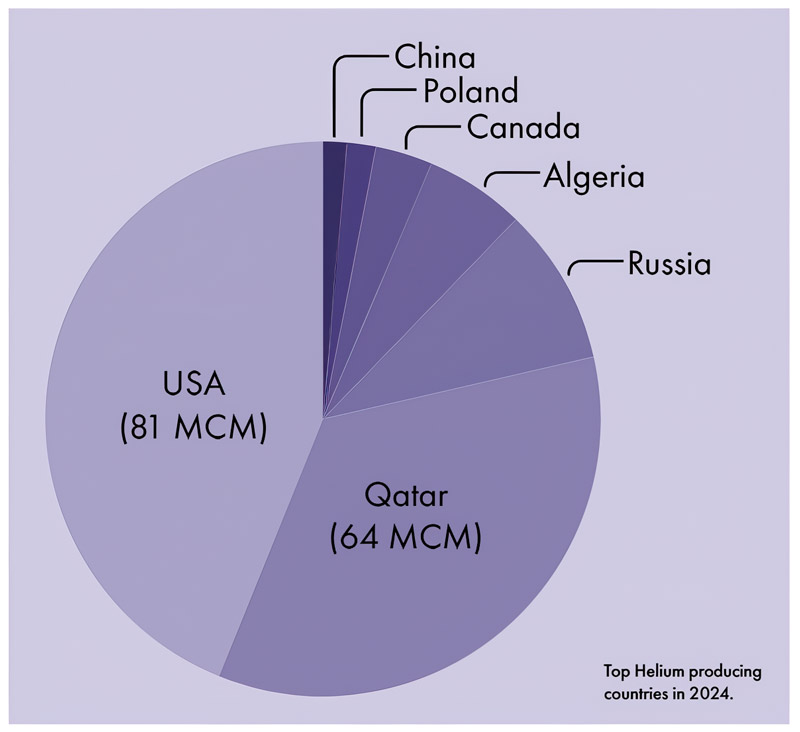
The United States, Algeria and Qatar are the largest helium producers globally. In the United States, large reserves are in the Hugoton Basin of Kansas and in the panhandles of Texas and Oklahoma. Several companies produce helium from the Alberta – Saskatchewan – Montana Helium Fairway, which is underlain by the Wyoming craton. Helium fields are being developed in Arizona and Colorado as well. In northern Minnesota, Pulsar Helium has drilled a well and measured concentrations up to 13.8 percent helium. Iran is estimated to have a third of the world’s helium; however, per the latest reports, they have not started extracting and purifying the helium.
Learn More with the Datapages Archives
The Datapages Archives has nearly 116 thousand documents within 75 collections from our content partners, societies and associations from all around the world. Whether you’re just browsing the collections or using an advanced search to nail down a particular topic, the Archives has 117 years of accumulated knowledge.
The following are the article citations that were most helpful:
- Ronald F. Broadhead, 2023, Helium Relationships to other reservoir gases and some implications for exploration: The New Mexico Example, Rocky Mountain Association of Geologists, The Mountain Geologist, v. 60, no. 4 (December), p. 141-158.
- Mariël Reitsma, 2024, Helium – the birth of a new exploration industry, Geo Expro, no. 2, pg. 41.
- Mariël Reitsma, 2025, The North American Helium Fairway, NEW GAS, Geo Expro, no. 4, pg. 70.