
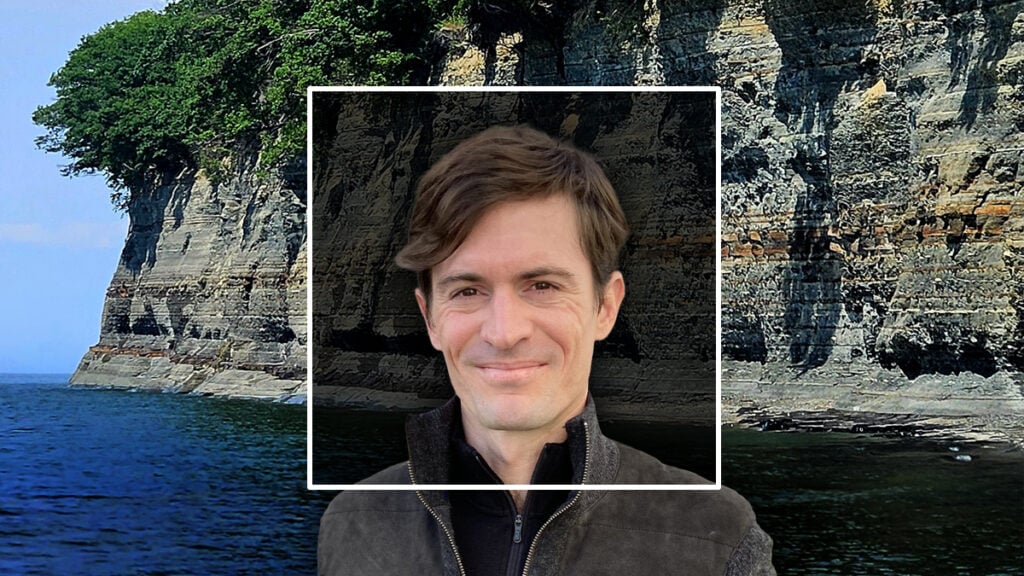
Forty-degrees Celsius and 80-percent humidity. That’s how Jurassic Park must have felt, in my opinion – or, in other words, just like home in Houston in summertime.
“Are those monkeys?” I asked.
“No, those are bird calls. But there are monkeys north of here, and the ‘people eaters’ (tigers) south of here in the Ganges-Brahmaputra Delta. Plus, elephants if you take the road east to Digboi,” replied my colleague.
Digboi was the first developed oilfield in India. Interestingly, oil was found there less than a decade after Drake found it in Titusville according to the book “ONGC: The Untold Story” by Raj Kanwar.
Welcome to Assam, the northeastern-most state in India, bordering China, Bhutan, Myanmar, and Bangladesh. Assam is known as the prime tea-growing state in India – and the birthplace of the oil and gas industry in India.
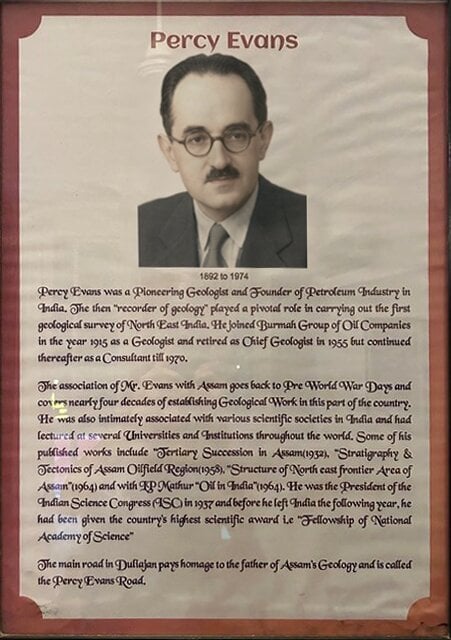
In Assam, you will see abundant references to the famous Cambridge-educated geologist, Percy Evans (1892-1974), who was “Founder of the Petroleum Industry in India” according to a plaque in his eponymous Guest House located at the end of his road (“Percy Evans Road”) in Duliajan, Assam. Evans carried out the first geological surveys of northeast India and joined the Burmah Group of Oil Companies in 1915, eventually serving as chief geologist until he retired in 1955. He continued to consult until 1970.
To attain the rank of chief geologist back in the day, you needed to be brilliant at finding oil and gas. It goes with the adage: “If you don’t find oil, you’re going out of business.”
So how do you become a chief geologist, or beyond?
Elijah White, Jr., retired executive from ExxonMobil, said it best: “What underpins success at a company will always be a good fundamental understanding of the basics … but my secret was, the last thing I did before bed was do some geology. Always find a way to do a bit more geology each day.”
Many successful explorers acknowledge that application of the fundamentals of geology is what launched them to another level. In fact, these explorers are off the charts. You could say they know the fundamentals so well, it has enabled them to grow exploration superpowers. From petroleum systems, to reservoir modeling, to attribute analysis, even brilliance in valuation – keeping the fundamentals underpinning their strategy has been game-changing for their effectiveness in the oil and gas business.
These explorers exemplify the following traits: Know the fundamentals. Apply them. Be consistent – but don’t “overscience” the data. Stay in the game.
Oh, and by the way, Evans published a few landmark papers, mostly once he was retired, such as “Stratigraphy and Tectonics of Assam Oilfield Region,” in 1958. I think you’ll find the best oil finders publish the least number of papers, but the papers have an impact.
Why publish so few papers?
Well, the best oil finders are too busy finding oil in frontier settings.
It’s Always Been About the Fundamentals
But it’s changing.
Elijah continued: “It used to be that you could come in with one set of skills and learn many things in the in-house training programs. Now with advent of all this new tech, you’d better be able to use all the different tools we have for mapping and interpreting the subsurface. But you will always need to have a strong base of the geology fundamentals. It is going to be that skillset.”
Not only do you need to know the new tech as Elijah mentioned, you need to know the merits, limitations and pitfalls of that same tech, as Kurt Rudolph, retired chief geologist of ExxonMobil, cautioned: “One thing I’d emphasize, and I see this in academia, too: stay linked to the fundamentals. Don’t get overly enamored by high-end tools. They have their place, and they’re really important. But you have to tie it back to basic science.”
Some see this as a duality, but it’s not. It’s simply applying the fundamentals of geology in the framework of new technology. This is enabling us to interpret more specific questions in the subsurface.
Apply the Fundamentals to the Business
“If it’s not new or a creative twist on a previous play, it’s not exploration,” Cindy Yeilding reminded us during our exploration retreats.
Building on the advice of a firm foundation from Elijah and Kurt, Lisa Goggin (retired from Chevron) explained the importance of applying the fundamentals to business opportunities: “Successful explorers in our industry have several things in common: a sound foundation in the entire system of oil and gas (source, maturation, migration, reservoir and seal), acumen in the critical tools of the trade (including interpretation, geophysics, risk and economics) an ability to see opportunity in both an abundance of and a lack of data and a willingness to embrace alternative perspectives.”
Lisa summarized: “A successful geologist in our industry needs a strong foundation in geologic principles and should be able to demonstrate they are capable of critical and logical thinking.”
Don’t ‘Overscience’ It
Do you remember Shell’s $2-billion write-down of assets in the Eagle Ford Group in August of 2013? I do. It turns out their acreage wasn’t as productive as some of the prime acreage in the Karnes Trough.
In our world of exploration, applying the fundamentals of sequence stratigraphy offers operators an opportunity to avoid costly moves in lease acquisitions. Operators extend sequence boundaries and maximum flooding surfaces across a play fairway, thereby predicting where the high-TOC upper member of the Lower Eagle Ford Formation exists. Missing this interval means you’ve missed the play.
Arthur D. Donovan, then senior technical leader at BP and lead author of “A sequence stratigraphic framework for establishing the chronostratigraphic relationships between the Woodbine and Eagle Ford groups along the outcrop belt and shallow subsurface in Texas,” offered this quote: “Sequence stratigraphy works. Applying it is less expensive than billions of dollars in write-downs.”
So what did Shell do? They committed their brightest minds originating from the Bellaire Tech Center to study the Eagle Ford Group and then the Vaca Muerta of Argentina’s Neuquen Basin to understand what went wrong and avoid costly write-downs in future unconventional play lease acquisitions.
However, other explorers carry this mantra: “Don’t ‘overscience’ it!” These savvy professionals say, “Avoid turning your exploration program into a science project.” This is likely especially true if you’re into promoting acreage and prospects and never plan to develop what you might find.
Look at what’s unfolding in Malta, Greece, Cyprus, and the greater Mediterranean, parts of the Caribbean, all around offshore Africa – even Venezuela. Lots of nimble explorers, albeit fewer than in previous decades – as well as companies that have never been in the exploration business – snapping up acreage, probably eventually hoping to sell it to the majors for a significant profit, before even considering drilling a well.
If You’ve Strayed, How Do You Get Back?
“Be a generalist if you want to work at an oil company a long time,” said one employee. “No, be a specialist – your deep technical knowledge cannot be replaced,” mentioned another.
If you’re Lisa Goggin, you’re both: “I am both a generalist and subject-matter expert,” she said.
“For example, I have drilled exploration, appraisal, and development wells, served as a regional geologist and provided lease-sale evaluations. I have conducted shallow hazard investigations for drilling, pipeline and facilities design and remediation. I have interpreted micro-image and wireline logs, described cores, taught numerous deep and shallow-water clastic field schools, and served as a corporate geologic software instructor, and worked in research and development. Most recently, I have become a product owner and manager of a team responsible for the deployment of all of Chevron’s geologic interpretation tools into the new cloud-based environments that will help us realize some of my greatest dreams for geologic interpretation.
Each of these assignments exposed me to the varied issues facing our business and the uncertainty impacting our ability to interpret the subsurface. This broad experiential background has given me the ability to apply geologic insight to a wide variety of technical challenges.”
You’ll probably change your expertise over your career. But you’ll find the best oil finders always keep in touch with technical interpretation of the subsurface.
Like Lisa, Kurt Rudolph always had a pet interpretation project going on while he led as chief geologist, to keep himself fresh and working on new subsurface interpretation challenges.
Take it from the best in the business: stay technical for at least part of each day, especially if you’re a manager.
Example Superpowers
We’ve heard from Elijah and his geoscience superpowers via “just doing a little more geology each day.” Kurt’s understanding of exploration benchmarking is a superpower.
What are some other examples of superpowers in exploration?
- Subject Matter Experts: Lisa Goggin applied her skills as an SME to win multiple patents for Chevron over her distinguished career.
- Experienced Observers of Earth: These make the best scientists on Earth. Through years of seeing nearly every petroleum basin, Mark Shann can identify and high-grade prospective areas faster than nearly anyone else.
- CEOs: Peter Lellis’ ability to see the whole picture of the Permian Basin gave him a competitive advantage to make a very high return investment with EnCap through his Advance Energy Partners.
- Creative Geniuses: In his Stanford doctoral thesis, Anshuman Pradhan helped pioneer AI/ML workflows in well log interpretation.
- Interpretation Specialists: Sumit Verma, one of Kurt Marfurt’s doctoral students, along with other specialists including Heather Bedle, has championed the AASPI Consortium for more than a decade now, developing the most sophisticated and applicable attributes for seismic interpretation.
- Serial Value Generators: Cheryl Collarini, a trained engineer and economist, ran most parts of the upstream value chain over her career, such that she could run multiple investment businesses, identifying value wherever it could be found.
- Integrators: These are the MVPs as described in last month’s article. Like Rich Sears, who professes not to be an expert in anything, but knows enough about what other people do to run and grow very successful businesses, like Shell Deepwater, or Shell’s Michigan business.
- “Righting the Ship” and Crisis Management: Amalia Olivera-Riley’s ability to lead through a crisis is another exploration superpower. This will be the feature of a future installment.
Develop Your Superpowers
Many of us regard with high esteem these world-famous explorers. They stand out for their achievements, and, in many cases, their personalities.
But they weren’t the best in the world immediately upon graduation. It took time, discipline and consistency to develop their skills into a superpower that differentiated them from the rest of the industry. It can come down to just a little bit more doing, each day, over a long period of time. Think of it like reinvesting dividends. Most finance classes teach us that is the way to create huge value over time.
As Jimmy Carr, the famous British comedian – and former Shell employee – said on the topic of consistency: “Amateurs wait for inspiration. The rest of us go to work.”
So go to work. Do that little bit more of geology today to build your firm understanding of fundamentals into a superpower.
This article is the tenth of the monthly articles on The Explorer’s Mindset prepared for AAPG Explorer. This column is based on the second edition of the book “The Explorer’s Mindset: Lessons in Leadership in Applied Geoscience and the Energy Industry.” In this column, we describe the traits of the successful explorer, their leadership qualities and what has enabled them to make game changing discoveries.