In Venezuela, June 24 is a holiday to commemorate Simon Bolivar’s victory over Spanish forces in the 1814 Battle of Carabobo, which led to Venezuelan independence.
Two-hundred and twelve years later, on June 24, 2026, Venezuela faced another battle, one that marked a chilling chapter in the country’s history.
At 6 p.m. local time, back-to-back 7.2 and 7.5 magnitude earthquakes struck, creating the strongest seismic event to hit Venezuela in more than a century.
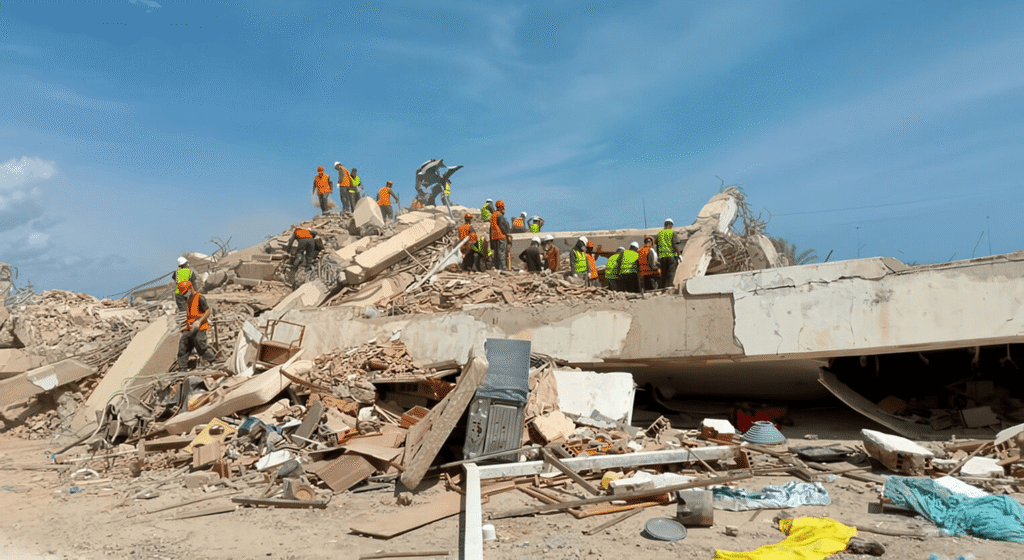
The most severe damage occurred in the coastal town state of La Guaira, located 10-kilometers north of Caracas.
Precise statistics change frequently and are nearly impossible to quantify, but in a July 15 publication, the Venezuelan Office of the President reported more than 4,800 deaths and 16,700 injured, with more than 20,000 people living in temporary shelters. Thousands of people remain missing, and the number of fatalities rises as recovery efforts continue.
A date that once marked celebration now evokes tragedy.
Chaos in the Shopping Center
Alejandro Gonzalez, geological engineer and AAPG Latin America and Caribbean Region Imperial Barrel Award coordinator, spent the afternoon of June 24 at the Candelaria Sambil mall with his girlfriend and her friend.
“Just before the earthquake hit, the power went out,” he said.
“As a joke, I gave my girlfriend a hug. Then, the ground began to vibrate, and people started screaming and running. In that moment, I realized what was happening. I grabbed her and her friend by the arms and pulled them into a store that did not have glass windows at the front. It felt like it lasted about 45 to 60 seconds. I didn’t feel two separate earthquakes; I felt only one with variable intensity.”
Gonzalez and his friends stayed in the store’s doorway throughout the event, waiting for the crowd to thin out because people were panicking and rushing down the stairs.
“I didn’t say anything at the time, but I was unsure if the mall would withstand the movement; I just waited, hoping for the best,” he said.
“After I got out of the mall, I went to the parking area to retrieve my car. At my house, everything had fallen – furniture, TV – but the beams and columns remained without a scratch. There was a lot of chaos on the streets.”
The news was not so good for Gonzalez’s father, resident of La Guaira’s Caraballeda sector, one of the areas most impacted by the earthquakes.
“At first, I had no news about my father. Eventually, he called me once he reached Caracas thanks to a good Samaritan,” he said.
“The day after the earthquake, we went back to his apartment so he could retrieve his papers, his money and his truck, which was trapped in the basement by debris blocking the exits. The building did not collapse, was declared uninhabitable and marked as a danger zone; it is not recommended to enter or even be in the immediate vicinity.”
For Gonzalez, the initial days following the earthquake are difficult to describe.
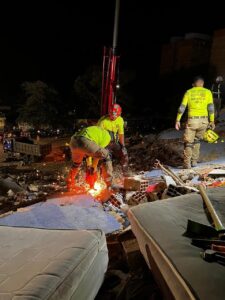
“Many people went to La Guaira to help. During the first two days, logistics – including food and water – were transported and coordinated by civilians, almost exclusively by motorcyclists. The state response was underwhelming given the scale and magnitude of this catastrophe,” he said.
“The reality was completely different from what you saw on social media. There were more destroyed buildings than you could ever imagine. I used to travel those roads all the time, and the landscape had changed entirely – just piles of debris and people trying their best to dig out their families.”
Tragic Losses
In the days that followed, Gonzalez received the devastating news that one of his closest friends died in the earthquakes.
“Her building collapsed, and only volunteers showed up to attempt a rescue. After 10 days, they found her body; she was hugging her mother, and her father was nearby. They all passed away,” he said.
For Gonzalez, one of the worst aspects of the tragedy was the slow and ineffective government response.
“People died because they lacked professional help, equipment, and resources. This wasn’t just in La Guaira; houses also collapsed in El Junquito, and parts of Caracas – like La Pastora, San Bernardino, and Altamira – were also affected,” he said. “There are many places across Venezuela in dire need.”
Soon after the earthquakes, Gonzalez returned to work and began volunteering at a distribution center run by The House Project foundation in Caracas.
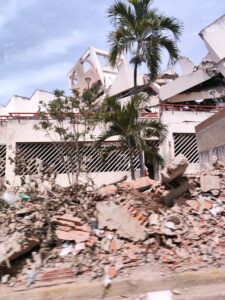
“I am doing fine, and my house was not structurally affected, but a nearby building collapsed. However, it is a different story for my father, as he lost his home, which is a very complicated matter, mentally,” he said.
Two weeks after the earthquake he learned that his father’s apartment had been burglarized.
“We are not the only ones,” he said. “The building had four apartments per floor across nine floors, and only five apartments remain untouched for now,” he said.
He focuses on the future but has constant reminders of the tragedy.
“Sometimes you feel like everything is trembling, or you feel as if it is happening again; it is a common post-event symptom.”
Just in Time to Help
Anirays Bolivar, executive director of the WEPAH Foundation and partner in an oil and gas group preparing to operate in Venezuela, felt the earthquakes during a business meeting in Caracas’s Chacao neighborhood.
“I called my kids to say goodbye. I truly thought it was the end of the world,” she said.
The Venezuelan native and Texas resident landed in the Maiquetía airport in La Guaira just hours before.
“I honestly believe God does everything for a reason. I think He wanted me to be in Venezuela that night, so I could help,” she said.
She started to help immediately.
“That first night, we went to our building, gathered everyone and went to sleep at a friend’s house,” she said. “From there we went straight to the collapsed buildings, bringing whatever tools we had at home or could find from anyone who told us they had equipment available.”
Bolivar started posting on social media to request international support and to connect family and friends who were volunteering at hospitals.
“My first instinct – and I think this was true for most people who were able to help – was to start getting supplies to the collapsed buildings: tools to pull people out, water, anything needed to get survivors out of the rubble,” she said.
Bolivar’s brother and sister-in-law traveled daily to La Guaira to volunteer, taking food, water, and medical supplies and coordinating directly with rescue teams on the ground.
“The smell of death alone was hard enough to make anyone turn back, but it never stopped them,” she said. “They went out each night – when it’s quiet and easier to find missing people – and returned home at 6 or 7 a.m. the next day,” she said.
“They went every day; there was so much to do. I admire their passion and dedication more than words can say,” she added.
Bolivar leveraged her personal contacts and professional network to secure resources for response and recovery efforts.
She repurposed her own organization, WEPAH Foundation – a group dedicated to providing education to disadvantaged youth – to collect funds to support rescue efforts on the ground.
She also worked with her newly formed oil and gas group, which activated its network in the United States and Venezuela to support aid efforts.
“I received immense support from friends with enormous hearts, which is what allowed me to react immediately on the ground and move fast,” she said.
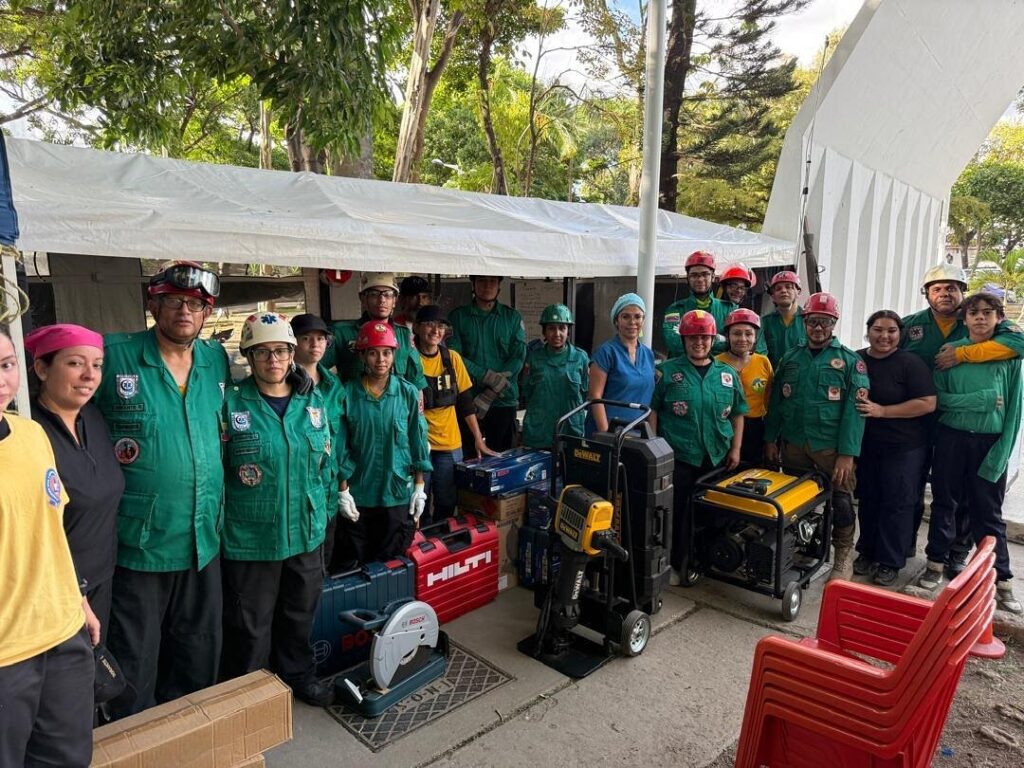
“We were able to purchase tools and equipment for a rescue team that arrived early, distribute medical supplies to those requesting help, and coordinate with friends on the ground to purchase and delivery what people were requesting,” she said. “We bought bunkbeds and generators to send to victims’ shelters in La Guaira.”
Bolivar worked friends Ana Carolina García and Lowry Brescia to create a the InfanciaenCasa.com (Childhood at Home) website, which is dedicated to connecting unaccompanied minors with their families.
She partnered with other foundations to raise funds and secured private donations to purchase medical supplies for a hospital and doctors’ network.
“So many people collaborated and showed their love,” Bolivar said.
From Texas to Venezuela
Support came from unlikely places, including Kemah, a coastal town in southeast Texas, home to AAPG members Alessandra Simone and Robert Patterson.
The couple owns West Texas Consulting and Support Services, LLC in the United States and started exploring opportunities in Venezuela following Nicolas Maduro’s capture in January 2026.
Simone, a petroleum engineer and Venezuelan native, brings personal connections and industry expertise while Patterson contributes military training and oil and gas operations experience from rural projects in the United States and Latin America.
“We began networking in January with the goal of working and eventually becoming part of an operations team in Venezuela,” Patterson said. “We have found valued partners like Anirays Bolívar and have grown our network through contacts met at AAPG events.”
Patterson, Simone and other group members attended AAPG’s Venezuela Technical Symposium and E&P Summit in The Woodlands in May and began connecting with Venezuelans and companies interested in being a part of the country’s reconstruction.
They held focused discussions with like-minded companies and individuals at the SPE AAPG SEG Unconventional Resources Technology Conference in Houston in the days just before the earthquake.
“After two and a half days of nonstop networking, meetings and social activities at the URTeC, we arrived home in Kemah. Ale went straight to the couch for a well-deserved rest, and I went for a bike ride around our little tranquil community,” he said.
“I ended up, as I often do, at Galveston Bay Brewing near our home, and two sips into my required ‘Latitude Lager’ I received the first messages from Ale that would forever change our lives.”
Simone informed Patterson that a 7.4 earthquake hit Venezuela. Her mother was fine, and she was checking with her aunts.
They immediately launched into response mode, contacting family members and friends in the Houston area and in Venezuela.
In the following days they leveraged their WTCSS and AAPG networks to coordinate a multidisciplinary, multi-organization response to the disaster.
Patterson said attending AAPG events prior to the earthquakes made the mobilization process faster.
“Collaboration at energy conferences not only strengthens one’s network and business opportunities but also paves the way for actionable progress in supporting a disaster response,” he said.
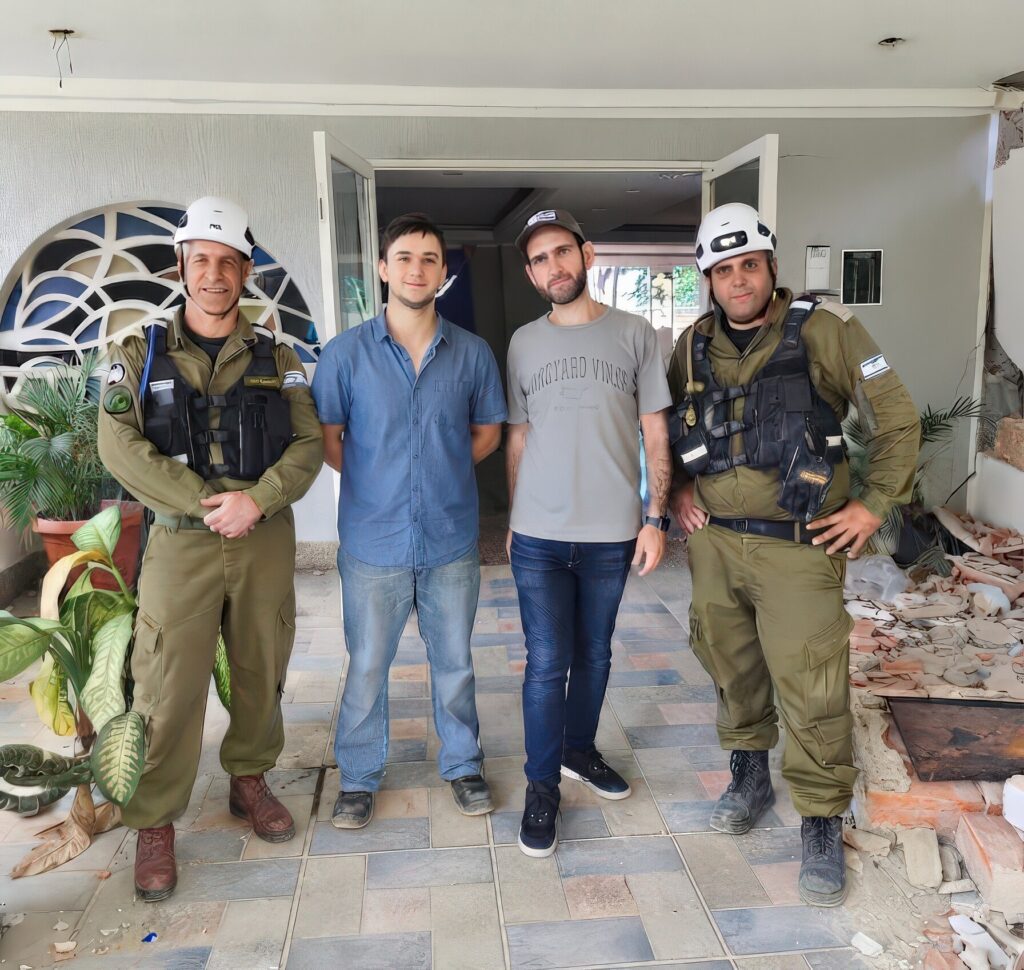
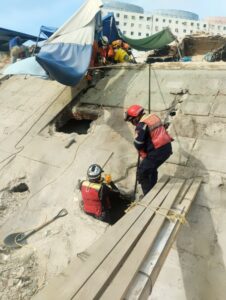
By June 27, three days after the earthquakes, they had sourced, purchased and delivered (U.S.) $20,000-worth of generators, jack hammers cutting tools and other equipment to the local search and rescue team. The funding came from WEPAH Foundation and Saludos Connection, a Houston-based organization that acquires locally-sourced medicine, food, water, hygiene, and first aid supplies and delivers to people in need.
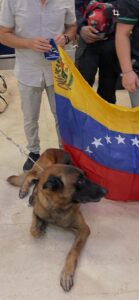
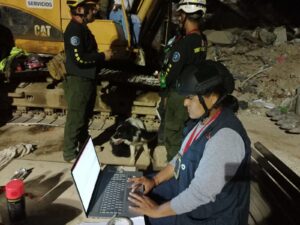
They also partnered with other volunteer groups from the United States, Colombia and Mexico who provided targeted assistance: an online registry connecting missing people with their families; a fuel relief fund donating gasoline and diesel to transport heavy machinery and supplies; and specialized canine search and rescue teams trained to recover survivors and identify human remains.
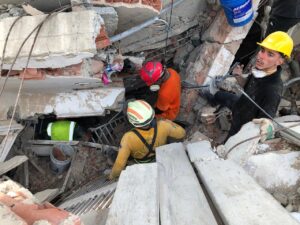
They recruited volunteer pilots and U.S.-based organizations to transport supplies and specialized recovery teams to Venezuela while also focusing on a more immediate task, identifying resources in-country and deploying them to areas affected.
“The supplies that save lives and give peace to those that remain now – tools, equipment, satellite phone and internet service, medicine, food, water, hygiene and first-aid essentials – exist inside Venezuela,” Patterson said.
“We have not exported (from the United States to Venezuela) any of the resources we have provided. We have merely used our network and oil and gas company structure and connections that we began investing in over five months ago.”
He described how the WTCSS infrastructure and connections developed for commercial purposes now serves a greater humanitarian mission.
“We are assisting groups on the ground to better organize and logistically manage assets to be the most effective possible. Each day we find new smaller groups and bring them into our group and fit them into our supply chain and support network,” he said.
“As we all know, we are better together.”
Oil and Gas Expertise
Patterson said he is privileged to be part of an industry that provides tangible support during times of crisis.
“The oil and gas industry is uniquely equipped to respond to ever-changing landscapes with multiple contingency plans to efficiently deal with large scale disasters like the earthquakes in Venezuela,” he said.
Bolivar agreed.
“The oil and gas industry has technical and logistical strength that Venezuela urgently needs right now: heavy equipment, engineers, and supply chains that can move fast under pressure,” she said.
She also identified opportunities for geoscientists.
“I would ask geoscientists to help assess soil stability and structural risk in areas still standing, since many buildings that survived are still not safe to occupy. Beyond the technical work, the industry’s existing infrastructure and relationships can move water, generators, and medical supplies into the country faster than most aid channels can,” she said.
Bolivar asked geoscientists involved with professional associations to use social media and other resources to share information about the situation in Venezuela.
“Simply keeping Venezuela visible internationally, through advocacy and continued attention, brings the resources and pressure needed to sustain the response,” she said.
Patterson said the network built around the June 24 earthquake response will provide long-term benefits.
“We do not only see this event as a devastating and terrible natural disaster; we see it as the first of many challenges we will face as we all navigate our way back into Venezuela to give a rebirth to its wealth of natural resources and amazingly resilient people,” he said.
Message for the International Community
Bolivar encouraged people providing assistance to maintain a long-term view. “Venezuela was already carrying so much before June 24. This earthquake didn’t just collapse buildings; it collapsed what little stability many families had left,” she said.
“Recovery here will take years, not months, and I ask that we not let this fade once the news cycle moves on. The Venezuelan people will need the world’s attention and support long after the cameras leave.”
As rebuilding continues, Bolivar focuses on combatting Venezuela’s humanitarian crisis.
“I ask for support to protect children and to prevent abduction and trafficking in the aftermath of this crisis. I also ask for healthcare, especially mental health support, for the families directly affected, along with housing and psychological programs: first for those who were rescued, then for those who lost family and friends, and ultimately for the broader community still living through this.”
Bolivar said the Venezuelan people will need years to process what happened.
“I think anyone who reaches that level of fear is forever changed by it,” she said.
“Seeing so many friends gone, missing, or losing their families is not something you simply process and move on from. I almost don’t want to describe it in detail, because
I don’t want anyone else to carry that same weight of sadness.”
Gonzalez agreed.
“The magnitude of this incident, the damage caused, and the way people reacted to it will change generations to come. In times of extreme need, people show their true colors.”
He asked members of the international community to support Venezuelans around the world.
“Ask your Venezuelan friends how they are doing and how they are feeling, because this is an incredibly difficult situation,” he said.
“We know that many Venezuelans are living abroad and are also affected; please reach out to them, because everyone lost something that day.”
Patterson said his group is committed to Venezuela in the long-term.
“This is our full-time job, to build an oil and gas operating and service company in Venezuela under the regulations of the OFAC office,” he said. “United States/Venezuela collaboration is crucial achieving our professional, commercial and humanitarian goals.”
Patterson credits professional societies like AAPG for helping connect the people and organizations that support his mission, responding to crisis and rebuilding the country.
“This is a marathon, and we only began in January. We have a long way to go, and we will get through it together,” he said.
“We are the oil and gas industry, and we are here to stay.”