
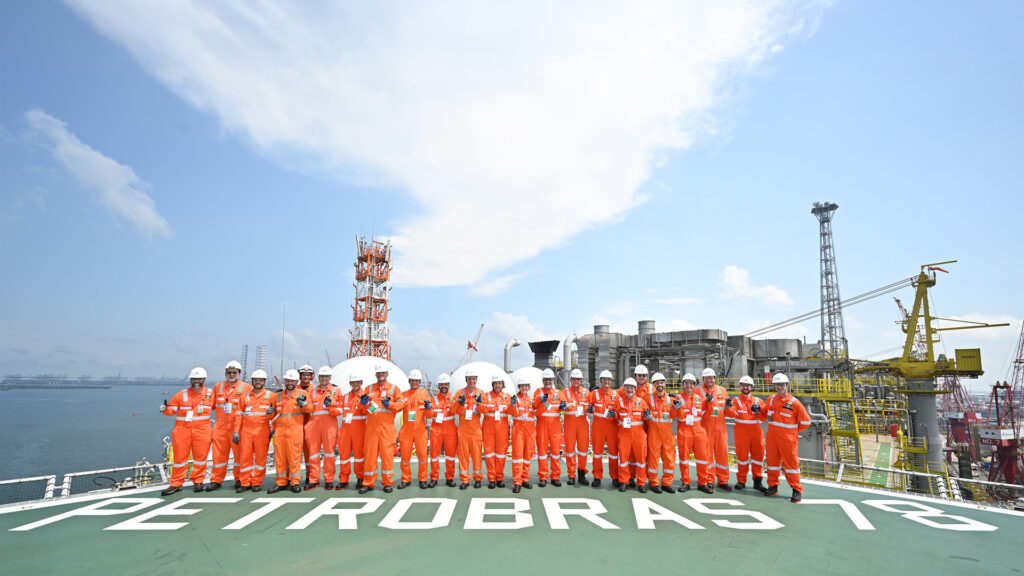
It’s been a good year for Petrobras, Brazil’s national oil company and largest employer.
The company announced a record operated production of approximately 4.2 million barrels of oil equivalent per day, and a 2.9 MMBOED production in its own operations in the second quarter 2025.
The results are a source of pride for Petrobras Exploration and Production Director Sylvia Anjos, long-time AAPG member and general chair of AAPG’s International Conference and Exhibition, taking place in Rio de Janeiro Sept. 30-Oct. 3.
“This outstanding performance, driven by world-class assets such as the pre-salt fields, is characterized by low carbon intensity and competitive costs, providing a strong foundation to support energy security not only within Brazil but also globally,” said Anjos.
A Year of Milestones
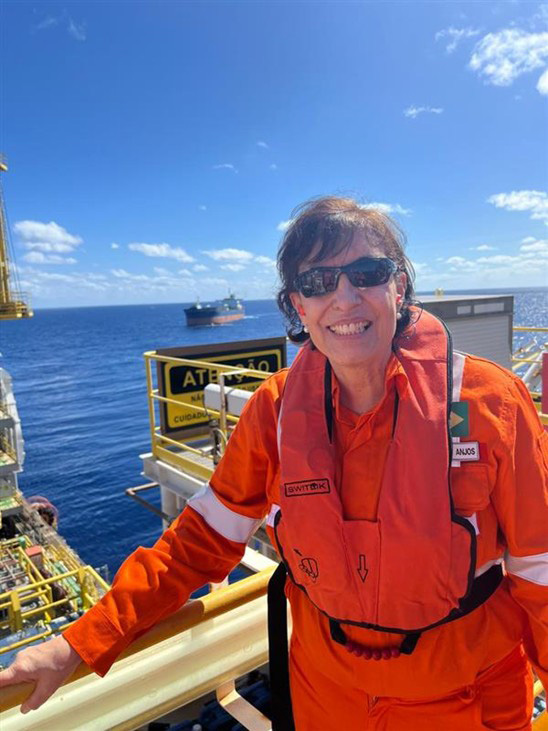
Anjos described the past 18 months as “quite special” for Petrobras.
In April 2024, the company announced a second oil discovery in the ultra-deep waters of the Potiguar Basin on the Brazilian Equatorial Margin on the border between Ceará and Rio Grande do Norte.
In December 2024, Petrobras reported the largest gas discovery in Colombia’s history, the Sirius-2 well operated in the Colombian Caribbean in partnership with Ecopetrol.
In March 2025, Petrobras announced oil discoveries in the Santos (Aram Block) and Campos (Norte de Brava block) Basins in the Brazilian pre-salt.
Petrobras maintains a strong reserves-to-production ratio of 13.2 years and a reserves replacement rate of 154 percent.
Anjos said the achievements demonstrate the company’s leadership in exploration and production, as well as its commitment to sustainability.
“Importantly, our pre-salt operations maintain low emissions intensity, around 10 kilograms of CO₂ per barrel of oil equivalent, reflecting our commitment to sustainable and responsible energy development,” she said.
Anjos noted how Brazil’s unique mix of established strengths and new frontiers that make the country one of the most exciting places for energy development today.
“What excites me most about Brazil’s energy sector is its diversity, resilience and growing role in the global energy landscape,” she said.
“In the oil and gas sector, the pre-salt continues to be a key area of opportunity. These reservoirs consistently deliver high productivity with competitive costs and lower carbon intensity, which positions Brazil as a strategic player in the global supply for many years to come.”
Carbon Capture and Storage
While Brazil breaks records for oil and gas production, carbon capture and storage gains traction with promising applications.
“Petrobras leads this area with the largest carbon capture operation in the world, reflecting our commitment to reducing emissions and advancing sustainable solutions,” Anjos said.
In 2024, Petrobras achieved a historic milestone by reinjecting 14.2 million tons of CO₂ into its pre-salt reservoirs. This volume represented more than 28 percent of the total CO₂ reinjected by the global industry in the same year, according to the Global CCS Institute.
This accomplishment positioned Petrobras as the global leader in CO₂ reinjection, operating the largest CCUS project in the world in terms of annual capacity.
A Country for All Types of Energy
Anjos is quick to point out that Brazil, a global leader in “clean energy,” was clean at the outset.
According to the Energy Institute’s Statistical Review of World Energy, 2025, Brazil has one of the cleanest energy mixes in the world, with 35 percent of its total energy coming from renewable sources.
“When focusing specifically on electricity generation, this share rises to an impressive 88 percent and we are committed to making it even cleaner,” said Anjos.
“This combination of proven oil and gas leadership and a proactive, science-based approach to the energy transition makes this an exciting and pivotal time. We can be both reliable energy providers and drivers of innovation for a more sustainable future.”
Expanding Access, Tackling Energy Poverty
Despite recent successes, Brazil also has areas for improvement.
Like many developing countries, Brazil struggles with two urgent challenges, addressing energy poverty and ensuring universal access to reliable and affordable energy.
“Despite significant progress, there are still many communities, particularly in remote and underserved areas, that lack consistent access to electricity and clean energy services,” Anjos said. “Expanding energy access is therefore a central priority for Brazil’s energy sector. Overcoming this challenge requires innovative solutions that combine infrastructure investments with new technologies and business models.”
With characteristic Brazilian optimism, she noted how energy access challenges provide opportunities for those who provide solutions.
“Brazil faces the important challenge of addressing energy poverty and expanding access to reliable and affordable energy to all corners of the country. This challenge makes the oil and gas sector essential not only as a driver of economic growth but also as a critical enabler of energy access and social inclusion,” she said.
She described how maintaining a strong and resilient oil and gas industry, helps Brazil provide the necessary energy infrastructure and resources to support expanding access, especially in regions where energy poverty remains a barrier to development.
“Tackling energy poverty is not only a social imperative but also an economic opportunity,” she said. “By expanding access, we can stimulate local economies, create jobs, and foster entrepreneurship in previously marginalized regions. This aligns with Brazil’s broader goals of inclusive growth and reducing inequality.”
A Balancing Act
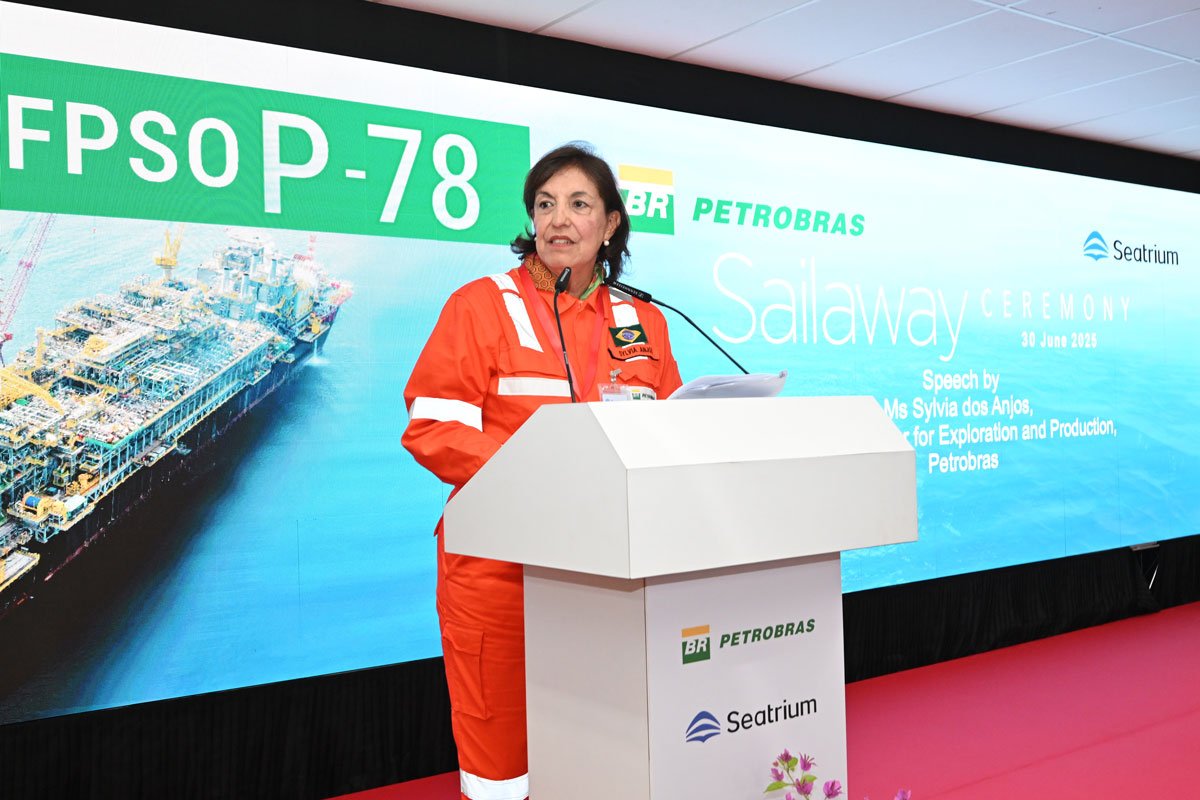
Anjos said Brazil’s energy sector faces several significant challenges that require careful management and innovation.
“One of the main challenges is balancing the need to meet growing energy demand while advancing the energy transition, as the country continues to develop, ensuring reliable and affordable energy access remains critical, especially in remote and underserved regions,” she said.
Anjos described additional challenges faced by Brazil’s oil and gas industry:
- Technical challenges remain in exploring and developing deepwater and pre-salt fields. These environments require cutting-edge technology, high investments and careful risk management to optimize production and maintain safety standards. Additionally, mature fields need constant revitalization to sustain production levels, which demands innovation and efficient asset management.
- As Brazil’s energy demand continues to grow, reserve replacement becomes increasingly critical. Environmental licensing remains a challenge, often impacting project timelines and feasibility.
- Furthermore, rising supply chain costs add pressure, making it more difficult to economically develop smaller accumulations.
- Together, these factors require constant innovation and new ways to balance growth, sustainability and cost-efficiency in the sector.
- Another challenge relates to infrastructure and supply chain complexity. The scale of investments and the demand for specialized equipment and skilled labor can create bottlenecks. Delays and cost overruns can occur, especially with global market fluctuations and geopolitical uncertainties impacting supply chains.
- On the regulatory and social front, maintaining a stable and transparent environment is essential to attract investment and foster long-term partnerships. Public expectations for environmental responsibility and social inclusion are growing, which means companies must engage proactively with communities and stakeholders to ensure sustainable development.
- Finally, workforce development is crucial. The energy sector is evolving rapidly with new technologies and digital transformation. Ensuring that Brazil has a highly skilled and adaptable workforce will be vital to maintain competitiveness and drive innovation across the sector.
Opportunities for the Oil and Gas Industry
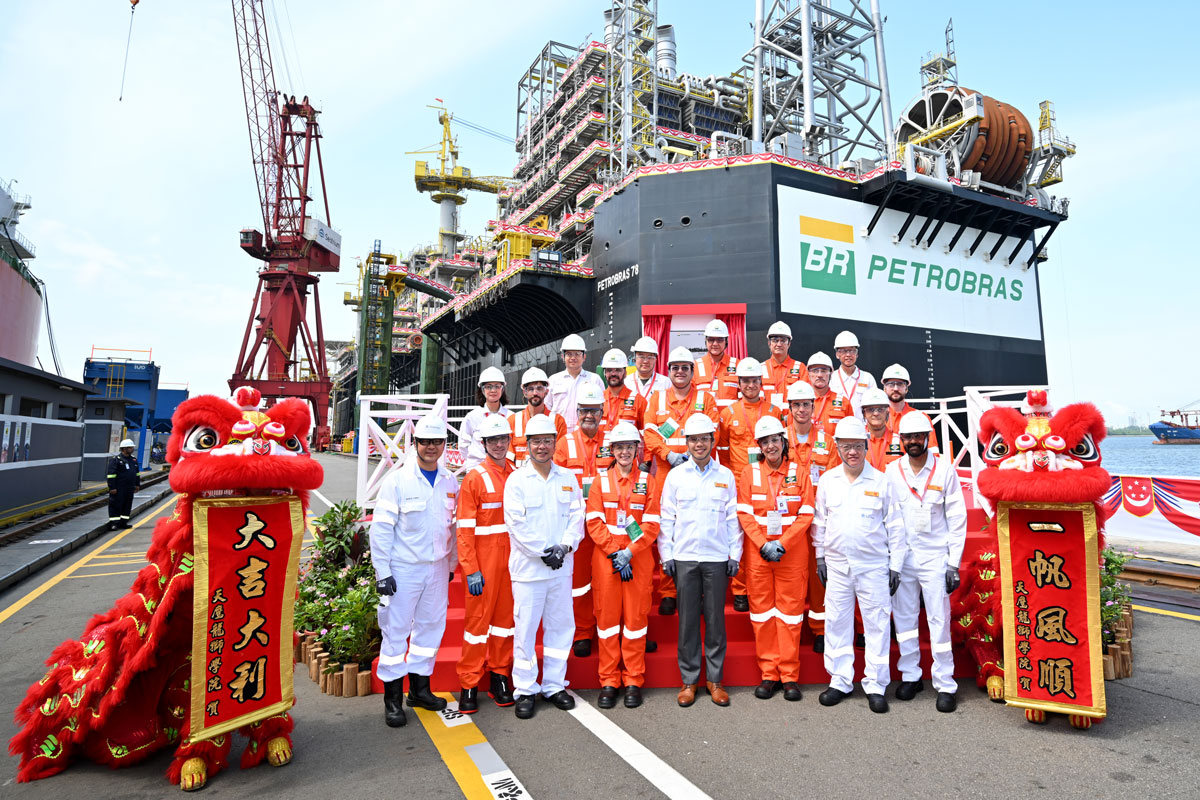
With ever increasing energy demand and a variety of hydrocarbon and renewable sources, Brazil offers opportunities for multiple budgets and objectives.
“Beyond the pre-salt, mature fields, especially in the Campos Basin, offer major opportunities,” Anjos said.
“By applying new technologies and recovery methods, we can extend the life of existing assets, improve efficiency and reduce emissions while making good use of existing infrastructure. These efforts contribute to a more sustainable and inclusive energy future, ensuring that the sector continues to support Brazil’s energy needs and economic development.”
“According to the Global Carbon Budget (2024), Brazil currently accounts for just one precent from fossil fuels of global greenhouse gas emissions, which provides room for us to continue investing responsibly in oil as an energy source, while advancing our transition toward cleaner alternatives,” she said.
She signaled opportunities in renewable energy, particularly hydropower and biofuels.
“There is growing potential to expand advanced biofuels production and develop green hydrogen, which are vital to decarbonizing harder-to-abate sectors and supporting industrial growth,” she said.
Brazil’s natural resources provide enormous opportunities for growth in wind, solar, geothermal energy and natural hydrogen.
“These resources are increasingly important to diversify our energy matrix, improve energy security, and help reach climate goals while supporting the expansion of energy access, particularly in remote and underserved areas,” she said. “With a solid regulatory framework, strong partnerships, and a skilled technical workforce, Brazil provides a favorable environment for advancing energy innovation and sustainable growth.”
Keys to Success
Anjos described the strategies Petrobras is deploying to ensure success in the current market.
Petrobras is exploring new frontiers while keeping Brazil as its number one priority.
“Areas like the Equatorial Margin and Pelotas Basin are examples where we are investing in exploration, looking for new opportunities to expand our reserves and production,” she said. “Returning to the international arena, we are focusing on Africa and correlated basins as part of our strategy to diversify and grow our portfolio.”
Anjos said Petrobas is also implementing new technologies like artificial intelligence and machine learning, as well as advanced separation technologies like high-pressure separation, or “HISEP” – a high-efficiency process that improves the separation of oil, gas and water, enhancing production efficiency and reducing environmental impact.
A History of Exploration
Anjos said Petrobras has been “an essentially exploratory company” since 1954.
“Even when it was not believed that there was oil in Brazil, we believed that we could produce oil and its derivatives in Brazil,” she said. “Our desire, since then, has been to achieve self-sufficiency in oil. Something very distant at that time, given that we were already a large consumer market.”
Anjos described how the goal of energy self-sufficiency led Petrobras explorers to discover shallow waters in the 1970s, and deep waters in the 1980s in the Campos Basin.
“The Campos Basin has earned its place in history for being the cradle of deepwater exploration and production in Brazil, becoming a global benchmark in this environment. In this basin, our company’s first FPSO (floating production storage and offloading) unit and the second in the world were installed,” she said.
Anjos described the Campos Basin as “a laboratory of pioneering technologies” brought the company international recognition from entities like the Offshore Technology Conference.
“In 2006 we discovered the pre-salt” she said. “Thanks to the unique technical capacity of our teams, we were able to overcome the challenges of this new frontier and develop the reserves in record time. “This achievement led Brazil to reach energy self-sufficiency,” she said.
Petrobras received multiple OTC awards over the past three decades:
- 1992: Innovative Production Technologies in the Marlim field, Santos Basin
- 2001: Innovations developed for production in the Roncador field, Campos Bain
- 2015: Pioneering solutions implemented in Tupi field, Santos Basin
- 2020: Innovations developed for production in Búzios field, Santos Basin
- 2024: New technologies adopted in the revitalization of the Campos Basin, with emphasis on the Marlim Field
Anjos said OTC awards reflect Petrobras’ ongoing commitment to innovation and operational excellence.
“The company stands out for its deep technical expertise and strong commitment to innovation. As a company that has operated for decades in some of the world’s most challenging environments, we have developed unique capabilities in ultra-deepwater and pre-salt exploration and production. This technical leadership allows us to deliver efficient, safe, and cost-competitive operations,” she said.
Social Outreach
Anjos also emphasized the company’s economic contributions to social, environmental, cultural projects, as well as to research, innovation and technology.
“Petrobras leads the largest socio-environmental program in Brazil, playing a vital role in the country’s sustainable development. From 2025 to 2029, we are executing over 170 socio-environmental projects across 24 states and the Federal District, covering all Brazilian biomes, with investments totaling $1.5 billion Brazilian reais (about $275 million USD).”
Petrobras is the largest cultural sponsor in Brazil, supporting diverse cultural initiatives nationwide.
“In parallel, Petrobras invests heavily in innovation, committing approximately $ 4.2 billion USD to research, development and innovation over the next five years, reinforcing our position as the country’s top investor in technology and a key driver of Brazil’s technological advancement,” Anjos said.
Future Goals
For Anjos, the invitation to serve as exploration and production director was a call to action.
“Looking to the future and working so that Petrobras continues to be responsible for about 31 percent of Brazil’s primary energy until 2050 is a huge challenge – and also a great reward. Being in this historic moment, surrounded by committed people with the same desire to grow the company, is truly amazing,” she said.
“I am very grateful to God for the opportunity to be here, seeing old dreams come true and being able to contribute to the next chapters of this journey,” Anjos added. “I want to contribute to Petrobras remaining a global reference, not only in results but also in innovation, governance and commitment to the energy transition. I hope the company continues to be a source of pride for Brazil and an example of technical and corporate excellence on the international stage.”