The engines are revving for the AAPG Foundation’s ambitious drive to impact and inspire the very future of geosciences and the profession.
The Foundation in April took an important step toward the official start of its new Capital Campaign – its first in more than 15 years – as its Steering Committee met to discuss details, plans, and strategies for the coming year.
The campaign, which has been initially promoted through a “quiet phase” that began this past winter, seeks to raise $25 million.
Its goal: To secure the financial support to “strengthen geoscience research, geoscience education, and talent development for years to come.
“And, clearly, the Steering Committee members are and will continue to be crucial to our efforts,” noted Foundation Chair Jim McGhay, “because they are the ones who provide the guidance and new ideas that will help us make our dreams come to life.”
In its first official meeting, the committee – led by chairs Pam and Dan Billman, both AAPG Trustee Associates with Billman Geologic Consultants in Houston, Pa. – heard about and discussed the concepts and objectives that are continuing to be developed by Foundation leadership and staff, under guidance of Foundation Executive Director Rick Fritz.
They also were given a sneak peek at plans for the new Foundation website, expected to be unveiled in early May.
That new site will feature not only information on the campaign, but crucial data about the profession, stories about the industry, and testimonies from geoscientists whose lives were changed by the opportunities they had to find their place in the industry.
“They (Committee members) already are providing valuable information that lets us know what works – and what doesn’t work – in our plans for the campaign,” Fritz said.
Among the campaign’s bold goals is a desire to “reinforce essential programs that develop future geoscientists at every stage of their journey.
“We know that we have set an ambitious goal,” McGhay said, “but that’s because today is unlike any other time in our history.
“Our history demonstrates that when the community aligns around a shared need, transformative progress is possible,” he added.
Committee members likewise focused enthusiastically on the necessity of the campaign’s timing, agreeing with Trustee Scott Cameron, who previously noted “the future of geosciences and of our profession have reached a critical point, and the time for action is now.”
Committee member John Armentrout, for example, echoed that need by citing examples of the challenges that universities face supporting geosciences, all demonstrating there is “a very big need, right now, to help geoscience students.”
His words were in support of data and reports that indicate how a decreasing emphasis on university-level geoscience education could jeopardize the profession’s future.
“The academic pipelines that support our field are under intense strain,” McGhay said.
Committee members not only agreed, but some took the goals to an even higher plateau, suggesting that the team consider early-on ways to ensure the money raised is not only wisely and strategically shared, but generously.
Supporting the Pillars
Fritz, in his report, shared how the Trustees and staff started developing the campaign’s goals and objectives by first identifying the “Foundation Pillars,” which help identify, define and target the needs.
Those pillars are:
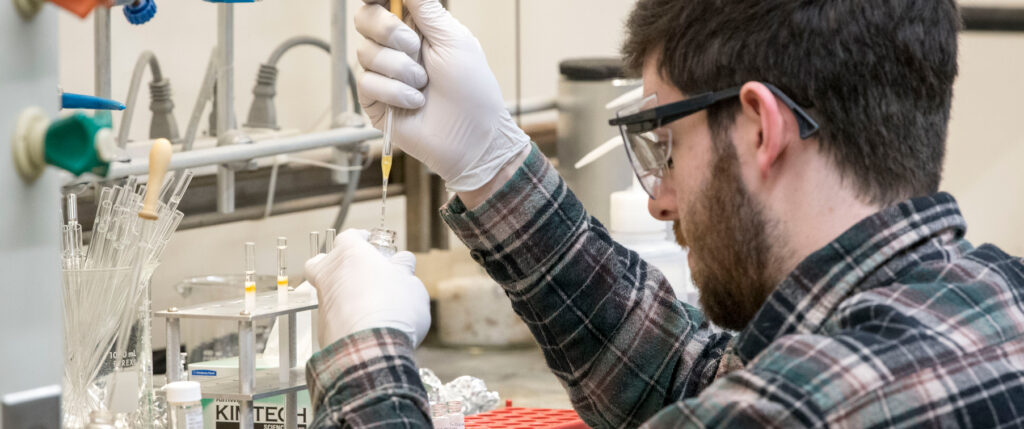
- Research – This pillar includes the new, innovative Advanced Energy Geoscience Innovation and Support program (AEGIS), designed specifically to address the critical gap in funding for applied research.
(Note: AEGIS’ initial program, announced in March, awarded eight grants, up to $100,000 each, to six universities based on research roposals submitted by geoscience professors, who will now serve as principal investigators for the respective projects and supervise the participating students.) - Education – This includes support for several geoscience education initiatives, including the recently developed Foundation Field Camp Scholarship program, as well as Grants-in-Aid and the newly rebranded Military Veterans Geoscience Scholarship Program (MVGSP).
- Outreach – This includes support for proposals that often involve programs that impact the general public, such as work with AGI on Earth Science Week, geoscience support for the YMCA’s Camp Cullen programs near Houston, the recently redefined Scouting initiative, and the popular Geoscientists Without Borders.
- Innovation – Support for ongoing efforts to recognize and reward excellence in the Association, the profession and the industry, and to promote those achievements to the public.
A unique example of this: The Foundation provides support for the “Rockd” geologic app, a popular app that provides instant access to hundreds of geologic maps from around the world – and through that funding, Rockd recently added the COSUNA stratigraphy to its program.
COSUNA (the Correlation of Stratigraphic Units of North America), developed by AAPG, provides a standardized, regionalized correlation of rock units across the United States, consisting of 570 columns across 21 charts displaying relative age, lithology and nomenclature.
“These initiatives represent a continuum of support that begins with early exposure to geoscience and extends through advanced research and professional readiness,” McGhay noted.
Details and other specific targets will continue to be developed throughout the campaign.
“AEGIS is only the start of our efforts,” McGhay said. “Much more is planned for education, outreach, and the public. Much more is waiting to be achieved.
“Many people have already provided gifts toward our efforts, and to you we say, sincerely, thank you,” he said, “but many more are needed.
“Your gifts can and will make a difference.”
For more information about the campaign and ways you can support the Foundation’s efforts, please visit the website at foundation. aapg.org.