
During the 1940s, ‘50s and ‘60s, approximately 40 massive, four-way dip anticlines in South Louisiana were discovered and produced from Miocene reservoir rock.
These 40 anticlines, parallel to the ancestral Mississippi River, were generally north to south with the southern end being Bayou Long Field in Saint Martin and Iberia parishes. The anticlines were drilled to 12,000 feet, generally, and world-class Miocene oil and gas was discovered.
Fresh out of the Air Force in 1956, I worked as a geologist for Conoco and helped Conoco develop Bayou Long and other fields in this 40-mile Miocene play, at the time (the operators) not having the desire to drill deeper to the Cretaceous sand at 20,000 to 30,000 feet.
Jim Bob Moffett, my friend and classmate at the University of Texas, would in 2013 drill to the Cretaceous sand in Bayou Long (29,430 feet), the Highlander No. 1 well.
The Cretaceous Connection
The Port Hudson field was discovered in 1975 in East Baton Rouge Parish, La., and represents the north end of the north-south 60-mile Cretaceous sand trend. While the 1940s, ‘50s and ‘60s four-way dip anticline initial drilling was to the Miocene only, the north end Port Hudson world-class discovery was in Cretaceous sandstone (1.2 trillion cubic feet of gas and 200 million barrels of condensate). It created the hottest American onshore play from 1975 to 2010, at typical depths of 20,000 to 22,000 feet.
This play was cheap to drill ($25 million per well), with absolute open flow (AOF) of typically 100 million cubic feet/day. Finding and development cost was $0.75-$1 per Mcf of gas with 24 to 26-percent porosity, and permeability of 200 to 300 millidarcies. A volumetric equation shows 60 to 80-percent recovery of original oil and gas in place.
The north end Cretaceous sand wildcatters were Moncrief (Moncrief Field), Vaughan-Carpenter Company (Morganza Field), Amoco-BP (Port Hudson Field/Judge Digby Field) and Chevron (False River Field). This North End Cretaceous sand began in 1975 and is still prospective in 2026.
In 2010, Moffett published a study predicting the ascent and future of the onshore Cretaceous sandstone trend. Paraphrased, it read, “We have a complete trend … there are more than 40 of these giant four-way and three-way closures against salt drilled in the 1940s, ‘50s, ‘60s.”
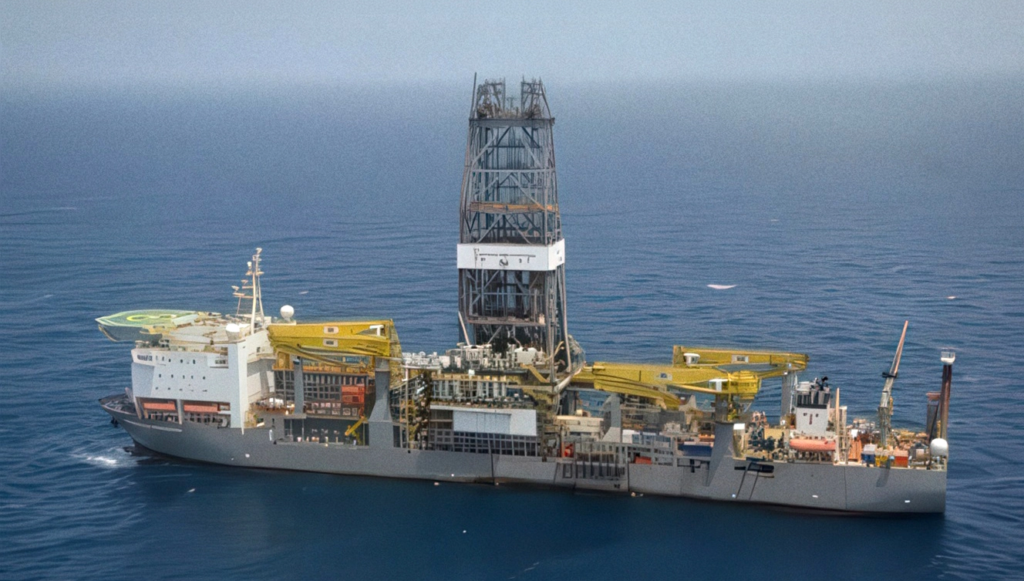
Moffett’s study was published after Exxon and McMoRan in 2010 drilled their famous Louisiana shallow offshore Blackbeard and Davy Jones wells to 30,000 feet, bottomed in and tested in the Cretaceous sand. Both wells were abandoned because of high pressures, (the type of) wells easily completed today in the Gulf of America.
Highlander’s Trillion-Cubic-Foot Promise
Moffett, determined to show success in the Cretaceous sand, in 2013 drilled the Highlander No. 1 well to 29,410 feet in Bayou Long Field, Iberia Parish, La., the same field where I worked for Conoco in 1956.
This southern-end, Cretaceous sandstone trend well was a roaring success, producing an average 50 million cubic feet daily for 10 years until a casing collapse occurred. P/2 pressure analysis of the Highlander No. 1 well indicates the well had ultimate reserves of 980 Bcf/gas, almost 1 Tcf/gas for a single well!
Following Moffett’s death, the new operator Moncrief chose not to repair the Highlander No. 1 and instead drilled the Highlander No. 2 replacement well at a cost of $246 million in a Conservation Commission-approved, 9,000-acre Unit with gas reserves similar to Highlander No. 1. Cost of gas is expected to be $1 per Mcf, similar to the northern Cretaceous trend economics.
It should be pointed out that electric log analysis shows the North and South Cretaceous trends correlate perfectly, proving a 60-mile north-south turbidite channel with some sheet Cretaceous deposition laterally to the west shown in the Cretaceous North end.
It’s the Reservoir Rock
The economics of drilling for petroleum is predominantly determined by the target reservoir rock and less by the drilling depth cost – the world’s 1.9 trillion barrels of oil production to date have come almost entirely from sedimentary Cretaceous-Miocene sandstone or oolitic reefal dolomite, conventional reservoir rock. Drilling-depth cost is less important than the reservoir rock.
A striking example of above is the relatively new 2020 drilling onshore in China’s Tarim Basin in northwest China, drilling to 35,000 feet in superb oolitic reefal dolomite reservoir rock. In 2024, China spent $42 billion (equivalent) drilling Tarim Basin ultra-deep wells, a sum greater than Exxon and Chevron’s combined 2024 drilling expenditures.
The largely undeveloped northern end (22,000 feet) and southern end (30,000 feet) of the Tuscaloosa Cretaceous sand trend in Central/South Louisiana, encompassing 60 to 100 undeveloped four-way dip anticlines, await development. The future for new global, offshore, more expensive drilling is the same calculus as the above onshore drilling of conventional reservoir rock.
The new, very deep offshore, expensive-to-drill Guyana field discovered 17 billion barrels of oil equivalent and is currently producing nearly 1 million barrels of oil per day. Two Exxon geologists, called “wildcatters” by Exxon, were interviewed and stated that the main economic factor for Guyana is “long silica Cretaceous sandstone blades”.
Similar stories exist, particularly for offshore drilling, like the Miocene sandstone successes in the Gulf of America and other offshore basins.