
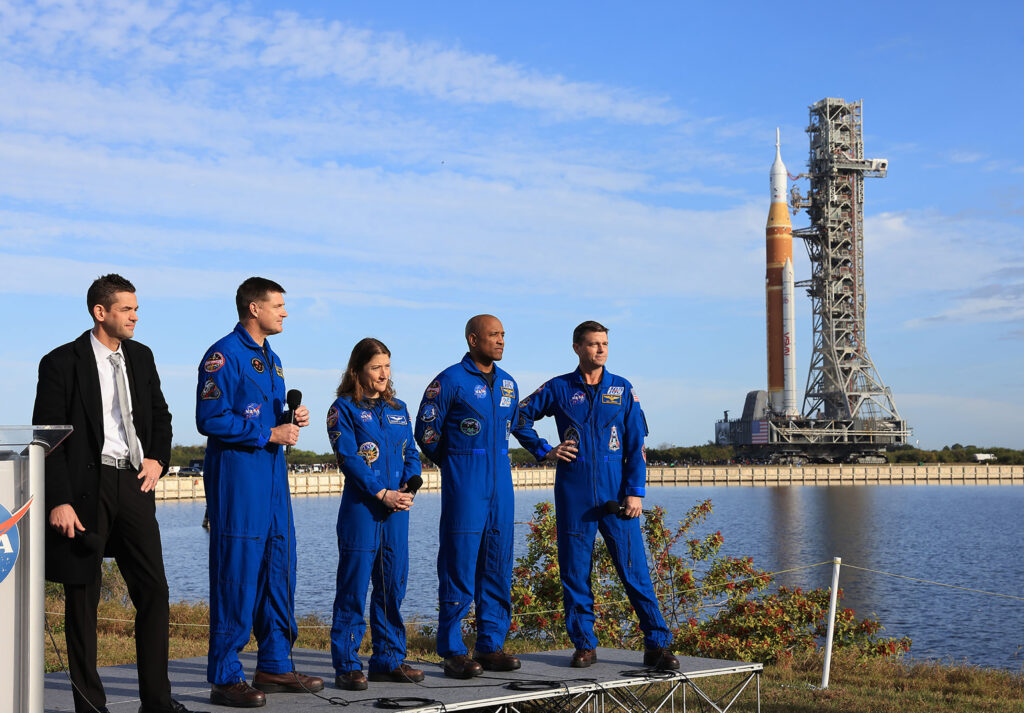
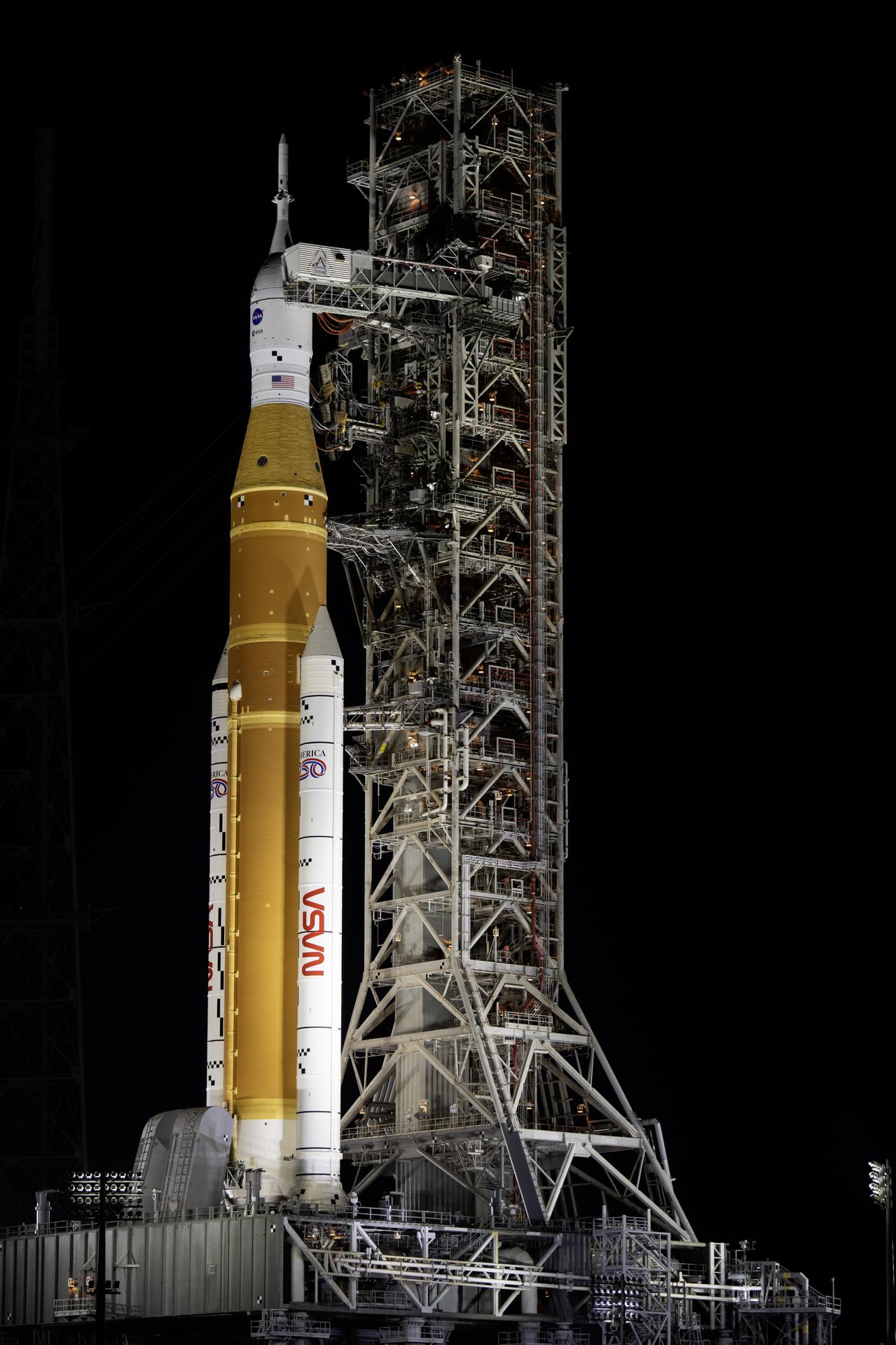
NASA’s Artemis lunar exploration program is due to take the next step toward landing a crew on the moon by demonstrating a full-up Space Launch System crewed mission around the moon with the Artemis II Mission.
The AAPG Explorer last looked at the Artemis lunar program in February 2024, and previously in July 2022. There have been significant developments since then – with the Artemis program and in the lunar space race with China, as well as plans for exploration for water ice to support human settlement at the lunar south pole.
NASA has delayed the Artemis II lunar flyby mission recently, first from its previously scheduled Feb. 5 launch date to no earlier than March 6, but now has announced that it will occur no earlier than April. NASA previously identified April 1, 3, 4, 5, 6, and 30 as potential launch days, though, during a news conference in late February, agency officials revealed they were assessing potential dates in May and June as well. The delay follows issues encountered during a wet dress rehearsal, including a hydrogen leak and technical, weather, and communication problems.
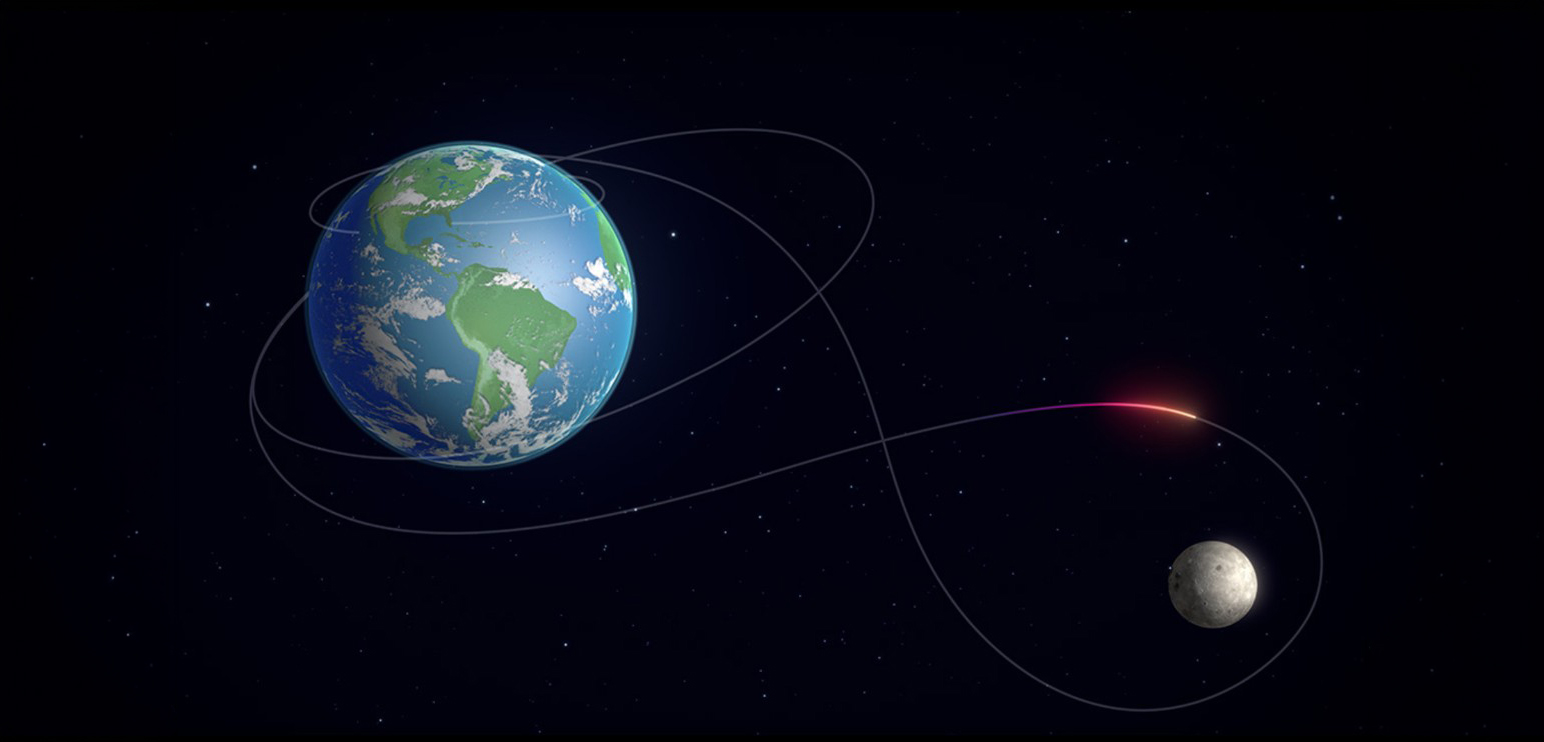
Following the historic achievements of the Apollo missions, which concluded in 1972, the current era presents the most significant opportunity in more than 50 years for returning to the moon and venturing into deep space. Building on Space Policy Directive 1 from 2017, the United States has committed to a lunar return with a permanent human presence.
This is preparation for future human missions to Mars.
Although the National Space Council initially accelerated this goal to a 2024 crewed lunar landing, to enable a sustainable presence by 2028, technical difficulties and budget constraints have delayed that original timeline.
NASA is pursuing these objectives through the Artemis program, utilizing the Space Launch System to enable this new era of exploration. Development of SLS began in 2011 as a replacement for the retiring Space Shuttle. SLS was built using a combination of Space Shuttle components, including solid rocket boosters and RS-25 hydrogen-fueled main engines. Hydrogen is a small, energetic molecule. It is the most efficient chemical rocket fuel, but is very tricky to store below -253-degrees Celsius (-423-degrees Fahrenheit).
SLS is not designed to be reusable.
The Space Shuttle flew for 30 years, from 1981 to 2011. The Space Shuttle scrubbed on average nearly once every launch attempt, with hydrogen leaks frequently being the problem.
The Artemis project has seen huge budget overruns and delays. The first SLS launch, Artemis I, initially scheduled by Congress to take place by 2016, was delayed by six years.
The current NASA Administrator Jared Isaacman announced in February that the Artemis II mission is delayed following issues during the wet dress rehearsal earlier that month, including a hydrogen fuel leak similar to the Space Shuttle and Artemis I. Isaacman emphasized that safety is the top priority, noting that such tests are designed to identify problems before actual flight. Ground crews were ultimately able to fill the rocket with liquid hydrogen and carry on with much of the dress rehearsal.
The Artemis I SLS experienced hydrogen leaks in the same location as Artemis II during its wet dress rehearsal three years ago.
“We really did learn a lot from the Artemis I mission, and we implemented a lot of the lessons learned yesterday through wet dress,” said Lori Glaze, NASA associate administrator, during a post-wet dress rehearsal press conference. “The Artemis II wet dress rehearsal was an improvement from Artemis I’s first fueling test,” she added.
Artemis I, which flew in 2022 without a crew, was a full-system test flight to prove that the rocket and capsule are mission ready for humans to travel around the moon and back. It returned safely but engineers found that the heat shield was damaged on re-entry. The crew compartment interior of the capsule was undamaged. Artemis uses the same type of ablative heat shield used by the Apollo Command Module. The design has not been upgraded from Artemis I.
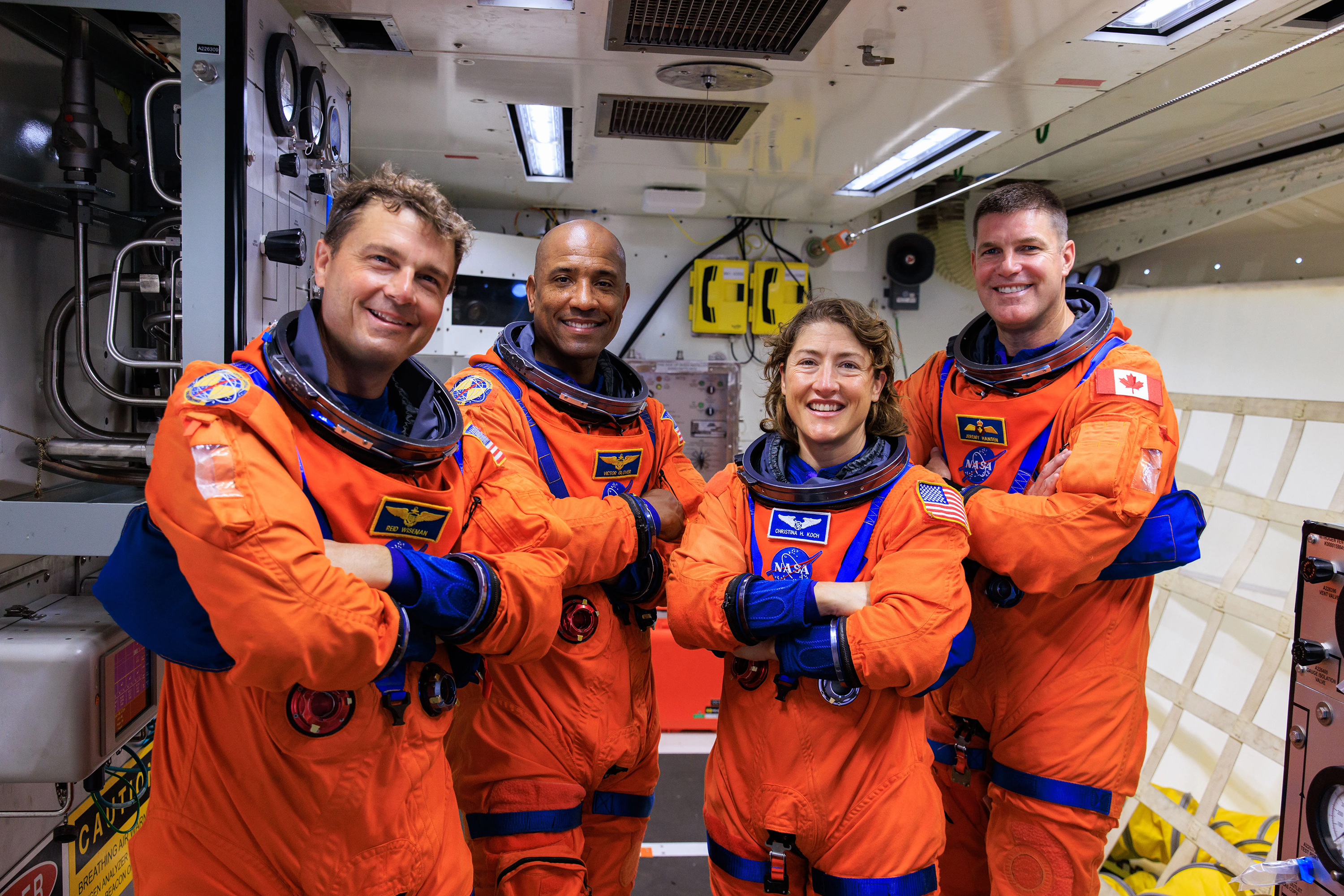
Artemis II Mission Commander Reid Wiseman told CBS News’ 60 Minutes, “You’re hitting Earth’s atmosphere at roughly 40-times the speed of sound. There is concern. We’re going to modify our entry trajectory. We’re actually going to come in a little bit hotter, a little bit faster than Artemis I. Based on the issues that we had with the heat shield, that will keep us safe.”
Isaacman remarked that the current SLS rocket, while planned for use through Artemis V, is “not the most economic path and certainly not the forever path” for lunar exploration.
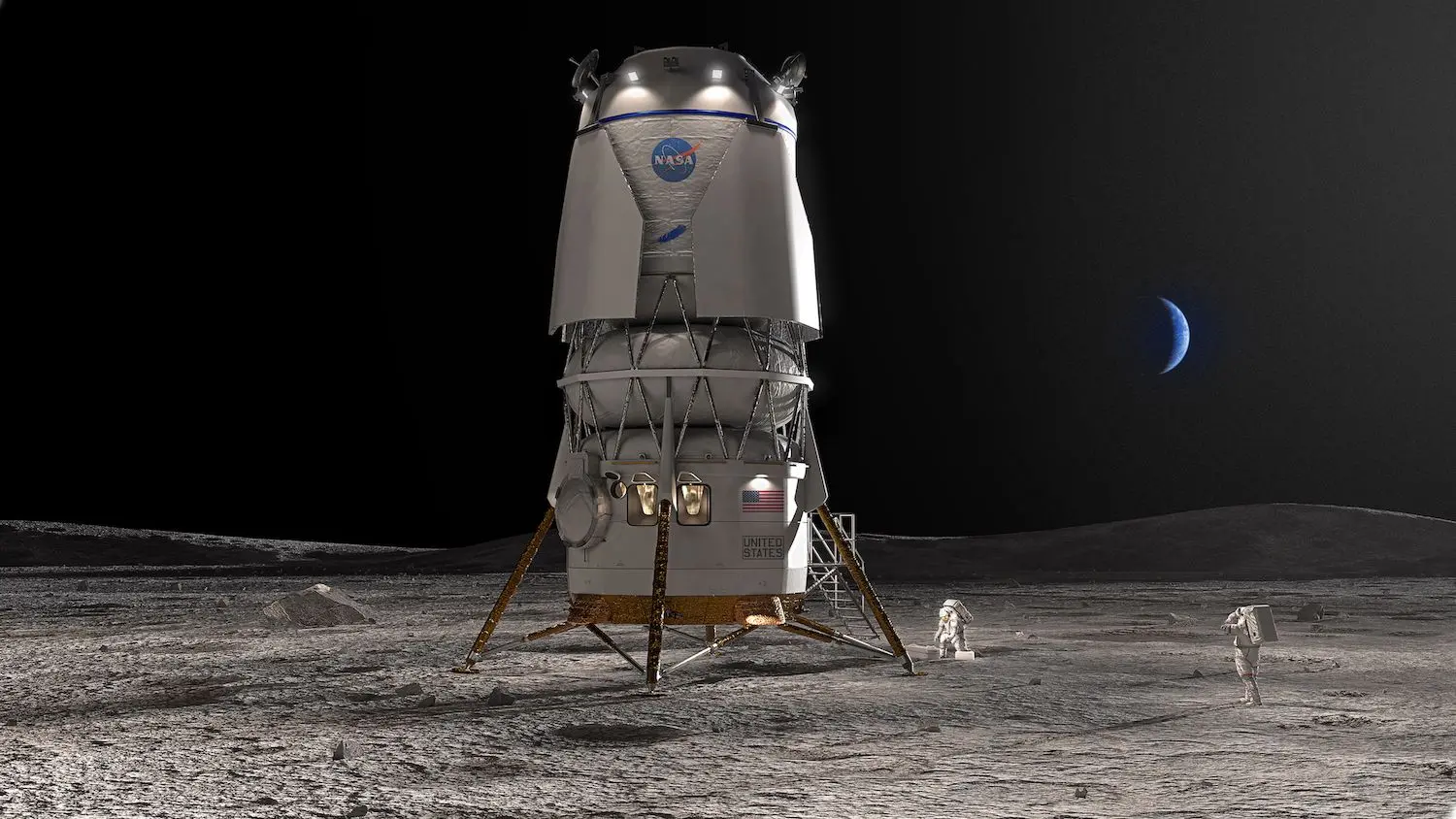
This opens the door to new technologies by private industry with the much more cost effective, reusable, heavy-lift vehicles such as SpaceX’s Starship and Super Heavy Booster and Blue Origin’s New Glenn rocket carrying Blue Moon Mark 1 and 2 lunar landers. Later in 2026, the New Glenn rocket will carry the uncrewed Mark 1 to land at the lunar south pole. The importance of the lunar south pole as a focus for future human settlement using the moon’s in-situ resources will be discussed below.
Artemis is a vital step in achieving a permanent human presence on the moon and establishing a space-based economy. Lunar missions will prove scientific and exploration technologies, provide life support for human settlements, and extract water-ice, helium-3, and minerals for rocket fuel, power, and infrastructure. Knowledge gained from developing lunar resources can be applied to future missions to Mars in the 2030s. Successful assessment of materials that can be sourced from the moon will enable scientific exploration and economic expansion into the solar system.
Doug Wyatt, chair of the AAPG Astrogeology Committee and retired NASA program manager, described the importance of Artemis: “Resources, a deep-space (gateway), strategic impacts, a scientific laboratory and platform, technology development – all are reasons for going to the moon. Discovery and exploration might lead to things we cannot yet imagine.”
The New Space Race
A high-stakes, 21st-century space race between the U.S. and China is intensifying, with both nations aiming for long-term lunar south pole habitation by the early 2030s.
The United States and the People’s Republic of China are investing heavily in lunar exploration programs aiming to establish long-term crewed scientific bases on the moon. NASA and its partners will employ the SLS heavy-lift rocket, the Orion spacecraft, and SpaceX Human Landing System. NASA’s goal is to land a crew on the moon by 2028, while China plans to do so by 2030.
SpaceX’s Starship HLS was chosen as the lunar landing system for Artemis III, the first lunar crew landing of the Artemis Program.
It is behind schedule.
SpaceX’s Starship is a revolutionary reusable space vehicle that could eventually replace the extraordinarily expensive non-reusable SLS. It is designed to land more than 100 metric tons (220,000 pounds) of cargo to the lunar surface per mission. It requires yet-to-be- demonstrated, on-orbit refueling with tankers, but enables the HLS Starship to deliver massive habitats, rovers, and infrastructure for long-term human lunar settlements.
Jim Bridenstine, NASA administrator at the onset of the Artemis program, told Congress in September 2025 that “America’s moon-landing system has grown too complicated. (It) is extraordinarily complex. I’m saying it is unlikely that we will land on the moon before China.”
Scott Pace of the National Space Council told 60 Minutes, “Establishing a presence on the moon is important. Who gets there first this century is not.”
However, China getting there first “would be massively embarrassing,” he acknowledged.
“I don’t downplay the embarrassment and bad headlines and everything else that would come from the Chinese returning to the moon before we’re able to do so. That’s a relatively short news story,
whereas who sets the rules for the space domain, who is there permanently – that’s a story for the next century,” he explained.
Pace said the competition with China should force NASA to rethink what he calls “an unwieldy and expensive approach.”
Wyatt described the importance of the United States achieving a lunar crew landing before China.
“China has openly inferred that they want to claim to significant areas and resources of the moon,” he said. “Just like Antarctica, the moon must remain for all nations. Second, any anti-space weaponry on the moon can dominate against others. All technological nations understand this. Thirdly, it is the ultimate space-based platform for Earth observation and communications.”
The Unites States and NASA are not alone in their interest of founding a permanent lunar station. The Artemis Accords were established in October 2020. More than 60 nations have signed the Accords, establishing a multilateral framework for peaceful, sustainable, and cooperative space exploration alongside NASA and its core international partners, including the European Space Agency, Canada, Japan, and the United Arab Emirates.
Russia and China, notably absent from the Accords, have since agreed to work together on the Chinese International Lunar Research Station concept, toward China’s 2030 goal.
The New Era of Lunar and Deep Space Exploration
It is an exciting time to be an arm-chair space enthusiast or a professional working in the rapidly evolving space industry. Water is a resource more valuable in space than oil is on the Earth. The economy of extracting water resources from the moon or deep space asteroids can be best illustrated by looking at the cost of getting water from the Earth’s deep gravity well to low-Earth orbit, and especially the cost to transport that water on to the moon for use in future lunar settlements.
Based on 2025–26 industry estimates, the cost to send water to space depends heavily on whether it is going to low Earth orbit or the moon. The cost to deliver water to LEO is approximately $1,500 to $7,500 per kilogram. The cost to deliver water to the lunar surface is approximately $300,000 to $1.2 million per kilogram.
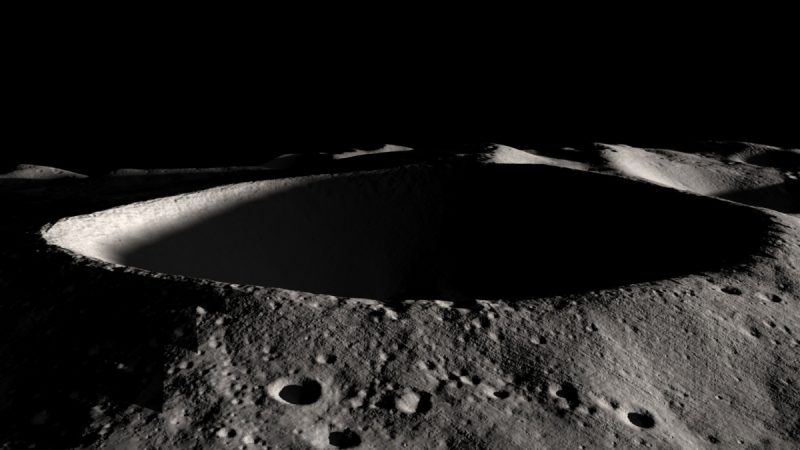
Let’s look at one of the most studied lunar south pole craters, Shackleton Crater, 21-kilometers wide and 4.2-kilometers deep. Estimates vary significantly based on detection methods, with some analyses suggesting concentrations up to 10 percent in the top meter. That could yield 178 million kilograms of water in localized, specifically identified permanently shadowed regions, or “PSRs.”
To underscore the potential economics of sourcing water at your potential settlement site near the lunar south pole instead of shipping from Earth, let’s look at a breakdown of costs to send water to low Earth orbit versus to the moon.
In the early 2000s, the cost was close to $50,000 to send 1 kilogram of water to low Earth orbit with expendable rockets. Currently, using SpaceX Falcon 9 reusable rocket boosters, the cost is roughly $2700 per kilogram. With reusable heavy-lift rockets such as SpaceX Starship or Blue Origin’s New Glenn, in the near future costs are projected to drop to below $600 per kilogram.
Industry rates for delivering payloads to the moon’s surface using expendable rockets are approximately $1.2 million per kilogram, although some private contracts for smaller payloads could be lower at about $300,000 per kilogram. SpaceX is targeting much lower, high-volume costs of $100 per kilogram ($100,000 per metric ton) for future reusable Starship cargo missions to the moon.