
Standing on the shoreline, facing south. It’s a perfect December day on the chromite-cobbled beaches of Limassol, Cyprus. Mostly sunny, light breeze from the west. Tuned 5 degrees east of north for the local declination, the Brunton bearing reads 205 degrees toward Zohr. Zohr, the approximately 450 million- barrels-of-oil-equivalent gas giant, is about 175 kilometers southwest of where I’m standing.
In AAPG Memoir 125, “Giant Fields of the Decade: 2010-2020,” edited by Sternbach, Merrill and Dolson, Andrea Cozzi and 11 co- authors describe the “Zohr Giant Gas Discovery” as a “A Paradigm Shift in Nile Delta and Eastern Mediterranean Exploration.”
Exceedingly few explorers thought that giant carbonate fields lurked in the Nile Delta and Eastern Mediterranean. This exploration province was designed for the gravity deposit specialists, those who obsessed about turbidite reservoirs and the plays they create. Incised slope channel systems. Frontal splay complexes near the base of slope to basin floor. Targets created by turbidite infill on the uneven upper surface of mass-transport complexes. As a result, explorers here almost exclusively studied analogous deepwater siliciclastic systems such as those exposed in the Taranaki, Alpine Foreland, Tabernas, Western Irish Namurian and Magallanes basins, among others. The paradigm pre-2015 was emphatic: the Eastern Mediterranean has no place for carbonate exploration.
Until Zohr-1 hit.
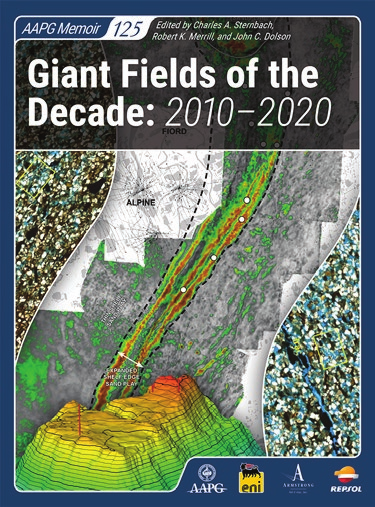
Few people imagined a play like Zohr. One of the world’s finest explorers, Mark Shann is one of them:
“Prior to the Zohr discovery in 2015 the industry focus was on exploring for Tertiary deepwater turbidites in a set of Syrian Arc inversion anticlinal traps across the deepwater offshore Nile Delta region. Despite the lack of modern carbonate reefs in the relatively cold waters of the Mediterranean today, there were three basic observations that pointed to a buried carbonate play in the Eastern Mediterranean – 10 years before the Zohr discovery:
- Ironically the first time I thought there might be a carbonate play in the Mediterranean was on a 2003 deepwater clastics field trip to the Tabernas area of southeast Spain with Kick Kleverlaan. On the first day, close to Almeria, one of the setting-the-scene field stops was to see the Messinian evaporites in outcrop which were represented by thick gypsums overlying Miocene reefal carbonates. The reefal carbonates surprised me at the time and I remember noting down in my field sketch book – look for a pre- Messinian carbonate play!
- One year later in 2004, I helped put together a set of regional 2-D seismic lines across the offshore Nile Delta as part of a BP internal exploration training class which BP ran across its global E&P subsurface teams. One of the objectives for this seismic interpretation exercise was to spot there were two types of offshore pre-Messinian structures present in the offshore Nile Delta: (a) the classic inversion anticlines with deep rifts overlain by inverted deformed deepwater turbidite beds and (b) a second set of more isolated highs characterized by strong pelagic onlap along their flanks. These observations then led to a class discussion as to whether there was second “isolated old high” play type present and what reservoir types might be present, ergo, carbonate build ups.
- And staring us all in the face to the north of the Nile Delta lies the huge Eratosthenes Seamount to the south of Cyprus. On the same 2-D seismic dataset, clear carbonate buildups were evident over its crest.
So, in summary, the basic observations for a pre-Messinian carbonate play were made 10 years before Zohr was discovered and documented as such. Ironically one of these “isolated old high” structures at the time was called the “Atoll Prospect.” This carbonate play was not without its geological risks, especially in carbonate reservoir quality and areal scale/footprint. But to the north, ENI subsequently found a larger old onlapped high on poor quality 2-D seismic data and bravely drilled it in 2015 and discovered 20 trillion cubic feet of recoverable gas.
Why was this carbonate play dismissed for so long?
I think it was for two simple reasons: one being the geological opinion at the time that carbonates do not flourish in front of large-scale clastic deltas “muddy waters concept,” and second being that there was an active and successful exploration campaign focused on deepwater turbidites in Egypt at the time and that was the accepted play being invested in.
Absorb New Information
As scientists, we’re taught in our academic and industry training to evaluate evidence, interpret the evidence and provide a “value- add” recommendation. Sometimes the evidence is vague, or low- resolution, as Hernández-Molina described in his interview in The Explorer’s Mindset: Lessons in Leadership in Applied Geoscience and the Energy Industry. This simple workflow is rooted in our training. Value can be assessed from a few perspectives, from increasing cash flow, the standard definition taught in finance classes, or by saving the company a lot of money by not spending money where it wouldn’t create more money. (More on that topic in a future article.)
Because we need to make decisions, and often need to make them fast (it makes little sense to look beyond several months in exploration since valuable opportunities often don’t last much longer on the market before they are snatched by competitors), we can miss information that is counter to our interpretation, unintentionally, because the data is not readily available or the resolution is not there. Or, we can straight-up ignore new information, even though, in our gut, we know the new information will change our investment or drilling thesis.
Whatever … you win some, lose some.
But in our business, it doesn’t take long to run out of money if you continue to drill dry holes. So when new evidence presents, and is counter to the thesis, we might want to change our minds.
K. W. Rudolph, retired chief geologist of ExxonMobil, defines a route for success “gateways” when presented with new or contrary data in the preface of Deepwater Sedimentary Systems: Science, Discovery and Applications, published in 2022:
“In my 40 years of trying to understand deepwater depositional systems, my appreciation for the variability between systems, within systems, and within reservoirs has grown tremendously. This heterogeneity puts a premium on applying multiple models, methods, and datasets; moreover, integration across disciplines and keeping humble in the face of uncertainty are two keys to sustained success. While this complexity is a challenge, it also offers gateways in terms of new concepts and exploration/ development opportunities.”
The Turbidite-Contourite Continuum
So almost exactly one decade after the discovery of Zohr, here we are in Limassol, Cyprus: more than 75 specialists from more than 20 countries representing supermajor and independent oil and gas companies, government agencies and academic research institutions gathered for the 2nd Advanced Course on Deepwater Sedimentary Systems, held by the International Association of Sedimentologists in December. This conference is affectionately nicknamed “Deepwater Davos” as a reverent nod to its international prestige, bringing in the brain trust of offshore exploration scientists for a week of daily 12-hour-long meetings on technical topics. Conversations and debates on deepwater exploration continue late into the evenings. At the conference, we observed a new paradigm shift. Not one from turbidites to carbonates, like Zohr, but a shift of focus from turbidites to contourites. For too long, contourites have been largely ignored by operators and service companies.
The convener starts with a simple question:
- “What is a contourite?” asked F. J. Hernández-Molina to the delegates in Limassol.
- There is an old definition by Faugères, and a new definition. The new definition by D. V. Stow reads: “sediment deposited or substantially reworked by persistent action of bottom currents.”
- We’ve known about contourites for years; they’ve been on companies’ radars for at least 45 years. So why are we associating them with a recent paradigm change?
Tortue-Ahmeyim and Coral-Mamba
Did I forget to mention that 2015 was a great year for exploration, and for paradigm change?
That same year, the 25-TCF Greater Tortue-Ahmeyim gas giant was discovered by McGuinness and her team at Kosmos. The Cenomanian reservoirs are chiefly turbidites that were reworked by bottom currents. The effect of the reworking concentrated coarser sediment, ultimately leading to higher reservoir quality and higher net:gross. In other words, this process of bottom-current reworking cleans the gravitational deposits and leaves a better product. Greater Tortue-Ahmeyim is also described in AAPG Memoir 125. Kosmos brought the field online just over one year ago.
And there is another giant worth noting that is about the size of Prudhoe Bay: Coral-Mamba, discovered in 2011-12 and estimated at 100 TCF. This is an Eocene deepwater channel complex that was created by gravitational sedimentation simultaneously reworked by persistent north-traveling bottom currents. The combined effect of these deepwater processes was the same as in Tortue- Ahmeyim: higher reservoir quality and higher net:gross.
Read about it in “A new world-class deep-water play-type, deposited by the syndepositional interaction of turbidity flows and bottom currents:
The giant Eocene Coral Field in northern Mozambique,” published in 2020 by Fonnesu and co-authors in the journal Marine and Petroleum Geology.
Just so you onshore Permian folks don’t fall asleep already, there are contourite systems in the Delaware. Just ask Kerans’ protégé, Buddy Price, on his dissertation at the Jackson School.
F. J. Hernández-Molina and The Drifters Research Group, initiated at Royal Holloway, University of London, now call home base Granada, Spain with the Andalusian Earth Sciences Institute. They are the longest-running joint industry project on deepwater sedimentary systems specializing in bottom currents.
Do paradigm changes require large groups of people voting on what is important to exploration?
In a word, no. Tillerson also has a quote on this democratic process of scientific advancement during his 2015 interview in the DC Economic Club with Rubenstein. It doesn’t take more than a few creative thinkers to consider new evidence that goes against the prevailing sentiment of the time to drill Zohr, Tortue-Ahmeyim, and Coral-Mamba.
The tight-knit, creative group of scientists of The Drifters has presented compelling new evidence on deepwater bottom currents. The Drifters’ reach has expanded and includes professionals from all over the world, sharing ideas at Deepwater Davos, working to crack the code on how gravitational and bottom currents interact to form the best reservoirs. Where were large deltas feeding sediment in a restricted basin setting? At what times in Earth history were bottom currents initiated and energetic? Who will be the next explorer to solve this problem and find the next giant?
What will you do with this new evidence on how deepwater systems operate?
Talk with Your Peers
If you weren’t convinced that we’re still in the midst of this paradigm change, and that all operators have integrated the new advancements in understanding deepwater processes and the effects on the exploration business, then let me relate one story.
At a recent conference in Houston, I was talking with colleagues, well-versed experts in intergalactic exploration.
“Where are you going next?” one asked. I replied, “Cyprus, for Deepwater Davos with Javier and The Drifters.”
“Contourites never work,” was the reply. Others then listened closely.
I should’ve left it.
“What about Coral-Mamba? Tortue- Ahmeyim?” I replied.
“What are those?”
Some discoveries don’t display on every company’s radar, but discoveries of that size should. The ramifications for not keeping up to date on the latest advancements in geologic systems are significant. When a company doesn’t change its mind when given new evidence, thus enabling the company to make giant discoveries and replenish reserves, the company might be forced to acquire another company to make up for this deficit. Today, the price tags for some acquisitions are north of $50 billion to replenish reserves. Acquisitions like this do not always match the value over the long term compared to organic growth at the drill bit.
I hope this brief article has encouraged you to consider the new evidence provided on deepwater processes, their deposits, and their role in the discovery of giant fields. It’s time for your teams to consider new data that goes against the flow of old paradigms to unlock new provinces rich in resources.
This article is the second of the monthly articles on The Explorer’s Mindset prepared for AAPG Explorer. This column is based on the second edition of the book The Explorer’s Mindset: Lessons in Leadership in Applied Geoscience and the Energy Industry. Over the course of the series, we’ll be looking at the traits of the successful explorer, their leadership qualities and what has enabled them to make game changing discoveries.