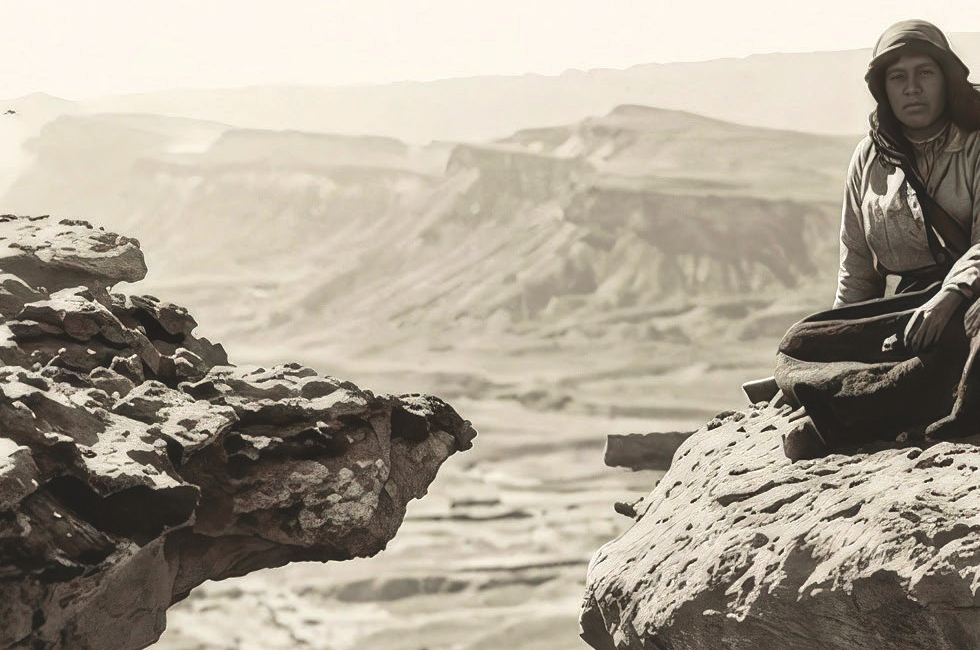
After the United States entered World War I in 1917, women began to enter the profession of petroleum geology. At that time, many men in the oil and gas industry volunteered for service or were drafted into the armed forces. To fill positions, oil and gas companies began to hire women. In former AAPG President Robbie Gries’ book, Anomalies, she honors Oklahoman and Texan women who worked in the petroleum industry. Women who worked in Tulsa – the center of the petroleum universe during WWI – were invited to attend AAPG annual meetings and become members. Anyone who worked outside of Tulsa either didn’t know about the annual meetings or didn’t attend, due to distance.
There are many women who worked as geologists in the western United States who have been largely forgotten by history.
Roxana Petroleum and the Cheyenne Office
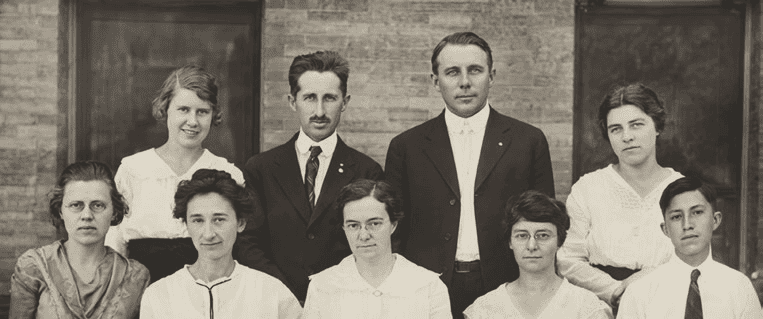
In the early 1900s, Royal Dutch Shell opened a U.S. subsidiary, Roxana Petroleum. Roxana, headquartered in Tulsa, opened offices in the major oil producing areas in the United States. The Roxana office in Cheyenne was opened by Max W. Ball, general manager and chief geologist. Ball (see Historical Highlights in the July 2024 Explorer) was hired by Roxana in 1917 because of his extensive experience in Rocky Mountain geology. He quickly began hiring staff for the office and by July 1918, the office in Cheyenne had 24 employees, including five geologists, five assistant geologists, two office geologists, staff for leasing, and general office staff.
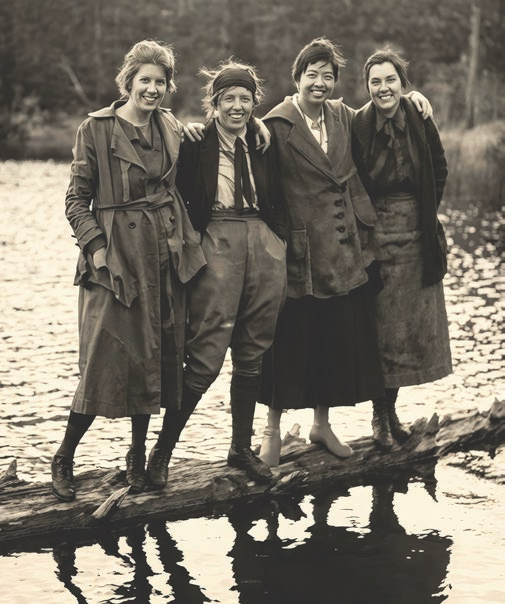
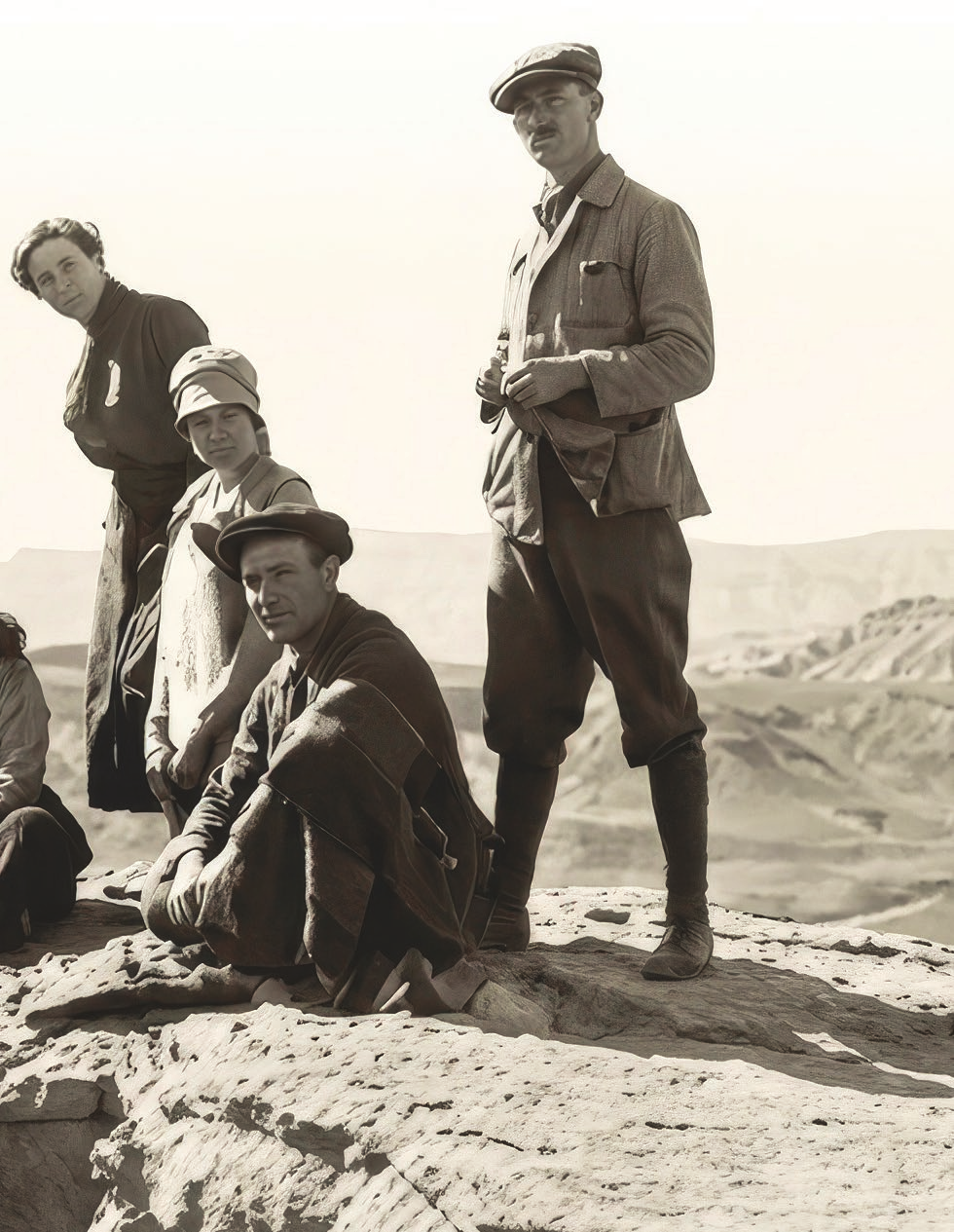
Right: Copeland Lake, Colo. From left: Elsa Lund, Vera Lund, Capitola Allison, and Floy Swain (Roxoleum, 1919, vol. 2, no. 7, p. 20). DeGolyer Library, SMU.
Roxana was a leader in hiring women, mostly due to the wife of chief geologist Richard Conkling, Winifred Conkling. She was a geologist by training, who was prevented from working as a geologist since she was married. To work around that frustration, she convinced her husband and the president of Roxana, Willem A.J.M. van Waterschoot van der Gracht, to hire women in many of the company offices. This especially worked well since men were going off to the war. She would go on to recruit women from her alma mater, the University of Chicago.
At the time, I. C. White’s anticlinal theory of oil accumulation drove geologists forward in the search for anticlines. To find anticlines, new techniques were invented in the early 1900s by U.S. Geological Survey geologists. These techniques involved using plane tables and alidades to survey topography, creating shallow structure- contour maps, and then creating deeper structure-contour maps by projecting the shallow contours down to the targeted oil-bearing geologic units. A geologic surveying crew consisted of a geologist paired with an assistant geologist. One geologist would operate the plane table while another would operate the stadia rod. Both geologists surveyed elevations of various geologic outcrops. The geologic surveying crew would also survey topography and create shallow structure- contour maps of key marker beds. The preliminary maps and elevation data were brought back to the office.
In Cheyenne, office geologists would redraft and recontour the collected data, merging the different surveys together. The end products were surface topography maps, along with maps of the structure contours of various geologic units that outcropped at the surface, both of which were used to identify anticlines. Using these techniques, the Cheyenne office identified numerous anticlinal structures across Wyoming and Colorado. Roxana drilled a number of wells there between 1918 and 1921, and the Cheyenne office was closed by the end of January 1922. Before its closure, the office staffed several notable women early in their careers.
New Geologists
Ethel Vera Lund (known as Vera) was the daughter of Anders Gustave and Ida Lund, both emigrants from Sweden. Anders Lund was a residential architect with his own business, designing homes and small businesses in the Chicago area. Lund was born on Feb. 23, 1893, in Chicago. She attended the University of Chicago and graduated in 1916 with a bachelor’s in geology. After graduation, Lund attended the Chicago Normal School with the intention of becoming a schoolteacher. She had applied for her U.S. passport by the end of the summer of 1917 to escort her ill teenage brother for treatment in Sweden. This was a very brave task at the time – the German naval blockade of Great Britain was at its height, with U-boats sinking many ships in the Atlantic Ocean and North Sea. While Sweden was a neutral country during WWI, 280 Swedish ships were sunk o become a respected architect from the mid-1930s through the 1950s.
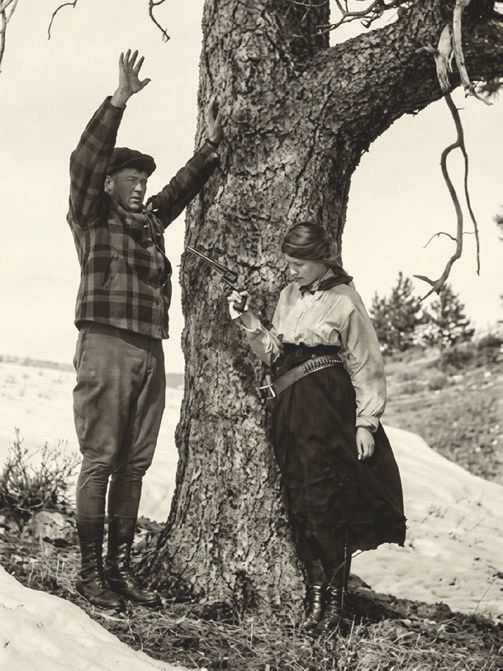
Other geologists in the Cheyenne office included Marian Ream, Ada Inglis, and Harriet Williams van Nostrand.
Ream came from Chicago and was a graduate of Northwestern University, where she studied mathematics and zoology. She worked alongside Lund, drafting and compiling the geologic survey data; at one point, she was tasked to research the mathematics of folding rocks to help find anticlines. Ream left Roxana to work for the Young Women’s Christian Association in Hastings, Neb., which engaged U.S. soldiers and sailors in entertainment activities during WWI.
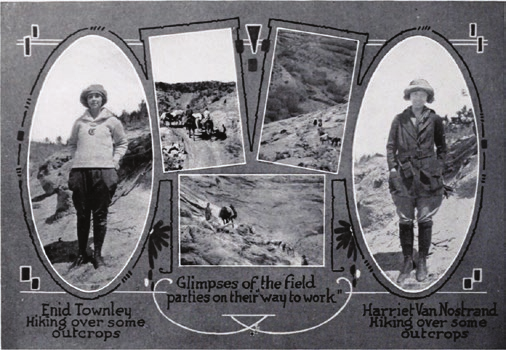
One of the last geologic draftsmen hired, Inglis was a University of Michigan graduate with bachelor’s and master’s degrees. Harriet van Nostrand was an honors undergraduate in geology from Barnard College who went on to do graduate work at the University of Chicago. At Barnard she was an athlete, participating in the basketball team, winning races in the high hurdles, as well as a member of the mathematics club. At the University of Chicago, van Nostrand’s thesis focused on the Lower Devonian fauna of Missouri.
Two women in the Cheyenne office had academic training in geology but were employed in non-geological positions: Olive M. Jones and Gracia Webster.
Jones originally was from Wisconsin and trained as a teacher, then earned her bachelor’s and master’s at the University of Colorado. While in graduate school and afterward, Jones worked as a secretary for the Colorado Geological Survey and compiled the Bibliography of Colorado Geology and Mining in 1914. She left the CGS to return to work as a high-school teacher at Fort Collins High School. Jones then left teaching to work for Roxana Petroleum’s scouting department in 1918. During this time with Roxana, Jones listed her occupation as “geologist” in the 1920 U.S. Census. When the Cheyenne office closed, Jones returned to teaching again. She continued to teach for the rest of her career, eventually retiring in Denver during the early 1940s.
Webster was a 1916 University of Chicago geology graduate along with Vera Lund and attended the Chicago Normal School with Lund in 1917. Webster worked briefly in the Cheyenne office as a representative for the president of Roxana. She eventually married John Bartram, another Roxana geologist. Jones and Webster showed that there were alternative careers available for women who had university training in geology.
Social and Political Activity
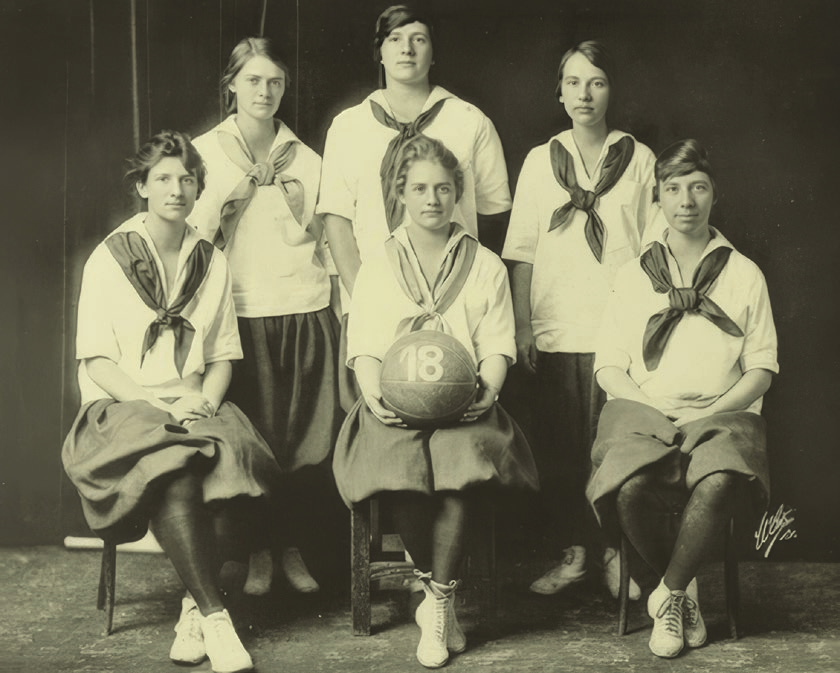
Women at Roxana were very social outside of work. They coordinated numerous parties, many of which were held at the Ball residence, and participated in frequent athletic and outdoor activities. During the summertime, the Roxana women played volleyball at the Ball residence; during the fall, winter, and spring, they played basketball at the YWCA. As for outdoor activities, they had picnics at Granite Springs (today’s Curt Gowdy State Park) and went swimming and boating at nearby lakes. They also hiked in the Rocky Mountains, visited Rocky Mountain National Park, and traveled to Denver to view plays. The Lund sisters’ travels included Chicago for the holidays.
The YWCA was one of the centerpieces of their social life. The Roxana women helped both to establish the YWCA in Cheyenne and to raise more than $25,000 for the building. Along with the basketball games at the YWCA, they pushed for municipal tennis courts to be built by the YWCA. Another external activity at the YWCA was organizing Cheyenne businesswomen. More than 700 women attended classes on recreational, educational, and religious topics.
The Roxana women engaged in social activism, contributing to the war effort through the Red Cross and the YWCA. Some of their contributions for the war effort included donating money to Belgian orphans’ funds. They knitted sweaters,socks, and other garments to support Belgian refugees. The Roxana women also raised money for the Red Cross by charging for office infractions, such as not putting away papers and maps, not putting away inks, and not turning off lights.
Vera Lund challenged societal norms by wearing men’s clothing at a time when almost all women wore dresses. There are several photos where Lund was dressed in men’s clothing – pants, shirt, and tie. In most of the other photographs, none of the other women wore men’s clothing.
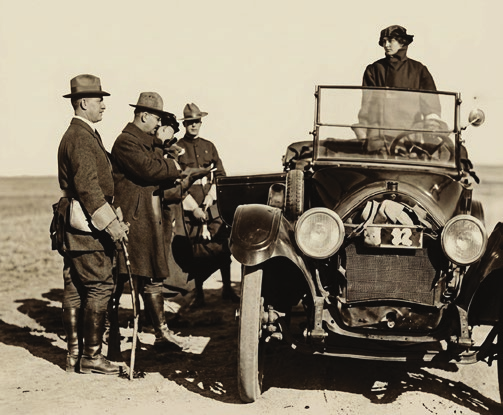
The late 1910s were a dynamic time for legislative challenges in the United States. Prohibition on alcohol, which would become the 18th Amendment to the U.S. Constitution, was being ratified by the states during the 1918–20 period. The Prohibition movement was supported in part by women’s groups who were concerned about the effect alcohol was having on marriages and families. The Lund sisters were indirectly affected by this social movement; while traveling to Denver by motorcar, they were stopped at the Wyoming-Colorado border by police and searched for alcohol.
Women’s suffrage was another highly contentious issue at the time. Wyoming had been the first state or territory to give women the right to vote in 1869, but societal norms still prevented married women from working. The Cheyenne geologists took advantage of the changing times to create their own opportunities. 0During the wartime period, the women of Roxana worked at the YWCA on a petition for women’s suffrage, which was sent to the state governor to influence his support for the passage of the 19th Amendment which granted women the right to vote in 1920.
There were several stressful activities that occurred in the Cheyenne office – the staff was on wartime footing. As men left for the war, other men were hired to take their places, resulting in a constant turnover. This turnover did not cease with the end of WWI, as the early ‘20s was a boom time in the petroleum industry. As men returned from the war, other men and women would leave for employment elsewhere. Many men would leave for other petroleum companies or would establish their own consulting or petroleum production companies. An additional task assigned to the office was to produce
an annual report for Royal Dutch Shell Group during November and December 1919. Staff were required to compile supplementary information for Royal Dutch Shell during these two months, in addition to all the other assigned daily tasks. Completing this report placed a lot of extra stress on the staff.
One of the most stressful events was the 1918–20 flu pandemic, which affected many of the staff members in the Cheyenne office. They tried to prevent infection by placing hand sanitizers and atomizers around the office. One staff geologist and his wife died from the virus in December 1918, leaving behind a one-year-old daughter. Another geologist volunteered for the U.S. Navy, then died from the flu soon after joining. Other staff members became sick, inviting worry and concern about their health and possible death.
Leaving Cheyenne
After Roxana’s Cheyenne office closed, Harriet van Nostrand went to work for Midwest Refining Company in Denver, becoming one of the first women to move from one oil company to another for employment. Midwest Refining had a refinery in Casper and oil production from Salt Creek, Wyo. While in Denver, van Nostrand joined the Denver outdoors club and climbed Pikes Peak. She worked for Midwest Refining as an office geologist for a year and a half, quitting in July 1922 to travel to Yellowstone and Glacier National Parks with her younger sister, then onward to Alaska. After her adventures traveling, van Nostrand moved back to New York and worked as an instructor of geology at Barnard College. Unfortunately, van Nostrand passed away two years later at age 28.
Enid Townley was another geologist at Midwest Refining. Townley graduated from the University of Chicago with a bachelor’s in 1921 and a master’s in 1925, both in geology. She worked for Midwest Refining for about six months, leaving around the same time as van Nostrand. Townley then worked at Wellesley College as an instructor of geology before moving to Chicago in the late 1920s to work as a geologist for the Pure Oil Company. After a few years there, she worked for the Illinois Geological Survey as a geologist in the administrative section before retiring in the 1960s.
A Sense of Adventure
We do not know the full extent of the hardships of these women, nor do we have a complete understanding of their experiences with sexism, bias, and/or harassment during their lives in Cheyenne and Denver. But they all shared several characteristics, including independence, a drive to challenge societal norms, a desire to have lives outside the expectations of women in the early 20th century, and an overall sense of adventure.
During the period of 1917 through the early 1920s, women began being employed as geologists. They were hired to fill the employment gaps in the petroleum companies due to men leaving for service during WWI. The Roxana Petroleum office in Cheyenne hired many women to work as geologists and in clerical positions. Across many other offices in the United States, Roxana showed a willingness to hire women into highly technical positions throughout many offices in the United States, where they could contribute to the company’s bottom line. This corporate example continued with Midwest Refining in Denver. All of these women showed a desire to have more in life and not to be limited professionally. The lives of these geologists demonstrate there were other women working successfully in the American petroleum industry outside of Oklahoma and Texas in the early 1900s.