Recent events brought global attention to Venezuela, the petroleum-rich South American nation – once one of the region’s wealthiest, which suffered multiple political and economic crises under the Hugo Chavez and Nicolas Maduro regimes.
Attention peaked on January 3, when the U.S. military entered the Maduro residence and removed the Venezuelan leader from power, charging him with corruption and drug trafficking.
News of the capture dominated media coverage across the world. Within hours, images showing Maduro’s capture and videos of the military strikes were followed by graphs of Venezuela’s oil reserves, frequently touted as the largest in the world.
In a press conference announcing the operation, President Donald Trump used the word “oil” 20 times, and the attention of both industry and public turned once again to a world-class petroleum province containing large concentrations of the planet’s oil resources.
But why is there so much oil in Venezuela? And why does the country hold such strategic importance for the United States and other countries?
The AAPG Explorer took these questions to AAPG members and subject matter experts who contributed to this, the first of a two-part series featuring Venezuela’s geology, petroleum systems exploration opportunities, and investment potential. Venezuela’s geology and petroleum systems and reserves estimates are examined in what follows, helping to explain why investors show so much interest in the country.
Next month, Part 2 will share insights into the exploration potential of Venezuela’s prolific onshore world-class petroleum provinces, offshore Caribbean and Atlantic Basins (which are less explored yet highly prospective), and offer advice to companies considering entering the country for the first time or after a long absence.
Incredibly Diverse Geology
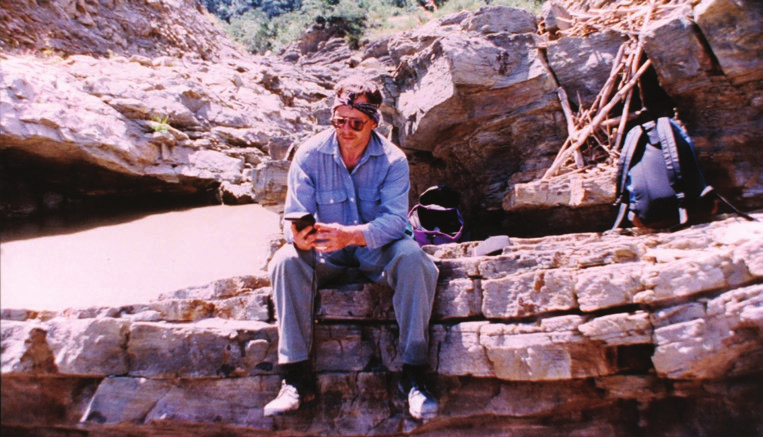
Bob Erlich, AAPG member and upstream adviser at Cayo Energy, started working Venezuelan projects during his time as a geologist with Amoco Trinidad Oil Company in 1987. He spent four decades studying surface and subsurface geology of Venezuela and neighboring countries, running exploratory projects and leading geological field programs.
He has also served as author or coauthor on 12 published papers on Venezuelan geology and its petroleum systems. He worked with María A. Lorente and other Venezuelan geoscientists to publish papers describing the richness of the La Luna Formation.
Erlich described the geology of Venezuela as “incredibly diverse” and fascinating for a variety of disciplines.
“Regardless of whether you are a structural geologist, stratigrapher, sedimentologist, geochemist, paleontologist, etc., there are still so many problems to solve,” he said.
Erlich explained how Venezuela is part of a larger regional setting that includes parts of Central America, northern South America and the Caribbean.
“The geology of Colombia, Venezuela, Trinidad, and Guyana unites the countries thematically by sharing some elements of Proterozoic and Paleozoic stratigraphy, influenced by the Guyana Shield, and Mesozoic and Cenozoic stratigraphy, influenced by plate margin processes (except Guyana),” he said.
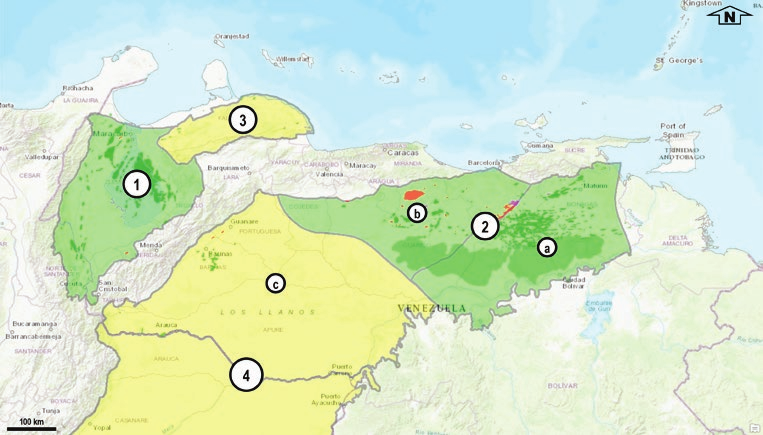
Erlich stressed the importance of remembering that hydrocarbon occurrences in Venezuela can differ significantly between basins, based on shared and unique structural and stratigraphic complexities.
“Specific hydrocarbon occurrences in the Maracaibo Basin are unlike those in Barinas, and hydrocarbon occurrences in Barinas are unlike those in Eastern Venezuela,” he said.
“The massive fields discovered in the Guyana/Suriname Basin are also unlike those in eastern Venezuela, with the fundamental difference being the degree and timing (or lack thereof; i.e., Guyana/ Suriname) of compressional/transpressional deformation,” he added.
‘Nature’s Masterpiece’
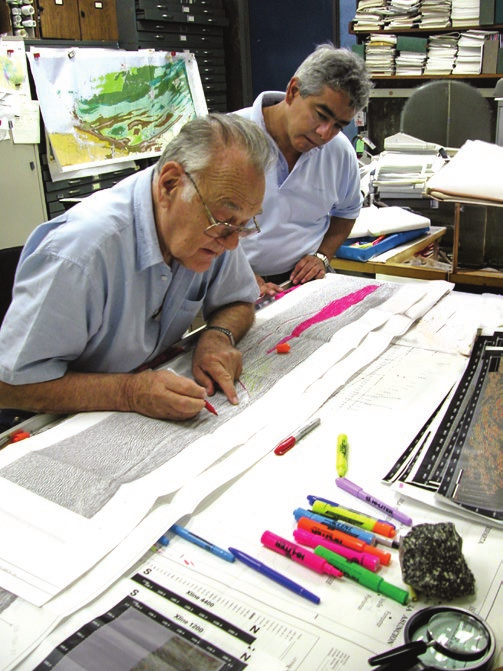
Jairo Lugo, AAPG member and exploration director at Caribbean Oil and Gas, started studying Venezuela’s petroleum systems as a university student in the late 1970s. He accepted an internship with a company later acquired by PDVSA during nationalization, and he stayed with the company until 2023.
Lugo is a prolific author, with several contributions to events and AAPG special publications, including AAPG Memoir 123 in 2021, where he and co-author Felipe Audemard related Venezuela’s petroleum systems with the collisional tectonic framework of northern South America in the Tertiary period.
Lugo describes Venezuela’s geology as “nature’s masterpiece,” and said that what he finds most fascinating about the country’s petroleum systems is how its elements and processes weave together an extraordinary geological story – one in which source, reservoir, seal, and trap- timing align with precision.
“Few places on Earth showcase such a dramatic interplay between tectonics, organic richness, and basin evolution,” he said.
“In Venezuela, every basin tells a different chapter: from the worldclass, oilprone source rocks of the Cretaceous La Luna and Querecual formations to the vast migration pathways shaped by the Venezuelan orogenies. The results are petroleum systems that are – besides prolific – remarkably diverse and geologically elegant. Studying them feels ike reading a masterfully written story in which every structural uplift, every subsidence event, and every stratigraphic variation plays an important role in creating one of the planet’s most significant hydrocarbon provinces,” he explained.
Lugo made several observations about how Venezuela’s geology relates to that of its neighbors:
- Colombia shares many tectonic and stratigraphic elements with western Venezuela, particularly along the Maracaibo– Catatumbo and Barinas-Llanos regions, but its petroleum systems are more compartmentalized by the Andean uplift and complex foreland basin evolution.
- Trinidad, on the eastern margin, reflects the continuation of the Eastern Venezuela Basin into an island arc setting, where intense deformation and active transpression have shaped smaller but geologically intricate petroleum provinces.
- Guyana, to the east, lies within the same broad Cretaceous passive margin system, but its petroleum story is dominated by deepwater stratigraphy and the remarkable success of the Guyana-Suriname Basin, where similar Tethyan influenced source rocks matured under very different burial and tectonic conditions.
Lugo noted how his comparisons reveal fundamental truths.
“Geology – and therefore petroleum systems – do not recognize political boundaries. Yet within that shared regional framework, Venezuela is uniquely blessed by nature,” he said.
Blessing through Multiple Variables
Juan Francisco Arminio, AAPG Latin America and Caribbean Region delegate and senior consultant at U3 EXPLORE, shares his colleagues’ admiration for Venezuelan geology.
He also worked at PDVSA until 2003, and after leaving the company has worked in several private companies and taught classes for Simon Bolivar University.
He has studied the petroleum systems and basin framework of Venezuela and the region and co-authored a recent basin framework with Marel Sánchez and David Sanford-Lewis.
For Arminio, what is truly “blessed by nature” is the evolutionary path of northern South America from the Triassic-Jurassic rifts to the Cretaceous Tethyan passive margin and linked collision-derived Tertiary foredeeps.
The “blessing” comes in the shape of multiple variables such as climate, reservoir provenance, basin geometry and burial timing that converged to endow Venezuela’s onshore foreland basins: Maracaibo, Eastern Venezuela (including the super-giant Orinoco Oil Belt) and Barinas-Apure with exceptional volumes of trapped hydrocarbons in the Venezuelan Llanos plains and the Zulia region, including the brackish Lake Maracaibo.
Why So Much Oil?
For geologists, the “Why so much oil?” question, has a simple answer: source rock.
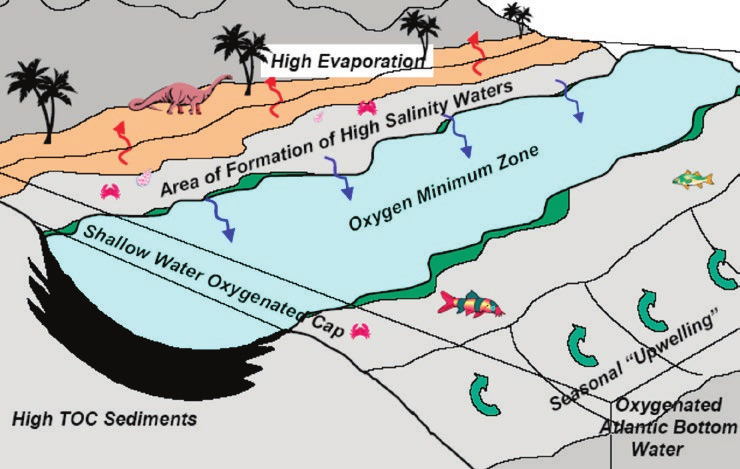
Lugo noted how the Venezuela’s position along the southern edge of the ancient Tethys Sea placed the Cretaceous passive margin in the ideal paleogeographic and paleoenvironmental window where some of the world’s most prolific source rocks were deposited.
“That combination of equatorial upwelling, restricted basins, and high organic productivity created the oilprone source intervals that later fueled the country’s extraordinary petroleum endowment,” he said.
“Geological configurations for catching hydrocarbons in both stratigraphic and structural traps exist in all basins of the world. But only a few basins stand out for the magnitude, quality and extension of their source rock like in Venezuela.”
Arminio noted that the petroleum system’s efficiency was enhanced by how the basins worked in the convergent context of northern Venezuela during the Tertiary period.
“The source rocks are so prolific and the charge system so effective that the primary challenge is not whether hydrocarbons are present, but how well the trap is defined,” Lugo said.
How Much Oil Is There?
Erlich said he dedicated his doctorate and four publications to two primary questions: “Why does Venezuela have so much oil?” and “How much oil is there?”
The answer came through understanding the Upper Cretaceous Petroleum System, commonly called “La Luna” (“The Moon” in Spanish). The petroleum system is characterized by an extensive sequence of organic carbon- rich rocks throughout the region, linking oil-bearing basins in Venezuela, Colombia, Trinidad, Guyana and Suriname.
The La Luna’s unique characteristics created the conditions required to form and preserve the world-class oil and gas reserves that have attracted so much recent news coverage.
Erlich said the total rock volume of effective hydrocarbon source rocks has been estimated in numerous publications.
“If we assume that effective generation and migration led to the trapping of only 10 percent of generated hydrocarbons, an estimate of more than 13 trillion barrels of generated oil is possible, with the Faja de Orinoco containing 1.3 trillion barrels of oil in place,” he said.
Arminio noted how even conservative estimates of oil and gas reserves deserve international attention.
“When you look at reserves and resources numbers, the abundance of Venezuela’s petroleum provinces stands out big time,” he said.
He used statistics from Lugo and Audemard’s 2021 publication to put the recoverable resource volumes into perspective:
- From 1915 to 2018, Venezuela produced 72 billion barrels of oil.
- The remaining recoverable oil and gas as per PDVSA’s 2016 estimates is 302.3 billion barrels of oil equivalent. This figure includes the extra-heavy resources of the Orinoco Oil Belt, estimated with a recovery factor of 16 percent.
- In shallow offshore waters, 30 trillion cubic feet of non-associated gas has been discovered. Only a fraction of that gas has been developed.
Next Up: Geoscience, Technology and Growth
Arminio noted that incremental reserves in mature fields represent low-hanging fruit opportunities for companies interested in being a part of Venezuela’s evolving energy landscape.
“Prolific mature provinces can yield new oil and gas through technological updates, new data and new concepts,” he said.
“My leaders at PDVSA kept paraphrasing Parke A. Dickey: ‘You don’t run out of oil. You run out of ideas.’”
Arminio said that Venezuela brings advantages beyond its world-class reservoirs. The country’s solid oil and gas history, world- class reserves and qualified workforce bring benefits to companies interested in the country.
“Venezuela has a resource base that volumetrically is very significant, with strategic and commercial attributes that offer important business opportunities to operators, service companies, and academia” he said.
“Exploration and production will play a pivotal role that will be leveraged with the potential for incremental production and resources of its mature fields – in advanced recovery, not depleted! – and the high prospectivity of the offshore basins and underexplored areas of onshore basins,” he added.
Lugo believes that geoscientists will be a part of the country’s transformation.
“As Wallace Pratt reminded us, ‘Oil is in the mind of men’ – and today it also lies in the ability of geoscientists to transform that vision into opportunity, to articulate the subsurface with clarity, and to convince investors that the next great discovery begins with a well defined idea,” said Lugo.