
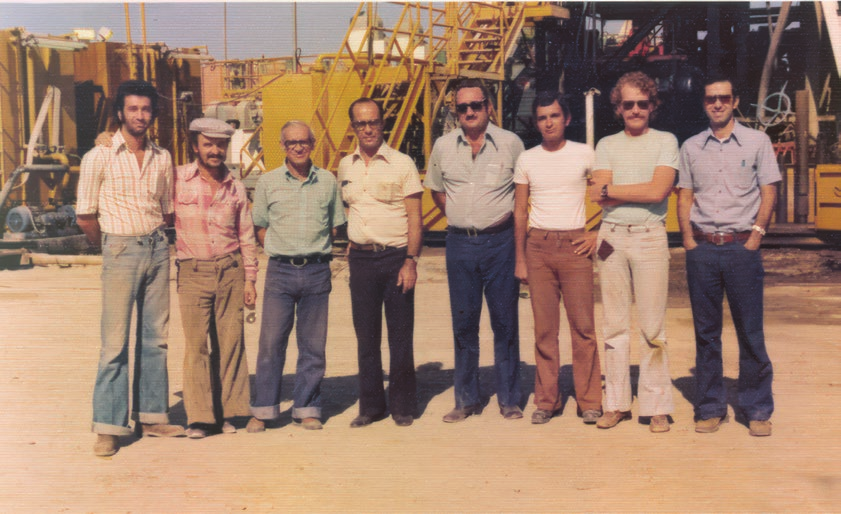
For as long as there has been oil in the ground, the relationship between geologists and politicians – the arguments, and the turf battles, especially when occurring in Brazil – has been part of the life of this year’s AAPG’s Harrison Schmitt Award winner, Guilherme Estrella.
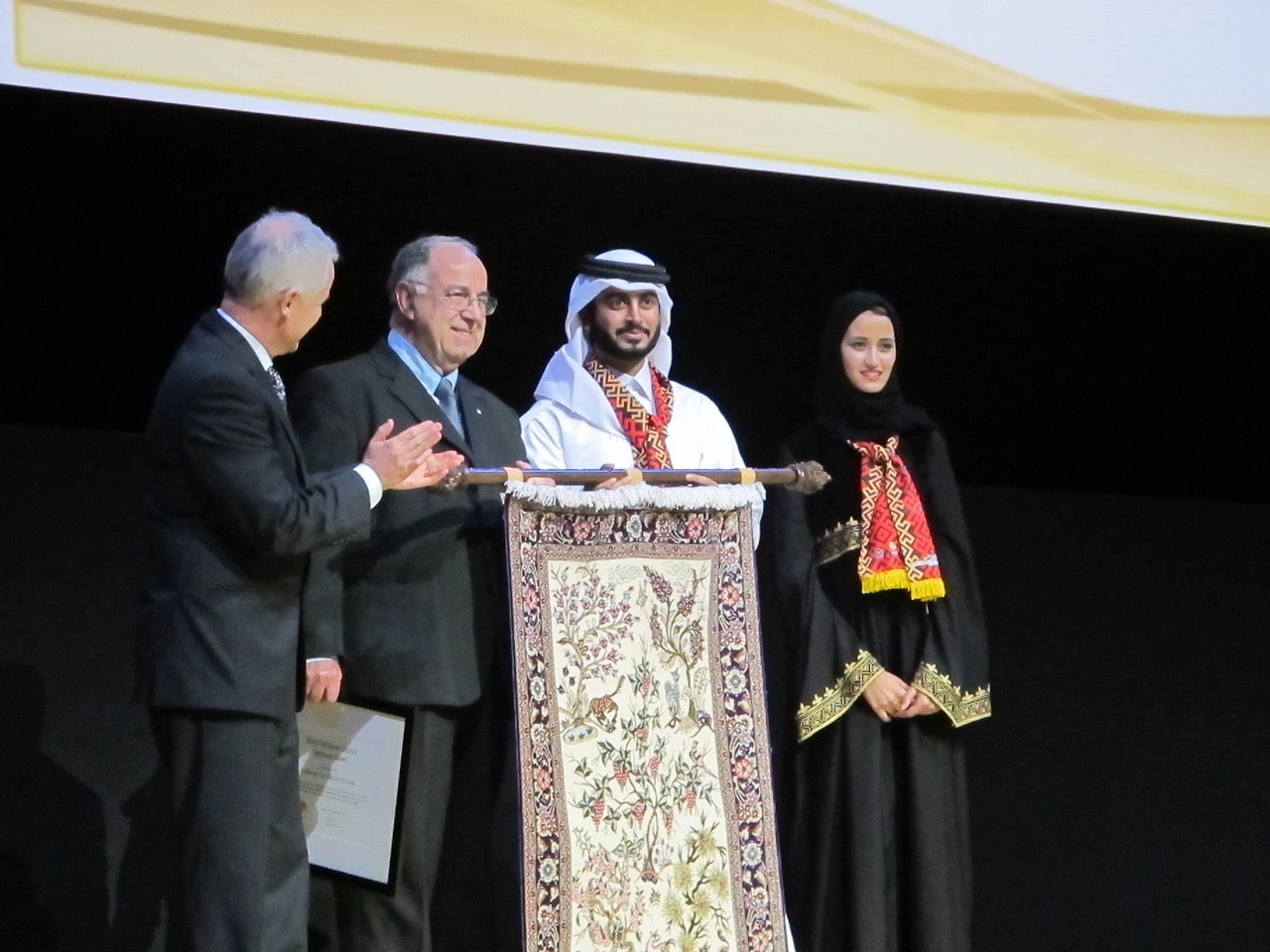
The award, by design, was never intended to fit neatly into any specific category, but is presented by the Association as a lifetime achievement award.
In Estrella’s case, that is as it should be.
Estrella just turned 84. His longevity, he said – even what he calls his “survival” – within the history of Brazilian petroleum comes from his successful participation with a generation of industry and academic professionals. But what an 84 years it has been.
‘Craziness’ in Iraq
After graduating school and working in the oil business in Rio de Janeiro, the nation’s capital, he made a decision that would change his life.
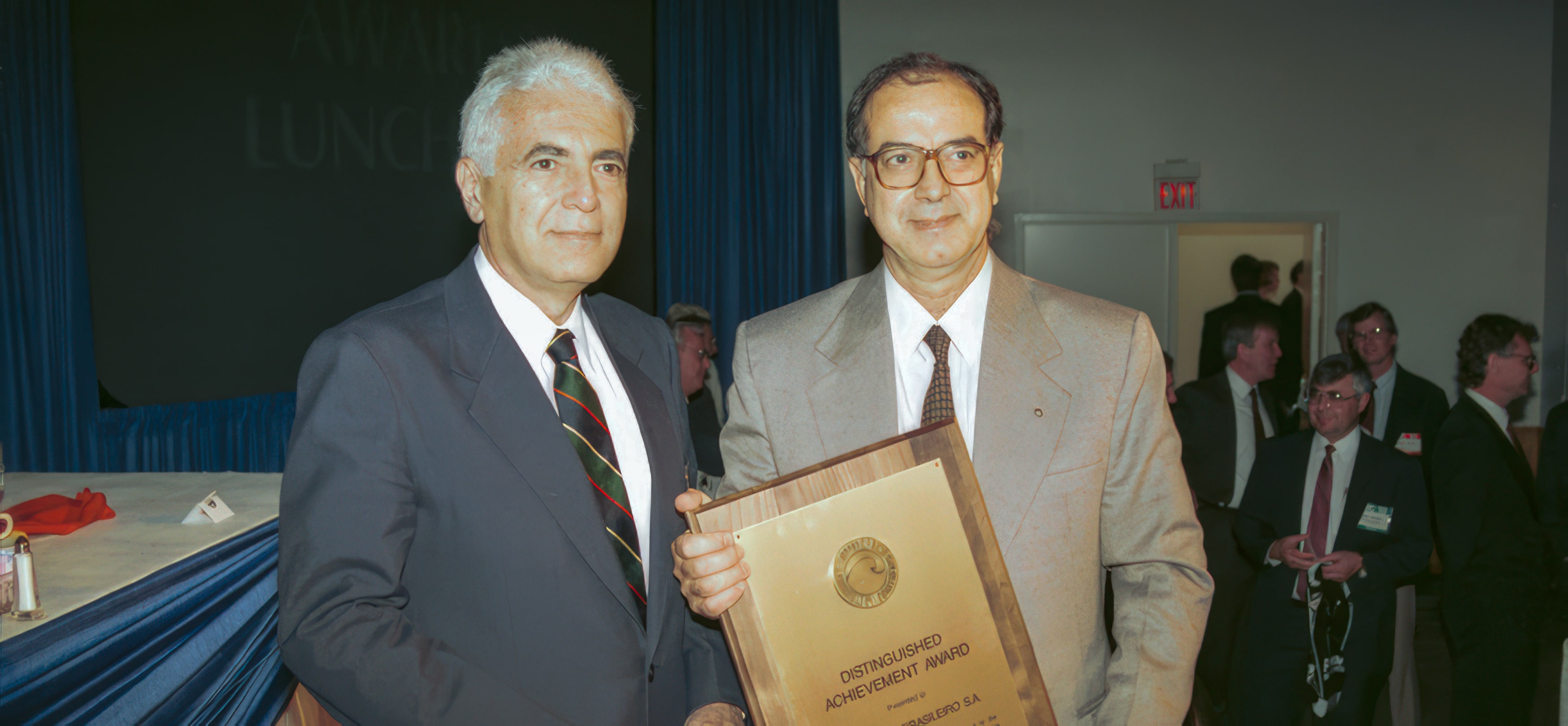
“In 1976, I arrived in Baghdad with my wife and our four children and took on the role of exploration manager for Petrobras-Iraq,” he said.
Up until that point, Brazil was importing 80 percent of the oil it needed, most of which came from Iraq.
“And here I am,” he said of his time in Iraq, “as a geologist at Petrobras, having my first experience in this global struggle for oil.”
In the same year, Petrobras discovered the Majnoon Oil Field, at the time a desert region, a super-giant oil field located 37 miles from Basra in southern Iraq and about 12 miles from the Iranian border. It is one of the richest oil fields in the world with an estimated 38 billion barrels of oil in place.
(New seismic work reveals those reserves might top 47 billion barrels.)
The name “Majnoon,” incidentally means “crazy” in Arabic – and there was (and is) a crazy amount of oil in the area.
It was at that point that the role of politics in geology made its first impression on Estrella.
“Because of this immense energy wealth, the Iraqi government suspended the contract and negotiated its termination,” he said.
When the 1973 Oil embargo began – when Arab members of OPEC, including Iraq, cut production and banned exports to countries that supported Israel, Brazil was not a supporter of Israel and so was not affected, thus protecting its oil supply. The relationship between Iraq and Petrobras was strengthened.
Estrella was there for all of that.
He stayed in Iraq for two more years before returning to Brazil.
Retired in Protest
In 1982, he joined Cenpes, the research center of Petrobras, formed in the early ‘60s to anticipate Brazil’s energy needs. He assumed the general superintendency of the organization in 1988.
He retired in 1993. Against his will.
“I retired from Cenpes in protest against an authoritarian, shameful, and morally unethical decision by the then-president of Petrobras, who assaulted the entire body of Cenpes employees. As the general superintendent of the organization, I could not accept this,” he explained.
“Making Brazil sovereign and self-sufficient in energy has always been Petrobras’ sole objective since its creation,” he said.
In his career, whether at Cenpes or elsewhere, he’s had little patience for whomever he felt thwarted that mission.
“Scientific, technological, and engineering development is a continuous, permanent, very dynamic industrial activity; it is always unfinished,” Estrella explained. “Innovation is the challenge that never ends. One of the characteristics of a research, development, and engineering center is precisely to innovate, to seek continuous improvement of industrial processes, even more so when great challenges are faced.”
That, more than anything, has been his single-minded pursuit in the industry.
‘Un-retirement’
He is known as the “father of pre-salt” – and this title too he swats away – which refers to his promotion of the geological model that vast oil and gas reserves would be located beneath the seabed and a thick layer of salt.
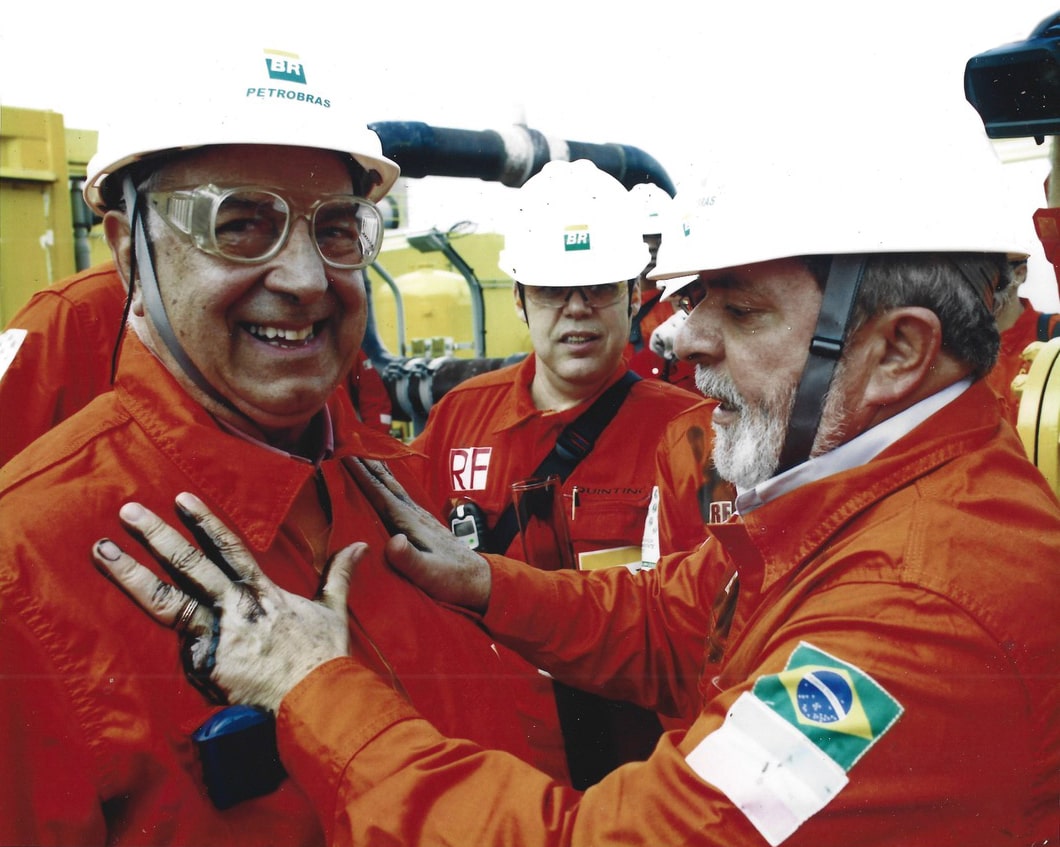
His reluctance to accept the title notwithstanding, it was due largely to his efforts that the discovery of those extraordinary Brazilian pre-salt provinces resulted.
“I am a survivor of the long process of transforming Petrobras into a major global oil company, in which I participated along with a generation of professionals, both from the company and from partner companies and, very importantly, from Brazilian universities,” said Estrella.
He un-retired years later, however, thanks in part to politics. It was a reemergence that occurred, he said, because the nationalist governments of presidents Luiz Inácio Lula da Silva, 2003-11, and then Dilma Rousseff, 2011-16, embraced his view of science and technology.
In 2012, Estrella was honored with the appointment as director of exploration and production at Petrobras
– a position he held for nine years, the longest in the company’s history.
“It was a period in which the scientific and technological competence of our exploration teams
– already proven in the Campos Basin
– enabled Brazil, in 2006, to achieve volumetric self-sufficiency in oil and, subsequently, the discovery of the extraordinary pre-salt oil province, which guarantees Brazilian sovereignty to develop a national developmental project that ensures not only Brazilian industrial development but
– certainly more importantly
– the overcoming of the historical and shameful social injustice that marks Brazilian society,” Estrella explained.
He sees an industry with enormous potential, to not only satisfy the world’s energy needs, but to be a force for good.
The Ever-Unfinished Struggle
He said of his career, generally, and the Schmitt Award, specifically, that the exciting aspect about the industry is the challenge of the great advances.
“And in the oil industry – which has exploration activities, with the need for gigantic investments and a high risk of success to be faced – scientific and technological development is the main and indispensable basis for meeting this challenge. And, certainly, managerial decisions that support this path,” Estrella said.
The oil industry, of all industrial activities, is a collective endeavor, he noted, which means that he recognizes the personal contribution of each of the workers involved and with whom he’s worked and how the successes and failures in pursuit of energy are always collective.
There is something else, as well. Yes, politics.
“But, since immense financial and global political interests are equally involved, ethical/ideological and political conceptions are equally decisive in the decision-making process,” he said.
In his more than eight decades, he knows that scientific, technological, and engineering development are continuous.
“It is always ‘unfinished.’ Innovation is the challenge that never ends,” he reiterated.
“I belong to a people whose permanent and ever-unfinished struggle has national sovereignty and the overcoming of immense and unacceptable injustices and social inequalities as permanent objectives,” he added.
For Estrella, his love for the energy independence of Brazil and for the country itself, both in terms of justice and democracy, has been his driving motivation.
“My connection and affection for Brazil: no different from most of the Brazilian people, who continue in this struggle,” he said.