
The second half of 2025 represents a time of transition for Bolivia, the landlocked South American nation nestled in the Andes Mountains.
After two decades of rule by the socialist MAS party formed by indigenous leader Evo Morales, Bolivians elected a center-right leader, Rodrigo Paz, who promises to combat double-digit inflation and fuel shortages with change to the country’s economic and energy policies.
There are no quick fixes for energy poverty, particularly in the Altiplano – high-altitude, high-elevation plateaus with fragile ecosystems and rural populations with limited or no access to electricity.
While the politicians discuss macroeconomics, young Bolivian geoscientists are exploring ways to provide energy access to vulnerable populations, seeking energy sources that bring people out of poverty with limited environmental impact.
Committed to Change
Two of those geoscientists are Cindy Fabiola Nina and Maicol Baltazar, AAPG members and geoscience students at the Universidad Mayor de San Andrés (UMSA) en la Paz, who have spent the past three years developing a project to identify and quantify the country’s geothermal potential.
“Geothermal energy is important in my country because it allows us to take advantage of volcanoes and places characteristic of geothermal zones, helping communities grow through its use,” Nina said.
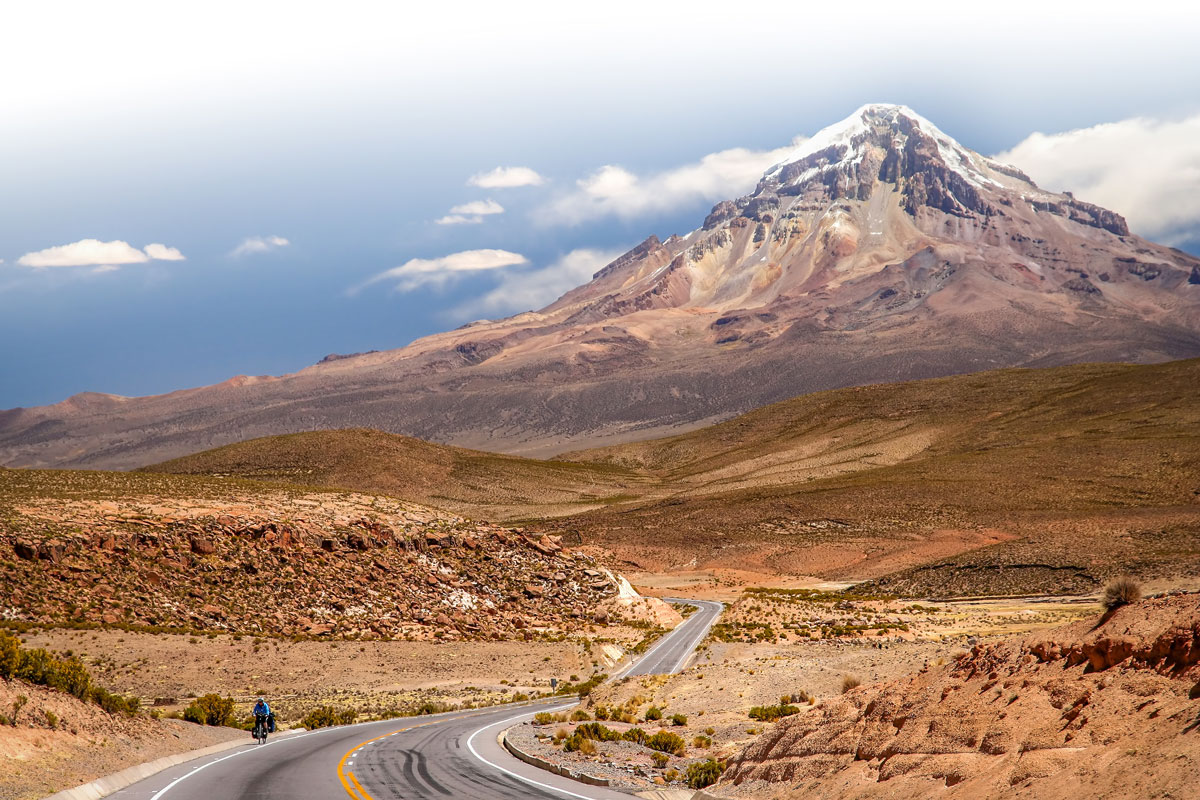
Their project focuses on the Sajama National Park in the Ouro Province of Western Bolivia. The park is located in a geologically active zone with surface thermal manifestations, making it an area of interest for geothermal exploration.
Previous geological and geophysical studies of the area focused on volcanology and seismicity, and while they mentioned geothermal activity, they did not delve into the energy potential.
Nina and Baltazar wanted to learn more, and they also wanted to make their own contribution to knowledge of Bolivia’s natural resources.
So they worked with classmates to design a project building on existing studies and applying a specific and systematic approach, using remote sensing data to assess geothermal potential at a local scale.
Sustainable Development in Energy Competition
Their project started with an application to the 2022 edition of AAPG’s Sustainable Development in Energy Competition, an initiative designed to encourage students and young professionals to develop innovative, sustainable energy projects with positive social, environmental and economic impacts.
The Competition offered an opportunity for like-minded students to combine their passion for geology with their love for their country and its natural resources.
“Bolivia is rich in ecosystems which are part of its natural resources,” Nina said. “I always have been motivated by the idea of contributing to the earth sciences in Bolivia, as it is a place with significant geological potential, and I was intrigued by the challenge of moving toward an innovative and clean energy idea.”
Baltazar agreed.
“We are people who love science and innovation. Since the competition is related to these two aspects, it appealed to us to challenge ourselves to apply our knowledge and test ourselves,” he said.
Selecting a Source
While the UMSA group had several energy sources to choose from, they selected geothermal because they felt it aligned best with their formation in geology, was one of the least used energy sources in Bolivia and had the greatest potential for impact.
“In Bolivia, most of our electricity comes from gas from thermoelectric plants, but it is important to have other sources, such as geothermal energy, which could be useful for transmission and has great potential in our western region,” Baltazar said.
“Our project can benefit the population by exploring areas with geothermal potential, thus providing a source other than gas to produce electricity,” he added.
The project caught the attention of Elvira Pureza Gomez, vice president of business development at Thrust Belt Imaging, chair of AAPG’s Sustainable Development Committee and co-founder of the Sustainable Development in Energy Competition, which started in the Latin America and Caribbean Region and later expanded globally.
“This project matters for Bolivia because it is trying to solve a real problem in a place where energy access is still a daily struggle,” she said.
Gomez noted how basic services in remote areas depend heavily on diesel generators, which are expensive, polluting and hard to keep supplied in such remote areas. She hopes that geothermal energy can help reduce reliance on diesel and other hydrocarbons.
“Unlike solar or wind, geothermal works day and night, rain or shine. And Bolivia has serious geothermal potential, especially along the Andes, where volcanic activity heats underground water,” she said.
Project Results
The UMSA team competed with teams from around the Latin America and Caribbean Region and took third place, winning $2,000 (U.S. dollars) in seed funding. The financial support helped the project, but team members said the biggest gift was international recognition.
“The most significant thing was doing the work together with my friends and colleagues, developing the idea, and moving forward without expectations until we achieved the third place. It was a surprise, and I’m still grateful for that experience today,” Nina said.
Baltazar shared similar sentiments and said he and team members were honored to represent Bolivia and carry the flag high.
Project Details
The UMSA geothermal project leveraged “geomatics”: the interdisciplinary science of gathering, storing, processing and delivering spatially-referenced information about the Earth’s surface.
They reviewed a variety of free sources to delineate potential geothermal areas in a simple, non-invasive manner. Their objective was to provide a guide for future in-situ exploration, contribute to the assessment of the region’s energy potential and offer solutions to diversify Bolivia’s energy mix.
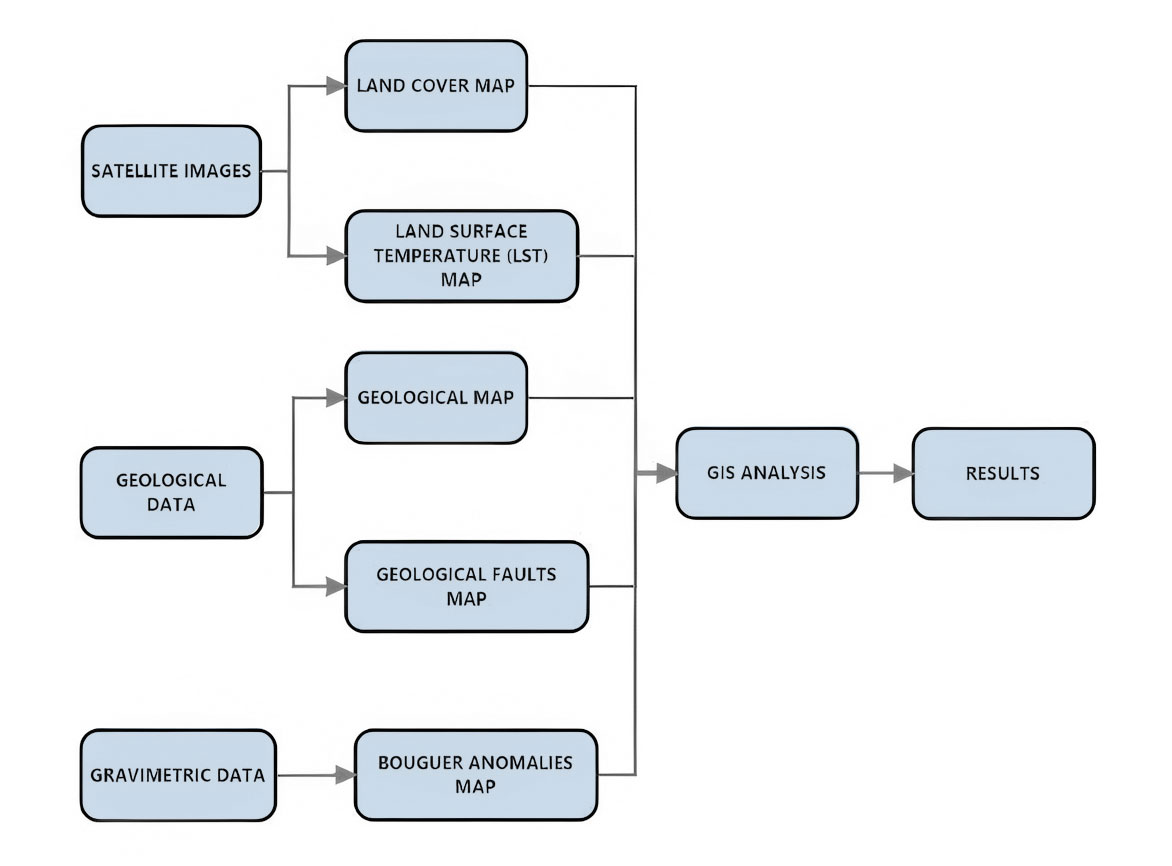
The team worked with five maps:
- A soil cover map, used to isolate areas with geothermal potential
- A land surface temperature map measuring the geothermal gradient, which is the temperature variation that increases with depth in the Earth’s crust
- A geological map as a layer for GIS analysis
- A geological fault map including both known and suspected faults
- A Bouguer anomalies map for gravitational measurements
They summarized their workflow with a diagram illustrating their methodology of their approach and the materials used in the analysis (see figure 1).
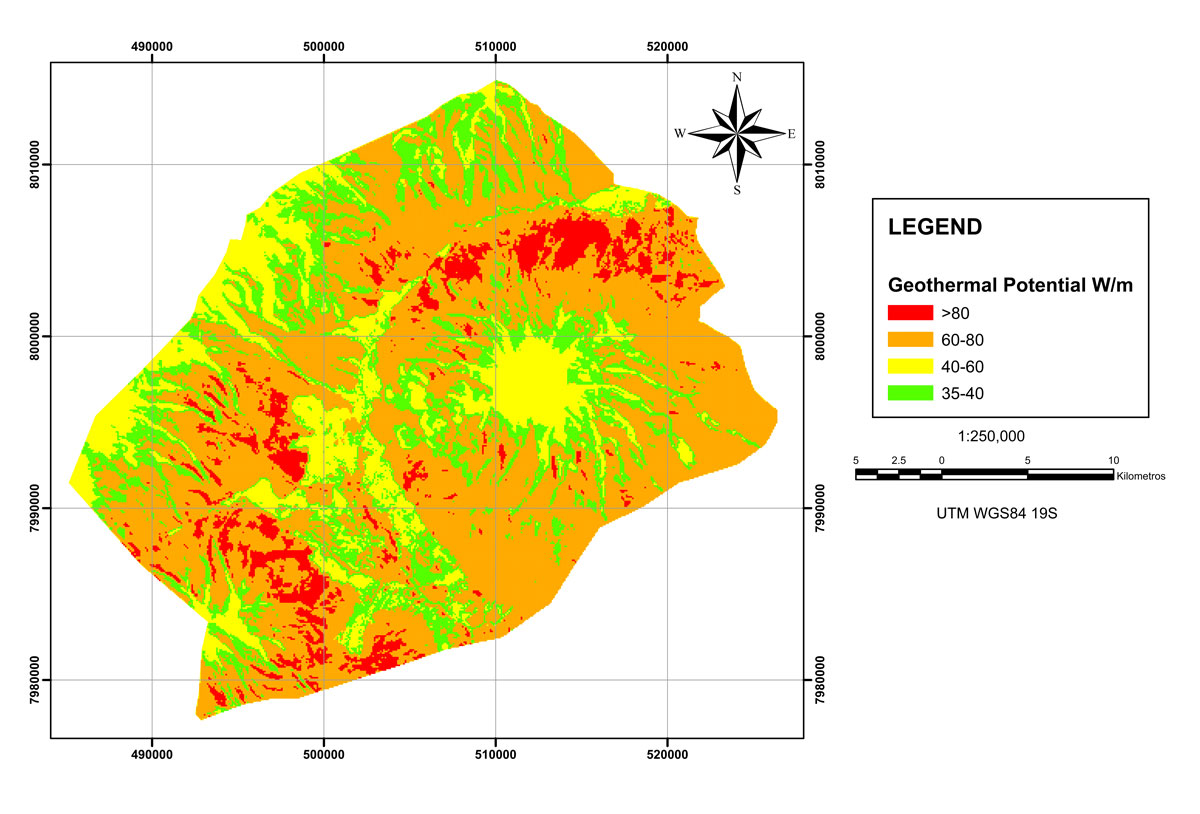
After calculating and combining the five layers into a single raster file, the team conducted a GIS analysis using a random forest classifier. The result of the process was a map of geothermal potential, representing the classification of the terrain based on the defined ranges.
Baltazar summarized the findings and their application:
“The analysis of the map data reveals that the areas marked in red (more than 80 megawatts) not only indicate a high temperature but also confirm the existence of a significantly elevated geothermal heat gradient. This value far exceeds the global average, suggesting the presence of a surface heat source, very likely related to a magma chamber or a volcanic system,” he said.
“To incorporate geothermal resources into the energy grid, it is necessary to optimize energy distribution and service organization. The availability of spatial information about the geothermal capacity of each area allows for optimizing the efficiency of the energy grid.”
He noted that drilling costs can be one of the most expensive aspects of any project, so identifying deposits with the greatest potential will help optimize the investment, reducing the drilling length or the number of drilling tests required.
“The proposed workflow allows for easy generalization to different scenarios and regions and can be enriched with additional information layers,” he said.
Transitioning to the Next Phase
Nina said the project has nearly completed Phase 1, which involves data execution and validation. The next plan is to move to Phase 2, which involves field data sampling and verification.
While the team is satisfied with the results, they identify areas for improvement.
“In the future, we recommended optimizing the initial dataset, such as generating gravimetric anomalies through field observations, for accurate detection of areas with geothermal potential. Another improvement would be a geological study of the study area in the field, which would involve enriching geological classes as well as reclassified information classes,” she said.
“However, the possible improvement of final accuracy could involve a significant increase in the cost of the approach; for these reasons, the present research, based on open/free data sources, provides an optimal foundation,” she added.
Sharing Findings
Nina and Baltazar presented their work publicly for the first time at the XXVI Bolivian Geological Congress held in Potosí in October.
“We’re excited to present this work to the Bolivian Geological Congress. I’ve personally heard some very positive feedback from some of my professors at the Universidad Mayor de San Andrés,” Nina said.
As Bolivia faces the future, young geoscientists look forward to being a part of the process.
“We plan to encourage large energy institutions to enter the geothermal, using our project as a basis for exploring potential areas in the initial stage, so they can take the next steps with less uncertainty,” Baltazar said.
“We want to encourage the growth of geothermal energy in the country, continuing to conduct research to support the country’s growth,” he added.
Relevance for Bolivia and the Region
Ana Maria Goncalves, geology and geophysics projects and studies team leader at YPFB Chaco, a subsidiary of Bolivian national company YPFB, said the geothermal project holds great relevance for the country.
“Bolivia still relies heavily on fossil fuels, particularly natural gas and diesel, to generate electricity. This project seeks renewable and sustainable alternatives by harnessing the Earth’s internal heat,” she said.
Goncalves, who also serves as AAPG Latin America and Caribbean Region president-elect, said the project’s impact extends far beyond the Bolivian border.
“In a regional context, this type of research places Bolivia on the South American map of energy transition, alongside countries like Chile, Peru and Argentina, which also have geothermal zones along the Andes. But unlike many of them, Bolivia is proposing here a scientifically solid and economically accessible model that can be replicated in other Andean or even Amazonian territories, where geological studies are still limited,” she said.
Goncalves also noted that, beyond its technical value, this project serves as a symbol of scientific and technological autonomy.
“The project was developed by Bolivian researchers using free resources and reproducible methodologies, proving that local knowledge can lead sustainable solutions without depending exclusively on foreign consultancies,” she said.
“Finally, its relevance goes beyond energy: it opens the door to sustainable development that combines science, the environment, and social well-being. Integrating geothermal energy into the Bolivian and regional energy matrix would reduce carbon emissions, promote green jobs and ensure electricity in areas where progress today depends on a diesel generator.”
For Gomez, one of the most remarkable components of the project is its cost effectiveness.
“Bolivia has serious geothermal potential, especially along the Andes, where volcanic activity heats underground water. The problem? Finding those hotspots usually means expensive surveys and drilling – things rural communities can’t afford,” she said.
“That’s where this project comes in. It’s practical, low cost and has the potential to put reliable energy within reach for people who’ve been left off the national grid for decades.”
Positive Change
Gomez said she is grateful to AAPG, the AAPG Foundation and other corporate sponsors for supporting the Sustainable Development in Energy Competition and other initiatives that help geoscientists have a positive impact on their communities.
“What makes this initiative especially powerful is that it was shaped by five young Bolivian geoscientists determined to have an impact,” she said.
“Beyond electricity, successful geothermal development could support local industries, reduce reliance on imported fuels, cut carbon emissions and even create jobs-all while taking care of the fragile ecosystems of the Altiplano,” she said.
“That’s the kind of work that doesn’t just win awards – it builds a foundation for real change,” she added.
Some changes happen at the ballot box. Others happen in the classroom, and still others in the field.
While no single project holds the solution to energy access or energy security, national policies and local solutions will help countries like Bolivia move closer to providing safe, reliable and affordable energy for all.