
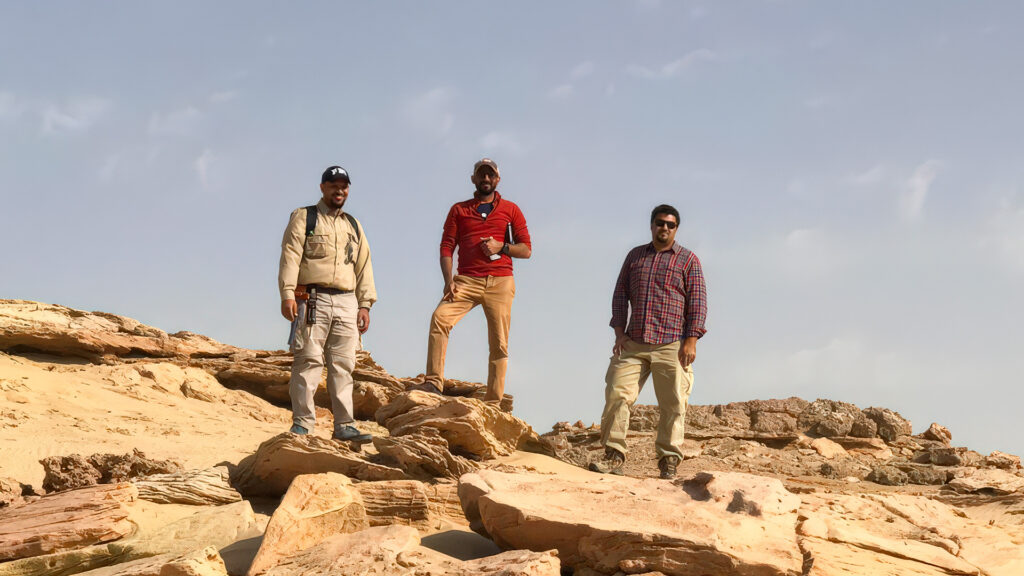
Kuwait has occupied a unique geological niche through the ages, as it lays at the crossroads of great river systems – the Hijaz River flowing from the Arabian Peninsula, the Tigris and Euphrates from Mesopotamia, and the Karun River from southwest Iran.
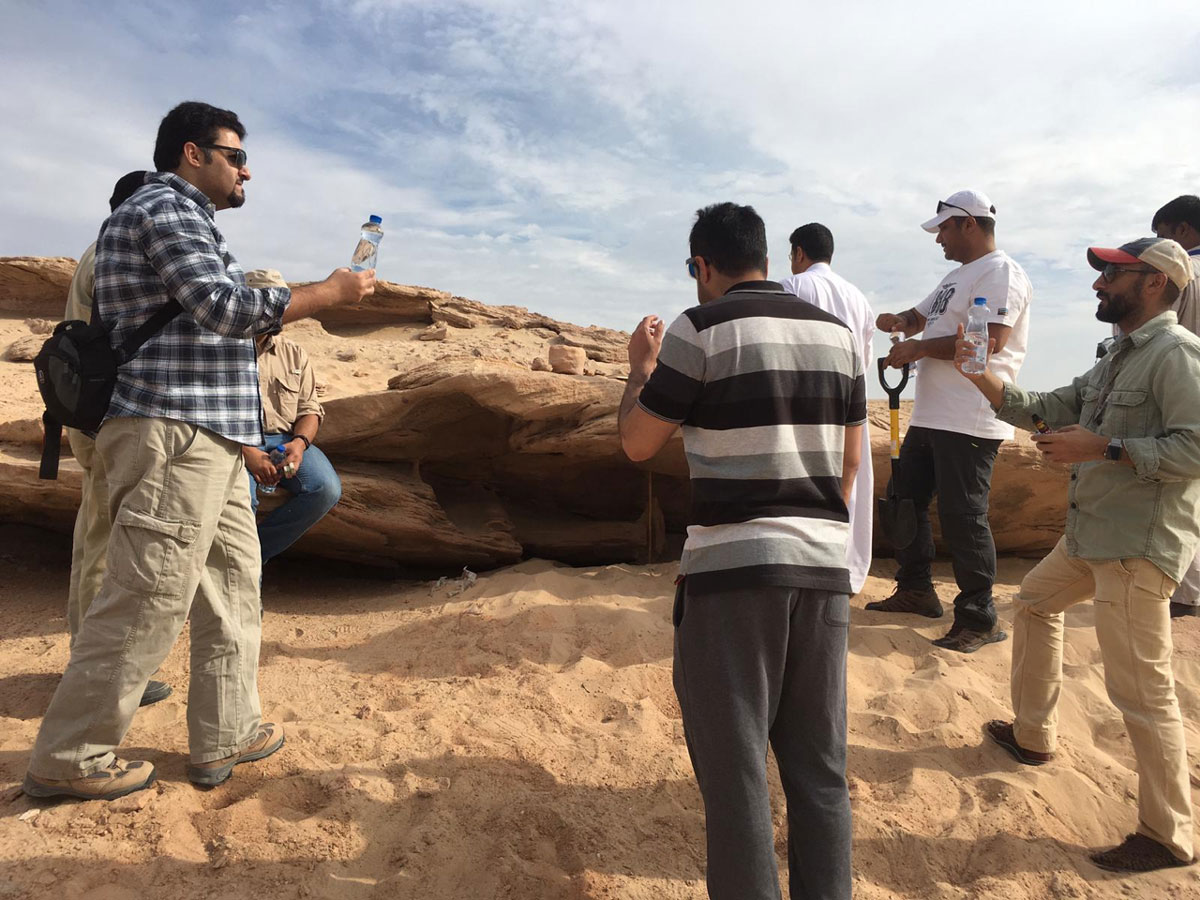
A place so rich in geology, as well as history and religion and mythology, deserves to have an organization to look after such treasures.
And that was the impetus behind the establishment and growth of the Kuwait Geosciences Society.
It’s not just the geology – though, that is being looked after.
“The richness of this region extends beyond rocks and ruins,” said KGS President Mubarak Al-Hajeri. “It is home to diverse wildlife and ecosystems, where visitors may encounter cave owls, Arabian foxes, migratory birds, reptiles, and a wide range of desert flora. Adding to its layered significance is the historical oil seep where Kuwait’s first exploration well, Bahra-1, was drilled in 1936. This site symbolizes the spark that ignited Kuwait’s transformation into a modern state, reshaping its economy, culture and place in the world.”
The area of Kuwait also preserves evidence of Neolithic communities, including the world’s first known boat model, alongside archaeological sites dating back more than 10,000 years, making it a living archive of human history.
KGS was formed in 2021, he underscored, “to safeguard these unique landscapes, highlight the urgent need for an official body that could represent geoscientists, advocate for heritage protection and connect Kuwait to regional and international networks.”
Birth of a Geoscience Society
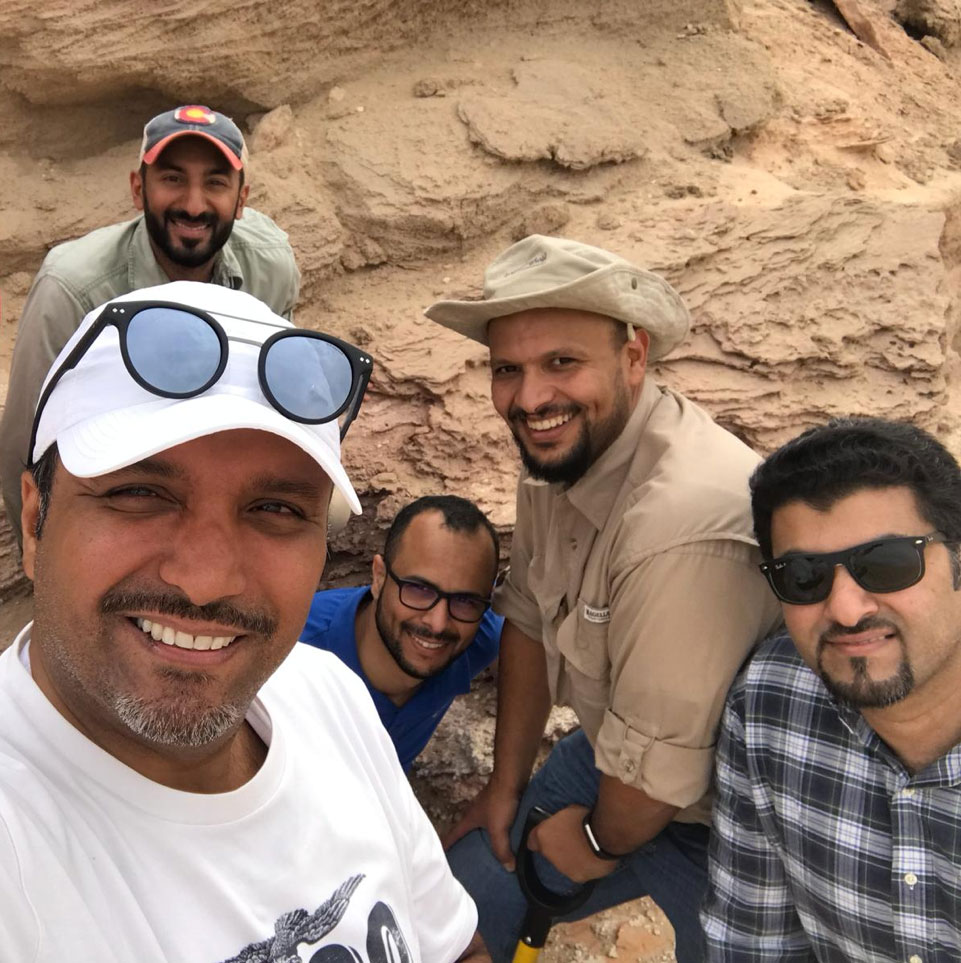
To say it started from humble beginnings is not an overstatement.
In the early aughts, a small group of volunteers in and around the Kuwaiti geological community decided it was time for such an effort.
“Its mission was to create a dynamic geoscientific community in Kuwait that benefits specialists, the public and students alike,” said Al-Hajeri.
To that end, the community became a center of excellence in knowledge management for geosciences and their applications in Kuwait, fostering innovation, collaboration and professional growth. The focus of that small group of volunteers, it was decided, could best come to fruition if they marshaled their forces to help create the Kuwaiti Geopark Initiative, a sprawling repository of geology and culture and adventure and economic development (see accompanying article).
Before work on the initiative could happen, KGS needed the national government’s imprimatur.
In 2021, the KGS was licensed by the Kuwaiti government.
Al-Hajeri said the challenges it faced – in some respects is still facing — are the same that challenge all startups.
“One of the main difficulties has been securing sustainable funding to support activities, events and outreach programs,” he said.
Another challenge? Seemingly trivial, but much more practical: finding a place to do the work, literally.
“All Board Members serve on a voluntary basis, while maintaining full-time employment elsewhere,” said Al-Hajeri. “This limits the time and resources they can commit to managing KGS on a daily basis.”
Additionally, he said, finding active members willing to contribute their time and skills has also been difficult, and ensuring long-term loyalty and commitment to the Society and the wider geoscience community remains an ongoing challenge.
Still, KGS did bring together a good portion of industry professionals, becoming a recognized platform for heritage protection, education and collaboration.
“The Society is also seeking to expand partnerships, sponsorships and collaborations to build a stronger financial foundation,” said Al-Hajeri.
Its progress has been impressive.
“In less than two years, it gained trust and respect locally, regionally and internationally. Strategic partnerships soon followed: locally with the Kuwait Oil Company, regionally with the Saudi Geological Survey, and internationally with the European Association of Engineers and Geoscientists and the American Association of Petroleum Geologists.”
One of its landmark achievements was signing a memorandum of understanding with AAPG – a step made possible through the unwavering support, Al-Hajeri said, of the AAPG Middle East Region, which has stood with KGS since day one. KGS, too, he said, would not have happened without the help of Ahmad Hakami, past president of AAPG’s Middle East Region, Saed Al-Hajeri, AAPG vice president of regions, and Gretchen Gillis, past president of AAPG. Al-Hajeri expressed special appreciation for their trust in KGS’s mission and for fostering stronger collaboration among geoscience communities across the region and beyond.
What’s exciting, Al-Hajeri said, is that today, KGS is the fastest-growing geoscience society in the region – a region that includes Saudi Arabia, the United Arab Emirates, Iran, Bahrain, Iraq, Jordan, Lebanon, Oman and Qatar, many with student and young professional chapters.
The Society now has 70 members.
“Ultimately, KGS aims to position Kuwait as a regional hub for geoscience knowledge, research and heritage protection while deepening partnerships with the global geoscience community,” said Al-Hajeri. “KGS leadership places special emphasis on engaging the next generation of geoscientists, particularly students and YPs. Dedicated events and initiatives are being planned to inspire, mentor and support these groups, ensuring that they play an active role in shaping the future of geoscience in Kuwait and beyond.”
Geological Guidebook in the Works
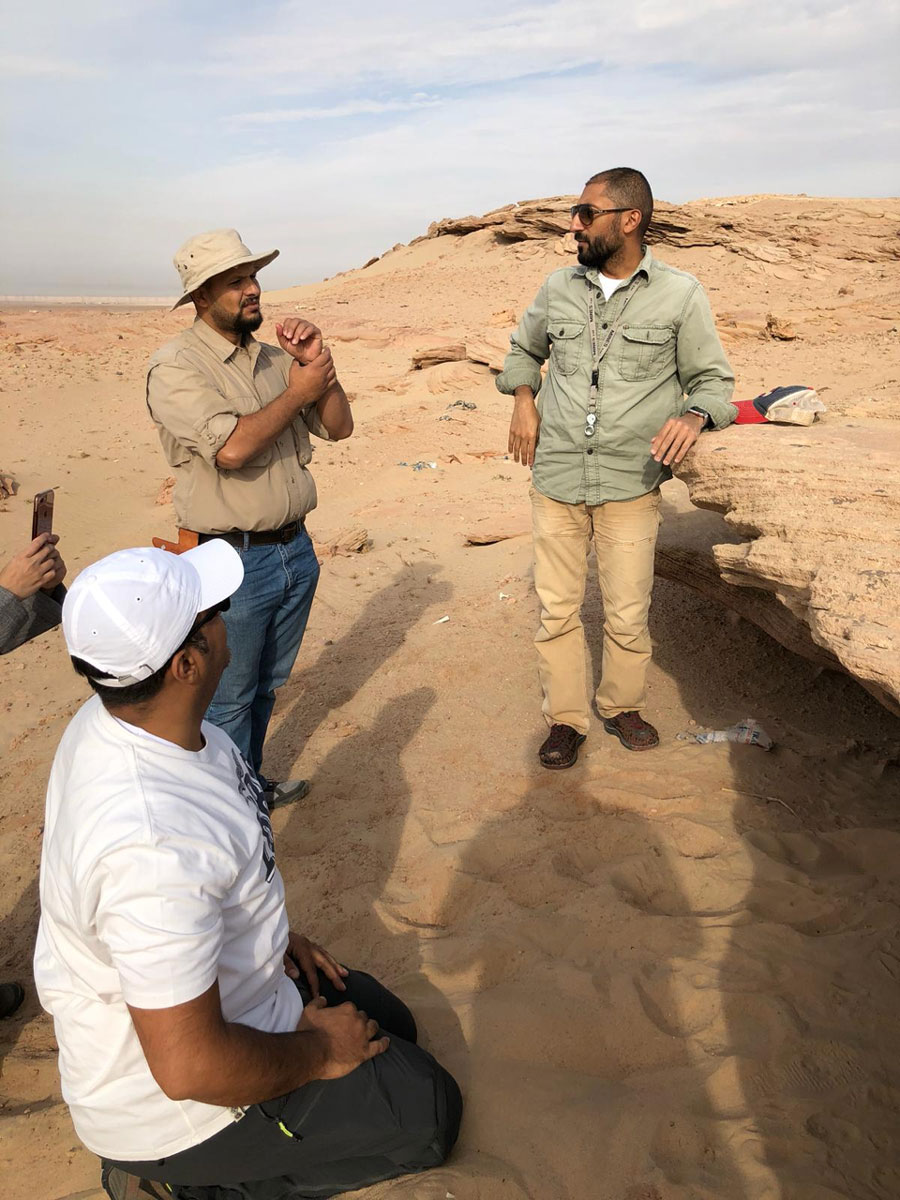
To that end, at the recent MEOS-GEO conference in Bahrain, Al-Hajeri, briefed participants on a KGS strategic initiative being carried out in collaboration with Kuwait Oil Company.
“The project aims to capitalize on the Jal Zor clastic outcrops as an analogue to Kuwait’s heavy oil Tertiary clastic reservoirs of the Lower Fars. Our plan is to drill three shallow (about 350 feet) data wells at the top of JAZ and conduct comprehensive studies, including whole-section coring, wireline logging, core and mud log analyses, among others,” said Al-Hajeri.
He said the ultimate objective is to develop a geological guidebook that will serve as a reference for training KOC employees and educating university students.
“At the same time, the outcomes may refine our geological model of the Lower Fars reservoirs, supporting production enhancement efforts,” he added.
The initiative should be completed by December this year.
Al-Hajeri said it has been a unique journey for KGS – from a voluntary research group to a nationally-licensed society – to guide and protect Kuwait’s geological heritage and its place on the world stage.