
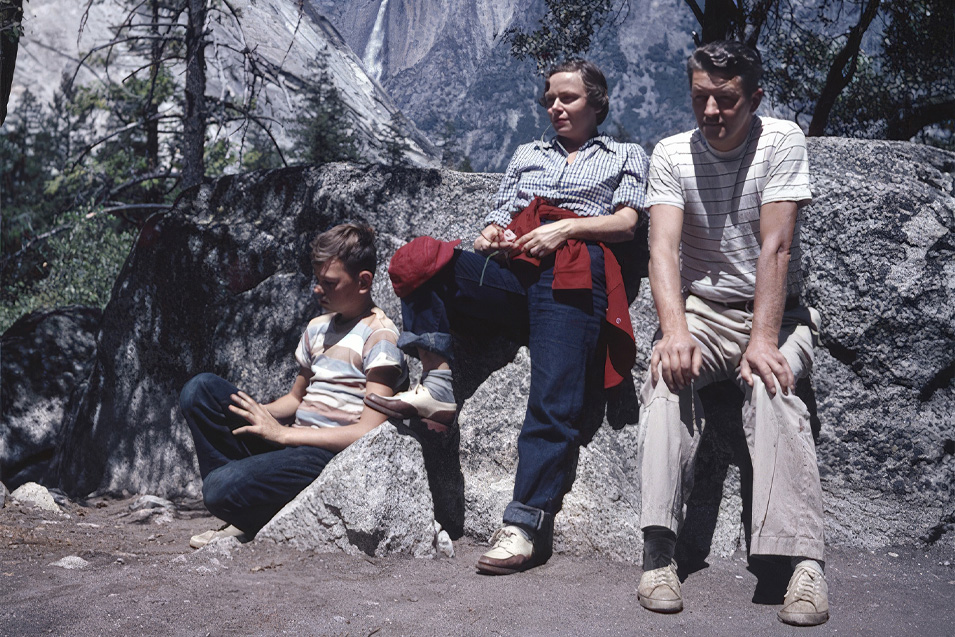
On April 13, 1993, Wallace Earle Stegner died in a hospital in Santa Fe, New Mexico, two weeks after a terrible car accident. Aged 84, he was celebrated as one of America’s greatest novelists and essayists, the “Dean of Western Writers.” Stegner had won every major literary award in America, including the Pulitzer Prize and the National Book Award, both for fiction. According to the writer Edward Abbey, “Stegner was the only living American worthy of the Nobel.”
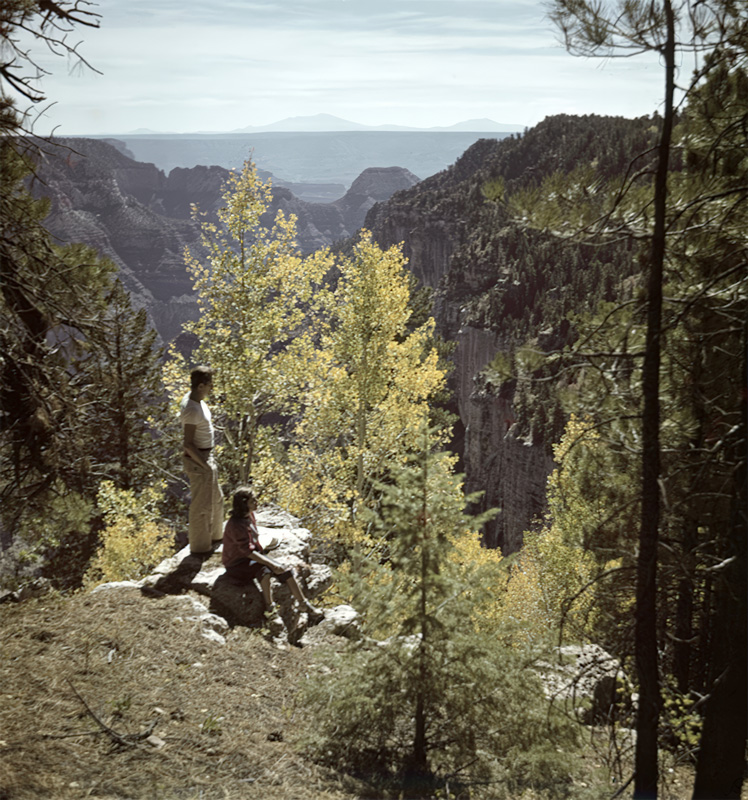
Now, three decades after Stegner’s death, his novels remain popular: “The Big Rock Candy Mountain,” “All the Little Live Things,” “Angle of Repose,” “The Spectator Bird,” “Recapitulation” and “Crossing to Safety.”
Stegner was also an environmental writer, years before Rachel Carson’s 1962 “Silent Spring.”
He was a historian of the geologists who mapped the American West, and he was actively involved in the preservation of the wilderness there. Curiously, Stegner wrote the earliest book on the history of the Arabian oil fields. This “other” Wallace Stegner is the subject of our exploration here.
The Big Rock Candy Mountain
In his 1943 novel, “The Big Rock Candy Mountain” (named after a folk song about the hobo’s idea of paradise), Stegner narrates the life story of a migrant family in the 1930s in pursuit of quick wealth. Bo Mason, his wife Elsa and their two boys, Chester and Bruce, are leading a poor and desperate life from place to place – the Dakotas, Saskatchewan (where the family’s wheat plantation failed), Montana, Utah and Nevada. The father, bad-tempered, abusive and ruthless, is engaged in various jobs – in a hotel, on a farm, and eventually selling illegal alcohol during the Prohibition Era. The family moves to Salt Lake City, and they struggle to survive and make a home in the new place. Chester, the athletic boy, dies unexpectedly, followed by the mother Elsa who dies of cancer, and finally Bo Mason kills himself after murdering a girlfriend in a hotel.
This tragedy is not entirely fiction; it is the story of Wallace Stegner’s family.
Stegner was born on Feb. 18, 1909, in Lake Mills, Iowa, on a farm that belonged to his maternal grandparents, the Paulsons, Norwegian immigrants. “Wally” was the younger son of Hilda (née Paulson) and George Stegner, a drifter from Illinois. Wally’s brother Cecil Lawrence was two years older.
In the summer of 1921, the Stegners arrived in Salt Lake City. Wally was 12. Although “Gentiles (actually Lutherans) in the New Jerusalem,” the Stegners were welcomed and the boys were well received by the Mormon community. Cecil was more athletic than his studious brother. Since Wally skipped two grades, both brothers graduated from high school in 1925.
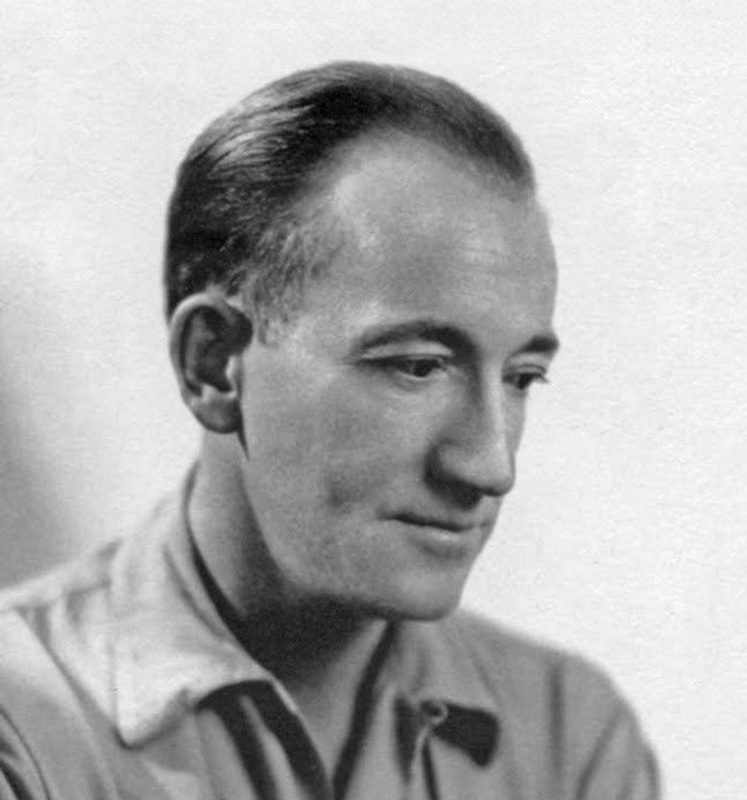
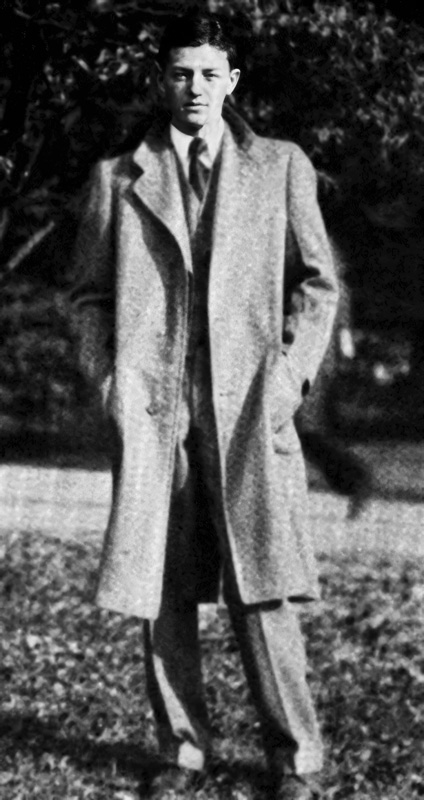
Wallace entered the University of Utah to major in English. Since his lonely childhood, he had loved reading books. At the university, Wallace became editor of Pen literary magazine, played basketball and tennis and took various classes, including geology. His freshman English teacher, Vardis Fisher, encouraged Wallace to write stories. He graduated with a bachelor’s in 1930 and then got a fellowship at the University of Iowa for his master’s in creative writing. It was probably the best program of its kind in the country.
In 1931, the family’s first major loss occurred when Cecil, age 23, died of pneumonia. Wallace obtained his master’s in 1932, writing three short stories as his dissertation. In 1933, his mother Hilda, aged 50, died of breast cancer: “You are a good boy, Wallace,” were her last words.
Stegner continued his studies, and his doctoral supervisor at the University of Iowa, Norman Foerster, suggested he change from creative writing to English literature. For his dissertation, Stegner wrote a biography, “Clarence Edward Dutton: Geologist and Man of Letters.” In 1934, Stegner married Mary Stuart Page, a graduate student at Iowa, and shortly after he became an English literature instructor at the University of Utah. Stegner was awarded his doctorate from the University of Iowa in 1935.
While at Utah, Stegner entered a short novel contest sponsored by the Little, Brown and Company publishing company. He won the first prize, $2,500, a considerably larger sum than his annual salary of $1,700. His award-winning book, “Remember Laughter,” was published in 1937. In the same year, his only child, Page (who later became an English literature professor and writer) was born in Salt Lake City. Because of the Depression, the University of Utah could not offer any promotion or tenure to Stegner. He accepted a teaching position at the University of Wisconsin in Madison, and then left for Harvard in 1939.
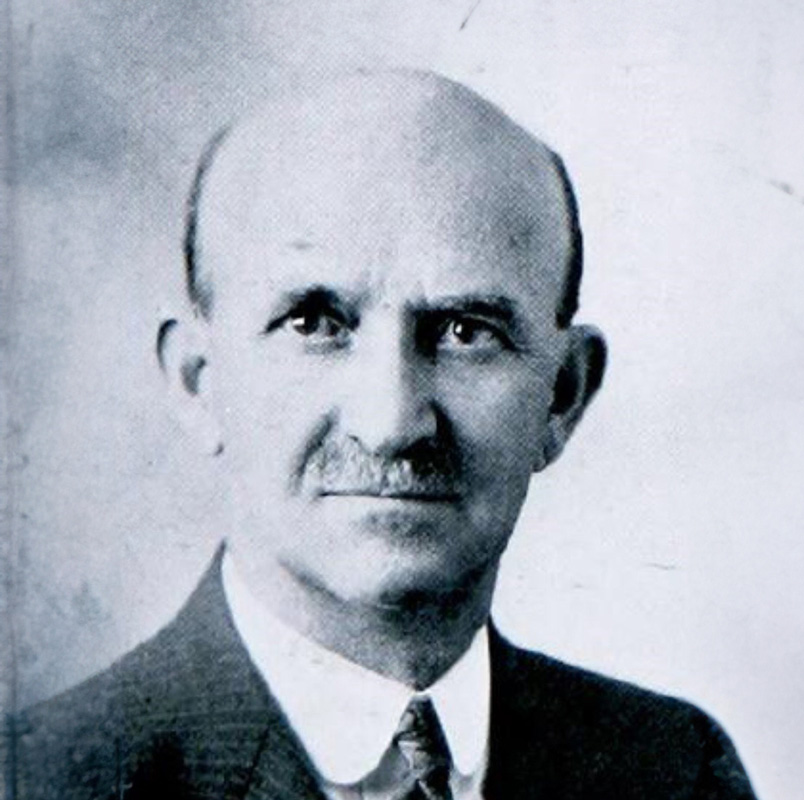
That year Stegner’s father shot his female companion in a jealous rage before killing himself in a downtown hotel in Salt Lake City. This tragic news was the talk of the town for days. Wallace, the only surviving member of the family, returned to Salt Lake City to bury his notorious father.
Making His Own Life
Raised in a wandering, poor family, Stegner came from nowhere, with no history. Yet, he made his own way to become a cultured and creative man of literature, history and environmentalism. He made the American West his larger home and became rooted in its story. In the face of all the tragedies in his life, Stegner kept a witty, joyous, hardworking and hopeful spirit.
In the summer of 1938, Stegner was invited to teach at the Bread Loaf Writer’s Conference in Vermont. It was there that he learned of the opportunity to teach creative writing at Harvard. His Harvard years – 1939 to 1944 – coincided with World War II.
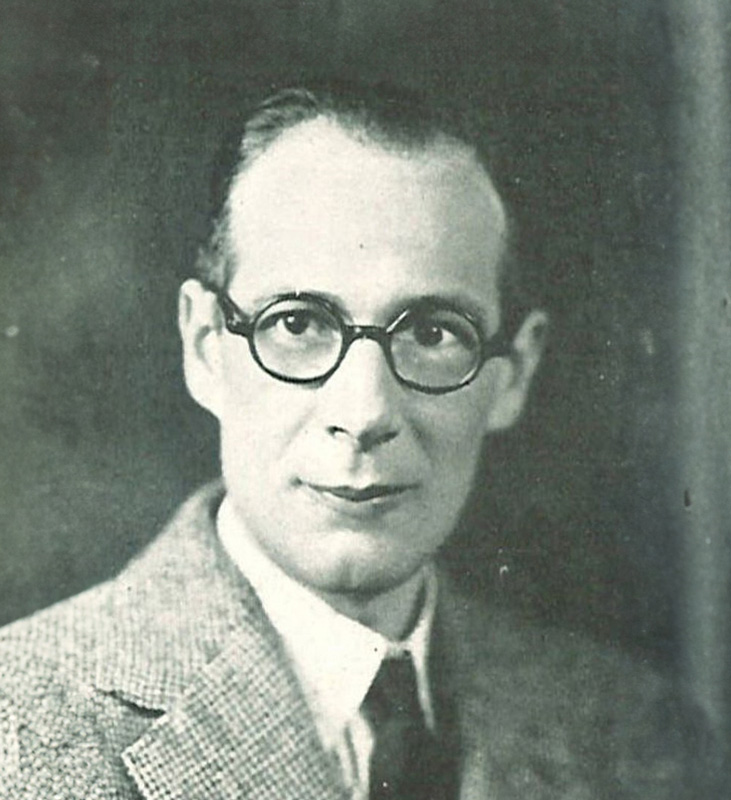
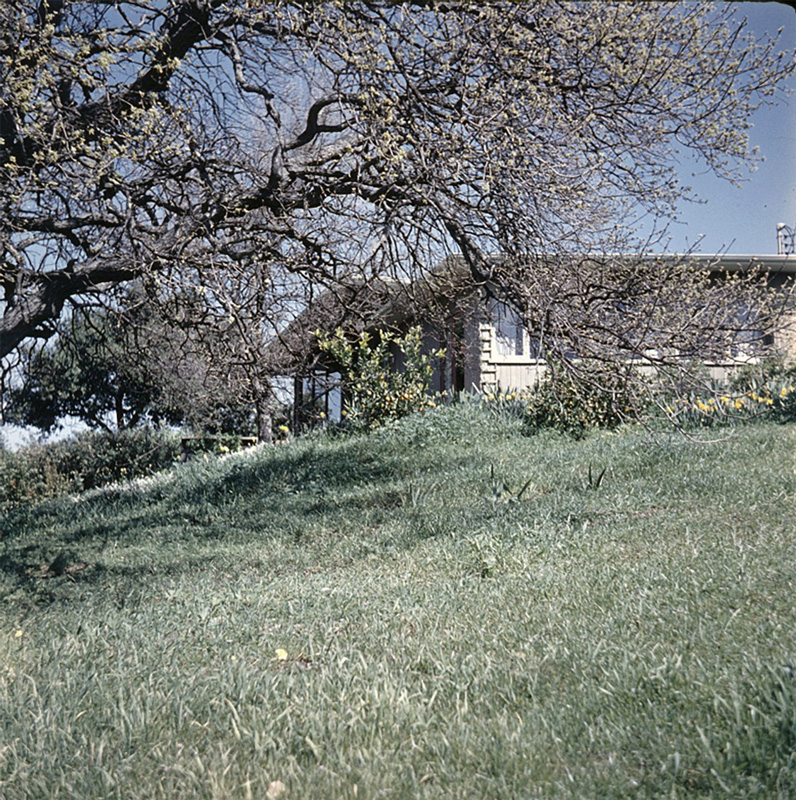
In 1945, Stegner was offered a teaching position at Stanford University’s English Department, where he setup a creative program – the first of its kind in the American West. For 25 years, he led the program and trained several dozens of successful writers. In 1971, at age 62, Stegner took an early retirement from Stanford to devote his time to writing and traveling. He was an old-fashioned ethical conservative and could not tolerate the counter-culture student protests and disruptions on campus.
In 1971, Stegner signed a contract with Doubleday to produce several books in the coming years. He received an advance payment of $150,000. “Angle of Repose,” his most famous novel, came out that year. This novel, like “The Big Rock Candy Mountain,” is the story of a family tragedy. The narrator is a retired history professor in the 1970s (modeled after Stegner’s teacher Norman Foerster who had retired to California). The narrator wants to write the memoirs of his grandmother (based on the notes of Mary Hallock Foote, 1847-1938). In this way, the plot goes back to the 19th century, and geologists of that era make appearances in the novel.
West of the Hundredth Meridian
Throughout his professional life, Stegner was fascinated by how a small group of devoted men from the U.S. Geological Survey mapped the geology of the American West in the second half of the 19th century. Of these pioneer geologists, two men in particular drew Stegner’s attention: Clarence Edward Dutton and John Wesley Powell.
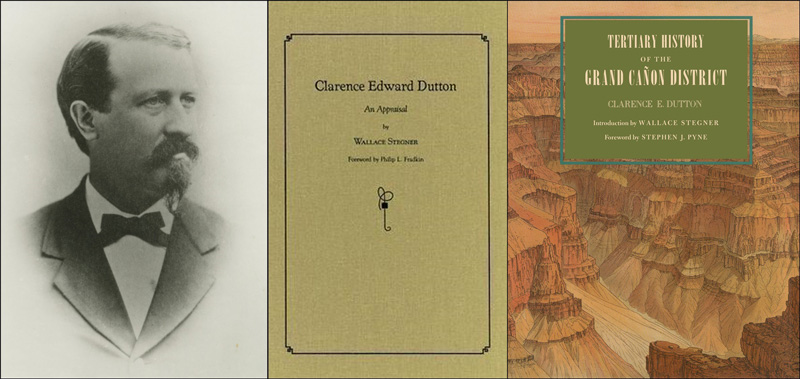
Dutton was the subject of Stegner’s doctoral thesis, which was published as “Clarence Dutton: An Appraisal” by the University of Utah Press in 1936. For his biography of Dutton, Stegner secured a long informative letter from the geologist’s son C. E. Dutton, Jr. (which Stegner included in his thesis). Stegner was fascinated by Dutton’s many talents and wide range of experiences: a veteran Army officer, a voracious reader, an original thinker, a brave field geologist, a good prose writer, and an artist with “an eye for color and an eye for form” (referring to Dutton’s geological maps and drawings). Of Dutton’s several geological reports, Stegner was particularly fond of “Report on the Geology of the High Plateaus of Utah” (1880) and “Tertiary History of the Grand Canyon District” (1882).
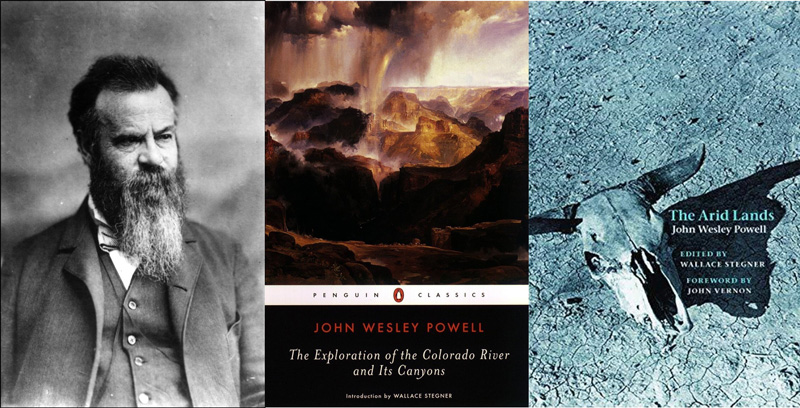
Major John Wesley Powell had lost his right arm in the Civil War and became a self-made professor of geology in Illinois. He is best known, of course, for leading the first exploration of the Colorado River from 1869-72, recorded in “Exploration of the Colorado River of the West and Its Tributaries.” This report, published in 1875, is a Western classic of exploration literature and was republished in Penguin Classics in 1987 with an introduction by Stegner. “The Powell expedition,” Stegner remarked, “was as barren of official backing as it was of official intentions … And the purpose of this shoestring expedition? Only to discover. To find out. To observe, analyze, map, comprehend, know.”
This observing, mapping and knowing included not only the lands, canyons and waters but also the native tribes and cultures. Indeed, Powell, two years before becoming the director of the U.S. Geological Survey in 1881, had become the first director of the Bureau of Ethnology at the Smithsonian Institution in Washington, D.C.
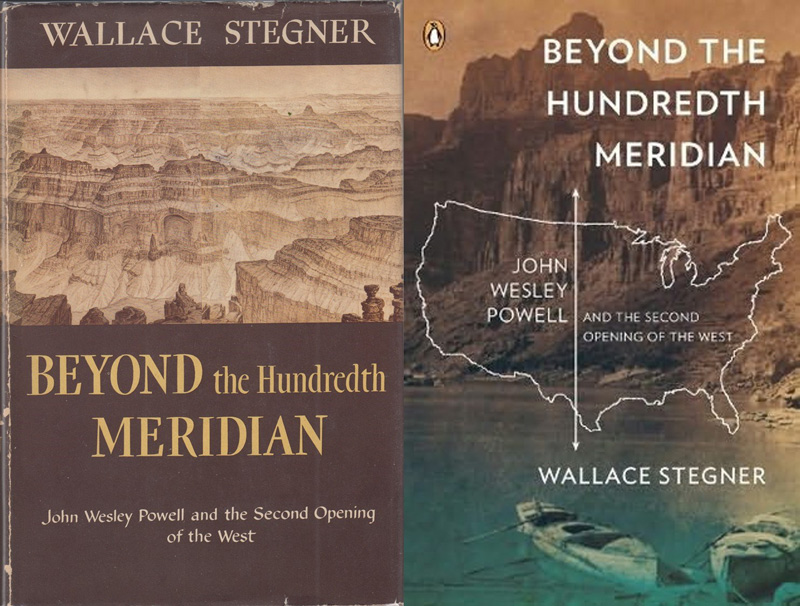
In 1954, Stegner published “Beyond the Hundredth Meridian: John Wesley Powell and the Second Opening of the West.” To write this book, Stegner did what even expert geologists rarely do: he researched and read almost all the major geological reports of the American West produced by pioneer geologists, including Dutton, Powell, Clarence King, Ferdinand V. Hayden, George Wheeler and G.K. Gilbert. Now, six decades after its publication, “Beyond the Hundredth Meridian” remains the most readable account of the mapping history of the American West.
The Hundredth Meridian, running almost parallel to the Continental Divide, separates the humid, green and low-lying lands of the East from the arid, high lands and deserts of the American West. Both Powell and Stegner argued that one cannot treat, develop and exploit the West like other geographies.
In “The Sound of Mountain Water,” Stegner wrote, “This is the West’s ultimate unity: aridity. In other ways it has a bewildering variety.”
Water shortage, fragile ecosystems, naked sandstone country and native cultural heritages in the American West require different responsibilities and their own means of sustainable development and living in the region. It was with these thoughts that Stegner republished Powell’s “1878 Report on the Lands of the Arid Region of the United States” in 1962 with a 20-page introduction to show its enduring relevance.
Geography of Hope
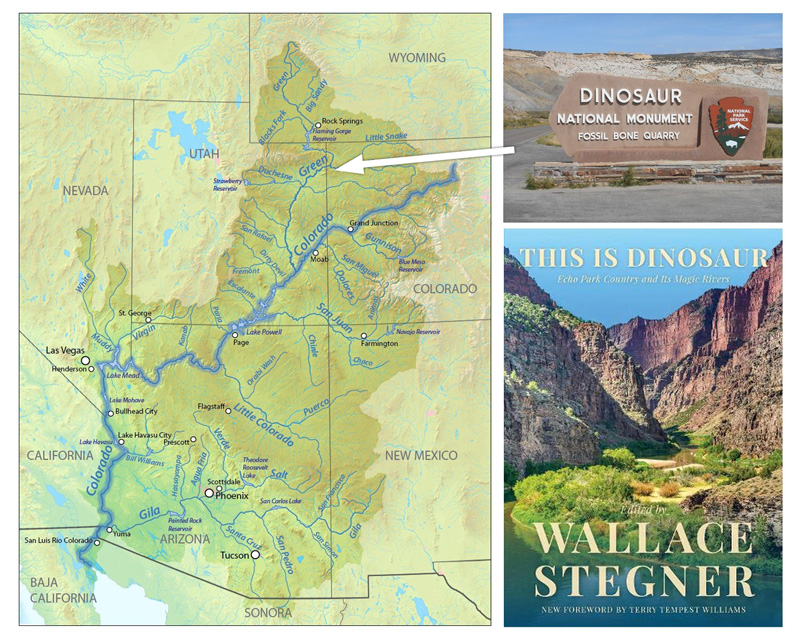
Since his childhood, Stegner loved the landscapes, solitude and serenity of the American West. In 1954, he learned of a federal government plan to build a hydroelectric dam at the confluence of the Yampa and Green Rivers in the Echo Park country of Utah. This construction would have flooded and destroyed Dinosaur National Monument. Stegner wrote two articles: “Battle for Wilderness for The New Republic” and “We Are Destroying Our National Parks,” published in Sports Illustrated. These articles caught the attention of David Brower of the Sierra Club who had solicited articles for a book advocating Dinosaur’s preservation. Brower contacted Stegner and asked him to edit the planned book. “This is Dinosaur: Echo Park Country and Its Magic Rivers” was published in 1955, and copies of the book were sent to all members of Congress. The initiative proved to be effective. The plan to construct the dam was canceled and Dinosaur was saved.
In 1960, Stegner wrote “The Wilderness Letter,” actually a short essay in defense of preserving wilderness: “Something will have gone out of us as a people, if we ever let the remaining wilderness be destroyed; if we permit the last virgin forests to be turned into comic books and plastic cigarette cases; if we drive the few remaining members of the wild species into zoos or to extinction.” He concluded: “We simply need that wild country available to us, even if we never do more than drive to its edge and look in. For it can be a means of reassuring ourselves of our sanity as creatures, a part of the geography of hope.”
Chronicles of Arabian Oil
In July 1955, one of Stegner’s former students, Ray Graham, who had become a film producer and a public relations consultant for Aramco in New York phoned Stegner. Graham planned to produce a book on the history of oil in Saudi Arabia to go along with his film, “Island of Allah.” Having read Stegner’s works, Graham thought his former professor would be the right person to write this history because Stegner had written about deserts and frontiers and because most American geologists working for Aramco came from California, close to Stegner’s heart.
The offer was financially attractive, and Mary Stegner also encouraged it because she wanted to see the fabulous landscapes of “Arabian Nights.” That November, the Stegners flew on Aramco’s private aircraft, the Flying Camel. They first visited Lebanon and Syria before arriving in Dhahran, Aramco’s headquarters.
“I got to go out into the deserts quite a lot with geologists and drillers, and other kinds of people,” said Stegner. He traveled around the country and interviewed the old-timers still alive and collected information from Aramco’s archives.
Mary was not impressed, saying “It was no ‘Arabian Nights’ at all.” She got stuck in the compound listening to the radio and drinking fruit juice.
After returning to California, Stegner worked hard to finish the book and submitted the manuscript in 1956 to Aramco’s New York office. Their plan was to publish the history in a series of articles in Aramco World. The company managers were paying for and expecting a “rosy company history” to please the public and politicians, but Stegner had written his understanding of the history, both glorifying and critical where necessary. Even though Stegner revised the manuscript, he finally gave up in frustration. Aramco officials decided to put the manuscript in the archive.
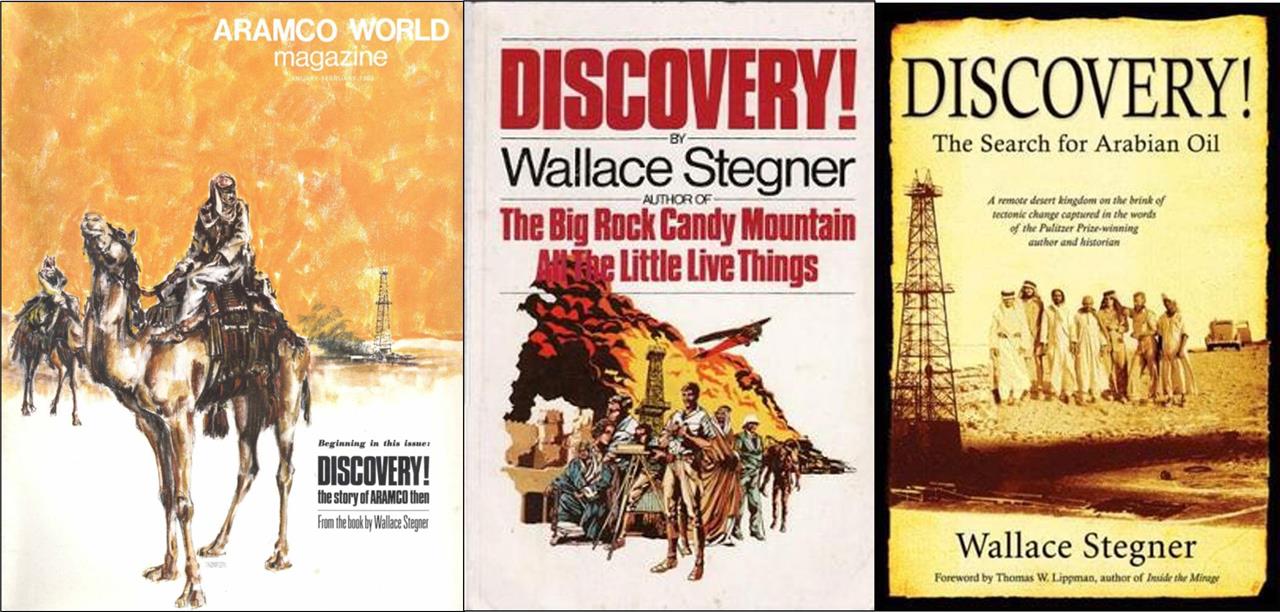
In 1967, Paul Hoye, a young journalist who had become editor of Aramco World, uncovered Stegner’s manuscript and published its 14 chapters in consecutive issues of the magazine from 1968 to early 1970. These were later collected and published in a book, ”Discovery!” Coming from the pen of a master writer, “Discovery!” remains the best literary work on the oil history of the Middle East.
Stegner saw parallels between the 19th-century geologists who mapped the arid landscape of the American West and the 20th-century American geologists who explored the new frontiers of Arabian deserts. One of these pioneers was the legendary geologist Max Steineke, who had died at age 54 in 1952, three years before Stegner’s trip to Saudi Arabia. (See “Steineke of Arabia” in the EXPLORER, March 2023.)
Stegner’s Legacy
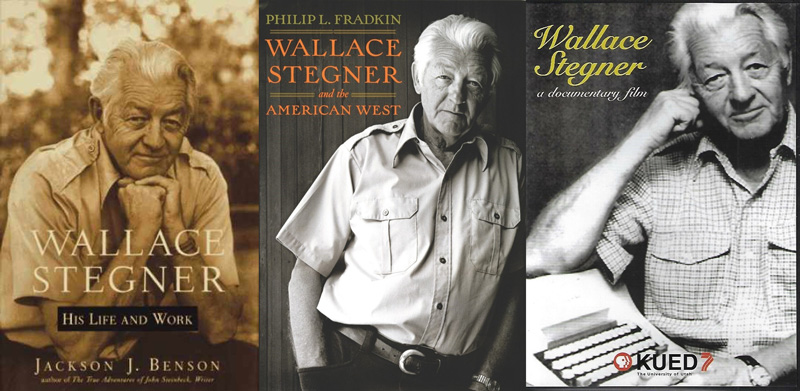
Wallace Stegner’s life spanned most of the 20th century. His legacy as a teacher and mentor, as a writer and thinker, and as a historian and environmentalist of the American West is phenomenal. He published 13 novels, 58 short stories, 20 nonfiction books of history, lectures and interviews, 10 edited volumes and nearly 250 essays and introductions (mostly collected in five volumes). He was a spokesman for protection of wilderness in the American West. In placing the American West on the world’s intellectual and literary map, Stegner stood up against New York critics who tried to downplay his works as merely regional or provincial. He returned the favor by saying that his critics were biased regionalists and that all true literature is rooted in personal and regional experiences.
The crucial moment that made Stegner a nature writer was when he studied the life and works of the geologist Dutton. I had long wondered what drew Stegner to Dutton. This is how it happened. When Stegner was a student at the University of Utah, he took geology classes from Frederick Pack. On the day of his examination, Stegner had to take a friend who had smashed his thumb in a car door to the hospital; therefore, he missed the exam. To make up for the exam, Pack gave Stegner a copy of Dutton’s “Report on the Geology of the High Plateaus of Utah” and asked him to read it and write a summary report. Stegner loved Dutton’s book, and he was hooked for a lifetime by the history of geology and mapping of the American West.
Toward the end of his life when Stegner wanted to donate his papers and documents to a university, he debated between Stanford and the University of Utah. He chose the latter, saying “Any scholar who has to go to Salt Lake to study Stegner will get a bonus into good country.”
Acknowledgements: Thanks to the Special Collections at the University of Utah’s J. Willard Marriott Library where Stegner’s papers (manuscripts, correspondence, photographs, journals and other documents) are preserved in 219 boxes, and for some of the images used here.