
A philanthropic legacy that was born nearly 50 years ago in the ocean waters of Australia has added yet another chapter to its amazing story – and once again, to the benefit of geoscience education around the world.
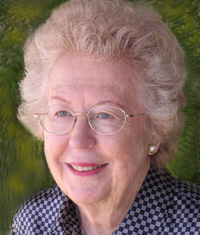
Marta S. Weeks-Wulf, an AAPG Foundation Trustee Associate, who, like others bearing the Weeks name, has generously and repeatedly supported the Foundation over the past four-plus decades, recently bequeathed yet another gift that will provide benefits for decades of geoscientists: A $5 million annuity gift that will be distributed through 2029.
Details of the gift were finalized in late December, and the Foundation Trustees will now determine specific uses for the funds. Geoscience education – a passion for Marta to this very day – is expected to be the priority.
AAPG Foundation Chair Jim McGhay, speaking for the Trustees, expressed heartfelt appreciation for the gift, and said that it not only will help ensure ongoing efforts in support of geoscience education, but could serve as a generous example to others.
“I would like to thank Marta and her family on behalf of the Foundation Trustees,” McGhay said, “although the true heritage of her family’s generosity will be the thankfulness of the hundreds of students and countless others that have and will continue to feel the impact.
“This has been a crucial time in our profession and industry, and Marta’s continued support to the Foundation has been a major underpinning to the success of our programs,” he added, “and has been an inspiration to many others to join them in their support.”
The surprise announcement is only the latest of many donations she and her family have made to the AAPG Foundation, including a $10 million bequest in 2006, the largest gift ever received by AAPG.
“The hope is that this gift is an impetus for the Foundation to set its goals high,” Marta said at the time, “and that this be a prelude to new horizons and even greater achievements.”
That donation did indeed position the Foundation to provide ongoing support in furthering the science of petroleum geology, expanding AAPG’s reach and sustaining geoscience education around the world.
While the AAPG Foundation supports a plethora of geoscience programs for geoscientists throughout their careers, its focus on education is among the higher profile activities.
For example:
- In 2021, the L. Austin Weeks Undergraduate Grant program (there’s that name again!), which annually awards undergraduate geoscience students and student-led geoscience associations with $500 grants, awarded $88,500 to 44 student organizations and 133 students.
- Also last year, the Grants-in-Aid Program, which provides financial assistance to graduate students whose studies have application to the search for and development of petroleum and energy-mineral resources and/or to related environmental geology issues, awarded 125 grants totaling $299,000.
A Legacy of Giving
Marta Weeks-Wulf, a retired Episcopal priest and “multifaceted philanthropist” now residing in Miami Springs, Fla., was the daughter of a geologist, raised on both the North and South America continents. In 1951 she married L. Austin Weeks, an internationally active petroleum geologist who, after his death in 2005, became the namesake of the Foundation’s highest honor, the L. Austin Weeks Memorial Medal.
Weeks himself was the son of famed geologist Lewis G. Weeks, who is credited with the 1964 discovery of oil in the Bass Strait, Australia’s first offshore success, which by its peak in the mid-1980s was producing over half a million barrels a day – at one point, suppling 70 percent of Australia’s petroleum needs. (See accompanying sidebar.)
In other words, geosciences and, specifically, petroleum geology, have been constants in her life – and “giving back” is an ongoing pleasure.
“I give to AAPG to honor my father, my husband and my father-in-law,” she said, “all of whom were involved in petroleum geology.”
Indeed, the Weeks’ impact on AAPG – and the entire city of Tulsa – is more than simply significant. Lewis provided a gift to the Foundation that allowed the building of the Weeks Tower in 1975 at AAPG headquarters in Tulsa.
Nearly 10 years later, 500,000 shares of Weeks Petroleum stock that had been given to the Foundation were sold, leading to construction of the Pratt Tower.
Today, Marta remains an active member of the Foundation Trustee Associates (she’s been a member since 1976), as well as a variety of other charities, plus her passionate support of the arts.