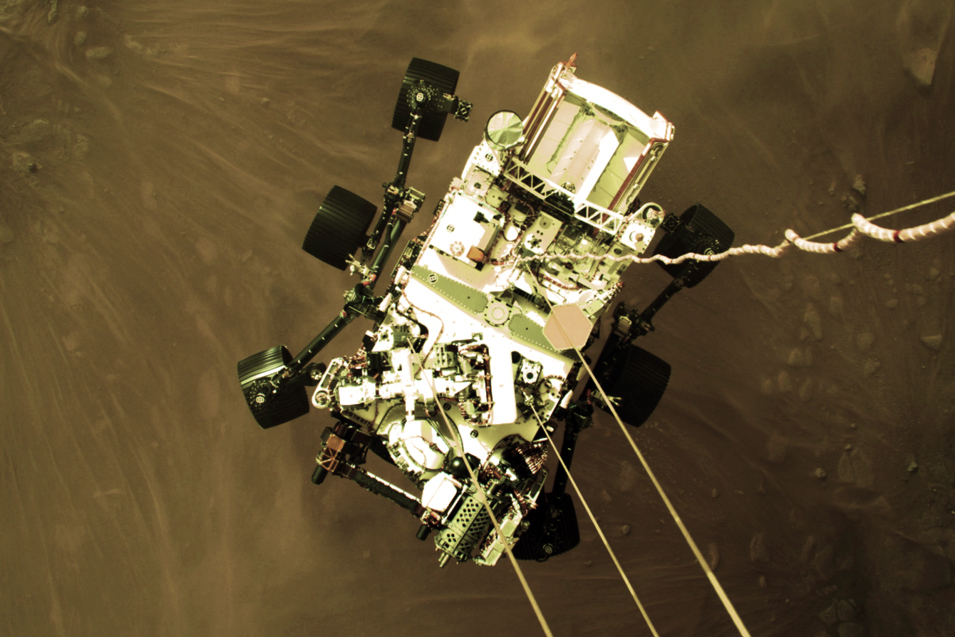
The Perseverance rover touched down on Feb. 18, 2021 at 2:55 p.m. CST with live play-by-play straight from JPL Mission control. Within moments after touchdown, during celebration and high-fives, a picture emerged from the rover on the surface of Mars.
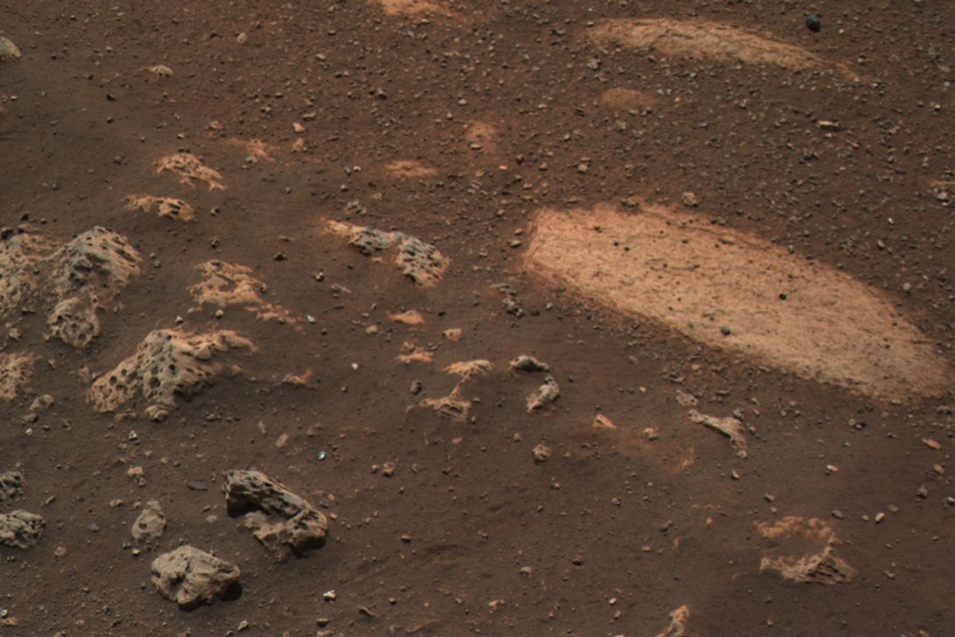
First rock analysis is a basalt. “The light color had us wondering if the holes werelimestone with wind blown holes. The basalt may have holes as gas vesicles,” said Cook.
The rover and landing system later returned spectacular images of the landing and the first 360-degree panorama of the landing zone. Already hundreds of images have been sent home. Most of these first images are from camera systems and subsystem checkouts.
Katie Stack Morgan, geologist and deputy project scientist of the Mars 2020 rover mission, published on the geology of Jezero Crater in the December EXPLORER. Currently, she reports, “I’m living on Mars time!” as she, along with rover engineers, check out each system and calibrate each important science instrument on “Percy.” The rover scientists and engineers stretch their living clock about 40 minutes longer each Earth day to stay on track with daylight on Mars.
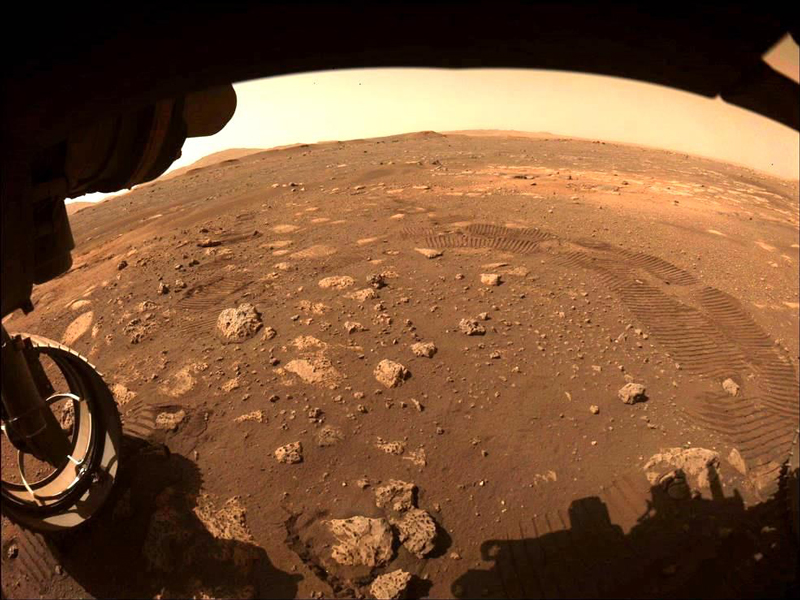
Percy’s First Drive of 22 meters on March 4, 2021,Sol 13. Below is the scene from a different NavCam.Note the light colored rocks with holes like a spongein the foreground and the oval shaped light patches inthe background that were scoured by the Sky Cranelanding system. (Image: NASA-JPL-Caltech)
On Percy Sol 9, Martian geologist Kiersten Siebach reports on the rocks among which Percy landed.
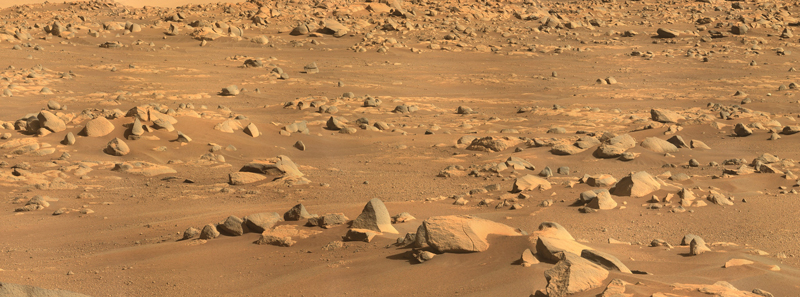
“I think at this point, the real highlights are the pictures – there’s not much any of us can say about the geology besides noting that the rocks are light-toned and have holes, which could be vesicles or pits eroded by water or wind. We’ve got a couple months of mostly engineering checkouts ahead of us, and then the real science begins!” she said.
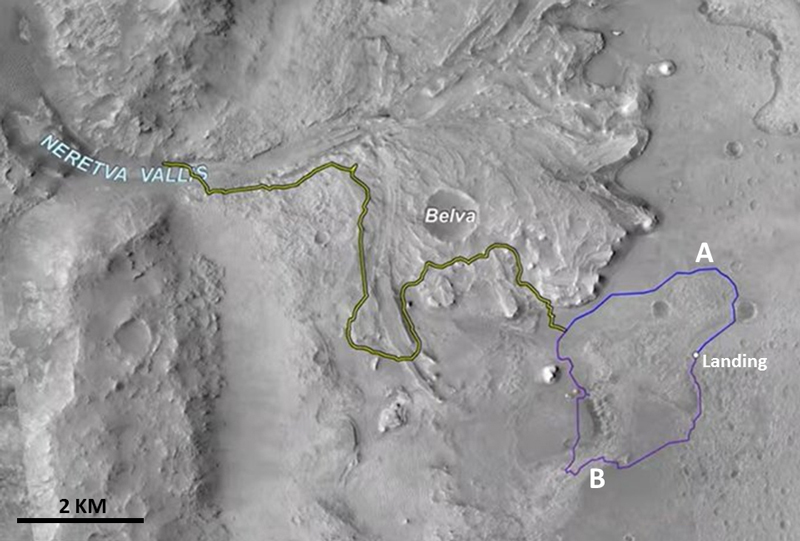
Rover teams work to decide the bestroute to get to the ancient river delta.Route A is the safest. Route B offersthe most geologic opportunities.Image courtesy of NASA-JPL-Caltech.
Siebach is an assistant professor in the Rice University Department of Earth, Environmental, and Planetary Sciences, and is one of 13 scientists selected to help operate the rover.
AAPG EXPLORE Live! held a panel on March 18 (Percy Sol 27) on “Perseverance and the Geology of Mars,” featuring Siebach and Michael Thorpe, Mars sample return scientist at the Johnson Space Center, AAPG President Rick Fritz and AAPG Astrogeology Committee co-chairs Bill Ambrose and Bruce Cutright.
As the rover gets down to the work of geologic exploration in Jezero Crater, it will look for signs of ancient life from over 3.5 billion years ago when a river delta and lake filled the impact crater for millions of years.
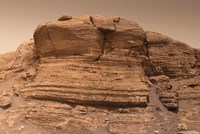
Mont Mercou outcrop is transitional from lacustrine to fluvial to aeolian deposits with analogs on Earth. Image courtesy of NASA/JPL-Caltech.
Mars Curiosity Rover Mission Update: Sol 3067 March 22, 2021
While the Curiosity rover continues its traverse up Mount Sharp in Gale Crater, it just encountered the colorful “Mont Mercou” sandstone outcrop and executed drilling a rock called “Target Nontron” for SAM analysis.
The sample analysis at Mars, or “SAM,” tool is made up of three different instruments that search for and measure organic chemicals and light elements that are important ingredients potentially associated with life.
The gas chromatograph separates gases to aid in identifying them.
The mass spectrometer detects key elements necessary for life such as nitrogen, phosphorous, sulfur, oxygen and carbon. The tunable laser spectrometer detects water vapor and methane to determine whether methane, if found, is produced by life or geologic processes. See the January and March 2021 issues of the EXPLORER for full details.
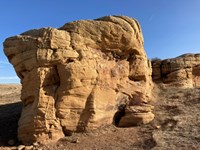
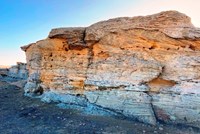
Transitional fluvial to aeolian sandstone, Permian Casper Formation, south central Wyoming as an analog to sediments found in Gale Crater on Mars. Photos by Doug Cook.
My Favorite Martian Outcrop
Also, join us on Thursday, April 22 at noon CDT for the “My Favorite Martian Outcrop” EXPLORER Live! event as Mars researchers discuss what they have learned about the geology of Mars and what the outcrops tell us. The Mars researchers will also answer questions about the geology, the equipment, and what we are learning about the geological history of Mars.
Register in Advance!