“Everybody has an agenda. Except me.”
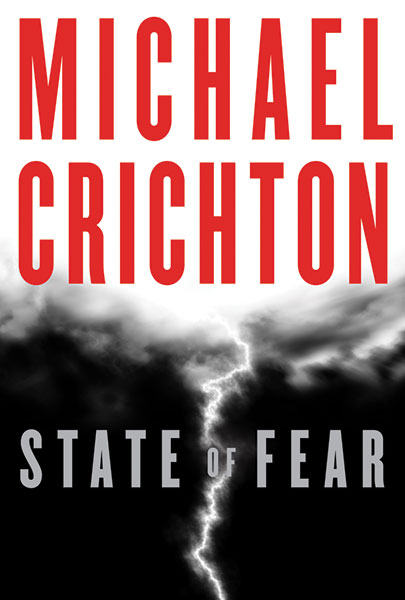
So ends Michael Crichton’s latest science-based thriller, State of Fear (HarperCollins, 603 pages, $27.95). Crichton’s statement comes at the end of a novel that makes important and rarely heard points concerning the global warming debate.
The question may be asked: “Why is an earth science organization reviewing a work of fiction?”
First, much of what passes for science is actually fiction.
Second, State of Fear, which is on the “Best Selling” list, is not an ordinary work of fiction. It is meticulously footnoted and has 34 pages of bibliographical material with commentary on each reference by the author, together with two appendices. Many papers presented in esteemed journals of science cannot make equal claims.
Third, Crichton has real science credentials. He has both an undergraduate degree in anthropology and an M.D. from Harvard University.
A genus of ankylosaurus is named after him: Crichtonsaurus bohlini, a late Cretaceous, three-meter long fossil, discovered in China in 2002.
Most importantly, State of Fear is a wide-ranging exposition on the status of climate and earth science.
However unlikely the plot (left), the book does make a number of extremely important points concerning the science of global warming. Kenner’s repeated exposition of scientific studies shows that there is a substantial amount of evidence that the planet is not warming at all. In spite of the dire pronouncements we hear from the mouths of reporters, musicians, actors and fellow scientists, the science of climate change is not nearly as clear as could be wished. In fact, a case might be made that the earth is actually cooling. As many may recall, an impending ice age was widely predicted by many of these same celebrities and assorted luddites in the 1970s. As noted by Oscar Wilde: “The pure and simple truth is rarely pure and never simple.”
Crichton is obviously outraged by the mis-allocation of resources and the human misery and environmental destruction that have resulted from the misuse of science and the misunderstanding of our environment. He debunks many of the more popular myths of our age: Alar, DDT, the power-line cancer scare and others. Through his character of Professor Hoffman, Crichton argues that the true agenda is “control.”
If correct, the thought is chilling. Environmental considerations color nearly every conceivable issue. If anything, Crichton understates the impact of the environmental movement.
The lesson for us all is that science should be left to the scientists and protected from misuse by the unscrupulous. Advocates have perverted science through ignorance or outright misrepresentations. This mistaken or maligned advocacy diverts available resources to nonexistent problems. The result, in Crichton’s words: statistical murder.
Crichton’s tongue is firmly in his cheek in his disavowal of an agenda; however, many of his forthright suggestions in the “Author’s Message” are right on target.
The point to be taken is not whether global warming is in fact occurring, or even whether or not man’s activities are having an effect. The point is that at present we simply don’t know if the earth’s climate is changing. It is even less clear whether any action we can take, no matter how drastic, will make one whit’s worth of difference. The earth has been both much cooler and much warmer many times before in its over six billion year history. Humanity has not even been witness to the vast majority of those events.
Geologists know that fact. The earth science community has largely stayed on the sidelines during the environmental debate that has raged for the last 30 years.
State of Fear is a wake-up call.