
A milestone event is occurring in Angola’s oil industry this year – Angola celebrates 100 years since the first oil well was drilled in the country.
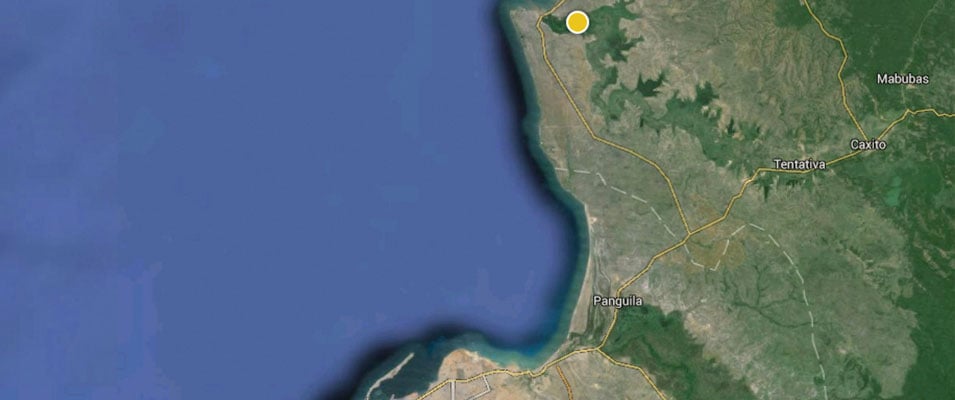
The first oil well, Dande-1, was drilled in the Dande River valley approximately 40 kilometers north of Luanda. Drilling began on March 25, 1915, and terminated four months later in July, as the well proved to be dry but drilling cuttings gave off a strong aroma of oil.
The well was drilled by the Portuguese oil company Pesquisas Mineiras de Angola (PEMA).
There are no historical records available to indicate why this location was chosen. The well was drilled before technology such as seismic, magnetic and gravity data was available. Oil seeps consisting of asphalt deposits are located northwest of the well site, which may have provided some incentive to drill the well. The seeps likely would have indicated to the geologists that oil had been generated in the area and had migrated updip and near to the outcrop edge of basement.
This area is today known as the Libongos asphalt deposits.
Two more wells were drilled and were abandoned due to the collapse of the casing.
On Aug. 14, 1916, Dande-4 was drilled to a depth of 857 meters and also abandoned, but the well tested six barrels per day of heavy oil. This represented the first-ever actual flow of oil in Angola.
Economic Impact
In 1919, a joint venture was formed with another Portuguese oil company, Companhia do Petroleo de Angola (COPA) and the American oil company, New York-based Sinclair Oil. This led to further exploration drilling until 1926, when drilling terminated due to lack of commercial discoveries.
Another three decades passed before the first commercial oil field was discovered by Portuguese oil company Petrofina in Benfica, a suburb on the southern edge of Luanda.
The discovery was Benfica-2, which was drilled in 1955 and commenced producing oil in 1956 representing a very important milestone in Angola’s oil industry.
Oil revenue has provided Angola with about 95 percent of its foreign exchange and 50 percent of its GDP.
Angola suffered immensely during the long civil war from 1975 to 2002. With the end of the war, revenues provided by the oil industry have enabled the Angola government to rebuild the country with new roads, railroads, hydro-electric projects, airports, hospitals, schools and universities.