
The Petroleum Museum in Midland, Texas, is one of the best institutions in the world to get a sense of the history of the oil and gas industry. Ideas for a petroleum museum in the Permian Basin were considered long ago, but the first to grow legs was conceived in the mid-1950s as part of the Permian Basin Oil Show.
When the Oil Show moved in 1954 from a park in West Odessa, Texas, to its permanent home on the Ector County Coliseum grounds, the directors decided that the Oil Show should dedicate itself to building a museum to be located near the Oil Show grounds “as soon as possible.” They also decided that all profits derived from the Oil Show’s professional entertainment would be set aside for a museum.
Plans were quickly underway for the development of a permanent Boom Town with an old cable tool rig as the central attraction. A saloon, café, jail and a tent and shack town were to be added later. This was to be the beginning of a museum “dedicated to the workers of the petroleum industry.” Two years later, a drawing of the proposed museum was presented to Oil Show directors and in 1958, 100 acres between Midland and Odessa were gifted for the project.
Unfortunately, nothing ever came of this early attempt to create a Permian Basin Petroleum Museum dedicated, according to oil historian Samuel Myres, “to a dual purpose, recognizing and honoring the people, the pioneers who made possible the petroleum industry and educating the public about the great enterprise that has brought wealth and progress to the region.”
But, this idea never left a Midland oilman named George T. Abell.
The Birth of the Museum
From the bustling coffee shop at Midland’s historic Scharbauer Hotel, Abell continued the campaign in the 1960s by writing letters about a contemplated “Museum of the Oil Industry” to be located between Midland and Odessa. He dreamed of a living, vibrant museum, attached to a university, which would speak with the voices of the men and women who had built the oil industry. He searched for antique oil field equipment for the museum, either as gifts or as purchases. In September 1964, 11 Permian Basin business and petroleum leaders from Midland, Odessa and Monahans met to discuss the project. The bitter presidential election of 1964 between Barry Goldwater and Lyndon Johnson brought the project to a halt, but then in 1966, it came to life again with the Abell-Hanger Foundation’s offer of a grant in the amount of $100,000 if the business group could raise $2 million dollars of support from the oil and gas industry.
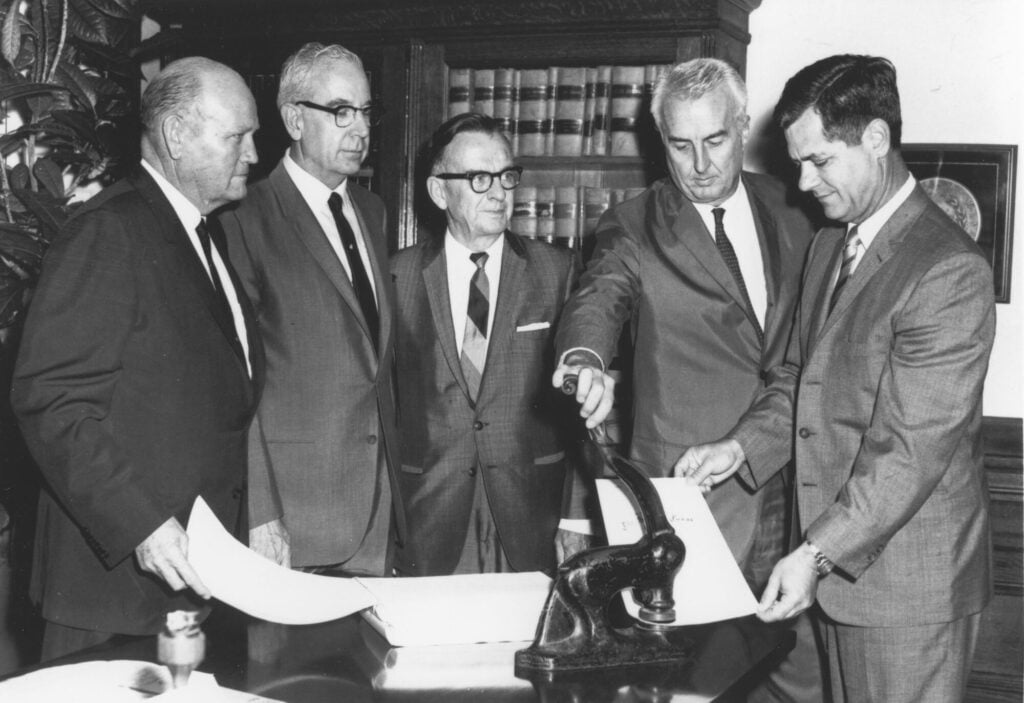
Organizational work began in May, continuing through September of 1967. Remarkably, 536 people from across the nation joined as incorporators of the organization and the museum was officially chartered by the State of Texas on Oct. 2, 1967. It was the largest number of signers of any corporation ever chartered in the history of the state. George Abell, Maurice Bullock, and Claude W. Brown were in Austin on that Monday, with then Texas Secretary of State John Hill for the formal signing of the corporation’s charter for the “Permian Basin Petroleum Museum, Library and Hall of Fame.” An early Texas state seal was brought out of storage for this special occasion.
On April 30, 1968, the incorporators held their second organizational meeting, approving the charter and selecting their first officers. The first Hall of Fame dinner was held following that meeting, and almost 250 people attended. Frank Pickrell of El Paso, a prime influence in the discovery of oil in Reagan County, was the initial honoree. Judge William L. Kerr was master of ceremonies. Houston Harte, publisher of the San Angelo Standard-Times introduced Pickrell, who had served as vice president and general manager of Texon Oil and Land Company when the historic Santa Rita No. 1 blew in on May 28, 1923, the discovery well for the Permian Basin that revealed the vast oil reserves buried there and fundamentally changed the landscape of the American oil industry.
Following the dinner, Kerr said of the evening, “The way everything was handled means to the public that quality of the product will dictate those who are to receive the award, and, in my judgement, the selection of Mr. Pickrell to be the number one awardee was a stroke of genius.”
Construction
Homer Fort, the Museum’s first director, was hired away from his job as head of Mobil Oil Company’s public relations department in 1968. Fort was a master planner, overseeing the financial strategy, as well as exhibits design and execution, with characteristic attention to detail. Working closely with designers and architects, Fort helped build the Museum’s foundation, literally and financially.
In the early days of planning for the museum, it was thought a site between Midland and Odessa, located with a university, the proposed University of Texas Permian Basin, would be ideal. But in June of 1969 the Midland/Odessa united front crumbled when the site for UTPB landed in Odessa. The Midland contingent was furious and began searching for a new site. Three months later, 41.4 acres on the south side of Midland was chosen. The Abells donated 34.2 acres, and another 7.2 acres was gifted to grant right-of-way access.
On Jan. 1, 1971, the trustees agreed to begin construction of the museum complex. Fundraising began and by the end of 1971 $830,000 had been raised. In 1972, with fundraising continuing, ground was broken and construction began, at a total cost of $1.4 million.
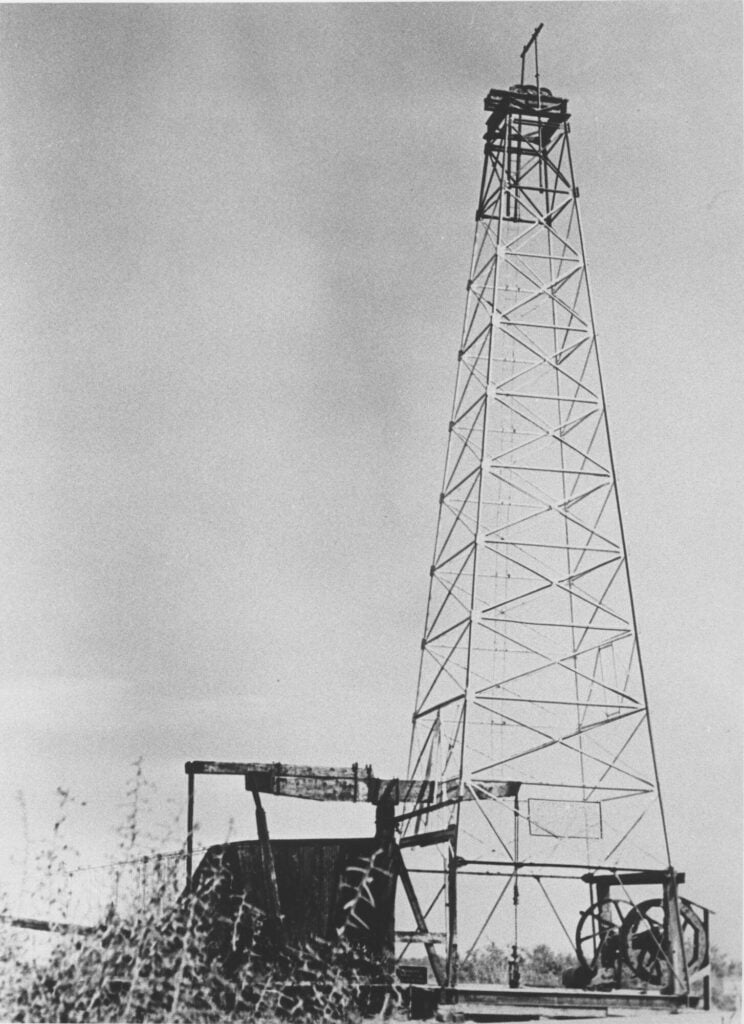
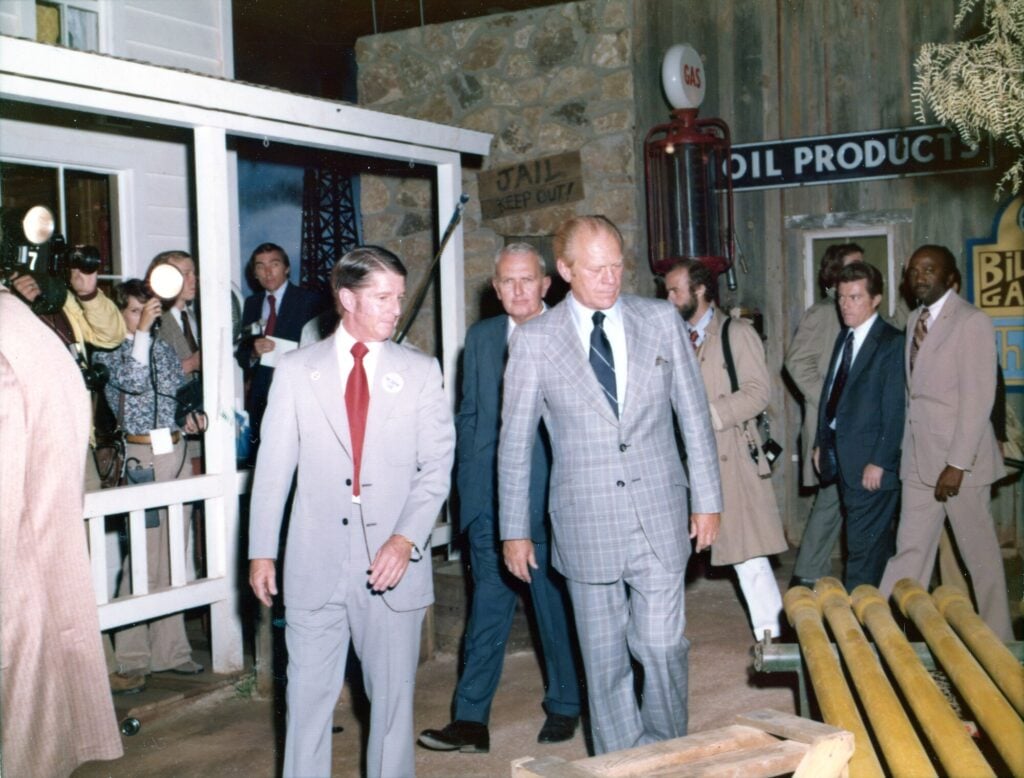
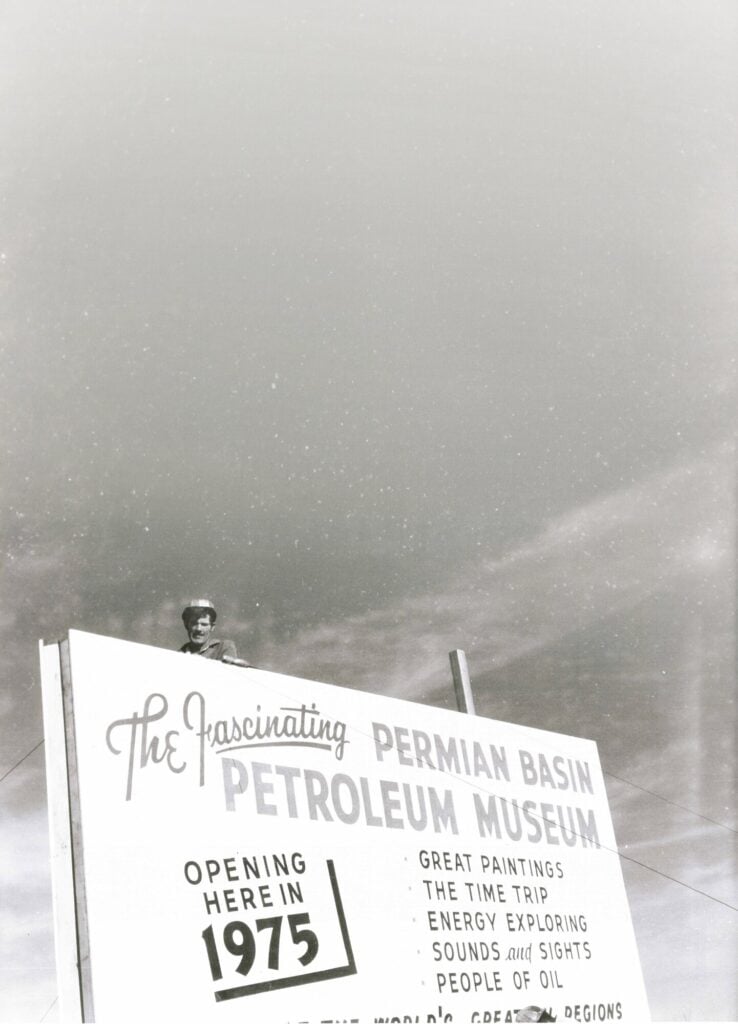
In 1974, the derrick that drilled the Santa Rita No. 2 was moved to the museum grounds and after years of work, the Museum finally opened its doors on Sept. 13, 1975, with U.S. President Gerald Ford dedicating the building. Board of Trustees President Russ Ramsland oversaw showing Ford through the new museum. Since then, the museum has continued to grow.
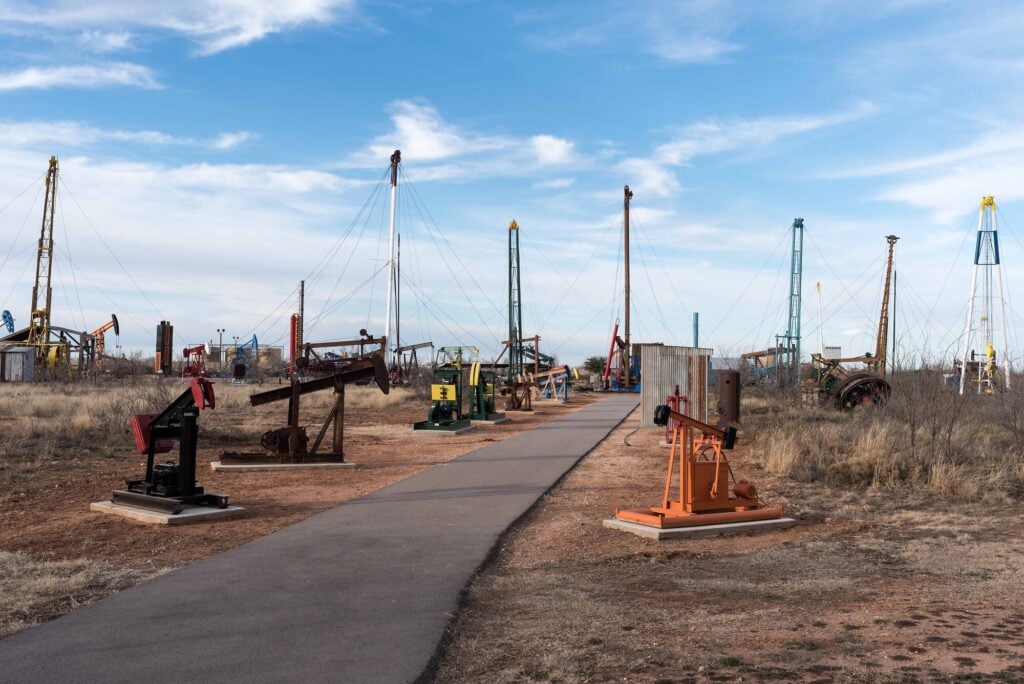
The Oil Patch exhibit of early drilling machines – a central band wheel power unit and other antique equipment – debuted in April 1977, dedicated “to the workers of the oilfields whose hands dug the ditches, drilled the wells, produced the oil and gas, and who sweated and shivered at thousands of locations around the world. Let their names be remembered here.”
New Facilities
The Museum’s Library and Archives Center opened in 1979 with more than 4,000 square feet of space, including a research library, processing room and art storage area. The Petroleum Museum’s Archives house the papers of Samuel D. Myres, author of the foundational, definitive histories of oil in the Permian Basin. The museum’s first archivist, Betty Orbeck, worked with Myres researching information for his two books, “Era of Discovery” and “Era of Advancement.” Myres’ papers, documents, and 260 oral histories became the nucleus for the museum’s archives. Since then, the archives have grown to contain not only the Myres collection but also photographs, motion picture films, manuscripts and maps. More than 500 taped oral history interviews and more than 450,000 photographs document those early oilfield days. The Archives Center also contains extensive files on each of the museum’s Petroleum Hall of Fame inductees.
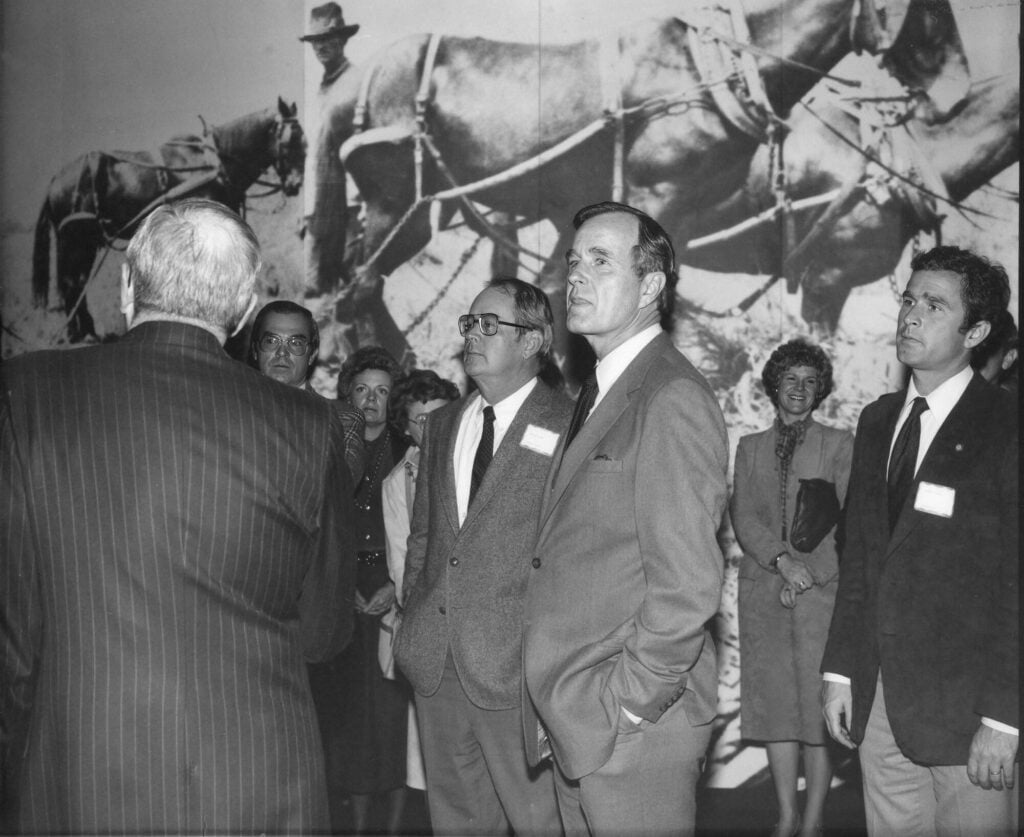
In 1980 work began on the museum’s North Wing and in 1981 it was completed. U.S. Vice President George H. W. Bush cut the ribbon at that ceremony. His son, future President George W. Bush, accompanied him to the opening. The North Wing explained the process of petroleum production.
In 1988, the exhibit “The History of the Pumping Unit” opened in the Oil Patch, assembled by Arthur Dinsmoor, a devoted volunteer at the museum. George and Kelly Young were present when the collection of 16 pumping units was dedicated to their father, Marshall R. Young, a legendary oilman in the Permian Basin’s early days. And then in 1996, a vintage 1950s rotary rig was installed on the grounds.
In the late 1990s, a design company was hired in the interest of “sprucing up” the exhibits, and preliminary drawings were produced that would update the museum’s East and North Wings. But another project began to take shape.
Two of the museum’s board members had begun working on the idea of housing the world-famous Chaparral race cars at the Petroleum Museum. Race car owner, designer and driver Jim Hall had built the cars for the Can Am series in the 1960s at his shop just south of Midland. Incorporating the cars into the museum’s exhibits would expand its offerings to include more science as well as enhance the area’s cultural story.
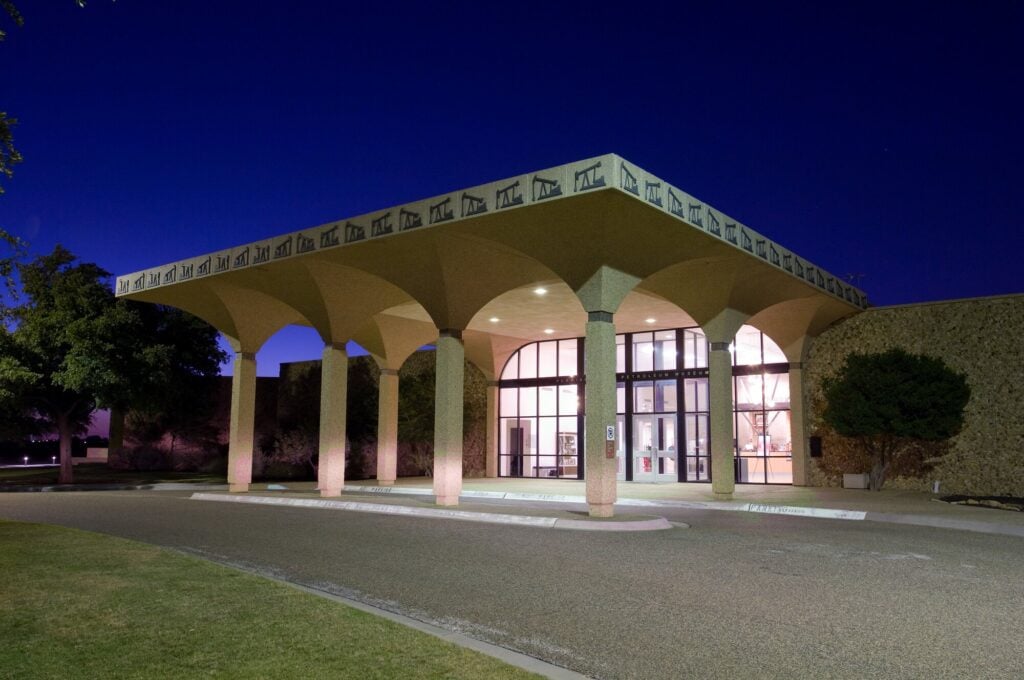
Renovating the petroleum exhibits would have to wait while the museum raised the $7.3 million needed to build a Transportation Wing. A $4.2 million grant from the Texas Department of Transportation got the project underway.
Construction began in 2003, but not before Texas Parks and Wildlife checked the area for horned toads. The staff waited on pins and needles while the land was combed in search of the illusive little fellows. A sigh of relief was breathed when none were found – and some disappointment, because they have been a part of the museum’s landscape for so many years. Construction began and the new building began to take shape. The museum hosted hardhat tours throughout construction, giving volunteers, friends and donors the opportunity to watch it grow.
The project also included a renovation of the Central Lobby, a beautiful new space for the museum store and the renovation of what was the cultural story of the Permian Basin, the West Wing. With the Central Lobby updated, the store tripled in size and was prominently placed in the spacious new lobby. The West Wing was turned into two separate galleries: the Davidson Gallery for temporary and traveling exhibits and the Abell Gallery, which houses 14 beautiful Tom Lovell paintings and many of his working drawings. The West Wing corridor became a remarkable entrance to the Transportation Wing facilities, a central location for the Petroleum Hall of Fame, and a beautiful setting for the many receptions hosted at the museum.
Chaparral Cars and a Transportation Wing
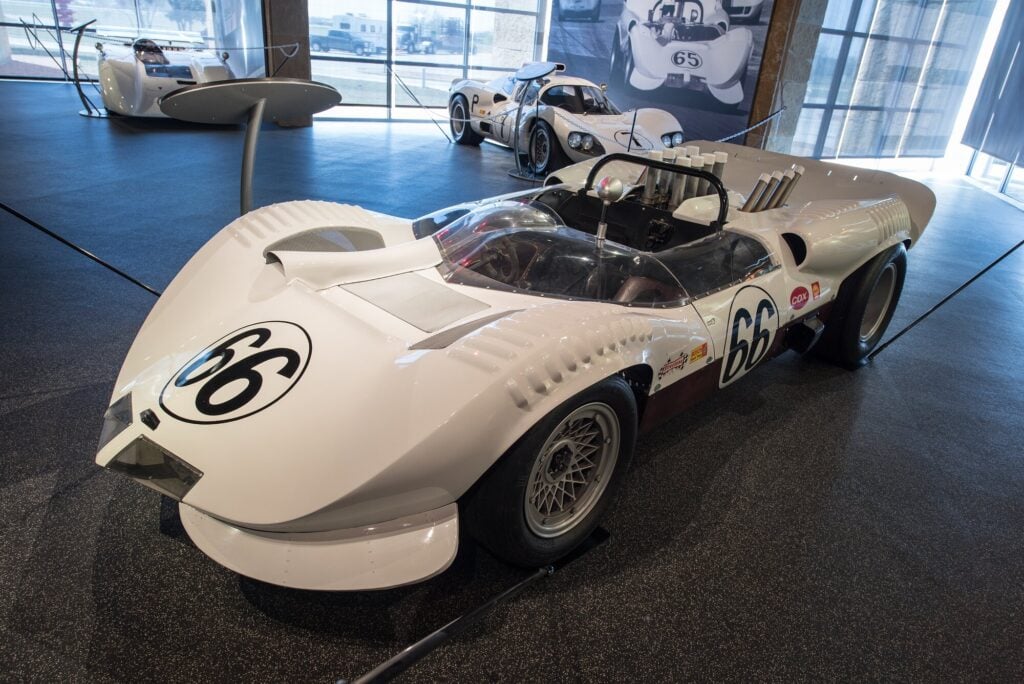
One of the most memorable days of the project was the arrival of the Chaparral cars. One by one, they were loaded onto flatbed tow trucks at the Chaparral shop and brought to the museum. They were carefully unloaded and pushed into place, except the Chaparral 2F which Jim Hall drove to the museum himself with a police escort to launch the Wing on opening day.
In April of 2004, the new, 16,000-square-foot Transportation Wing opened with a gala attended by over 1,000 people and a Family Day the following day. A large tent was set up in the new west-side parking lot and the party began. Tours of Chaparral Cars, Inc., a golf tournament and the “Conversation with Legends” panel discussion that included Jim Hall and motorsport greats Gil De Ferran, Vic Elford, Dan Gurney, Phil Hill, Ronny Hissom, Brian Redman and Franz Weis were the opening events. Finally, a gala dinner officially opened the Transportation Wing, which included a multi-purpose auditorium, cafe area, catering kitchen, loading dock and new maintenance facilities as well as the beautiful Chaparral Gallery.
With the opening of the Transportation Wing and its multi-purpose auditorium, the museum finally had the opportunity to turn its old auditorium into a state-of-the-art education facility – a dream of the Education Department for many years. Construction began on the project in 2005, working to maximize the space, storage, and fun at every opportunity. The colorful and kid-focused Education Hall opened in 2006 with a Willy Wonka-themed event. A “whimsically-formal” gala opened the Hall. Children competed for a chance to arrive in a limo the next morning for a golden ticket breakfast and be the first to experience fun science-based activities in the new facility.
21st Century Update
The museum’s Board of Trustees placed the renovation of the petroleum exhibits back on the table in early 2006. More than five years had gone by since the original plans were drawn. Design companies had merged, gone out of business or changed personnel, and the museum staff needed to start over. A list of more than 20 design companies from across the country was compiled. That list was eventually narrowed to two and finally Jack Rouse Associates in Cincinnati was chosen to do the work. They learned about the industry as they worked and came to appreciate its story. They chose exhibits that fascinated them, assuming that if they were fascinated, the visitors would be too. More than $1 million was raised and spent on design work alone.
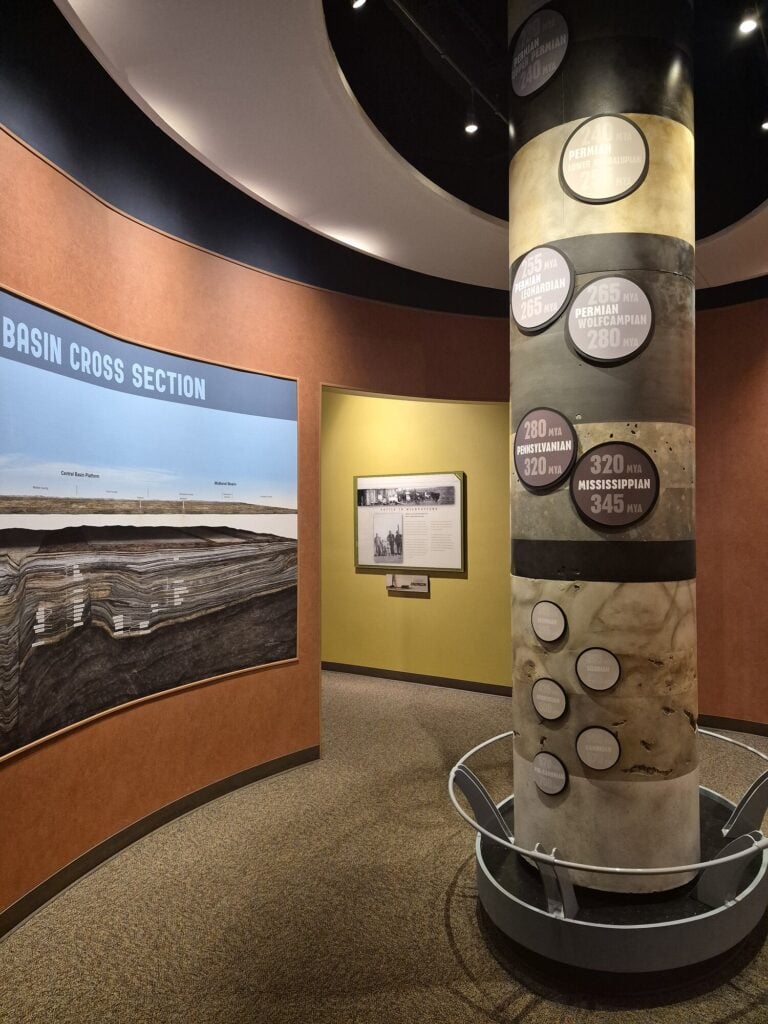
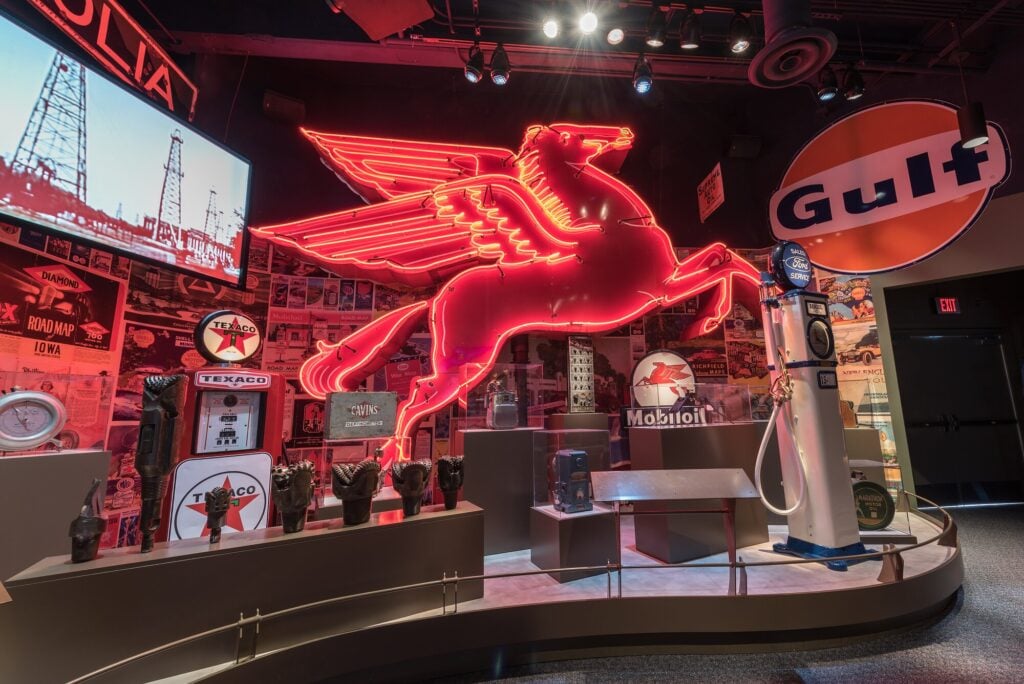
The “Exploring the Past – Defining the Future” campaign was an $18-million investment for the community and the museum. The original East and North wings were leveled and work began from the ground up. The Hall of Fame was relocated to the West Wing corridor. Most of the original Marine Diorama was saved and placed in the new reef area, recognizing that major early oil plays in the Permian Basin relied directly on highly porous, dolomitized back-reef facies. Exhibits that covered economics and supplemental (or alternative) energies were included.
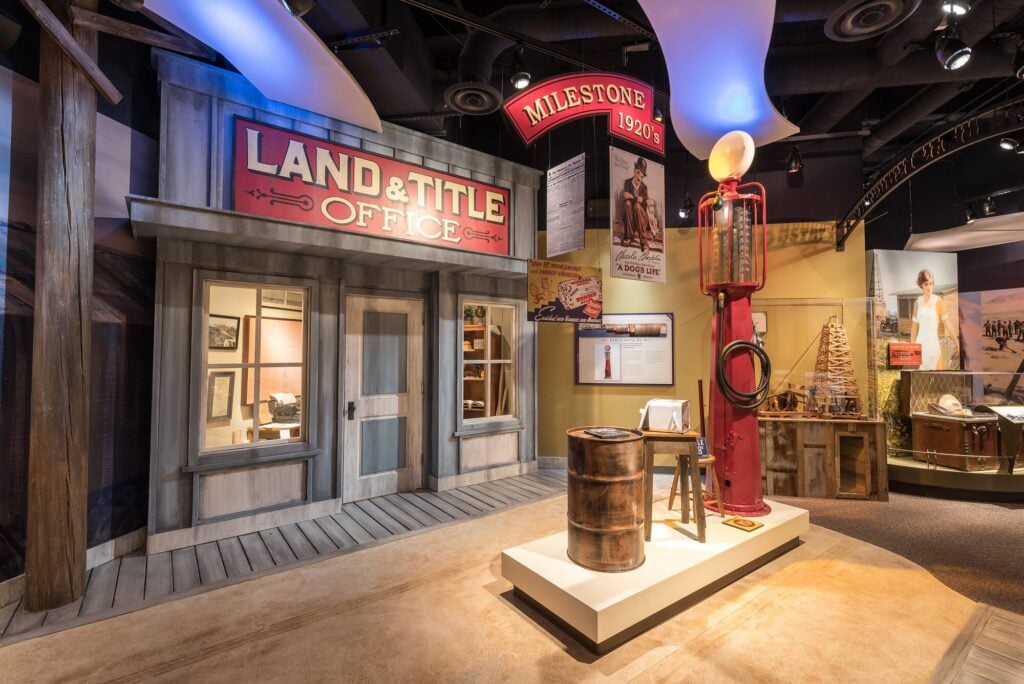
A new Boom Town was created, with Midland artist Don Parks’ mural as a backdrop, and a kid-size Energy City showcased history as well as the future. A huge model of a core sample greets visitors after the Permian reef display, which depicts the stratigraphy of the Permian Basin. Some of the Museum’s original core samples are displayed in an area explaining porosity and permeability, seismic applications, hydraulic fracturing and reservoir management. The project also included renovated offices, the Library and Archives Center and collection storage. It was an extreme makeover for the almost 40-year-old building.
During the design phase of the renovation, work began on a permanent Mineral Gallery, to be located in the Davidson Exhibits Hall. Today the gallery features more than 90 top-quality mineral specimens from all over the world, housed in beautiful custom wood cabinets, each individually lit, rivaling mineral galleries anywhere. The Mineral Gallery opened with a beautiful, jewel-toned Gala in 2012.
Education
During all this work, it was the education programs that kept people coming to the Museum. While exhibits were closed for almost two years, programs continued in the Education Hall. The Museum Store remained open, but the administrative offices, the library and the archives center moved to the second floor of Midland’s downtown library.
Education programs expanded rapidly after the opening of the new petroleum exhibits. Family Science Nights grew, and it quickly became apparent that the Museum needed more space. The idea of a dedicated Education Building where students could get messy was born.
A $6-million campaign began in 2019, then 2020 hit and it took a little longer to get through COVID and back to fundraising. Construction began in 2022 and the new facility opened in August of 2023. A space dedicated to kids was filled with fun equipment: laser cutters, 3-D printers and Legos of every shape and color. The Museum could now accommodate classes of 70 kids instead of 30, so the staff called on Midland Independent School District teachers to help – a win/win for everyone.
The Museum is focused on inspiring lifelong learners with its programs and research opportunities. Its staff aims to preserve the history of the industry and to provide a vision for what the future holds. The collections also include 14 paintings reflecting the cultural history of the Permian Basin by Prix de West Gold Medal-winning painter Tom Lovell. Paintings by Frank Gervasi, John Scott, and William Brigl also depict the story of the industry. Commissioned paintings by Gervasi, a painter of Italian descent, depict the early stages of the oil and gas industry in locations throughout the Permian Basin.
A New Englander, John Scott began as an illustrator for the Army’s “Yank” magazine as an artist-correspondent. His work was concentrated in the fields of England and after the invasion of Europe. Scott’s commissioned work features historic moments in the Permian Basin’s petroleum industry.
William Brigl was born in Bavaria and was taught by his father, who painted for that country’s king. He arrived in the United States at the age of 28 and maintained studios in Dallas, Taos, and Chicago. Much of his work features landscapes completed in his beloved Big Bend Country of Texas.
Vision
Fifty years later, with all that has been accomplished, founder George Abell’s statement of purpose for the Museum is still the guiding star. The Museum’s leaders revisited his original letter during the renovation to be sure that they stayed on the path that those early incorporators and donors hoped and dreamed.
Their vision of creating a museum that honors the industry and the people in it endures today, just as they envisioned it a half century ago. After leading the charge so long ago, George Abell would be very proud of the legacy he has left. In recognition of the Museum’s efforts to preserve and present the heritage and history of the oil and gas industry, the Petroleum History Institute gave its 2025 Keeper of the Flame Award to the Museum. The Permian Basin Petroleum Museum has shared the petroleum story for five decades with tens of thousands of visitors and remains committed to continuing that effort and honoring that tradition for many years to come.