
Precambrian oil and gas plays are relatively scarce: Given the destructive geological processes, older strata are less likely to retain commercial volumes of good quality petroleum. Most of the Precambrian petroleum comes from “Infra-Cambrian” or Ediacaran sediments – 635–540 Ma – such as those discovered in Siberia, Oman, and Pakistan.
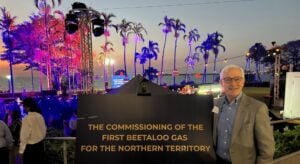
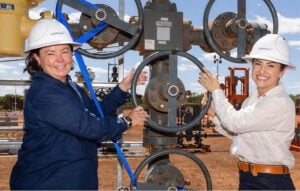
In September, geologists, engineers, investors, and officials gathered at the Shenandoah South Pilot Project site, operated by Tamboran Resources, to celebrate the commissioning of the first Beetaloo basin gas production for Australia’s Northern Territory. This recent natural gas production from a Mesoproterozoic shale formation in Australia is a gamechanger.
The Beetaloo Basin
The Beetaloo Basin (or subbasin) within the greater McArthur Basin covers an area of 28,000 square kilometers with two – east and west – depocenters. The Beetaloo contains about 9,000 meters of Paleoproterozoic and Mesoproterozoic sediments. Of these, the Roper Group deposited between 1.5 and 1.4 billion years ago is of highest interest for petroleum exploration.
The Roper Group is 500- to 5,000-meters thick and comprises a succession of interbedded shale and sandstone deposited in an intra-cratonic sea within the Nuna (or Columbia) supercontinent. After 1.3 billion years ago, the basin was subjected to compressional tectonics, structural inversion, and partial erosion.
Velkerri Shale Gas
The Velkerri shale, part of the Roper Group, is sandwiched between the Bessie Creek (lower) and Moroak (upper) sandstone formations. The shale was deposited between 1.36 and 1.42 billion years ago based on Os-Re dating. Trace metal analysis indicates that the formation was deposited below wind wave base in suboxic to anoxic waters overlain by a shallow oxic zone.
The Velkerri is a “hot shale” with gamma-ray values of 100 to 400 API. It consists of three members: the Kalala, Amungee and Wyworrie members, from bottom to top. The Amungee is the most organic-rich, with highest gamma-ray values and lesser silt contents. It is vertically layered with hottest units A, B, and C interbedded with relatively less organic-rich units.
Microbial mats were the major source of kerogen in the Beetaloo shale formations. Total organic carbon measured on cores and cuttings ranges widely, from less than 1 percent to 10 percent, but mostly over 2 percent. Thermal maturity based on pyrolysis Tmax values indicates immature, mature and overmature source rocks depending on sample conditions. Kerogen has been reported to be type I and II. High silica content in the formation helps the shale to be more frackable.
To learn more about the geology of Velkerri shale, read the articles in the June 2022 and June 2026 issues of the AAPG Bulletin.
The Road to Success
Matt Silverman of Robert L. Bayless, Producer in Colorado (and the Explorer’s own Historical Highlights editor), who played a key role in the initial development of the Beetaloo play, chronicles the history of exploration in the Beetaloo basin in three phases:
- Phase 1 (1985–95) started when the Urapunga-4 well drilled by the Australian Bureau of Mineral Research found live oil in the Velkerri formation. This encouraged Pacific Oil and Gas to launch a conventional oil exploration in the basin, acquire 2-D seismic data, and drill 22 exploration wells into Roper Group, many of which had oil and gas shows. All the Pacific wells are plugged and abandoned.
- Phase 2 (1996–2006) started when Sweetpea Petroleum was founded by Bob Bayless, Tom Dugan, Bill Peabody, and J. Greg Merrion. Sweetpea Petroleum succeeded in obtaining exploration permits in the Beetaloo Basin.
- Phase 3 (2006–present). Starting in 2006, Sweetpea and its assets were sold to several operators, then finally to Tamboran Resources in 2021. Tamboran focused on shale gas exploration and brought first gas to production.
Currently, Tamboran, Daly Waters Energy, Santos, and Beetaloo Energy operate in the basin. Tamboran has the largest position and has partnered with Liberty Energy (for hydraulic fracturing), Baker Hughes (for oil field services), Helmerich & Payne (for drilling), and APA Group (for pipelines).
A New Frontier in Deep Time
With estimated resources of 200 trillion cubic feet of recoverable gas from the Beetaloo Basin, Velkerri shale gas production is a significant milestone globally and for Australia.
The Velkerri provides a proven concept for deeper and older hydrocarbons in Mesoproterozoic black shales such as those deposited on the North China Craton. Velkerri shale gas is also a live analog for understanding how petroleum systems worked in the distant Proterozoic times.
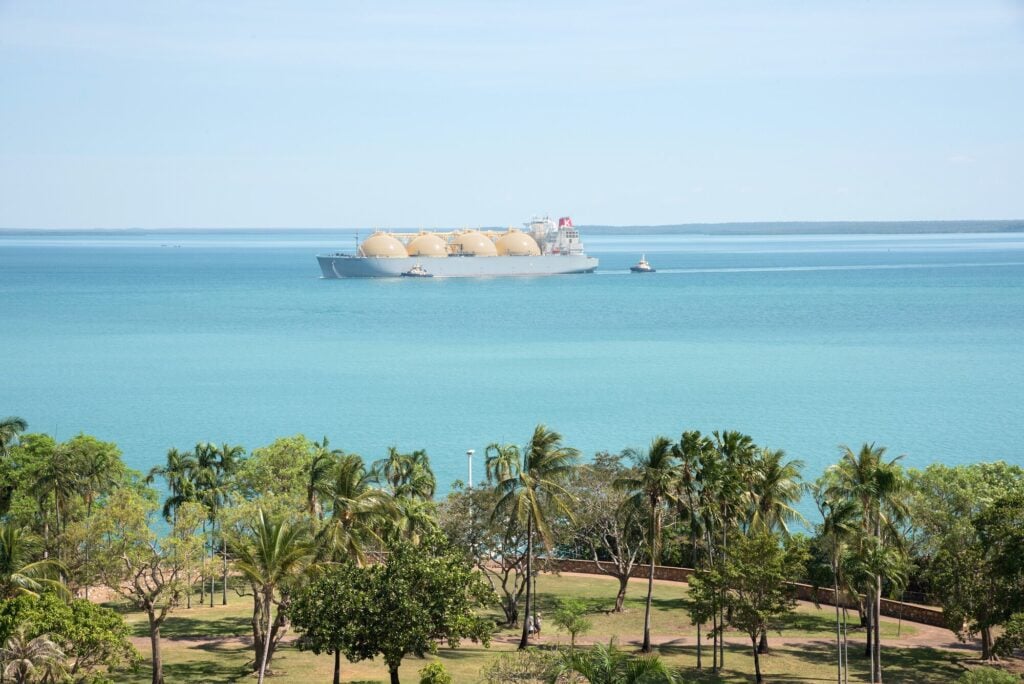
Natural gas from the Beetaloo basin is a major addition to Australia’s energy portfolio and will further strengthen the country’s global share of liquefied natural gas exports. Developments in Beetaloo will also be economically beneficial to the native Aboriginal people living in the Northern Territory.
The Roper sediments, of which the Velkerri Shale is a part, are widely distributed in the greater McArthur Basin. Currently, only Amungee B zone has been targeted for production. Other pay zones in the Beetaloo Basin will increasingly draw attention from explorers.
Tamboran’s success is the first step in a long development path for the Beetaloo Basin. With more drilling and data, it will be important to know more about declining rates of wells, estimated ultimate reserves, and microseismicity. Currently, the Velkerri gas flows at a rate of 40 million cubic feet of gas through an existing pipeline to Darwin for power generation.
More pipeline infrastructure will be required for LNG and export capacity.