
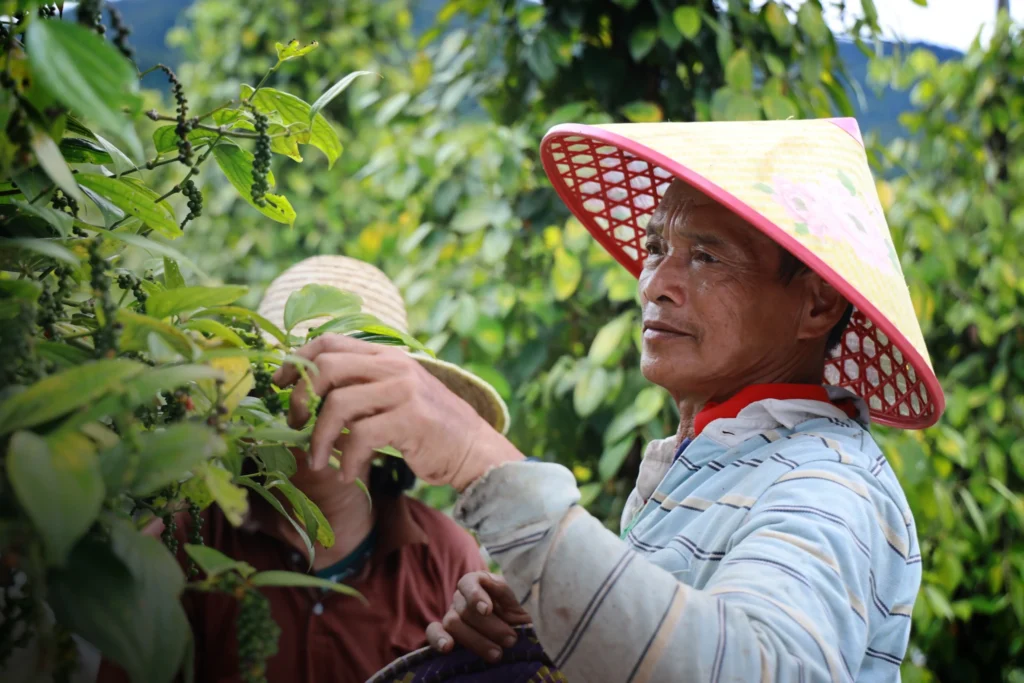
That gourmet pepper you sprinkle on your food could soon be coming from Sarawak in Malaysia.
So could new natural gas supply for Southeast Asia.
The Malaysian pepper industry got a boost recently when the Malaysian Pepper Board launched an international communications initiative to promote the geographically certified Sarawak pepper, a specialty peppercorn, as a premium product.
“Sarawak pepper represents more than its distinctive quality and flavor. It reflects the dedication of our growers, the richness of our land and the standards that define the Malaysian pepper industry,” said Vincent Sawat, the Pepper Board’s director general.
The country’s pepper industry supports more than 38,000 registered pepper growers nationwide, according to the Board. Located on the island of Borneo and Malaysia’s largest state, Sarawak is the center of commercial pepper growing. It supplies almost 98 percent of Malay pepper production.
That’s not all the good economic news. Sarawak Gold pineapples are now being introduced to European markets, according to the Malaysian Pineapple Industry Board. The SG1 pineapple type is said to have a smaller crown and more tender core than competing varieties.
Also, Sarawak is the focus of a regional, billion-dollar Miocene oil and gas play that could ultimately change the face of energy supply for Malaysia and all of Southeast Asia.
Two proposed deepwater wells in the play area popped up on the list of 2026 high impact wells to watch, Jampuk and Langka. At the end of summer, TotalEnergies reportedly was preparing to spud its Jampuk-1 wildcat offshore Sabah, the Malaysian state bordering Sarawak to the north.
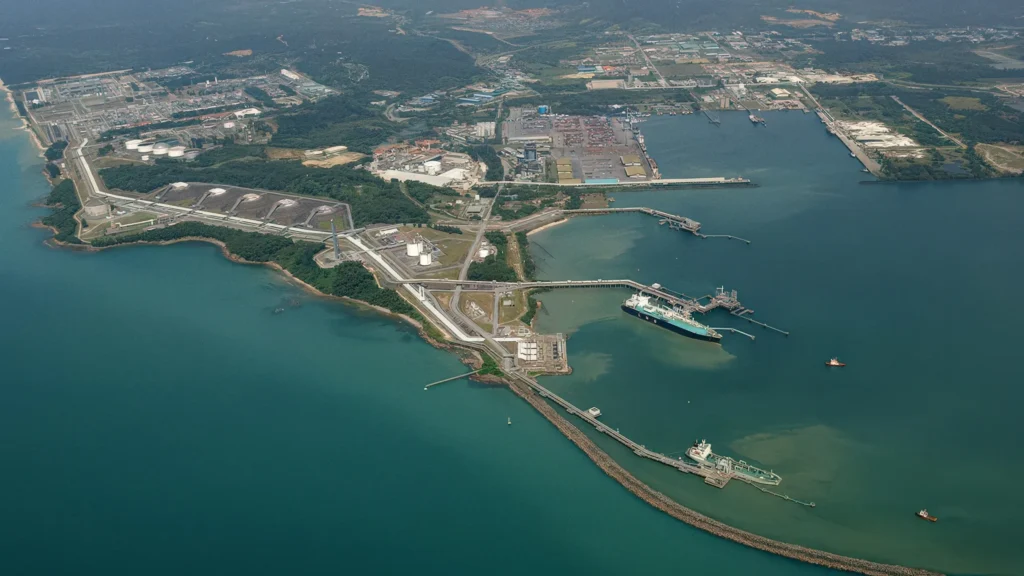
Then in October, Shell quietly prepared to drill its own Sarawak wildcat, with a Borr Drilling jackup rig moving to the site. A discovery could add natural gas resource for the Petronas LNG complex at Bintulu in Sarawak, a major export facility with a capacity of almost 30 million metric tons per year.
“Malaysia and the region as a whole are experiencing a period of growth. Increasing domestic supply has always been a priority in this region due to the growing demand for gas, even prior to the situation in the Persian Gulf,” said Jasman Adam Leong, senior research analyst, Southeast Asia upstream, for Wood Mackenzie.
“We have seen operators in (this) region sanctioning big gas projects across Southeast Asia,” he noted.
In addition to the oil and gas majors, those operators include Inpex Corp., Japan’s largest E&P independent. The company announced in July that its Malaysian subsidiary had acquired an 85-percent participating interest in Block 2E off Sarawak from TotalEnergies EP. Two years ago, Inpex agreed to acquire a 42.5-percent participating interest in Block 2A offshore Sarawak, covering 12,035 square kilometers.
A Miocene Opportunity
Ongoing exploration efforts include three main areas, dominated by the Central Luconia carbonate play region offshore Sarawak. Known as the Luconia Middle Miocene play, it targets mid-Miocene zones – cycle IV to lower cycle V – situated above pre-existing structural highs.
Reservoirs are typically carbonate platforms and reefs, spread over an area of 50,000 square kilometers. Those are overlain and sealed by more than 1,000 meters of thick, over-pressured middle-to-late Miocene shales.
Sarawak generates around 90 percent of Malaysia’s LNG exports, mainly from the Bintulu industrial complex. It produces about 4.5 billion standard cubic feet of gas per day and holds roughly 60 percent of Malaysia’s natural gas reserves.
MPM is the Malaysia Petroleum Management division of state energy company Petroliam Nasional Berhad, known as Petronas. Established under the country’s Petroleum Development Act 1974, MPM manages Malaysia’s upstream petroleum resources for their full lifecycle.
“Exploration in Sarawak is still popular among operators due to the prolific Baram Delta basin. The regulator, Petronas MPM, is trying to spur interest amongst explorers in Peninsular Malaysia and Sabah via the Technical Evaluation Area, taking on seismic acquisition on its own expense,” Leong said.
Mapping the Potential
In August, international geophysical firm TGS announced Phase 4 of its multiclient seismic program off Sarawak, covering 1,020 square kilometers. Acquisition is expected to be complete by year-end. TGS will acquire and process up to 105,000 square kilometers of multiclient 3-D seismic data offshore Malaysia over the full project.
“Sarawak basins are one of the most prolific hydrocarbon-bearing basins in Southeast Asia, holding major reserves of both oil and gas proven by numerous discoveries in recent years,” said Kristian Johansen, TGS CEO.
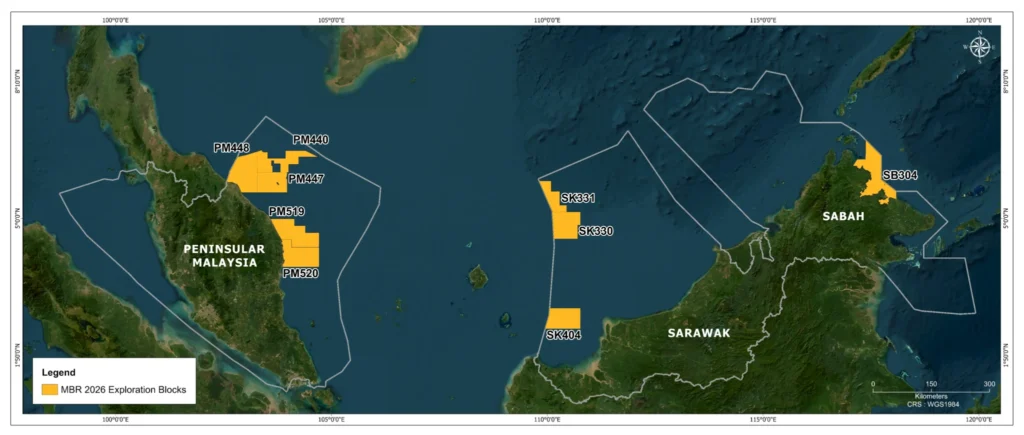
Much of the current offshore Miocene exploration play remains in the derisking and positioning phase. Malaysia’s 2026 bid round comprised six discovered-resource development opportunities and nine exploration blocks, including high-potential, shallow-water blocks SK404, 330 and 311 offshore Sarawak.
Two other play areas beyond the Luconia Middle Miocene are the East Sabah/Sandakan Basin area and the Malay Basin. Sabah is undergoing a major development push aimed at nearly doubling its gas output by 2030, to 1,350 MMscfd from seven different offshore projects.
Barriers to Development
Several factors, including localized demand, affect the energy and exploration outlook for Malaysia, according to Leong.
“A lot of resources in the country remain undeveloped, especially in Sabah and Sarawak due to the lower domestic demand compared to peninsular Malaysia. The government is trying to alleviate this by developing demand centers in those two states, but that will take time,” Leong noted.
“Another factor will be the prospectivity. The currently producing basins are mature and there’s not much left to explore other than offshore Sarawak. There are several frontier basins in the country, but they require significant investment from the regulator and willing operators to de-risk those basins,” he added.
One potential obstacle to exploration and development may have been cleared away. Petronas has been in a continued turf tussle with local authority and gas aggregator Petroleum Sarawak Berhad (Petros). Under an agreement announced by the prime minister last year, Petros will maintain control of gas distribution in Sarawak and Petronas will retain its national authority over oil and gas.
But operators face other continuing challenges. In geology, they include karstification in Central Luconia formations, complex regional tectonics and heterogeneity from past sea-level changes. And gas impurities include high sulfur and carbon dioxide content.
“Many fields in Malaysia remain undeveloped due to its high CO₂ content. Developing these fields will require regulatory frameworks, which are still immature in Malaysia,” Leong said.
Earlier this year, Petronas announced it would try to maintain Malaysia’s domestic production at levels near 2 million barrels of oil equivalent per day through 2028. The country produced just under 3 trillion cubic feet of natural gas total in 2025.
By contrast, Malaysia is the world’s eighth largest pepper producer, generating about 32,500 metric tons annually: 70-percent black pepper and 30-percent white.