
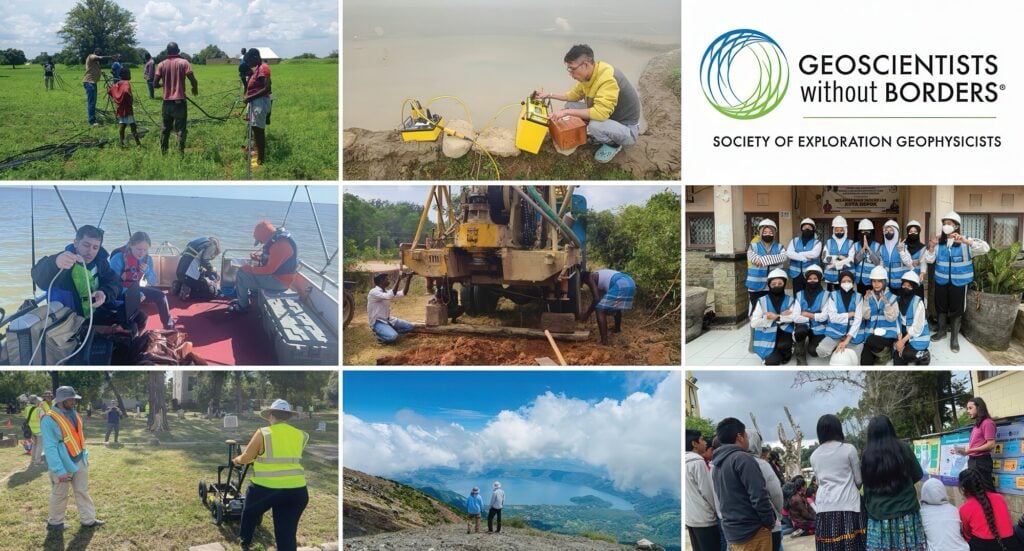
Communities worldwide face growing environmental challenges, including water shortages, natural disasters, habitat destruction, pollution, and threats to cultural heritage.
We believe geoscientists can, should, and do play an essential role in addressing these issues by using geoscience tools and technology to enhance community resilience and promote sustainable solutions.
Geoscientists’ skills in investigating groundwater, assessing natural hazards, mitigating pollution, and safeguarding culturally significant sites enable them to deliver vital support where it is needed most.
Since 2008, Geoscientists Without Borders, the humanitarian program of the Society of Exploration Geophysicists, has supported this effort by funding more than 68 humanitarian geoscience projects in 40 countries.
These projects deliver direct benefits to people while training the next generation of geoscientists. To date, GWB initiatives have engaged more than 1,255 students and reached more than 18 million people. Through global partnerships and community-focused collaboration, GWB demonstrates the vital role of geoscience in improving lives and building a more sustainable future for communities in need.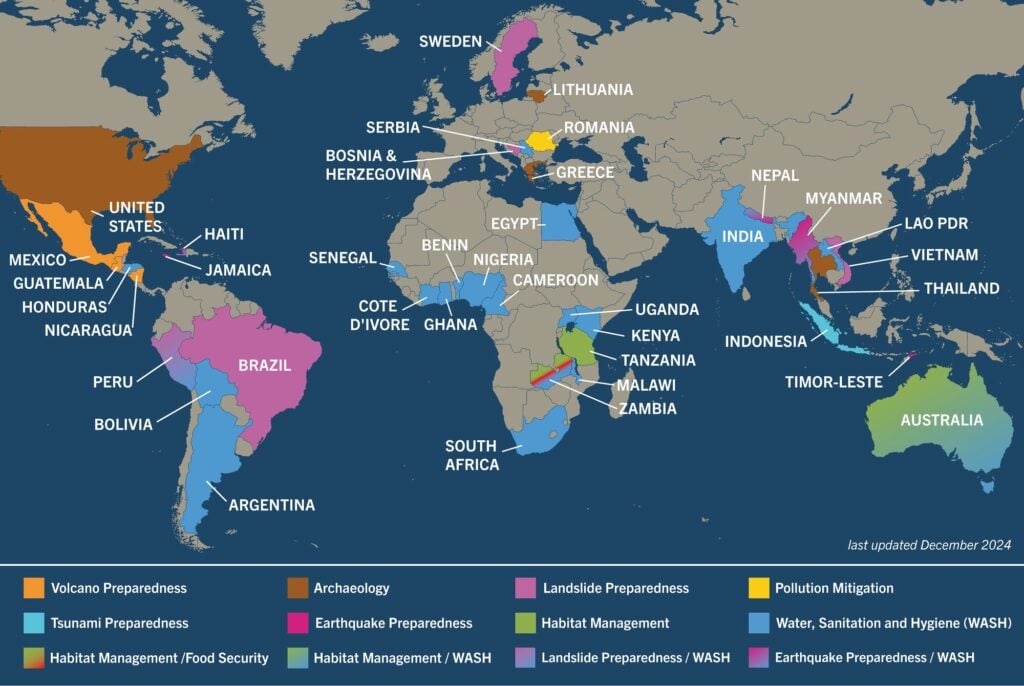
Funding decisions are based on humanitarian impact, technical merit, feasibility, sustainability, and the degree of student involvement – an essential criterion aligned with GWB’s mission to build future capacity.
Also, projects directly support multiple United Nations Sustainable Development Goals (information is available at the UN website).
All GWB projects share the goal of delivering direct, measurable human benefits while helping educate the next generation of geoscientists. Many also advance gender equity by engaging women as students, community leaders, and local collaborators.
GWB serves as a catalyst connecting capable scientists with communities in need to address their challenges. Geoscientists and experts from universities, research organizations, nonprofits, and international humanitarian organizations lead projects.
A Thematic Approach
GWB projects focus on four primary themes:
- Water, Sanitation, and Hygiene (WASH): These projects commonly employ electrical and seismic methods to identify groundwater aquifers and determine optimal well-drilling locations. Teams also investigate groundwater quality, assess the natural and human pressures on aquifer systems, and collaborate with communities to develop sustainable water management strategies. GWB-supported WASH initiatives have included siting water wells in refugee camps in Kenya and Uganda, as well as projects in Argentina, Nigeria, Ghana, Cameroon, Laos PDR, and Peru.
- Food Security: Geophysical surveying, soil analysis, and satellite imagery help define sustainable agricultural practices and ensure year-round water availability. Many projects have improved groundwater management, supported irrigation-system design in partnership with Engineers Without Borders in Zurite, Peru, and enhanced agricultural productivity. Past food-security projects have included irrigation improvements in Ghana, Peru, and the Lao PDR, as well as fisheries-habitat mapping in Lake Tanganyika in Tanzania and Zambia.
- Disaster Preparedness and Risk Reduction: GWB projects contribute to fault mapping, seismic network development, monitoring of volcanic and landslide hazards, and community-focused disaster preparedness planning by installing early warning systems and developing preparedness strategies that shift the mindset from reactive to proactive.Work in Indonesia has ranged from tsunami-risk mitigation to identifying substrate conditions that exacerbate earthquake damage. Additional earthquake-preparedness and volcanic-hazard projects have been carried out in Haiti, Jamaica, Nepal, Peru, Mexico, Guatemala, Nicaragua, and Honduras.
- Environmental and Cultural Conservation: Efforts in this area include habitat mapping, wildlife management planning, pollution distribution studies, and non-destructive geophysical surveys at archaeological sites. GWB-supported conservation and heritage projects have taken place in the United States of America, Lithuania, Greece, Australia, Thailand, and Romania.
Measures of Success
GWB evaluates proposals using clear criteria to ensure projects deliver the greatest possible benefit.
Successful projects typically demonstrate:
- Strong humanitarian impact, providing sustainable improvements for communities facing environmental challenges
- Active student engagement, diverse team participation, and strong partnerships with local institutions
- Long-term value, transferring geophysical and geoscientific knowledge that communities can draw on far into the future
Ultimately, GWB advances the principle that geoscience can directly improve human well-being. By supporting communities affected by natural hazards, water shortages, and environmental degradation, GWB enables geoscientists to apply their expertise where it can make the greatest difference.
The program strengthens global disaster resilience, promotes sustainable resource use, and nurtures the next generation of geoscientists through education, training, and international collaboration.
Through partnerships with the AAPG Foundation and with donors and organizations worldwide, GWB continues to demonstrate the essential role of geoscience in building a safer, more sustainable future.
For more information on how to apply for funding consideration, as well as a list of current and past projects, please visit www.seg.org/gwb.
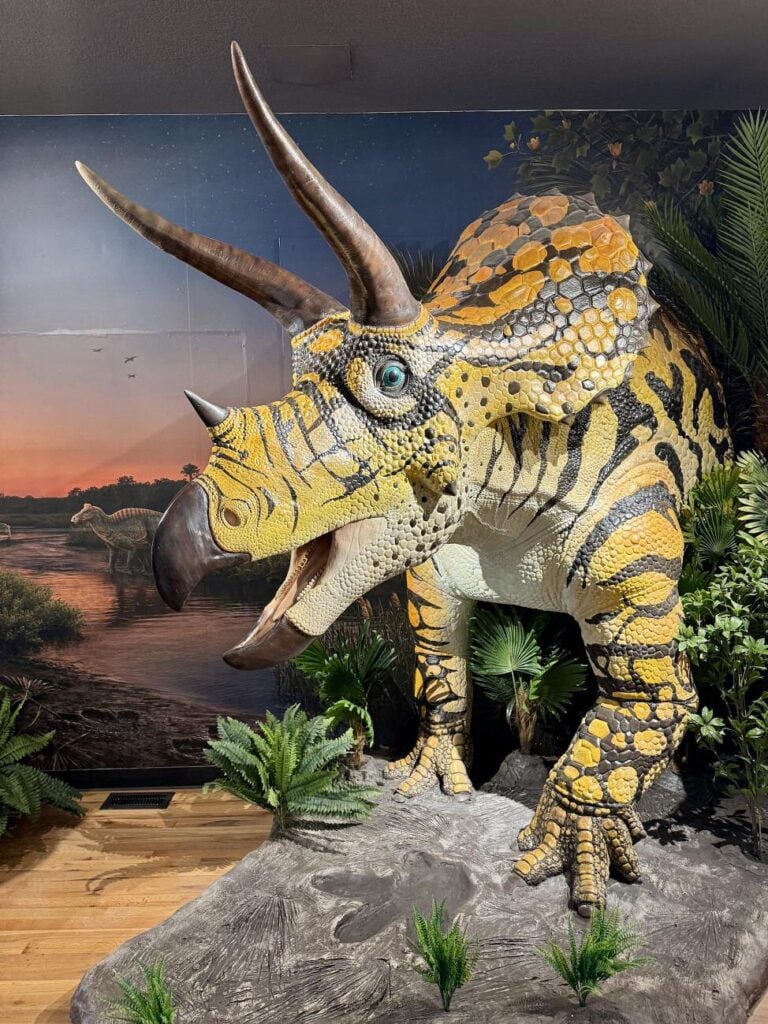
 In honor of the Foundation, the Dinosaur Ridge curators named the Discovery Center theater the AAPG Foundation Lecture Hall.Dinosaur Ridge is an award-winning and popular outdoor museum just west of Denver, where more than 250 fossil tracks can be found.“Our support of the Lockley Discovery Center is a great example of how the Foundation is using our gifts to fulfill our mission of making geosciences better and more accessible to the general public,” said Jim McGhay, AAPG Foundation chair.“This is another reason of making an impact,” McGhay said, “and how our Capital Campaign can help far beyond just our neighborhood.”