


America’s energy resource security in the coming decades will depend on our understanding of the subsurface – but a new National Petroleum Council study warns that the geoscience workforce it relies on is under threat.
That warning runs throughout “American Resources for a Secure Future: A National Cooperative Subsurface Assessment Program,” which the NPC, in coordination with the U.S. Department of the Interior, delivered to the U.S. Department of Energy in August at the request of Secretary Chris Wright. The report, which all three authors of this article participated in writing, represents the work and conclusions of the Council as a whole and was approved by its full membership. We focus here on a part of the study most highly relevant to AAPG members: the nation’s subsurface geoscience workforce.
The NPC is a federal advisory committee, established in 1946, that advises the secretary of energy. Its membership today includes representatives from the oil and gas industry and experts drawn from a broad range of scientific, technical, academic, and public-sector fields.
This NPC study examines how the United States collects, analyzes, and shares public data on its key subsurface resources. These include oil and natural gas; geothermal energy; essential minerals and metals for solar panels, wind turbines, and batteries; coal; geologic hydrogen; and underground storage. The study covers federal, tribal, state, and private lands, both onshore and offshore.
Its core observation is that the United States has world-class geologic data, institutions, and expertise, but no coordinated national mechanism for assembling them into a more complete picture of the subsurface that decision-makers can act on. Public data and assessments from the U.S. Geological Survey, state geological surveys, and the Marine Minerals Administration are an important foundation on which industry builds its basin- and prospect-level work. When that foundation is sound, explorers face less uncertainty, evaluate prospects faster, and put capital to work more efficiently. The study concluded, however, that the subsurface remains among the nation’s most poorly understood strategic assets and that a long-term national assessment program, authorized and appropriated by Congress, would have significant and lasting value for our nation.
The report identifies five cross-cutting gaps: baseline datasets that are incomplete, with legacy data at risk of loss; data that are not standardized and therefore not interoperable; no integrated framework for assessing multiple resources and resource types together; assessment methods that lag new technologies and emerging resources; and, the subject of this article, a dwindling workforce of professionals with the skills that modern subsurface assessment demands.
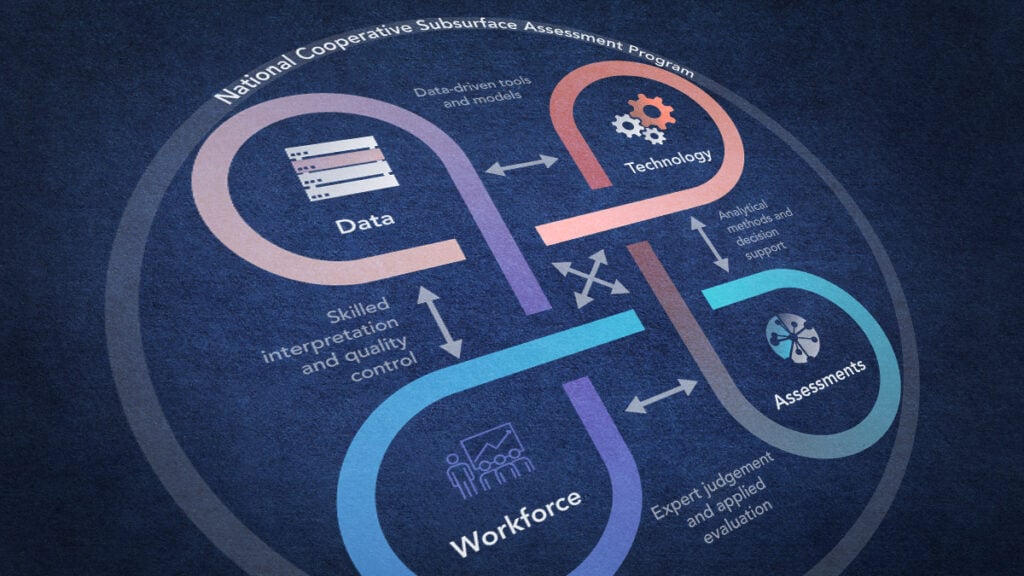
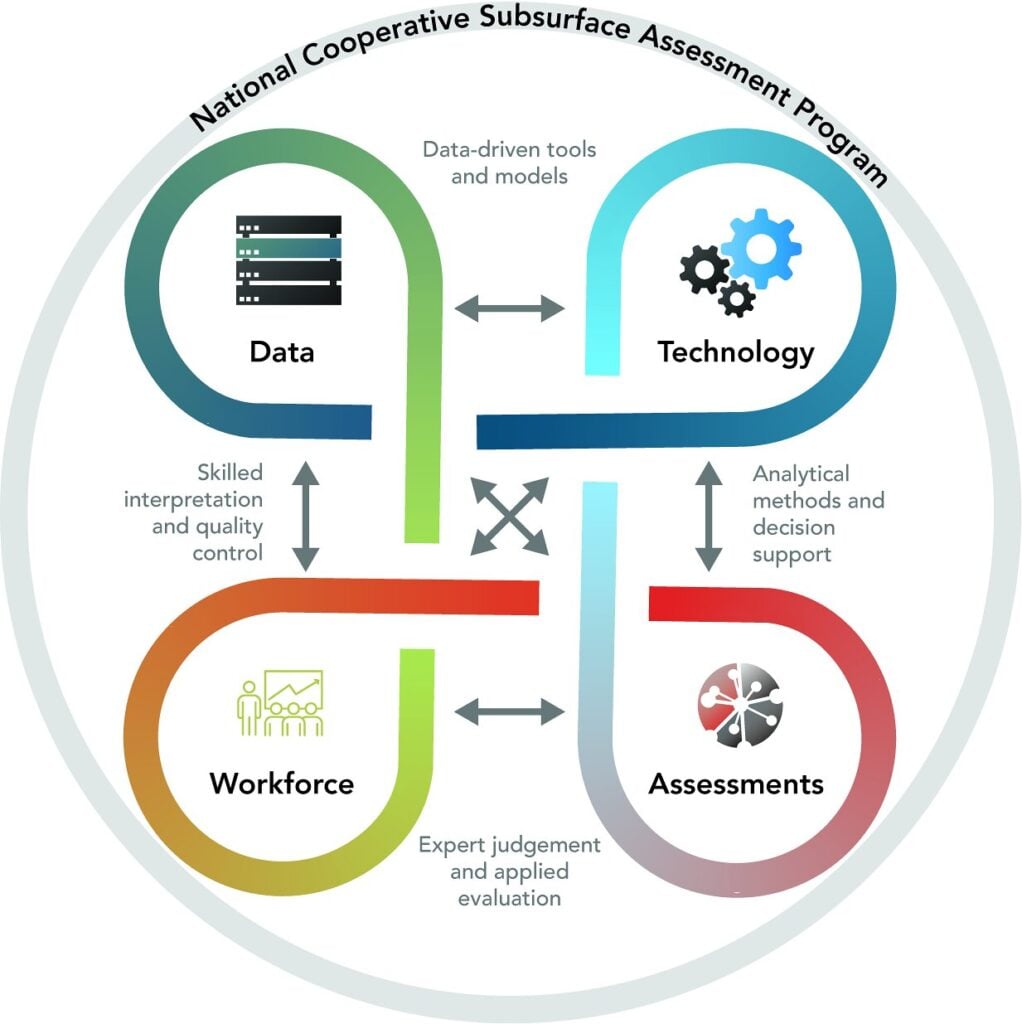
To close these five gaps, the NPC recommends that Congress establish a National Cooperative Subsurface Assessment Program with four pillars: data, technology, assessments, and workforce. It calls for sustained funding of a joint federal-state data acquisition effort under USGS leadership with a National Data Portal; more public investment in artificial intelligence, advanced sensing and 3-D Earth modeling; and holistic assessments that treat the subsurface as a system rather than a series of disconnected commodities.
The final recommendation, upon which all other pillars draw a critical dependency, is a sustained national effort to build a more robust cadre of geoscientists and computational analysts capable of advancing subsurface characterization and assessment.
A Profession Built on Experience in Applied Science
Subsurface resource characterization and assessment are inherently interdisciplinary applied sciences, combining theory from physics, mathematics, chemistry, and biology with advanced mathematical and geophysical modeling and empirical validation. The approach reflects a principle articulated by physicist Richard P. Feynman in his 1965 description of the development and testing process for physical laws:
“First we guess it. Then we compute the consequences of the guess … Then we compare the result of the computation to nature, with experiment or experience … If it disagrees with experiment, it is wrong.”
The NPC report describes the requisite expertise for subsurface characterization and assessment as the product of university education, postgraduate study, and years of functional experience. Abilities must commonly span the core subsurface disciplines of stratigraphy and structural geology, geophysics, geochemistry, geomechanics, and petrophysics, as well as the empirical and pragmatic expertise required to interpret seismic data and well logs, synthesize disparate datasets, and develop geostatistical and numerical models. The report is explicit that much of this knowledge cannot be gained in a classroom alone; it is advanced through hands-on analysis of real datasets in the context of real assessments. That lengthy development process begins with a relatively simple prerequisite: a steady supply of students entering relevant university programs.
That supply is shrinking. Drawing on American Geosciences Institute data, the report shows U.S. geoscience bachelor’s degrees falling from peaks in the 1980s and 2010s, and master’s degrees declining dramatically since 2019. According to Chris Keane’s and Maeve Boland’s 2017 analysis, cyclical demand tied to petroleum employment, combined with institutional pressure to improve cost and completion metrics, has led some universities to close geoscience programs with low enrollments. At the same time, many departments have been renamed, restructured, or refocused. A 2004 American Geological Institute census counted 70 U.S. geoscience departments that had closed or merged since 1999; as Keane wrote in 2005, the losses included a group of mostly bachelor’s-level departments whose emphasis had moved away from geology toward environmental studies. Many programs now give little attention to subsurface energy and mining topics, and fewer universities offer petroleum geology degrees than in the past. Only a minority of programs offer dedicated coursework in subsurface mapping, advanced computing platforms, and modeling. Meanwhile, retirements are depleting the experienced workforce, thinning the ranks of practiced staff who can mentor early-career subsurface analysts in professional settings. The study finds that the widening gap in skills threatens the ability of both government and industry organizations to meet future assessment needs for critical minerals, energy resources, and subsurface storage.
Establishing a Residency-Based Pipeline
The NPC report credits existing federal programs that develop early-career technical talent, including the U.S. Department of Energy’s Mickey Leland Energy Fellowship, USGS internships, and the National Science Foundation’s INTERN program for graduate students. These programs offer STEM higher education and work experience, but none focuses specifically on development of subsurface resource characterization and assessment skills. Put another way, the gap is not a shortage of programs for students – it is a shortage of credentialed pathways that equip graduates with the quantitative subsurface skills needed to contribute effectively and independently early in their careers.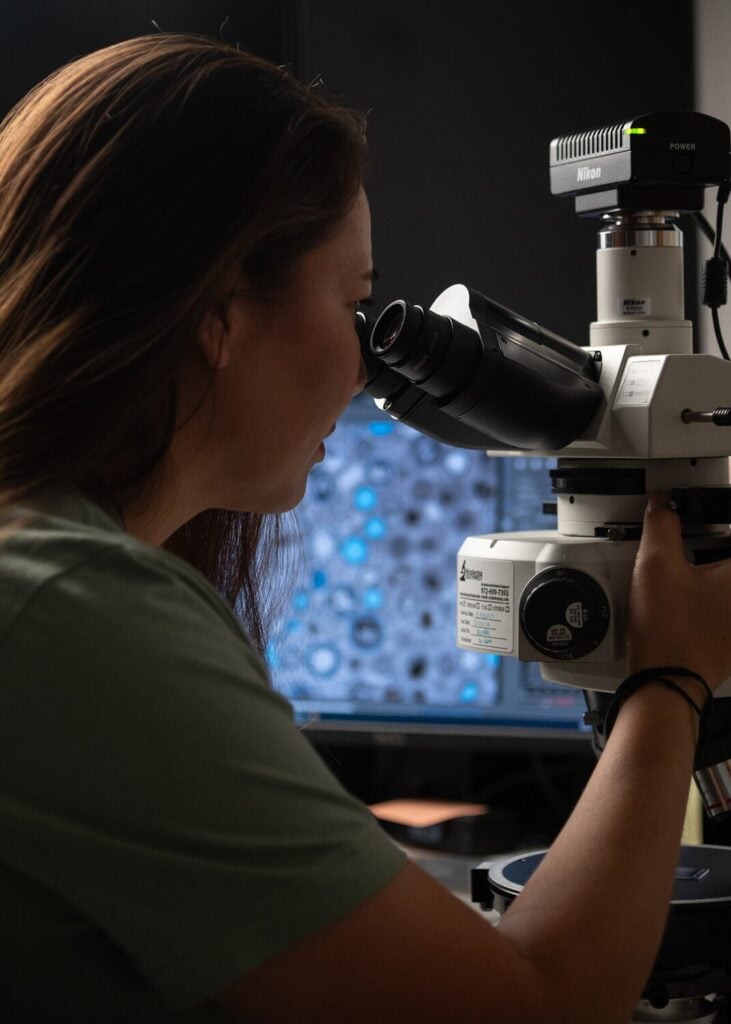
That gap is addressed in the study with a recommendation. It asks the U.S. departments of Energy and the Interior to work with the National Science Foundation, U.S. universities, state geological surveys, national laboratories, and private-sector partners to identify a priority suite of subsurface analytical skills. These skills would become the focal point of a new type of training pipeline – one more closely resembling hands-on clinical rotations in medical school and the medical residencies that follow than traditional research-oriented graduate training.
The centerpiece is a proposed Subsurface Training and Residency Program, patterned on the Department of War’s Science, Mathematics and Research for Transformation (SMART) program. As the report outlines, STAR would comprise a federally funded scholarship-for-service program open to university juniors, seniors and master’s students in geology, geophysics, petrophysics, and related fields. The program would consist of three phases. In the first, participants would complete one to two years of fully funded study at a designated partner university, guided by a faculty mentor and a co-mentor from a participating agency or company. The second phase would move participants into a residency, where they would rotate through mentored, applied projects with the USGS, Marine Minerals Administration, state geological surveys, DOE national laboratories, or private-sector partners. Upon successful completion of the first two phases, participants would enter the third: a guaranteed two- to three-year placement with a sponsoring agency at competitive pay, with one year of service required for each year of program support.
The study anticipates that a program linking education to professional experience would attract students and support enrollment growth. We would go further. Medical students commit to long, costly training because a defined residency pathway connects the degree to practice. A student considering subsurface geoscience today sees no comparable route. A visible, funded pathway that offers applied training and employment at the end changes that calculation. If it draws in students, departments gain a reason to rebuild the subsurface coursework that has eroded, and the decline in degrees can begin to reverse.
The report is frank about the obstacles. STAR would require federal funding sustained across budget cycles, coordination among agencies and partners with different mandates, and university faculty, curricula, and software equal to the training required. At the same time, the proposal builds on several existing strengths: strong national demand for subsurface expertise, established institutional capacity, and a proven scholarship-for-service model that can be adapted rather than created from scratch. Much of that capacity is concentrated where one might expect. A 2025 survey of energy curricula at leading U.S. universities by Hiatt and Mills found that the schools offering the broadest grounding in real-world energy systems were predominantly public institutions, many of them the same universities that host state geological surveys and applied energy research programs.
From Recommendation to Program
A recommendation is not a program, and the report leaves most design questions to be determined. Yet several design principles are laid out:
- Focus training at the master of science level. In subsurface geoscience, the master’s is typically considered the professional degree, much as the bachelor’s is in engineering, and the doctorate remains the research degree. A master’s-centered program builds the workforce faster.
- Let the employer and the sector drive the match. Most fellowship models are organized around an institution or a principal investigator’s funding. A residency should work more like the match in medicine, pairing each resident with a sector and a partner’s need.
- Measure residency in total time, not in summers. An aggregate of roughly nine months spread across the degree would give residents time to build working relationships and to do project work that supports a thesis.
- Program credentials must function as an affidavit of demonstrated experience, not only course or thesis work. In this sector, competence is demonstrated more through performance than through certificates or publications.
- Pilot, then scale. The model should be tested initially with a subset of partners before scaling nationally. Funding, intellectual property, contracts, and supervision at partner sites are best settled at the design stage, before any solicitation goes out.
Why it Matters to AAPG
For AAPG members, the implications are clear. The study recommendations address the critical pipeline that staffs industry technical teams, geoscience faculties, state and federal geological surveys, and national laboratories. A residency that reconnects university training with applied subsurface work would serve federal assessment needs. It would also strengthen the wider professional community the AAPG represents at a time when technical demands keep growing and fewer students are entering the field. Members who advise students, mentor early-career colleagues, host interns or work with federal and state agencies are the people who would make such a program succeed. Finally, it would ensure that the United States can continue to compete with China and other nations that are investing heavily in subsurface assessment and workforce development.
Acknowledgements: Approximately 80 geoscientists, engineers, and agency staff contributed to the NPC study. Scott Tinker, director emeritus of the Bureau of Economic Geology at the University of Texas, and Berry “Nick” Tew, State Geologist of Alabama, served as committee co-chairs. Mark Shuster, associate director of the Bureau of Economic Geology at the University of Texas, and Scott Anderson of Occidental Petroleum Corporation co-chaired the subcommittee working group writing the report. Jay Kalbas, director of the Kansas Geological Survey, and John Moore of Chevron led development of report chapter 1 and, along with Owen Hurd of EOG Resources, led conceptualization of the report’s recommendations regarding geoscience workforce development. The STAR concept benefited greatly from discussions with Stacey Weltmer, a retired ExxonMobil executive.