
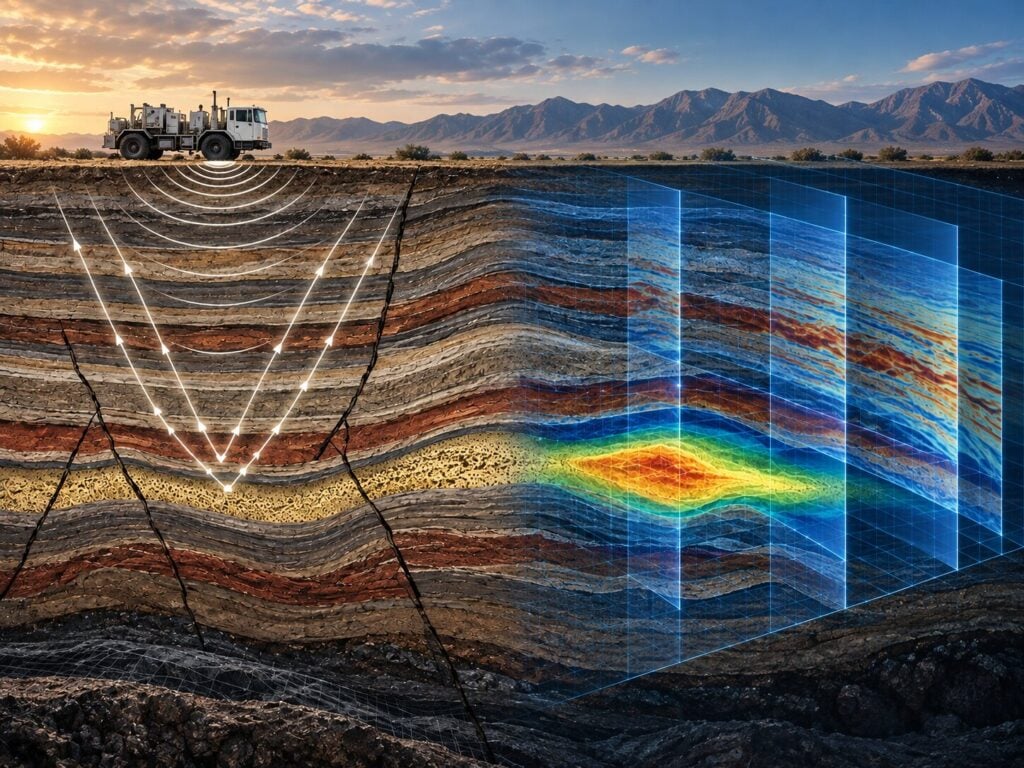
Machine learning has given geophysics a boundless avenue for seismic analysis and interpretation.
That’s great news.
It’s also a problem, because geophysics needs bounds to model the physical world. The laws of physics establish key bounds for seismic, and traditional geophysics is largely built on … physics. As the saying goes: It’s right there in the name.
When machine learning and then artificial intelligence began to have a significant impact on seismic analysis, a new approach took shape. It was based on pattern recognition involving numerous datasets with vast amounts of data. People started to talk about “data-based” or “data-driven” geophysics. Traditional geophysics was labeled “physics-based.”
Geophysicists faced a choice. Or, at least, a challenge. Today, seismic analysis in exploration geophysics is grounded in Big Data and physics-based tools and modeling. Will the future of exploration become more reliant on data-based geophysics or physics-based geophysics?
Pros and Cons of a ‘Physics-Free’ Geophysics
Mrinal Sen is a professor in the Department of Earth and Planetary Sciences at The University of Texas at Austin. Sen has taught a Distinguished Instructor Short Course on physics- and data-driven seismic data analysis for the Society of Exploration Geophysicists.
“When you say ‘physics-based,’ it means we have some physics-based models to help us with the interpretation of observations we make,” Sen noted.
“How does the physics connect our observations to the physical properties of the rocks? What is the physics that relates this physical rock to the reservoir properties?” he said.
In his course description, Sen observed that the “entire suite of seismic processing and inversion algorithms starting from stacking velocity analysis to full waveform inversion” was developed on fixed parameters. Those include the physics of wave propagation and signal-processing principles.
“But what machine learning does is that it does not necessarily use physics. It just takes the data and uses it to establish properties and relationships,” he said.
Geophysicists tend to use a data-driven approach “when we have a whole bunch of observations, and we know what causes the observations to vary,” Sen said. That approach is based on statistical pattern recognition and historical, real-world observations.
“The other thing is that there are some problems where the physics are not well understood, and that is definitely where we would end up using a data-driven approach,” he said.
Data-based geophysics also has time and money advantages over a purely physics-based approach. Both use significant processing power, but physics-driven analysis is highly computational. The speed variance is often cited as seconds or minutes, compared to days.
Using data-driven models, geophysics can incorporate multiple forms of sensor input, combining wave-derived seismic data with gravity and magnetic readings, for instance. Automated, algorithm-based tools can continually build up a reliable model of the subsurface, processing data almost as fast as it is acquired.
“Many current geophysical data processing and imaging techniques are driven by matching or modeling real measured data using some physics-based process. This measure, model, and match or focus to create a subsurface picture underlies much of our geophysical analysis,” said Rob Stewart, president of the Geophysical Society of Houston and director of the Allied Geophysical Lab at the University of Houston.
Questions of data reliability and completeness might influence geophysicists to take a more physics-based approach. Sen has called data-driven models “agnostic to the physics.” Traditional methods draw on real-world signals and mechanical responses, and can be limited to include only the possibilities of physical geology.
“In the case of machine learning, we have datasets that are acquired under different conditions – but we may not have enough (of a) dataset under all possible conditions,” Sen said.
One problem is that machine learning requires huge, labeled datasets for training. In new settings, the acquired seismic and labeled data might not be sufficient for training purposes.
The use of synthetic datasets has become common in filling out seismic data collections for analysis. These datasets, based on synthetic modelling, do incorporate laws of physics. But they might rely on engineered, theoretical projections and probabilistic forecasts.
“You have to be careful when you use those (synthetic datasets), because they may not reflect complete physics under all possible subsurface conditions,” Sen cautioned.
Still, such datasets can be helpful, he said, and Stewart agreed.
“Creating synthetic data from known subsurface models can also be very useful to explore possibilities and provide training data for more AI-type algorithms. The synthetic data come along with the limitations of the model – 1-D, 2-D, 3-D, anisotropic, attenuative? – and propagation methods,” Stewart noted.
“Nonetheless, synthetic seismograms, for example, have been used for many decades with exceptional usefulness to help interpret seismic data, as has synthesizing data to instruct us in the design of geophysical surveys.
“We remember and are cautioned that we’re often looking for anomalies–accumulations, nuggets, etc.—in the subsurface (and) not average, empirical, nor regional values that might be used in our simulations or training data,” he added.
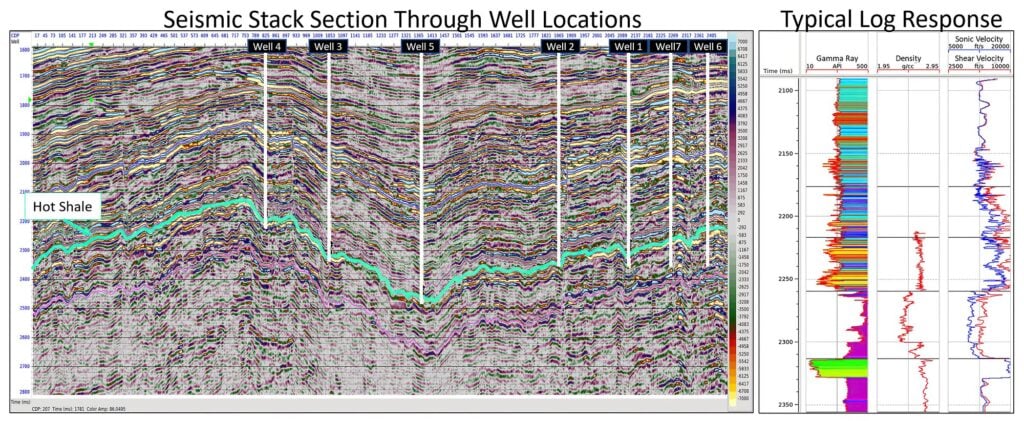
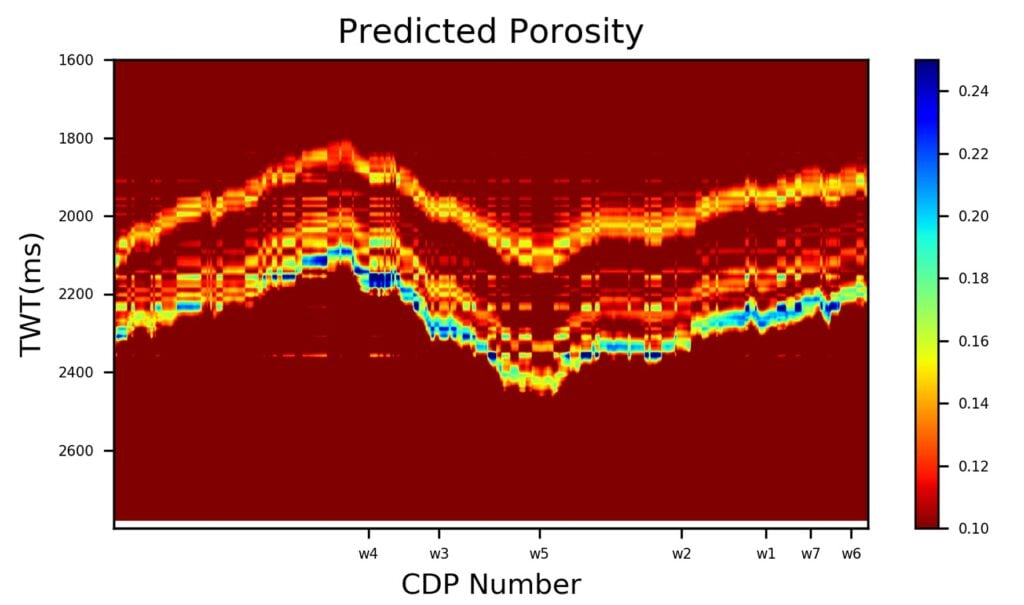
Synthetic datasets are drawn from a generated, specific synthetic model of the world with known parameters. It is the opposite of real-world seismic data, where a model is derived from the data. Researchers can validate their algorithms by applying them to a synthetic dataset, to find out if they produce an accurate reading of the underlying model.
Signal noise also affects data reliability. A physics-based approach can attempt to correct for overly noisy data. Data-based geophysics deals with noisy data in multiple ways. Machine implementations can be trained on incomplete or masked data, learning how to compensate for signal corruption or interference. In other cases, they learn to identify and focus on the characteristics of an underlying signal model.
The Best of Both Worlds
As a bottom line, geophysics could not exist without geophysical data. And geophysics would not exist without physics. So there’s a seismic shift going on in the profession – a move toward finding ways to combine proven physics-based approaches with comprehensive and much faster data-driven analysis.
“What I have been preaching is to use some combination of the two,” Sen said.
“We basically end up using all the tools, but we end up placing some constraints on the physics (of the data-based approach),” he added.
This combination provides a real-world check on machine learning and AI, helping to eliminate hallucinations and other results unconnected to the physical world. And it offers a more efficient and speedier way to utilize the enormous datasets now available to exploration geophysicists.
Sen wrote a handbook for his short course, “Physics and data-driven seismic data analysis: A narrative of two approaches.” In the book description, he wrote:
“Physics offers interpretability, theoretical grounding, and generalization across contexts. Data-driven methods provide scalability, adaptability, and the ability to uncover patterns in complex, high-dimensional spaces.
“Together, they form a powerful toolkit for modern geophysical data analysis.”
Sen noted this new hybridization of data-based and physics-based approaches is evolving rapidly, and “new algorithms, computational architectures, and seismic data sets are continually reshaping what is possible.”
One guideline dictates that constraints should be defined in terms of physics but not overly restrictive on analysis and interpretation. Geophysicists recognize that the real world is messy and noisy, and bounds can’t demand 100-percent conformance.
“There should be physics-based constraints, and there should be geology-based constraints. These are basically soft constraints,” Sen observed.
“If we put 100-percent constraints on these, we aren’t really getting anything,” he said.