
Editor’s note: A version of this article was originally published in the Houston Geological Society Bulletin in May 2024. It is reprinted here with the author’s permission.
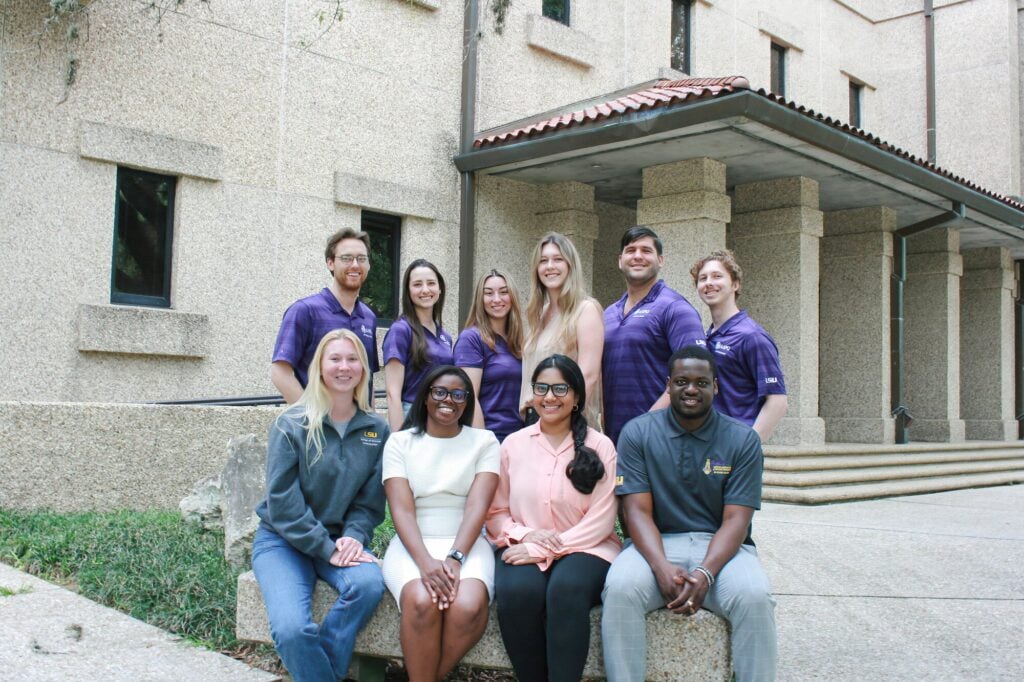
I was president of the AAPG Student Chapter at Louisiana State University in Baton Rouge, La.. During that time, I increased the Chapter fourfold despite the COVID depression and unfavorable messages about oil and gas. I had key help from Jeff Lund with the Houston Geological Society. I also thank Chevron for their very generous financial support to the LSU AAPG. This essay is about how we did it, some of the obstacles we had to overcome and how we positioned the group for success after I and other leaders graduated.
My father and both of my brothers are petroleum engineers. I was born in Lafayette, La. but grew up entirely overseas. My father’s work as a petroleum engineer took us many places. We lived in Borneo, Java, Brazil, the Netherlands and Egypt. My mom was a key figure who constantly helped us navigate and overcome the challenges that come with a life of constant change. I graduated high school in Cairo, Egypt in 2013. Along the way, I enjoyed scuba diving, hiking, cooking and competing in a variety of sports.
I give this background because of one key point: I truly grew up immersed in this industry. Over dinner, my dad had been asked to work a field with an anomalous pressure depletion rate and was hired to figure out why. I have long been aware of the “engineer versus geologist” jokes. But this is the kind of stuff we talked about every day.
It was when I started interviewing and preparing for my career in the oil and gas industry as an undergraduate that I realized just how much knowledge I had already absorbed about the industry, compared to many of my peers. For many of them, it was their first time hearing the words “operator” and “service company.” Knowing those words didn’t necessarily make me any more qualified for a job, but it certainly made me more comfortable networking and attending industry conferences or events.
The Old Formula
Around this time I joined the Houston Geological Society, where Jeff Lund encouraged me to volunteer for events with HGS to grow my network even further as an undergraduate student and to apply for the Calvert Memorial scholarship. The confidence from this interaction, while still an undergraduate, helped me connect and network with many hundreds of incredible industry geologists before ever starting graduate school. I’ve since been a recipient of the Calvert Memorial Scholarship for the past four years, which has been both an honor and a blessing to have been selected for HGS’s incredibly generous support.
In 2019, when I started my second year of my doctoral studies at LSU, I became president of the LSU AAPG Student Chapter. There were 10 members. I became president because I felt that I could help students successfully break into the oil and gas industry. I could see how discouraging it was for students to feel overwhelmed or intimidated by the industry. I wanted to help them build up their confidence just as many others had helped me grow my own confidence.
I assumed I would follow the same formula that past LSU AAPG Student Chapter presidents had before: encourage participation in the Imperial Barrel Award, put on a few social events and hope to grow the chapter. The “formula” to help students get into the industry was relatively simple: Encourage them to pursue a research-based graduate degree, be a decent communicator, complete the IBA, be involved in professional societies and keep up their grades. If you follow these steps, you’re very, very likely to land interviews that will lead to internships/jobs in the industry.
This formula is strong because it had been proven over many years, and after all, students were generally always interested in the oil and gas industry. But I wondered, “How much work would I, as president of the group, really need to do?”
COVID-19 Changes Plans
But, life is always full of surprises. In 2020, the COVID-19 pandemic brought some of the most financially challenging years in the history of our industry. Also, from a personal standpoint, many people lost their loved ones, or their jobs, or were forced to retire early. It was devastating for so many, and everyone was impacted differently.
After COVID-19, students saw the market flooded with experienced but unemployed petroleum geologists, because they got laid off from their jobs. Students couldn’t help but wonder, “Why would an oil and gas company be interested in me? I just can’t compete.”
From a student’s perspective, the tried-and-true formula was not even close to a guaranteed opportunity in the industry anymore. Around this time, students stopped registering for IBA at many universities, including LSU.
COVID-19 and Negative Messages
The COVID-19 pandemic was almost immediately followed up by the energy transition.
While I truly feel fortunate and proud that I can work as a petroleum geologist during a time when oil and gas companies are especially conscientious about their effects on the environment, I’ve observed a somewhat negative effect that the conversation surrounding the energy transition has had on recruiting students. Not “negative” because students think these changes are negative – it’s that these and other changes are not being communicated in a way that students can easily understand. It seemed that almost overnight, the “energy transition” conversation dramatically shifted the purpose of the oil and gas industry and dominated many conversations related to the future of the industry.
Large operators, small operators and service companies have adopted some phrasing related to the energy transition topic. Should the formula now include taking courses in CCUS? Should students get environmental geology minors to be competitive instead of petroleum engineering minors? What does the ideal petroleum geology student candidate look like now? On top of this, COVID-19 and the energy transition were then immediately followed by tensions in eastern Europe with Russia and Ukraine, which left a resource void in international oil and gas markets as Russian petroleum was no longer being widely traded.
To make matters worse, social media is constantly bombarding students with negative messages about the oil and gas industry. By the time most students start as undergraduate majors, and especially by graduate school, they are exposed to a plethora of negative oil and gas information from social media – some of it true, some of it false.
How can students tell which is which? How can we expect them to be able to sift out the accurate information from the inaccurate, and then confidently step into interviews or apply for jobs?
Lastly, throughout all of this and even before COVID-19, students find entering the oil and gas industry difficult if their academic adviser does not support – or is personally against – the energy industry. As president, I needed to equip students with the confidence to navigate these situations.
Impact on Students
COVID-19, the energy transition and geopolitical tensions – these three factors took a significant toll on student interest the oil and gas industry. The rate at which these changes occurred was breathtaking, and all students could reasonably comprehend the past few years was, “Why is everyone getting let go?” (COVID-19) to “Is the oil and gas industry no longer interested in oil and gas?” (energy transition) to “Why is everyone hiring again?” (geopolitical tensions driving increased demand).
Even as someone who can comfortably tap into a strong network of geologists at any time, these events – and their effects on industry – are still very difficult to understand.
Unless a student had already built up a strong network of petroleum professionals, the effects of these events on recruiting were not communicated in a way that students could easily understand. When there is that much change, and pressure from advisers not to enter the oil and gas industry, why would students try to enter the industry at all?
So, it goes without saying that it’s an interesting time to be a student trying to find their way in the energy industry right now. More importantly, since 2020, it’s been a difficult time to inspire confidence in the industry.
Students Follow Obvious Career Paths, Oil and Gas Was Not One
What I observed in my last few years at LSU is that when students arrive for their first semester (typically in the fall), they have no clue that the very competitive oil and gas recruiting season is about to be in full swing.
They then very quickly realize that in the next month they will need:
- Their resume in perfect shape
- A presentable LinkedIn profile
- An elevator pitch
- Interview attire
- An understanding of answering questions using the “STAR method” (Situation, Task, Action, Result)
- The ability to confidently speak about their research
- Enough money to travel to recruiting events, and
- Some basic knowledge of every company with which they hope to interview.
From what I have seen, most students simply don’t realize that they need to have all of this ready, and so they opt to ignore interview season altogether their first year, even if they are interested in applying.
 Since students are only in graduate school for a few short years, they then choose to apply for jobs for which the interviewing and recruiting process is not as rigorous, and for which their career paths are more obviously suited (which has not been the case for oil and gas the past few years). For jobs outside the energy industry, applications typically open in their second semester (after they get their feet on the ground at their new graduate school).
So, when I became LSU AAPG president during COVID-19, I realized very quickly that despite all the knowledge I had to offer, and despite all the contacts I had accumulated while being a member of HGS, it didn’t seem to matter as much as it had before, because the face of the industry had dramatically changed in the blink of an eye. I also realized that, in general, I needed to help students understand the expectations of the oil and gas interview/recruiting process.
A New Formula
I realized that a petroleum geology chapter wasn’t going to survive the COVID-19 pandemic, or the other challenges, with the typical formula for student societies. I knew that if I tried to hang on to the old formula and the old way of doing things, our group was going to perish. We needed a very clear path forward.
I needed LSU AAPG officers who would not only execute the tasks I would assign them, but also think critically and improve on ideas. I knew that if I had dedicated people alongside me, it would allow the group to operate more smoothly and allow me to continuously seek out new opportunities or efficiently improve on old ideas. Sure, I was the president of the group, but that didn’t mean I was the only one leading. I wanted them to feel empowered to help lead others as well. Sometimes, when working with friends in unpaid volunteer positions – as many in student organizations do – it can be hard to ask your friends to carve out time and give attention to something that doesn’t pay them (especially if their faith is already lacking in the industry).
To cultivate and nurture leadership between peers, for three years, at the beginning of every first officer-only meeting of the year, I would do two things:
First, I handed out descriptions of each of the officers’ expected duties. I asked each person to review the description and sign their name at the bottom of the page and return it to me. I asked them to get back to me with anything they wanted to change, remove, or add to their position.
The purpose of the first action was to make sure there were no surprises from what I would ask of my peers. I expected them to work, but I also wanted to make sure it was work that they would enjoy doing as a break from research. I didn’t want to set them up for failure if they couldn’t balance the workload of school alongside the workload of AAPG. It was also to help them see that their position meant something, and that I understood 100 percent if they wanted to walk away. If we all honored our agreements, it would save a lot of potentially awkward disagreements between friends regarding who was expected to pull which workload. With that being said, I encouraged honest communication and asked if they had a tough week of school ahead, let the officers know so we could divide the duties. This worked very well as it helped build trust between all of us.
Second, during that same first meeting, I went over all of the events I had planned for the next year and outlined the times of the year I would lean on their help the most, so they knew what to expect and when. I also asked them to brainstorm new ideas early on. The purpose of the second action was to set the tone for being proactive instead of reactive.
It wasn’t just a club where everyone did whatever they wanted. We all had a part to play, and their part was as important as my part. I was counting on them, members in AAPG were counting on them, and they knew it from day one.
The Three Cs of the New Formula
So, I created a plan that would help our chapter thrive. Instead of trying to address many diverse issues all at once, I recognized that we needed to address a few key points very intentionally and improve on those points over the course of a few years. I also tried my best to lead with empathy, because students were trying to find their place in a rapidly changing, competitive industry. I thought to myself, “If we can make it through COVID-19 and find a way to thrive, this group has a future.”
The emphases of our student chapter “new formula” were community, communication, and confidence.
I made a strenuous effort to cultivate both our digital and in-person community, because the pandemic made it very difficult to feel a sense of community at all. Even without the pandemic, it was already difficult for new graduate students to feel like part of a community, because most students come in from various undergraduate schools and don’t have many friends at their new schools.
To bolster up our digital community, during 2019, I created the LSU AAPG LinkedIn and Instagram pages. It was critical to have both. It cannot be overstated how important it was that we met students where they spent most of their time (and received most of their information), which was on Instagram. Most geologists know that LinkedIn is a fantastic place to meet new people and get a pulse on the news, trends, and forces in the industry. However, most students also get their information from Instagram, and more recently, TikTok.
Students needed to see the LSU AAPG Chapter active on a platform that was easily accessible. This made LSU AAPG seem more approachable, because students could see all of our good work and fun events. Also, I knew that Instagram would lead to a larger following on our more professional LinkedIn page.
I created the social media chair position at LSU AAPG to increase our digital footprint. They would create inviting, well-designed, engaging interactive content for students on Instagram and LinkedIn. I used Instagram to engage and recruit undergraduate students (geology and petroleum engineering students), and our LinkedIn to connect students with the larger geologic community. We were very intentional about communicating with students through these digital platforms.
I measured our success by the number of followers and the rate at which we observed students interacting with our content (likes, comments, and shares). Over the course of three years, we now have hundreds of followers across our Instagram and LinkedIn platforms, and that number grows every month. Our content gets weekly engagement by our students.
The more students engage with our digital content, the more likely other students are to see it, and it has kept our chapter relevant and inviting to the next generation of students.
We also used the GroupMe App weekly to communicate meetings, events, or anything else pertinent. Students were more likely to check an app on their phone for updates than read their email. Our AAPG GroupMe was our own community chat group that made communication between AAPG officers and AAPG members easy.
Short Course Series
During my first year as LSU AAPG president in 2019-20, I created a virtual short course series called “AAPG: All About Petroleum Geology.” I invited speakers to sequentially discuss small-scale petroleum geology (biostratigraphy and source rock characterization) all the way up to large-scale petroleum geology (exploration) over a year. That way, I could help students grow their network and their technical vocabularies, despite not being able to traditionally communicate and network with professional geos because of COVID.
I began this series by inviting speakers to virtually discuss the history of the industry (to understand and accept the cyclic nature of the industry), along with discussing resume and networking techniques.
I tried my best to ensure that all of our members had a LinkedIn and that they connected with our virtual speakers after every virtual AAPG event that we had.
Career Services
We also helped students with resumes. We scheduled one-on-one, virtual resume reviews with Eric Scott, a petroleum geologist who is an adjunct professor with Rice University and LSU G&G alum. During each student’s 20-minute slot, Scott helped with formatting, phrasing, clarity, and resume purpose. We followed-up his talk with a resume and LinkedIn review with Amanda Rico with Rico Editorial Services. From Rico, students learned about the importance of correctly formatting their resume so that online application tracking systems could properly review their resume and get it to recruiters. Rico also emphasized the importance of having a professional, well-curated LinkedIn profile. So, by the end of our first year, nearly all AAPG members had that.
We added mock interviews to our professional development series in 2022, and we’ve had undergraduate and graduate students in petroleum engineering and geology attend all of our professional development events. Our professional development events were only open to LSU AAPG members, but even non-geoscience students heard about this service and joined. So, this helped grow our membership across the board.
In 2023, LSU AAPG still frequently reaches out to the same speakers from our AAPG series (and new speakers, too!) to chat with our Chapter. However, our professional development events are always the most well attended.
Merch and Crawfish
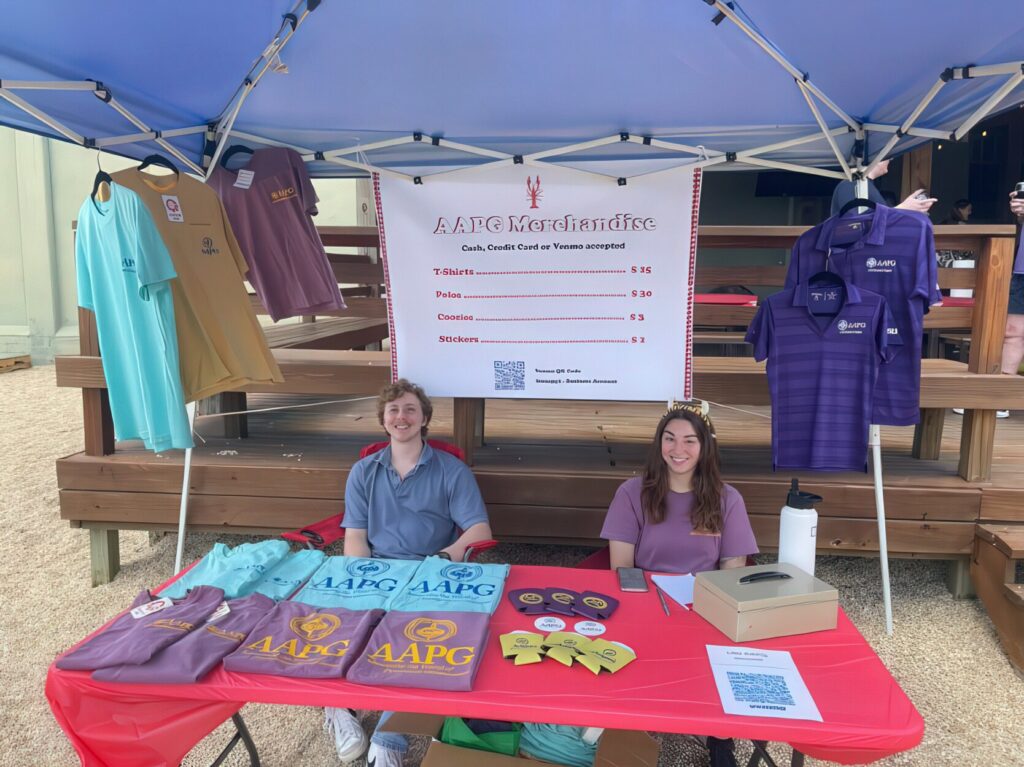
Around this time, I also started developing LSU AAPG merchandise for the community we were building, which began with t-shirts. While everyone was sitting at home on zoom, I had a feeling they would enjoy a cozy t-shirt.
In 2020, I created the first-ever LSU AAPG Annual Crawfish Boil which we hosted at a local brewery. I invited the LSU undergraduate geology group, GeoClub, to collaborate with us on this. I encouraged this collaboration for four reasons. First, I wanted to befriend the lower classmen so that they might join LSU AAPG. Second, I wanted them to feel less intimidated by graduate students. Third, many of them wanted to attend grad school one day, so I wanted to encourage communication between the two groups. Fourth, I knew that GeoClub was not as well-funded as LSU AAPG and therefore struggled to host large events to recruit new students into their club. So, I thought, why not host an event that can benefit both groups?
So for the crawfish boil, LSU AAPG paid to reserve the space, provided the crawfish and refreshments, while GeoClub provided snacks, sodas, and a variety of vegetarian appetizers.
At the Boil, LSU AAPG had all-you-can-eat crawfish (at a discounted price for members) and raffles with lower- and upper-tier prizes. The North Sea Core group in Aberdeen provided core samples for the raffle. We also offered discounted membership renewals that would apply to the following year. Nearly all of our members would use the Annual LSU AAPG Crawfish Boil as a chance to renew their annual memberships with us.
At this event we sold our merchandise (at discounted prices for members). It brought in decent revenue and also built up our brand on campus. Students, faculty, alumni, and professional geologists attended.
And – a key point here: the social media chair heavily publicized this event before, during, and after the Crawfish Boil. People need constant reminders.
We encouraged the GeoClub to create their own merchandise to sell, because it is a great way to raise funds for the group, which they did in 2023. It was very rewarding to see them take the initiative.
To recap the success of this collaborative event: in 2019, just fewer than 30 people attended the Crawfish Boil. In 2023, 60 people attended. It was a wonderfully fun collaborative event that both groups look forward to every year.
Cenozoic Cervesas, Other Events and Miscellanies
I created another event in 2021 called “Cenozoic Cervesas.” Every Friday, after the departmental seminar, we had an agreement with a local pizza shop to buy a handful of pizzas and beverages to relax with colleagues after a long week. This event was open to everyone who was interested in hanging out and chatting with friends – they did not need to be an LSU AAPG member. We did this almost every Friday without fail. Over time, this event became very popular with students, faculty and alumni. We also used it as an opportunity to recruit new students. We always had our LSU AAPG Venmo QR code printed out so students could easily Venmo us the $30 annual membership fee. This popular event has continued into 2024.
Lastly, since LSU football is legendary, every two weeks during the fall season since 2021, we had LSU AAPG Student Chapter tailgates. At these tailgates, we would provide food (vegetarian, halal, and meat-eater options available), sell LSU AAPG merchandise, stream the game on a big screen with plenty of chairs, with music and refreshments.
We would always use these events as an opportunity to recruit new student members. This popular event built-up the LSU AAPG community and brand and continued successfully into 2023.
In 2021, I realized that our merchandise could support student professional development. Business clothes are notoriously expensive, and sometimes students feel out of place at networking events because they aren’t sure what to wear. And what they want to wear, they can’t afford. Because of this, I asked our group vice president to design professional-looking polos that had our LSU AAPG logo on them. This way, a student could always have a professional, affordable clothing option for any business/professional event they attended, and they wouldn’t feel out of place.
I followed this up with business cards. Our social media chair designed an LSU AAPG business card template, all students needed to do was to email us a headshot, their title, and the name of the lab they worked in. Then we would upload their information and print their business cards for them. Again, this added to their professional development and confidence.
Also, if students presented at a conference, LSU AAPG reimbursed them up to $300. If students just wanted to attend a conference, we would still support their desire to network and reimburse them $150. This initiative was (and remains) very popular with undergraduate and graduate students alike. This has been a very powerful recruiting tool for us because students need to be an LSU AAPG member to access this perk.
Lastly, to help students feel up to date on current oil and gas news, in 2019 I began every LSU AAPG meeting with an “Industry Update” in which – to the best of my ability – I described what is going on in the industry. We also utilized the GroupMe App to send out articles about oil and gas news.
Setting up the Future
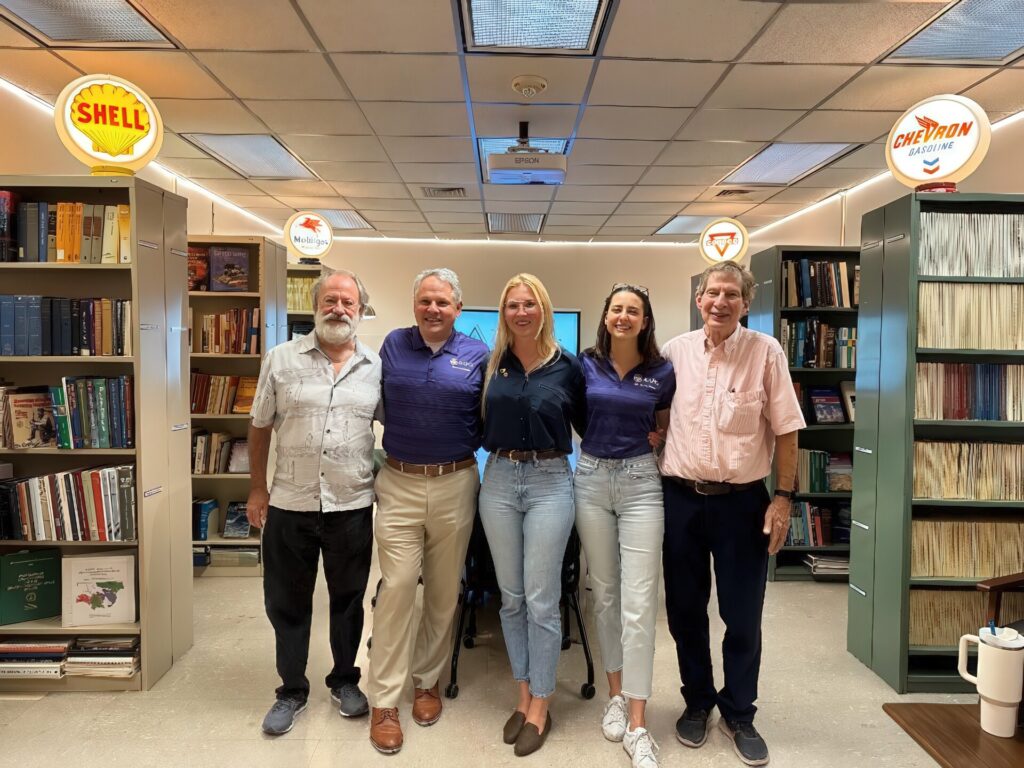
In 2021, the AAPG Publication Pipeline announced that due to COVID-19, they no longer had the ability to store their enormous collection of petro-technical books. While they were in the process of liquidating their collection, I asked one of the team leaders, Chuck Caughey, if a portion of the collection could be donated to LSU so that we could create an energy library inside of the LSU Geology and Geophysics Department. The idea was to digitally catalogue all the books so that they could be easily accessible and preserve the history of all the fantastic work done by the Publication Pipeline. Chuck spoke with the Publication Pipeline and they graciously agreed.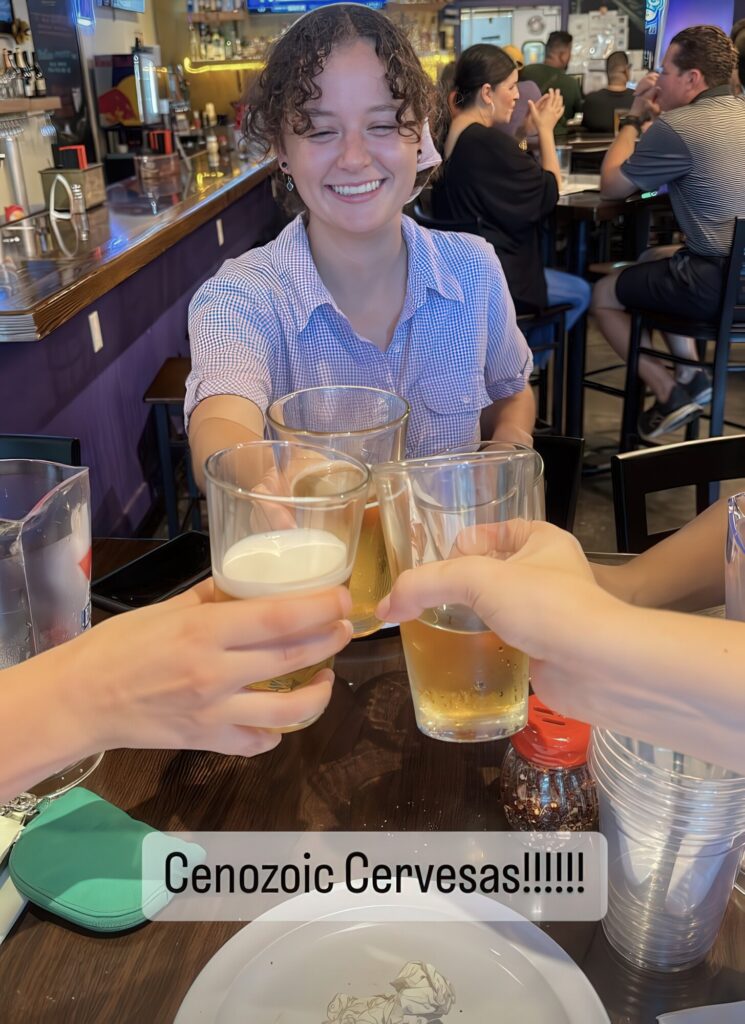
I was intentional with the books we selected in that, yes – I wanted this library to contain information on traditional, fundamental topics in the oil and gas industry (sedimentology, geophysics, geochemistry, exploration etc.), but I also wanted topics that could apply to the clean energy/energy transition as well (CCUS, geothermal). I also included fundamental, general geology books (physical geology, historical geology etc.).
The idea was that anyone in the LSU Geology and Geophysics Department in particular, or academia in general, could benefit from this project, not just those interested in the energy industry.
During the summer of 2023, I reached out to Eric Zimmermann, the chief operating officer of LLOG Exploration, with a proposal to fund an undergraduate student intern, whom I would mentor to help the library vision come to life. Eric graciously agreed, and the first LSU AAPG Student Chapter Internship was born.
The library came together beautifully, and it currently contains more than a thousand books, all organized in an inviting conference room that the current LSU IBA team is utilizing. This project added more than $50,000-worth of value to the LSU Geology and Geophysics Department and was a collaborative effort that would not have been possible without Chevron, AAPG, the Houston Geological Society, the New Orleans Geological Society, the support of the LSU Geology and Geophysics department, and many others.
While the obvious purpose of the library is to provide a space for students to enjoy and find resources and to build community, the deeper purpose of the library is the following: the LSU AAPG Caughey-Zimmermann Energy Library can now forever act as a venue for continuous engagement between LSU AAPG, students, faculty, alumni, organizations and companies. Because it permanently embraces the fundamental aspects of the oil and gas industry, and the new directions of the energy transition, it sends a message that the LSU AAPG Student Chapter is aware of where the industry came from, and we’re embracing where it’s going. The library can be used as a tool for future AAPG student chapters to facilitate community, confidence, and communication.
Results
By the end of 2022, our chapter had reached more than 40 active members, and we maintained that number in 2023. Additionally, in May of 2023, our Department saw the largest number of students go into oil and gas internships and receive the most job offers in the last 10 years of the Department’s history. The majority of those students were members of LSU AAPG.
While I always had a vision and a plan to creatively move forward, I could not have done any of this – and I mean any of it – without the fantastic support of every LSU AAPG officer, Jeff Duxbury, Tiffany Nordstrom, Colby Knight, Ashley Thrower, Vivian Grom, Joses Omojola, Nick Schuler, Nick Prehis, Joe Honings and Zach Coutee. They trusted me, they questioned me, they pushed me and they made me a stronger leader. I am a better person, both personally and professionally, because I worked alongside so many talented friends in LSU AAPG. I thank Chevron for their financial support.
It’s been an honor and such a privilege to help so many students build up their confidence to step into the energy industry over the years.
Geaux tigers!