

Beer is well known to most geologists, especially, say, on a late Friday afternoon during the summer, perhaps after an arduous week of field (or office) work. Not surprisingly, this combination might lead to new themes of discovery or some keen insights or, at the very least, heightened camaraderie. During such Friday-like gatherings over a pint or two, some weighty queries might arise, such as “What makes the best beer?” or “How are breweries located?” and “Do you have any good beer stories?”
At a recent geo-convention in Calgary, a similar discussion brought up some surprising geological connections of beer. As the study of beer even has a name – “zythology,” as well as patron saints (St. Arnold and none other than Good King Wenceslaus), we thought it potentially useful to share some highlights of the new field of … geozythology.
History
Brewing of beer has been known for more than 10,000 years and its consumption was even encouraged in the Bible (Deuteronomy 14:26), although geologists weren’t explicitly mentioned. In England, there is a town in Devon called “Beer,” but it does not have a brewery, which is surely a missed marketing opportunity.Meanwhile in Scotland, northwest of Edinburgh, is the Harviestoun Brewery, which produces “the Ridge” pale ale, named after the mid-Atlantic Ridge and appropriately brewed with ingredients from both Scotland and America.
In another cross-Atlantic link, American history was perhaps altered by the pilgrims in 1620 when they ran out of beer and had to make landfall at Plymouth Rock. At the time, beer was a safe way of getting hydration and therefore quite valuable. Today, North America has many world-renowned breweries producing numerous types of beer. Craft brewers use local water from remote locations to create refreshing beers with unique flavors and tastes, depending on the water mineralogy and pH in addition to the terroir of the malt and hops. (“Terroir” is a French term for the influence of a specific region’s environment – its soil, topography, climate and other local features – on the flavor of a crop that is grown there. It’s typically used in reference to wine but can apply to any crop.)
However, some large breweries prefer to obtain local water and chemically purify the fluid before beginning the brewing process. This is often driven by the need to control costs associated with canning and shipping large quantities of uniform product, rather than benefit from the local beer terroir.
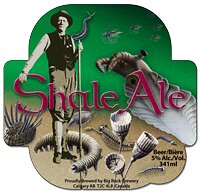
In Western Canada, one of the best-known examples of the relationship between geology and beer is the Big Rock Brewery in Calgary, named after the local erratic near Okotoks. Not surprisingly, the locally based Canadian Society of Petroleum Geologists in 2009 commissioned the brewery to create the “Shale Ale,” a 5-percent alcohol brown ale, for the annual convention. It was well received, selling out quickly. The artwork used was actually created for the Burgess Shale Foundation to commemorate the 1909 discovery of the Walcott fossil quarry – another geological link.
Other Western beers with a geological connection include Operation Ploughshare by Urban Artifact. The beer was named after a project, stopped in 1960, to extract bitumen from the McMurray Formation in northern Alberta using an atomic bomb. Environmental concerns of the project notwithstanding, the beer was good!
Examples From Around the World
Beer is thus a part of geoscience lore and history. There are also other more obscure connections of which three are highlighted here:
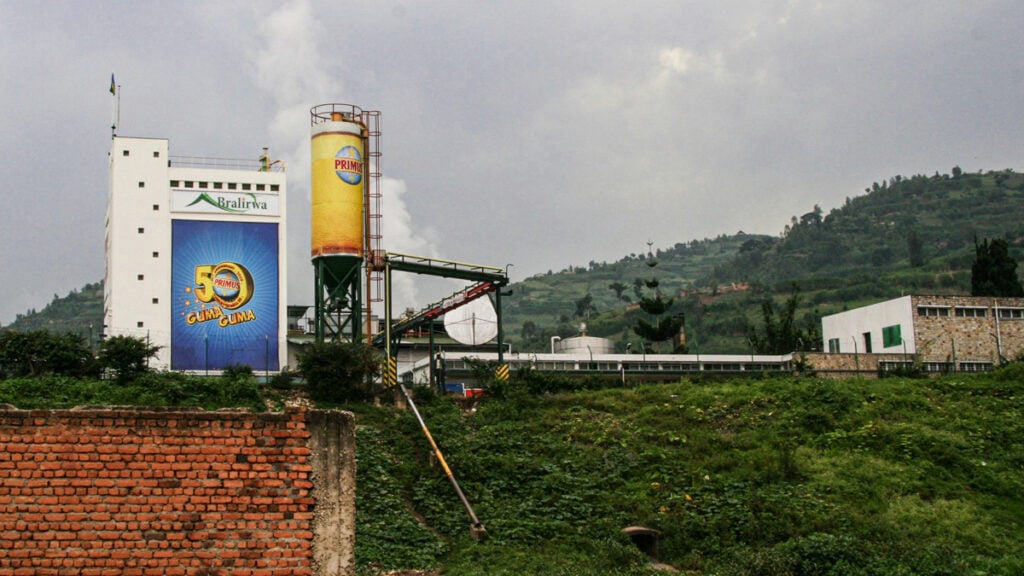
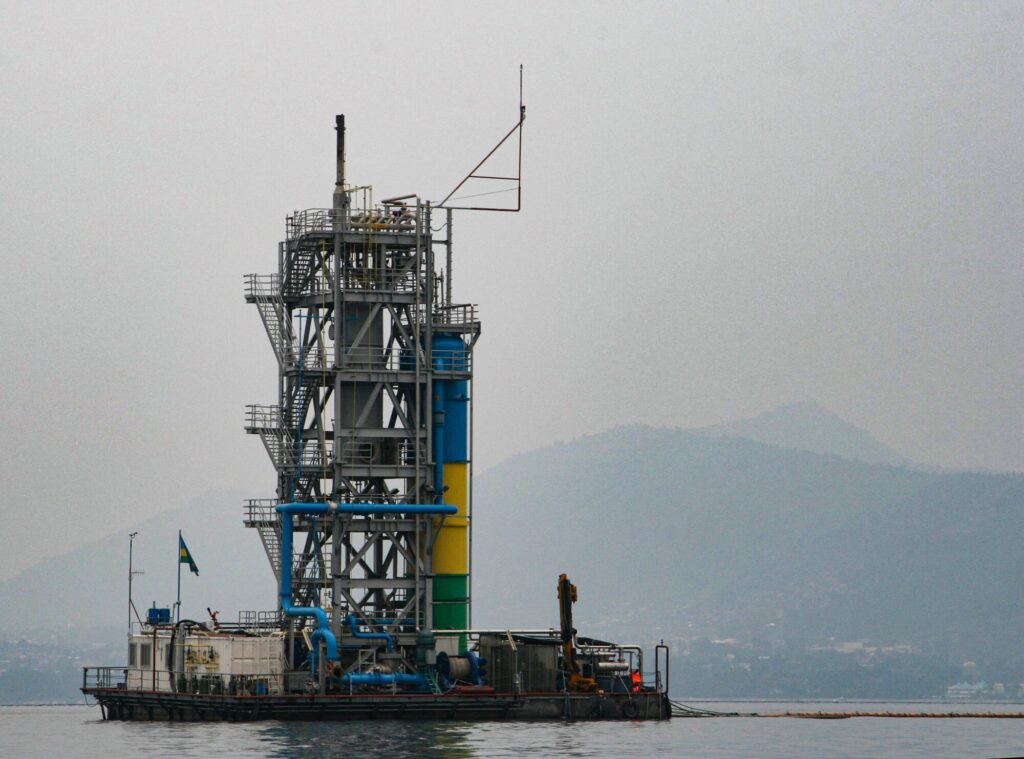
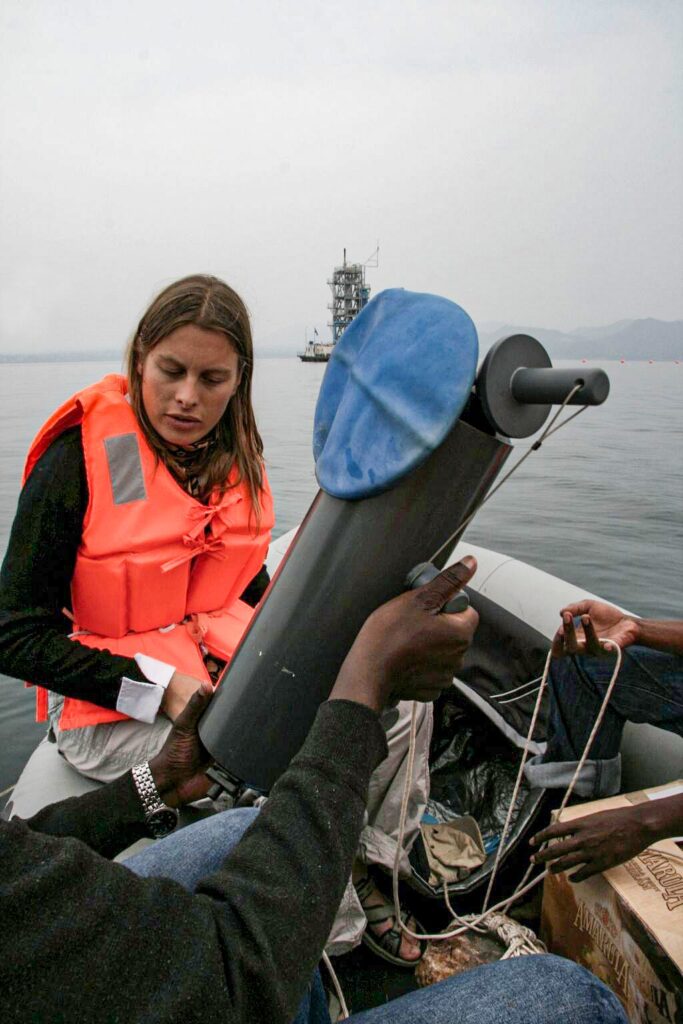
- The layered Lake Kivu in Rwanda is a stunningly scenic site situated among the volcanoes of the East African Rift zone. It’s a remarkable region that displays Earth’s generative processes. But, the lake harbors a powerful ingredient in its waters: dissolved methane, estimated at 2 trillion cubic feet. Along with its companion CO2, gas-saturated lakes of this kind have been known to overturn or degas suddenly and catastrophically. To try to minimize that risk, it’s sensible to carefully degas the lake. This can be done by basically putting a 300-meter-deep pipe or “straw” into the lake and letting the water undergo a controlled geysering to the surface. The methane gas can then be collected, processed, piped to the shore and used to do something special, like brew beer! And it is. The Bralirwa Brewery (Rwanda’s largest), on Kivu’s shores in a town called Rubavu (formerly Gisenyi), has been doing so successfully for 66 years. Its signature beer is the 5-percent alcohol by volume Primus lager, along with a 5.5-percent premium Alsace-style lager called “Mützig,” which is brewed under license with Heinekein. The degassing risk-reduction process is unique, with its critical follow-on use in creating chilled hydration fluids which,in turn, help compensate for the humid tropical weather found in central Africa.
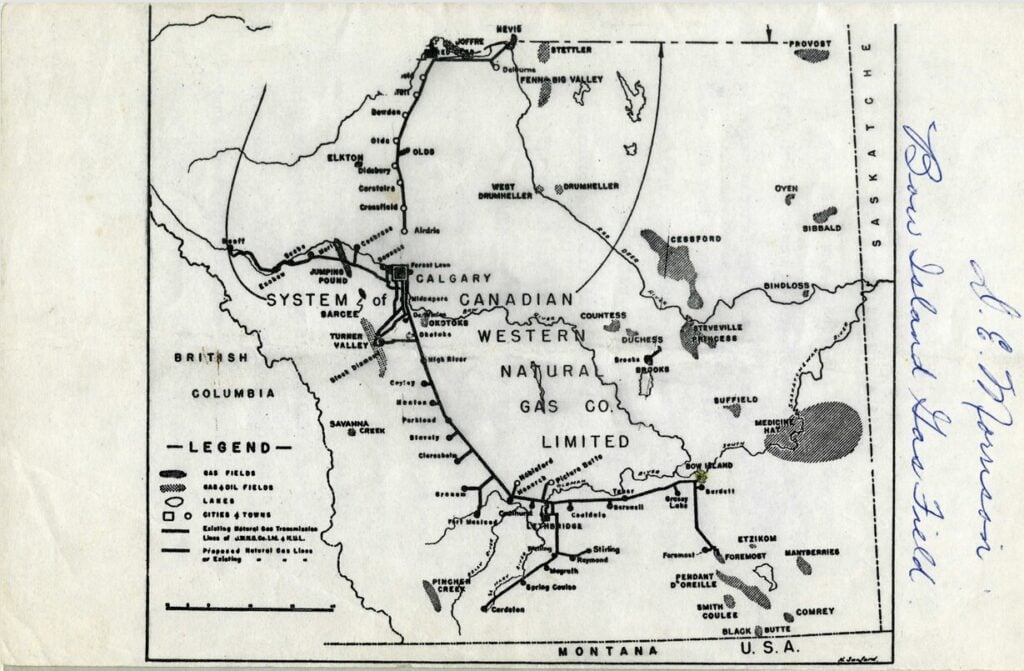
- Calgary brewery and the first long gas pipeline in Western Canada: Around 1902, Archibald W. Dingman of Turner Valley Dingman No. 1 discovery fame, moved to Calgary fromOntario and, along with financial partners, formed the Calgary Natural Gas Company. In 1908, Dingman drilled a productive natural gas well on the Col. James Walker Estate within the City of Calgary and laid pipe connecting it to the Inglewood Calgary Brewing and Malting Company to supply gas for their operations. This well initially produced 1 million cubic feet per day and was also used to power local streetlights and Col. Walker’s home. By 1912, the local gas demand was more than the well could produce so an additional source was sought. A gas pool of Early Cretaceous Age at Bow Island had been discovered in 1909 with the completion of the “Old Glory” well. Drilled by Eugene Coste, the well was prolific, but 170 miles to the southeast of Calgary. To get the gas to Calgary, Coste’s Canadian Western Natural Gas Company built a 16-inch diameter transmission pipeline to the city, in an amazing three months, making it one of the longest and largest gas lines at the time. As an aside, the financing of the project was provided by English investors, though it is not known if the brewery connection was an incentive. The resulting gas power saved the first brewery in Alberta and its signature brew, Calgary Export Larger. The initial Calgary well continued production in Inglewood until finally being capped in 1948.
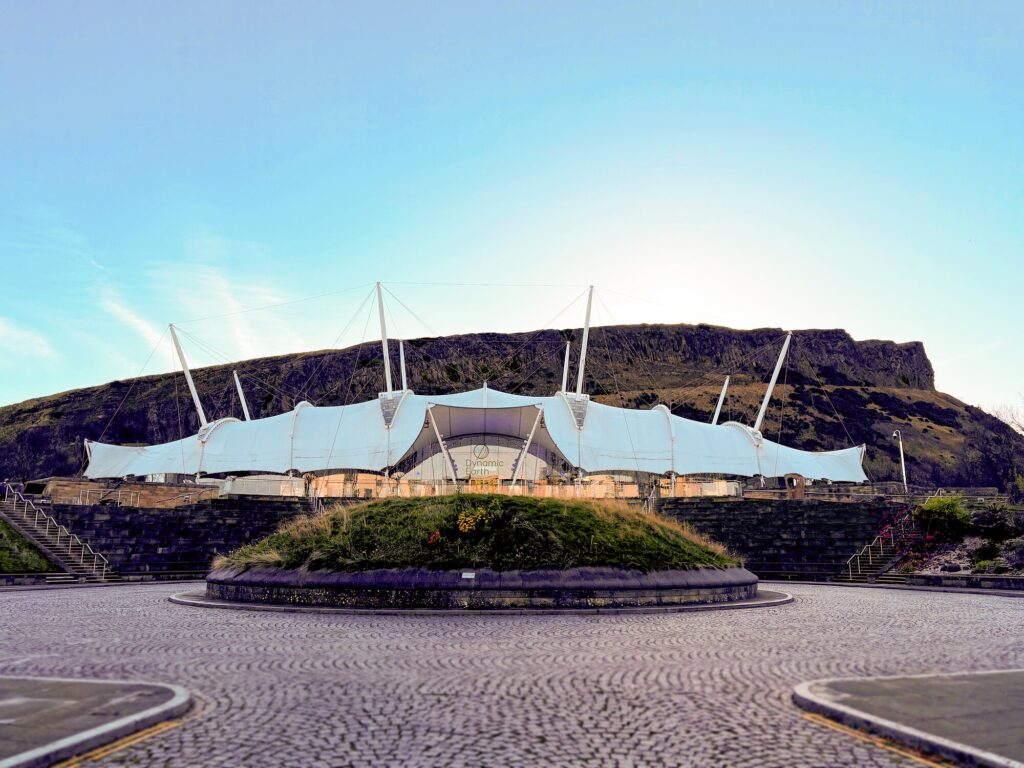
- Edinburgh Dynamic Earth Science Museum situated next to the Salisbury Crags: In 1767, James Hutton settled in Edinburgh and published in 1788 the important geology book, “Theory of the Earth,” in which he coined the phrase “dynamic Earth.” He is known to have visited the Salisbury Crags and described the injection of magma into sedimentary layers. Just prior to this, in 1749, the Scottish and Newcastle brewing company had its beginnings. Its first brewery was sited in Edinburgh, with its good brewing water and thirsty students at the local university. The company subsequently grew to become a major company and by the 1850s was shipping beer to domestic and foreign markets. Through mergers and acquisitions, the company developed the Abbey and Holyrood Breweries, both within Edinburgh. However, in 1986, these sites were closed and the land was subsequently generously donated between 1995 and ‘97 to the City of Edinburgh for public use. Part of the area has since become the location of Holyrood Palace, the seat of the Scottish Parliament, while another part found a different use.
The geological significance of the location lead to the building of the Dynamic Earth Science Centre and Planetarium, telling the epic story of planet Earth from its beginning to the present day. James Hutton would probably be impressed.
Stay Thirsty!
Geology and beer are intimately interrelated, and that connection via water, energy, and fellowship can lead to many new topics and responsibly enjoyed afternoons. Rocks, soils, and hydrocarbons are all part of beer’s history. With the blossoming of craft brewing around the globe, along with social re-connection, we can imagine scientific insights abounding.