
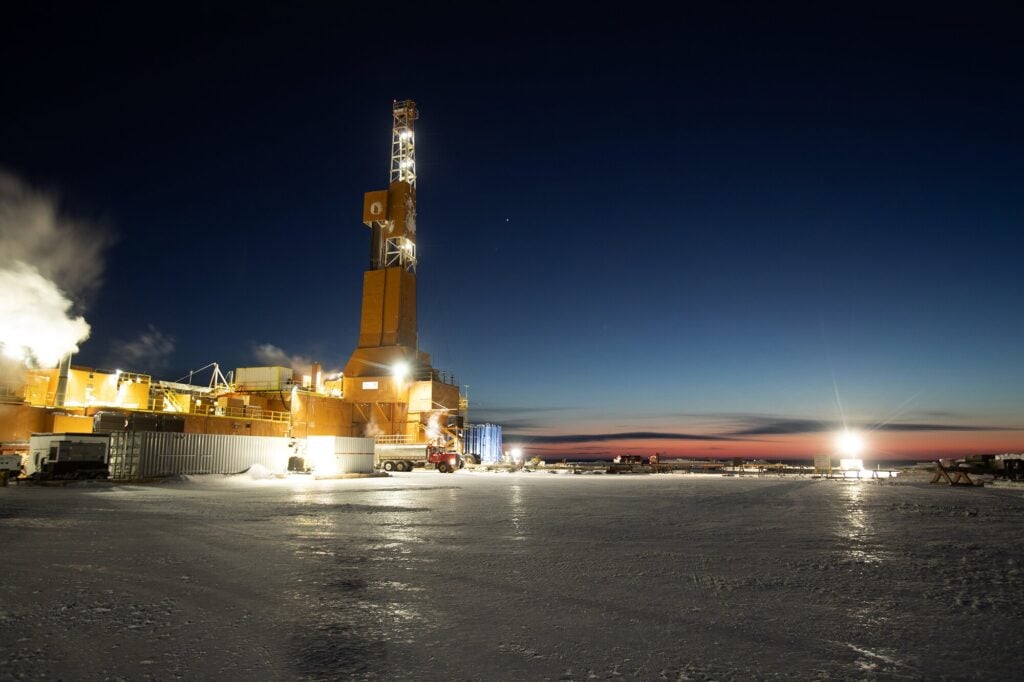
The International Meeting for Applied Geoscience and Energy is the world’s premier gathering for geoscientists, energy professionals, industry leaders and explorers.
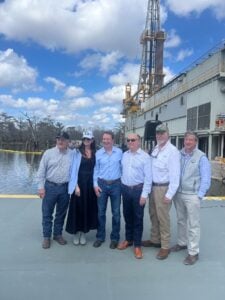
Explorers can celebrate their craft at the Discovery Thinking Forum, a flagship feature of AAPG’s annual meeting, where they can share stories about how technical and professional skills combine to turn prospects into discoveries.
Now in its 20th year and 30th edition, the Discovery Thinking initiative has featured more than 100 discoveries and highlighted the role integrated geology and geophysics play in making them successful.
The 2026 Discovery Thinking Forum, entitled “Analogs and Perseverance,” features four talks:
- Update on the Nanushuk Play of the North Slope of Alaska, presented by Bill Armstrong of Armstrong Oil and Gas
- “From Mamba to Zohr to Baleine to Geng North Discoveries: Analyzing Twenty Years of Continued Exploration Success at Eni,” presented by Andrea Cozzi and Lorenzo Meciani of Eni
- “Highlander – Confirmation of a Giant Gas Field in South Louisiana,” presented by Kevin McMichael of Claymore Oil and Gas
- “Missed it by That Much – Who A Gulf of America Look at Near Misses that Became Significant Discoveries and the Impact for Future Exploration,” presented by Eric Zimmerman of LLOG
The Hottest Play on the Planet
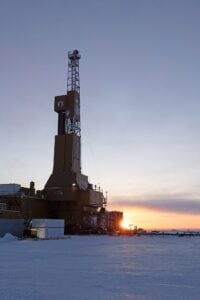
Bill Armstrong, CEO of Armstrong Oil and Gas, looks forward to talking about the North Slope of Alaska, an area he is proud to promote.
“My team and I think the Nanushuk is the hottest play on the planet – sorry Guyana, Suriname, Namibia, Eastern Mediterranean! Let others come to the forum and judge for themselves,” he said.
The Cretaceous Nanushuk Group has been recognized for its petroleum potential since the U.S. Navy’s oil discovery at the Umiat field in 1946. Subsequent discoveries at Fish Creek in 1949 and Simpson in 1950 confirmed the regional extent of the Nanushuk petroleum system. The Group’s full potential remained hidden until 2013, when Repsol and Armstrong discovered the multibillion-barrel Pikka field.
The 13 BBOOIP (billions of barrels of oil originally in place) accumulation at Pikka field is trapped stratigraphically within topsett and upper foreset portions of a series of prograding clinothems. These clinothems are part of the Brookian sequence, a lower Cretaceous through Tertiary progradational system that extends for 600 miles from Eastern Russia across the North Slope into Northwest Canada.
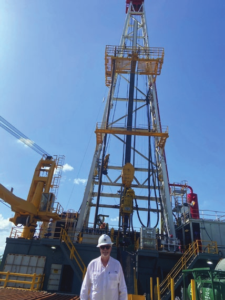
Technological Advances
Before discovery, Pikka’s subtle stratigraphic traps were almost undetectable on seismic. Advances in 3-D seismic and amplitude-versus-offset technology helped teams understand the reservoir architecture and the distribution of hydrocarbons within it.
Armstrong explained how the application of AVO analysis in onshore conventional plays is rare due to typically poor-quality seismic data, and that most modern onshore exploration is limited to low-quality reservoirs.
In contrast, the emerging Brookian topset play benefits from both high-quality reservoirs and abundant high-quality 3-D seismic data, which allow the prediction of lithology and fluid type in topset targets across the North Slope.
“The result is the Holy Grail of exploration: a shallow, low-risk, onshore, conventional oil play spanning hundreds of miles containing multi-billion-barrel targets in one of the most prolific petroleum systems in the world,” he said.
After refocusing efforts on Brookian topsets, Armstrong and companies, Oil Search/Santos, Repsol, and ConocoPhillips, have drilled 35 of 38 successful wells in the Nanushuk play, a 92-percent success rate.
In addition to recent Nanushuk discoveries at Willow, West Willow, Stirrup, Mitquq, and Horseshoe, Armstrong, along with partners Apache and Santos, have extended the topset play 85 miles to the east with multiple younger Brookian topset discoveries at King Street and Sockeye.
Global Attention
Alaskan discoveries have drawn attention from the global oil industry.
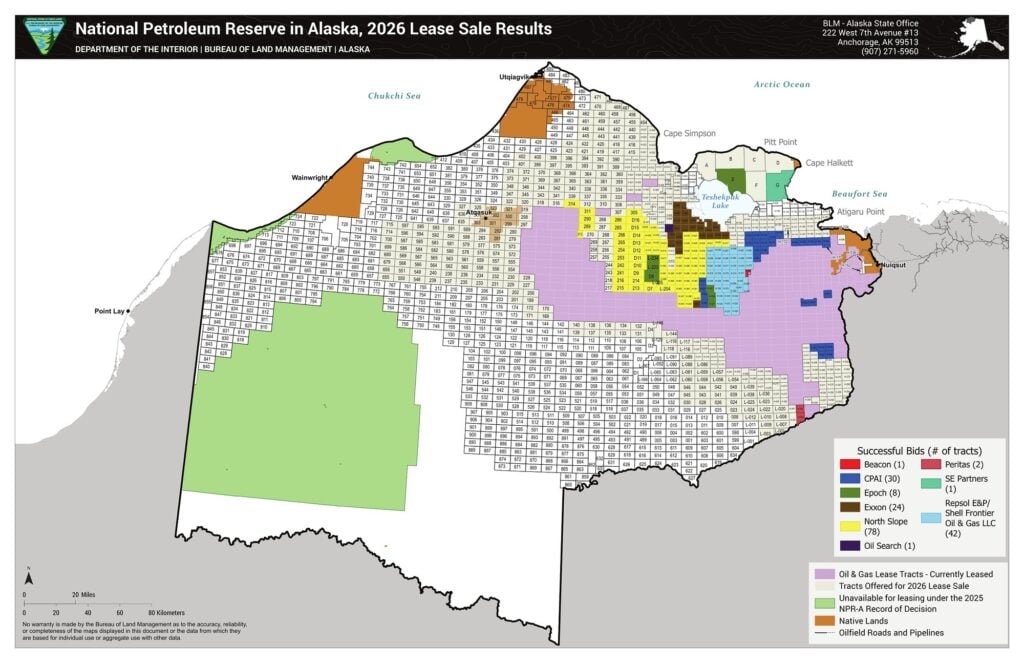
During the 2026 National Petroleum Reserve in Alaska lease sale, the Bureau of Land Management received 11 companies bidding on 187 tracts covering more than 1.3 million acres, totaling $242 million in bids.
The lease sale brought back super-majors Shell and Exxon, and current North Slope companies ConocoPhillips, Repsol, Santos, and Armstrong expanded their leasehold in pursuit of this prolific onshore oil play.
“Recent play-extending discoveries, historic lease sale competition, and the return of the super-majors all support the fact that the Brookian topset play is the hottest onshore oil play on the planet,” Armstrong said.
Finding Gas 14 Years Later
The Discovery Thinking Forum also features success stories farther south.
Kevin McMichael, owner, president, and chief geologist at Claymore Oil and Gas, will tell the story of Highlander Field, a giant gas field in South Louisiana.
In February 2026, Claymore and partners drilled in a confirmation well to a large gas discovery made 14 years earlier beneath the Bayou Long Field in St. Martin Parish, Louisiana.
The well, drilled to 30,862 feet, proved a Tuscaloosa gas pay with a column height of more than 2,100 feet. Once completed, it will be among the deepest and highest-pressure gas wells in the world.
McMichael’s talk will summarize the stratigraphy and structural evolution of the Highlander Field, as well as some of the diagenetic factors that enabled the ultra-deep discovery. He will also explain the role of technological advances and knowledge sharing.
“The 2026 well was drilled much more efficiently than the prior well due to lessons learned and effective coordination among the drilling and evaluation team, enhancing the economics of future full field development,” he said.
McMichael said critical thinking, regional understanding, and analogs are key to successful exploration.
“The study of analogs gives the explorer a library of pattern recognition that, when combined with new data, often leads to the ‘aha’ moment when a good prospect is recognized,” he said.
Success Phases and Near Misses
Armstrong and McMichael will share the Discovery Thinking stage with Andrea Cozzi and Lorenzo Meciani of Eni and Eric Zimmermann of LLOG Exploration, who will share their own stories of analogs and persistence.
Cozzi’s talk highlights exceptional exploration performance during the “Eni Success Phase” – 20 years characterized by consistent discovery rates, rapid development cycles, and high commerciality of newly discovered resources.
Zimmermann’s talk discusses how examining near misses in the Gulf of America (Mexico) lead to discoveries decades later.
Discovery Thinking Chair Charles Sternbach said that while the 2026 session includes a wide variety of topics and geographical areas, the four presentations have a common thread.
“All of the speakers and their companies are learning organizations. They have a culture and a gift for seeing things others have overlooked. Commerciality drives each individual and organization. Quick-to-production is a strategy for ENI, and, of course, that is a challenge in Alaska,” he said.
“But they all share common traits instructive to all of us – they learn, they persist, and they don’t give up,” Sternbach added.
Discovery Thinking co-Chair Mike Forrest said all the presentations fit perfectly with the Forum’s objective.
“Integrating geoscience data along with curiosity and creativeness can lead to new exploration play concepts,” he said.
Expectations for the Forum
McMichael looks forward to sharing his story and learning from others at IMAGE.
“I joined the Discovery Thinking Forum for the purpose of advancing the art of exploration, a waning skill set in today’s oil business,” he said.
“I hope to see what others have done in the creation of opportunities and go to school on their methods to improve my own approach. Even after nearly 50 years of exploring, I have never considered myself as anything other than a work in progress, new ideas and methods still intrigue me.”
Armstrong agreed.
“The AAPG is a very important organization for the world, and I think it is important to share ideas, experiences and learnings,” he said. “I always learn a lot from talking to other explorers.”
In addition to presenting on the Nanushuk play, Armstrong plans to share his insights from his work in Latin America and discuss the exploration mindset.
“You can’t make great art by painting by the numbers. Also, you can’t find big discoveries without swinging the bat,” he said.
“Despite all our technology, we don’t have all the answers. I have drilled lots of great prospects that didn’t work. The key to long-term success is to keep getting back to the plate to swing again.”