
In the March issue of the Explorer, we reported on the status of the Artemis program to return humans to the moon to explore for water ice to support human settlement at the lunar south pole.
On behalf of AAPG membership, congratulations to the Artemis II crew members Commander Reid Wiseman, Pilot Victor Glover, Mission Specialist Christina Koch, and Mission Specialist Jeremy Hansen for their successful historic mission and safe splashdown back on Earth.
This journey around the moon is just the beginning of our return to lunar exploration. We credit years of extraordinary work from NASA, industry, and international partners.
“This historic mission was exactly what the country and the world needed,” said Explore Mars CEO Chris Carberry in a company release. “Artemis II represents a positive future for humanity. It not only demonstrated American leadership in space exploration, but also the value of international cooperation for the benefit of all humanity.”
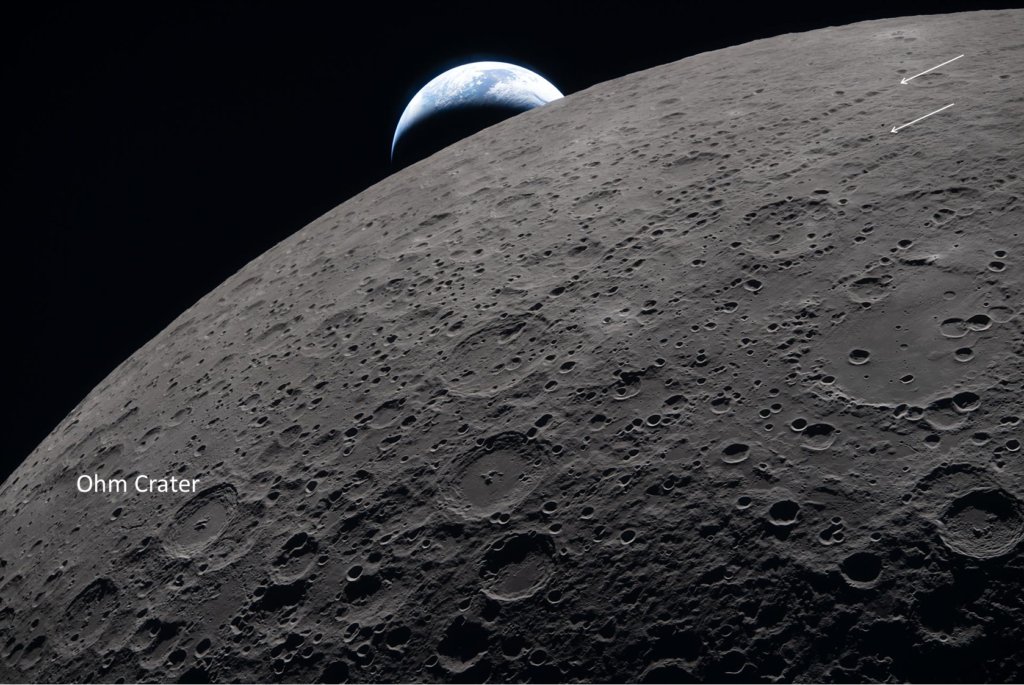
Milestones achieved by this mission include traveling a total of almost 700,000 miles. They traveled farther from Earth than any humans have before. The mission included the first person of color, the first female, and the first Canadian astronaut (Hansen) to fly around the moon. They viewed significant portions of the far side of the moon not visible to Apollo astronauts, and they conducted science observations to improve our understanding of the moon.
After a safe splashdown and recovery, the astronauts returned to Houston on April 10 at Ellington Field, greeted with cheers, a standing ovation, and embraces from NASA Administrator Jared Isaacman. CNN reported that they reunited with their families for the first time since completing their historic 10-day trip around the moon. Isaacman referred to the mission as “the greatest adventure in human history.”
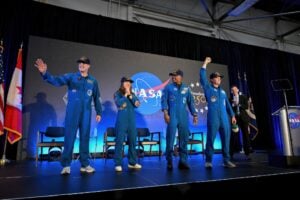
“Victor, Christina and Jeremy, we are bonded forever, and no one down here is ever going to know what the four of us just went through,” said Wiseman. “It was the most special thing that will ever happen in my life.”
“Our four Artemis II astronauts – Reid, Victor, Christina, and Jeremy – took humanity on an incredible journey around the moon and brought back images so exquisite and brimming with science, they will inspire generations to come,” said Nicola Fox, associate administrator of NASA’s Science Mission Directorate.
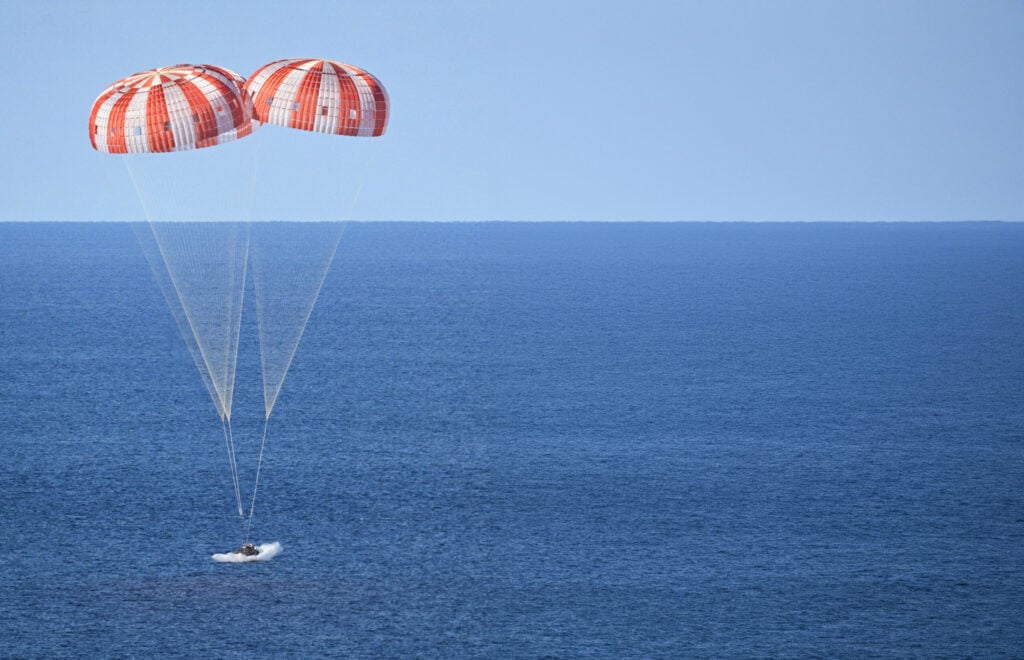
The Orion spacecraft traveled more than 24,000 miles per hour when it reentered Earth’s upper atmosphere. Its heatshield experienced temperatures nearly as hot as the sun’s surface. Artemis II began its final descent on April 10 when the European Space Agency built service module separated, just before its atmospheric reentry at 7:53 p.m. (EDT).
The module has the engine and solar panels that powered Orion on its lunar voyage. Live footage showed the Orion capsule gently pulling away to begin the most hazardous phase – reentry into the Earth’s atmosphere to Orion splashdown. The capsule’s approach angle had to be exact. If it came in too shallow, it could skip off the atmosphere; too steep and the heating could destroy Orion. It entered a precise corridor of sky southeast of Hawaii on its way to splashdown off the California coast.
We look forward to upcoming Artemis missions that will return humans to Moon landings starting in 2028. Continued exploration and development of lunar bases will help enable the first crewed mission to Mars in the 2030s. Artemis II’s success demonstrates that the technology, partnerships, and human resolve needed to live and work well beyond Earth are achievable. Congratulations Artemis II!
Artemis Schedule Revision
Since the last report in the March Explorer, NASA has again changed the planned Artemis mission sequence to allow testing and rendezvous of the Orion crew capsule with the yet to be chosen human landing system. Selection is between Blue Origin’s Blue Moon HLS and SpaceX Starship HLS variant, both of which are still being developed. Both Blue Origin and SpaceX are under NASA contract to fully develop and demonstrate their respective HLS systems.
Blue Moon is a family of lunar landers, and their associated infrastructure, intended to carry humans and cargo to the moon. It is under development by a consortium led by Blue Origin and including Lockheed Martin, Draper, Boeing, Astrobotic, and Honeybee Robotics. Blue Origin’s reusable New Glenn rocket is fully capable of launching the Blue Moon lander to the moon.
SpaceX are developing a full launch system with Super Heavy booster and Starship upper stage. Starship will be developed into a cargo system variant, a refueling tanker, a crew system capable of interplanetary travel, and an HLS lunar lander.
The revised Artemis program schedule will increase mission cadence and change the first crewed lunar landing, originally planned for Artemis III, to Artemis IV in 2028. They revised the Artemis III mission to 2027 to be a low-Earth orbit HLS docking and systems test.
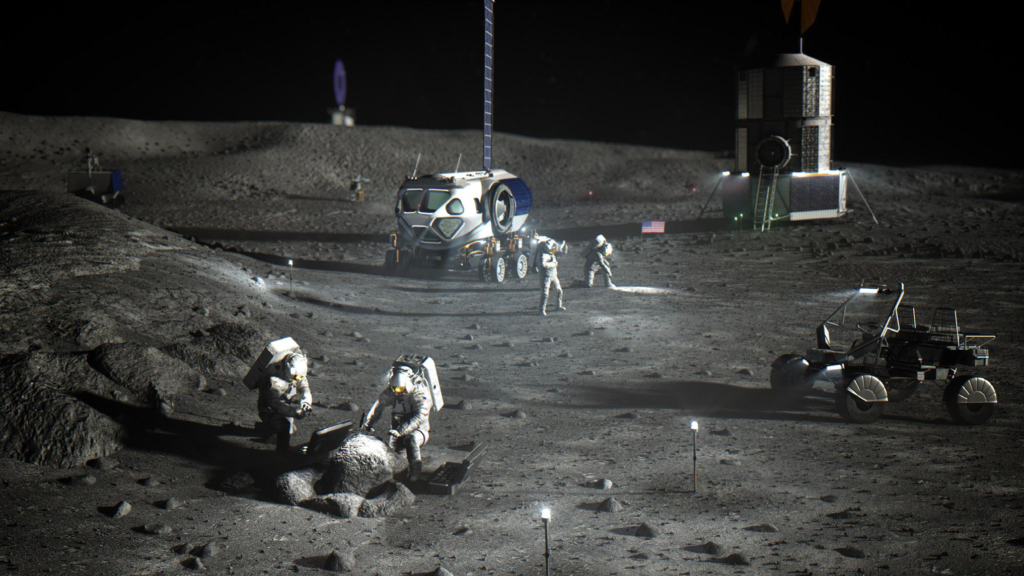
Key program aspects beyond Artemis V include building a permanent base near the moon’s south pole to explore uncharted areas. Artemis will emphasize commercial reusability with Incorporation of more reusable hardware from commercial partners for future crewed expeditions.
The Artemis Base camp will be established in the lunar south pole region near the adjacent Shackleton and de Gerlache craters. The area has a wide variety of lunar geography and an abundance of water ice, seen with lunar orbiters, in the soil regolith of permanently shadowed crater floors.
Technologies developed for the moon, such as new habitation modules, Artemis Moon Rovers, and equipment to mine and process water ice will prepare for future human missions to Mars.
Credit: NASA.