
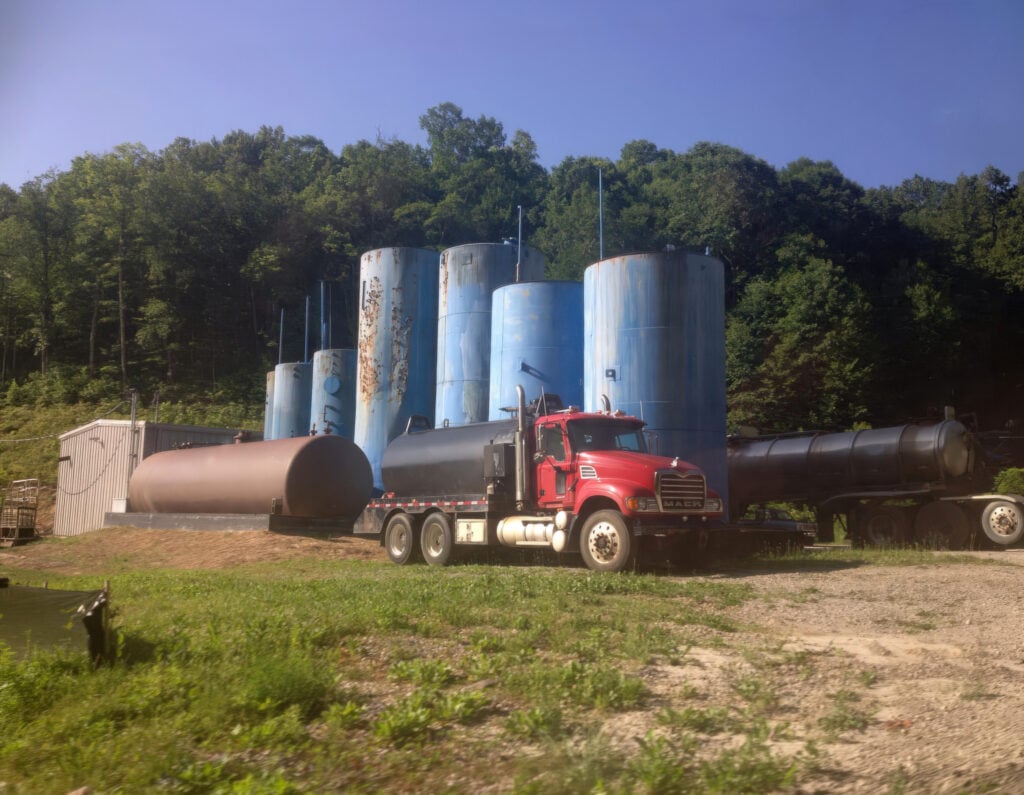
Everything, it seems, is bigger in Texas.
Including the increasingly complex challenge of managing produced water, a byproduct of oil and natural gas production often characterized by high salinity and variable water quality.
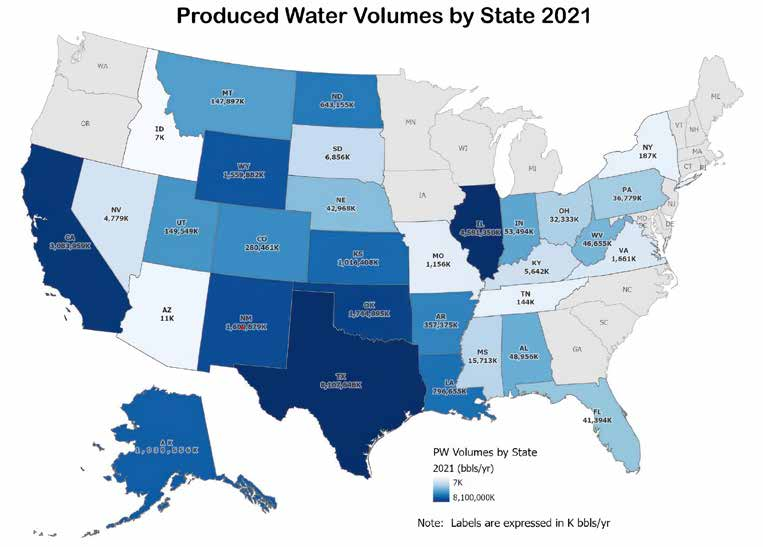
In Texas, there’s a lot of it more than anywhere else in the country, according to “U.S. Produced Water Volumes and Management Practices in 2021,” a report prepared in 2022 for the Groundwater Protection Council by ALL Consulting.
On average, approximately — five barrels of water are produced for every barrel of oil in Texas. For unconventional shale gas wells, an estimated 0.5 to 3.8 million gallons of combined produced water and flowback water are recovered over the first 5 to 10 years of production, according to “Quantity of flowback and produced waters from unconventional oil and gas exploration,” a paper by Andrew J. Kondash and co-authors in the January 2017 Science of the Total Environment journal.
“It’s becoming more and more of an issue because of the sheer volume of produced water in Texas,” said Danielle M. Kingham, professional geoscientist and principal hydrogeologist with Houston-based GSI Environmental Inc.
The problem, she noted, is particularly pronounced in the Permian Basin, where aging fields, increased production, and unconventional drilling methods targeting zones with residual oil saturation further exacerbate the problem.
“There’s just a lot more water to manage and to dispose of,” she told the Explorer.
Growing Regulatory Scrutiny
To address this challenge, industry predominantly relies on underground injection control Class II saltwater disposal wells, which are used to inject and dispose of fluids and gases generated as byproducts of oil and natural gas drilling, completion, stimulation, treatment, production, and related operations.
According to the U. S. Environmental Protection Agency, UIC Class II injection wells account for roughly 20 percent of all UIC wells in the United States, of which approximately 20 percent are saltwater disposal wells; representing only 5 percent of the total UIC well inventory. However, as oil and natural gas exploration and production continue to increase in the United States, so does the demand for saltwater disposal.
“Historically, deep formation injection has been the predominant disposal pathway,” Kingham explained. “In certain settings, high-rate, high-volume wastewater injection has been linked to induced seismicity, or other environmental concerns, including the possibility of impacts to underground sources of drinking water (USDWs).”
Together, these environmental concerns have prompted heightened regulatory scrutiny. In 2025, the Railroad Commission of Texas updated statewide produced water disposal regulations to limit injection pressures and volumes in order to further protect USDWs.
Further, Kingham added that “as UIC Class II saltwater disposal becomes increasingly constrained, operators are turning to alternatives to disposal, including recycling and reuse for oilfield applications such as hydraulic fracturing and enhanced oil recovery, industrial process water, agriculture, and cooling for power plants and data centers.”
Reuse Potential, and Hurdles
In 2024, the RRC developed a produced water-beneficial reuse framework to support pilot studies and encourage the commercial recycling of oil and gas fluid waste.
Broader reuse, however, remains challenging due to highly variable produced water chemistry, including elevated salinity and contaminant levels, as well as infrastructure limitations such as pipeline connectivity, treatment capacity, and elevated treatment costs.
“Another consideration is that produced water may contain recoverable concentrations of critical minerals, most notably lithium, along with other constituents such as sodium, magnesium, calcium, and trace metals including nickel, manganese, and cobalt, offering a potential domestic resource stream,” Kingham explained.
Encouragingly, “Pilot projects in Texas and North Dakota have demonstrated the technical feasibility of lithium extraction from produced water, indicating potential commercial viability,” she added.
Nonetheless, she said that “variability in water chemistry, capital-intensive extraction technologies, and commodity price volatility pose hurdles to scaling these projects beyond pilot operations.”

Another such hurdle is the legal one.
In a recent 2025 ruling, the Texas Supreme Court held that produced water is generally treated as oil-and-gas waste belonging to the mineral lessee under typical lease arrangements, offering clarity for operators but limiting surface owner rights.
“This ruling,” said Kingham, “did not resolve ownership of valuable dissolved minerals within the water (e.g., lithium), leaving legal ambiguity for extraction ventures.”
Complicating matters further, Texas law does not currently prescribe or standardize royalty rates for minerals extracted from produced water, meaning “such royalties must be negotiated between parties (e.g., producers, mineral owners, midstream companies).”
In contrast, in May 2025, the Arkansas Oil and Gas Commission established an initial 2.5-percent royalty framework for lithium carbonate payable to the brine owner, a development that might inform similar discussions in other states. For context, Texas mineral royalty rates for oil and gas typically range from 12.5 to 25 percent of production revenues.
As such, Kingham said that the evolution of produced water from a waste and disposal liability to a resource and feedstock for critical mineral recovery is generating growing commercial interest in brine and produced water rights in Texas.
“That demand has already led to increased acreage transactions and heightened interest from leaseholders, investors, and landmen seeking to position themselves for the next wave of energy and mineral supply development,” she said.
Kingham will speak on this issue at the topical luncheon, “Evolving Issues in Produced Water Management in Texas,” at next month’s Unconventional Resources Technology Conference in Houston.
She noted that, as we look ahead, produced water volumes are expected to remain high across the Permian Basin, with environmental considerations, including cross-formation migration and induced seismicity, likely to remain at the forefront of industry and regulatory discussion.
“This may prompt stricter permitting, monitoring, and reporting requirements, as produced water releases or mismanagement could result in penalties under RRC rules, environmental tort claims, or contractual liability.”
She added that “possible advances in water treatment and pipeline infrastructure could enable more large-scale reuse for applications such as hydraulic fracturing, EOR, industrial cooling, agriculture, and, in some cases, data-center cooling,” and that “pilot projects indicate that critical mineral extraction and modular treatment technologies may become commercially viable.”
Further, once ownership and royalty disputes over minerals extracted from produced water are resolved, this could prompt increased leasing activity that incorporates produced water royalty provisions.
Challenge, and Opportunity
Her recommendations for industry in coming months and years are to:
- Invest in robust characterization and modeling studies to assess subsurface geologic and hydrogeologic heterogeneity, water chemistry variability, and mineral concentrations per region/well.
- Develop integrated logistics and infrastructure planning (treatment hubs, pipelines, storage) to improve water handling efficiency.
- Engage proactively with RRC rulemaking and guidance to ensure project compliance.
- Track evolving disposal and recycling regulations to anticipate permit requirements for reuse and critical mineral extraction and to plan for mandatory monitoring/reporting.
- Clarify ownership and lease rights in agreements covering produced water and contained minerals.
- Monitor emerging case law on produced water ownership and mineral extraction, as early projects may set precedents.
Produced water is “one of the greatest challenges facing our domestic production,” RRC Chairman Jim Wright once said.
Kingham said she believes there are ways to address that challenge.
Produced water, she noted, is a byproduct of oil and natural gas operations.
“Accordingly, it will continue to be generated, and I do not anticipate a near- term decline in volumes,” she said.
However, advances in recycling, beneficial reuse, and emerging critical mineral extraction technologies are reshaping how produced water is managed.