The AAPG will be hosting Namibia’s third installment of a two-day GTW in 2026 under the theme “Finding New Elephants: New Insights from Hydrocarbon Exploration Along the Southern African Margin and Onshore”. Intensive drilling campaigns offshore the Namibian Margin over the past three years have resulted in multiple discoveries, opening new plays in the deep waters and providing new information with respect to the petroleum elements along the Southern African Margin.
During this workshop, a series of (by invitation only) presentations will focus on updates detailing the deep-water plays, current understanding, and future potential expansion along the South Atlantic Margin. The emerging onshore clastic and carbonate plays, and the rejuvenation of exploration blocks and legacy discoveries in Namibia will also be featured. Additionally, insights from geological analogues applicable to understanding key questions affecting future oil and gas exploration and development activities will also be discussed.
A field course option will also be available following the main conference. More details will be shared as planning progresses.
WORKSHOP OBJECTIVES
This workshop aims to enhance the outcomes of the 2022 and 2024 AAPG Namibia GTWs by integrating seismic, geological and geophysical data to offer an in-depth analysis of the onshore and offshore geology and, to describe the proven and potential petroleum systems. Professionals, scholars, and industry enthusiasts will be able to give talks and exhibit posters with excellent, comprehensive, and creative data on the considerably reduced-risk petroleum systems offshore the Southern African Margin and Onshore. By enhancing regional knowledge of tectonic evolution, geology, and structure, these data hope to shed light on the hydrocarbon prospectivity.
Participants are expected to leave with knowledge and exposure to the following:
- Proven and possible petroleum systems of Namibia uncovering the transformational potential of the Orange Basin, rejuvenation of adjacent Deep Water Basins plus the progression of the Ovambo and other onshore basins
- Regional understanding of sedimentary & tectonic evolution, providing new insights regarding the prospectivity of these basins
- Deep water reservoirs: Updated reservoir distribution, provenance, depositional architecture and controls on reservoir and hydrocarbon quality
- Source rock characteristics, maturity and charge
- Challenges of onshore and deep-water exploration
- The application of new technologies and current understandings to advance hydrocarbon exploration
- An update on recent and projected exploration, appraisal and development activities
- Development challenges and the path forward for Namibia achieving first production
BENEFITS OF ATTENDING
The workshop is an opportunity for attendees to receive up-to-date knowledge about the recent discoveries and drilling activity. Talks will be focused on understanding the proven petroleum systems and exploration plays that have been identified in recent exploration and development activities. It is an opportunity to network and share experiences.
Attendees will also have an additional learning opportunity through a planned field course following the main workshop.
Sponsors

Platinum Sponsor
Platinum Sponsor
Silver Sponsor
Silver Sponsor
Luncheon Sponsor
Workshop Abstracts Sponsor

Workshop Icebreaker Reception
Program
Workshop Registration
7:30 am - 8:30 amWelcome Address
8:30 am - 8:45 amNillian Mulemi, AAPG Africa Region President
Greetings and Introductions
8:45 am - 8:55 amAlina Narubes, GTW Chair
Inaugural Keynote
Victoria Sibeya, Executive: Upstream Exploration, NAMCOR
Technical Keynote: Recent Successes in Exploration of Orange Basin
Elsa Bof, Exploration Manager, TotalEnergies
Session 1: Tectono-sedimentary Evolution, Structural History and Exploration
High Impact Exploration on the Southwest African Atlantic Margin since 2012
Bryan Gill, Westwood Energy
Role of Mass Transport Complexes in Petroleum Systems Evaluation
Karyna Rodriguez, Searcher Seismic
Coffee Break & Posters
Understanding your Volcanics and Their Impact on your Basin: A Case Study on Lavas Flows, and Shallow Dyke and Sill Plumbing Systems in the Kavango Karoo Basin, Namibia
Dougal Jerram, Dougal Earth
De-Risking the Cretaceous Margin of Namibia and South Africa Using Earth Systems Science
Benjamin Gréselle, Halliburton
Exploring the South Atlantic Namibian Plays in the South American Conjugate Margin
Juan Pablo Lovecchio, YPF
Q&A Session
Lunch
Session 2: Petroleum Systems: Source Rock
Revisiting the Aptian Source Rock Offshore Namibia
Wina Shipo, NAMCOR
The Petroleum Systems of the Northern Orange Basin
Andre Stout, Rhino Resources
Reconciling the Source Rock with the Fluids in the Mopane Complex
Francisco Silva, Galp
Coffee Break & Posters
Unlocking a Complex Deep Water Petroleum System of the Orange Basin
Claire Demangeot, TotalEnergies
Source Rock vs Hydrocarbon Accumulation Seismic Character
Karyna Rodriguez, Searcher Seismic
A New Approach to Investigating the Tectono-magmatic Evolution of the Namibian Margin and Improving Heat Flow and Petroleum System Prediction
Douglas Paton, TectonKnow
Q&A Session
Poster Session
Regional Petroleum System Modeling of the Namibian and South African Offshore Basins: Insights from Source Rock Charge and Migration Histories
Maria Anna dos Reis, Petrobras
From Turbidites and Beyond: The Role of Along-slope Processes in Shaping Depositional Systems Along Southern African Margins
Anthony Fielies & Reagan Africa, Petroleum Agency SA
Damara Fold Belt Frontier Onshore Exploration in NE Namibia
Geoff Anderson, ReconAfrica
Understanding the Salado and Río de la Plata Fracture Zones: Insights into the Tectono-Sedimentary Evolution of the Argentinean and Uruguayan Continental Margins
Ignacio Scalerandi, YPF
Cretaceous Deepwater Hydrocarbon Prospectivity Along the Argentine Margin
Julia Elena Bouhier, YPF
Applying Avogadro's Law to PVT Analysis in Exploration and Drilling
Joost van Breemen, Global Spec Oil & Gas Services
Session 3: Petroleum Systems: Reservoirs and Seals
Offshore Namibia: Large Turbidite Systems in the Orange and Lüderitz Basins
Yuri Perez, Pioneer Oil and Gas Consulting
Review of Walvis Basin Prospectivity – Similarities and Differences to the Orange Basin
Ansgar Wanke, Stamper Oil & Gas
Seal Identification in the Context of the Outboard Part of the Orange Basin
Emmanuel Crouzy, TotalEnergies
Coffee Break & Posters
Investigating Sediment Provenance and Tracing Cretaceous Depositional Systems in the Walvis and Lüderitz Basins
Emily Kay, TGS
Integrated Geological and Geophysical Characterization of Deepwater Orange Basin Reservoirs
Joe Martin, Shell
Rejuvenating the Appraisal of the Kudu Field – Drilling the Kharas-1A Well
Guido Paparoni, BW Energy
Seismic Breakout Session
Lunch
Session 4: Technology Advancements and Current Understanding
Prospect Mapping Using Full Tensor Gravity Gradiometry Data – Examples from Onshore Kwanza Basin, Angola
Jonathan Watson, Metatek
Dedicated SQI Method for Better De-risking of Stratigraphic Traps
Philippe Prat, TotalEnergies
Redifining Static Geomodeling for Exploration Using a Scalable Gridless Modeling Approach: Case Study from Deepwater Exploration in Suriname Basin
Ifeanyi Ikueze, Halliburton
Coffee Break & Posters
Digital Core & Cuttings Workflows - Supporting Mopane Subsurface Success
Jenny Omma, Stratum Reservoir/Galp
Translating Orange Basin Exploration Success to Assess the Hydrocarbon Prospectivity of the Walvis and Luderitz Sub-Basins
Alina Narubes, NAMCOR
Q&A Session
Workshop Wrap Up and Adjournement
Committee

NAMCOR
BW Energy
BW Energy
Chevron
Fenix Consulting Delft

Galp Energia
GEO Exploration Ltd
Ministry of Mines and Energy, Namibia
NAMCOR
Petroleum Agency SA
Petrofund
Petrofund
Pioneer Oil and Gas Consulting

PRO ALLY
Shell Namibia
TotalEnergies
Tower Resources
University of Namibia
University of Namibia
University of Western Cape
Activity
Although exploration play concepts have been well established on passive continental margins the systems associated on magmatic margins remains poorly understood.
This is primarily because of the paucity of high fidelity data in these systems, and a reliance on outdated understanding of volcanic margins.
Recent high quality data acquisition has revolutionised our understanding of these system from an academic perspective, however, this has not been translated into a revised understanding of the implications for the petroleum system.
The South Atlantic generally and the Namibian margin more specifically, requires an integrated academic-petroleum system approach to understand and predict its petroleum success.
The team leading this proposal provides world leading expertise on magmatic margins from both an academic and industrial perspective.
The short course will be undertaken by leading academic-industry experts Prof’s Paton and Jerram. The course will introduce key aspects of the development of volcanic margins based on extensive experience on field and sub-seismic studies on magmatic margins globally with specific experience of onshore and offshore Namibia/South African basins.
Participants will be introduced to the state of the art understanding of the development of magmatic margins, key concepts and facies, analogue systems, case study examples and the future potential for how an improved understanding of the tectono-magmatic evolution of these margins can be translated into a revised understanding of the implications for the petroleum system.
DougalEARTH ltd

TectonKnow
Agenda
• 09:30 – 10:00 Registration and coffee
• 10:00 – 10:30 Introduction – what problems do we face on the margin?
• 10:30 – 11:30 Magmatic margins and exploration- why it matters
• 11:30 – 12:30 Interpreting the offshore
• 12:30 – 13:30 Lunch
• 13:30-14:30 Virtual Volcanic Margin
• 14:30 – 15:30 Revised Namibian Tectono-magmatic framework
• 15:30 – 15:50 Coffee break
• 15:50 – 16:30 How do we account for heat flow? Discussion and wrap-up
Registration Fee: $350
Registration Deadline: 18th May 2026
Agenda
Day 1 – drive to Keetmanshoop.
Stay at Maritz Country Lodge. View landsurfaces, visit bitumen vein outcrop in Nama sediments near Berseba, Brukkaros crypto-volcano, intrusive sills of Stormberg (189Ma) age.
Day 2 – drive to Fish R canyon.
Stay at Gondwana Canyon Lodge (or nearby). Permian Mesosaurus fossils east of Keetmanshoop. View canyon.
Day 3 – drive to Norotshama lodge on Orange River.
View outcrops of Carboniferous (Dwyka turbidites with dropstones and trace fossils) & Permian Karoo (Whitehill source rock), Orange River meanders and Cenozoic deposits. Discuss paleocourse of Orange and predecessor rivers.
Day 4 – return to Windhoek with roadside stops to look at possible glacial roches moutone in the distance and Karoo-Stormberg lava contact and associated landsurface (implications for burial and recent erosion history).
Field Trip Leaders:
Roger Swart, BlackGold Geoscience
Registration Fee: $1,400
Registration Deadline: 15th April 2026
Price includes:
- Vehicles
- Accommodation
- Meals and drinks
Venue
Venue
Windhoek, Namibia – Hilton Windhoek
Address
Rev Michael Scott St, Windhoek, Khomas, Namibia
Phone
+264 61 296 2929Lodging
We have secured exclusive rates at the Hilton Windhoek and Hilton Garden Inn Windhoek for those who wish to book accommodations at the workshop location. Should you wish to secure a room, please email WDHHI_Reservations@hilton.com and be sure to mention that you are part of the AAPG group.
The rate is 2,500 NAD per room per night, including breakfast at the Hilton Windhoek, and 2,100 NAD per room per night, including breakfast at the Hilton Garden Inn Windhoek. Please note that there are limited rooms available, and they will be distributed on a first come, first served basis.
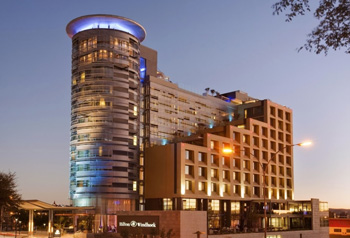
Windhoek, Namibia – Hilton Windhoek
Rev Michael Scott St, Windhoek, Khomas, Namibia

Be Notified on AAPG Training Opportunities
From geotechnical workshops to field trips and more, stay in the loop on upcoming virtual and in-person events.