

How did the energy industry evolve from the burning of wood and animal fat for heat and lighting to the high-tech industry of today? To answer that question, the Datapages Archives contains some of the earliest writings concerning geology and energy. The Archives is a great place to hone your knowledge of geological history.
Georoots
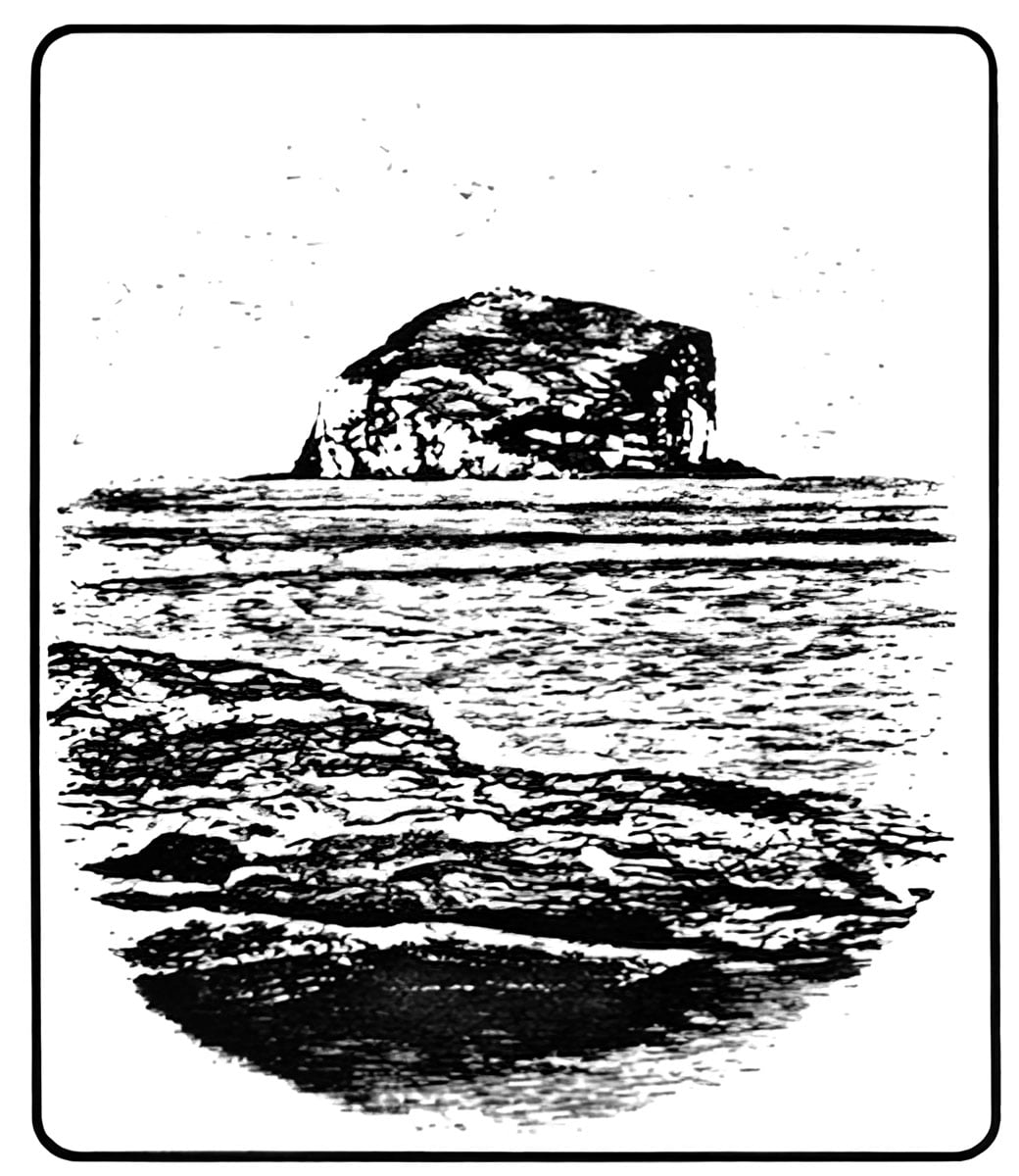
One of my favorite publications is “Georoots Scotland: The Geological Heritage.” (The name “Georoots” was coined by the creator of Datapages, John W. Shelton). This is an AAPG-sponsored field seminar book published in 1989. The illustrations, chronicles and geological descriptions of James Hutton, John Playfair, Sir James Hall and other pivotal early geoscientists fill the pages. Many of the field locations can still be seen today using Google Earth, allowing for comparison of then and now.
Scotland was a center of thought and scientific inquiry in the 18th century. Joseph Black first described carbon dioxide in 1754, Daniel Rutherford discovered nitrogen in 1772, James Lind found the cure for scurvy in 1747 and in 1783 the Royal Society of Edinburgh published Hutton’s “Theory of the Earth” in the first volume of the Society’s transactions. I find the hand sketches amazing in their accuracy (see accompanying images) and enjoy seeing how castles tie into the geology of the region.
Petroleum History Institute
The Petroleum History Institute collection contains articles from 1861 through 2024. “The Practical Treatise on Coal, Petroleum and other distilled oils” was written in 1861 by Abraham Gesner. He was a doctor and surgeon in Nova Scotia who turned to geology after becoming a rock-hound during his many trips making house calls on horseback. Gesner was a significant player in the coal oil industry, and he produced a clean burning oil he called “kerosene” to replace whale oil for lamps. Included in the treatise is an introduction to the distillation and varieties of oils from coal, types of coal and bituminous substances, a table of the compounds of carbon and hydrogen, the purification of oils and the buildings and machinery needed to accomplish it.
Oil Fields of Russia
Another fascinating publication is “The Oil Fields of Russia and Russian Petroleum Industry: a practical handbook on the Exploration, Exploitation, and Management of Russian Oil Properties,” by Arthur Beeby Thompson, written in 1908. The handbook is full of photographs, illustrations and tables that guide the reader through the industry of Russian energy. At the time the book was meant to be a manual to investors and shareholders and to be a reference for businessmen and engineers. A few of the topics included are oil-land lease terms, distribution of Russian oil within Russia and England, labor disturbances, the Caucasus petroleum, the boring for oil, the casing of wells, bailing wells, fountains, fires on the oil fields, belts and wire ropes, and the methods of raising oil.
Petroleum Geology of Russia
To double down on the Russian theme, the collection “Petroleum Geology: A Digest of Russian Literature” covers the years from 1958 to 2005. The journal covers the yearly results of exploration in the USSR and reports the key developments of the industry. For instance, in 1957 the production of petroleum was more than 98 million tons and 20.5 billion cubic meters of natural gas. In that same year, 1,050 geophysical crews and 350 seismologic crews were working across the USSR. The collection also has individual field descriptions and scientific methodologies.
Further Suggestions
Other collections that offer intriguing historical insights are those of the Panhandle (Texas) Geological Society 1939-1990, and the Kansas Geological Society 1929-2003.