
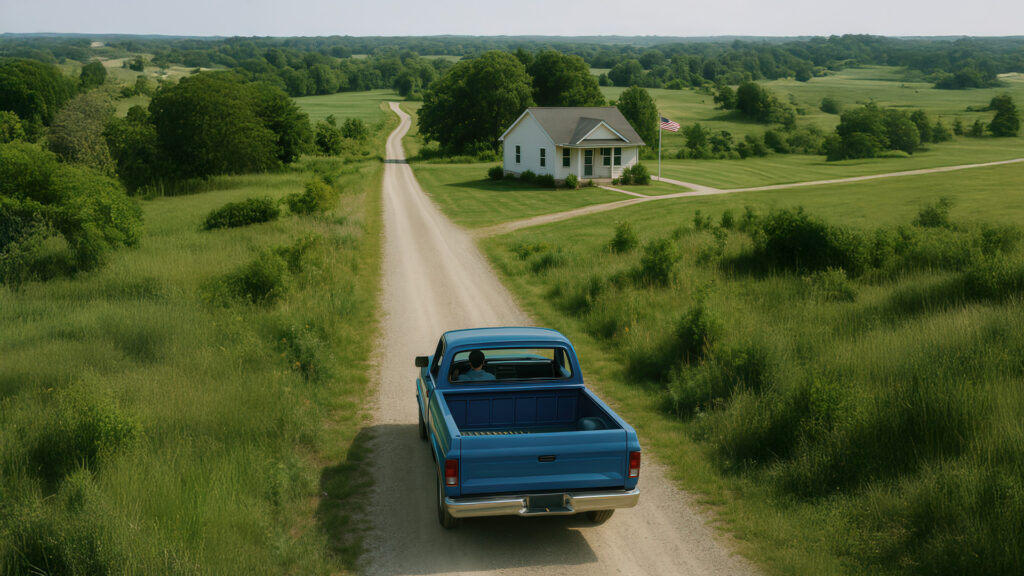
In much of the world, the minerals beneath the soil belong to the government. In the United States, however, one of our most distinctive freedoms is the right to privately own mineral resources. Globally, this system – in which individuals, families, companies and trusts can own the oil, gas, coal and minerals beneath their land – is rare. In the United States, it is an engine of opportunity, entrepreneurship and innovation that was established deliberately.
American Exceptionalism
In most countries, a landowner may hold the surface but has no claim to the resources underneath. Development requires navigating state-controlled licensing, political considerations and bureaucratic timelines. By contrast, the U.S. tradition of private mineral rights, rooted in old English common law (“from the core of the earth to the heavens above”) and strengthened over centuries, allows American citizens to buy, sell, lease or develop those rights as we see fit. This freedom has created a dynamic and competitive marketplace for resource development that has been paramount to America’s leadership in exploration locally and the knowledge transfer globally. Private mineral ownership aligns the interests of landowners and operators. A rancher in Texas, a farmer in Oklahoma or a family trust in Pennsylvania can work directly with an energy company to lease minerals, bringing technical expertise and capital into play while securing royalties and long-term income.
This alignment transforms exploration from a disruption into an opportunity. It fosters trust, encourages efficiency and creates a competitive environment where operators strive to offer better terms, improve recovery methods and act as responsible stewards of the land. Shareholders can enrich themselves, their families and their communities directly rather than enriching a centralized distant government that decides how the profits are to be utilized.
This American system has been especially important for independent geologists, wildcatters and small “mom-and-pop” operators. In countries without private mineral rights, the barriers to entry are so high that only state-owned companies or large multinationals can participate in exploration. In the United States, the path is open for those with vision, skill and determination. Independent geologists can take a concept from paper to production by leasing directly from landowners. Wildcatters can take bold, high-reward chances on frontier plays. Small family-run operations can thrive in niche areas, working fields that might be overlooked by larger companies but still provide steady livelihoods or better.
Freedom Breeds Opportunity
For members of the American Association of Petroleum Geologists and the wider exploration community, private mineral rights have been more than just a legal advantage: they have been a professional lifeline. Petroleum geologists have been able to turn scientific insight into commercial success without waiting for centralized approval. They have generated and sold prospects, negotiated equity or royalty positions in return for geological expertise, and applied new technologies in partnership with mineral owners eager to maximize the value of their assets. This freedom has transformed geoscientists from pure researchers into entrepreneurs, dealmakers and catalysts for economic growth.
AAPG was established to help Members learn how to navigate these unique opportunities by facilitating subsurface petroleum exploration expertise and networking opportunities that forge the business relationships necessary, from bringing a prospect found in a geologist’s mind to being a successful discovery, to a producing field, to a generational asset or to being purchased by an oil major.
Of course, this is not the only focus of the AAPG today – we have an extremely diverse Membership with many subsurface interests. However, AAPG is still able to shoulder these foundational responsibilities after 108 years of existence.
Tangible Benefits
The benefits of our mineral system extend far beyond the individuals directly involved and AAPG Membership. For instance, the shale revolution catapulted the United States from an energy importer to the world’s leading oil and gas producer. This positive inflection in human history would not have been possible without private mineral ownership. In states like Texas, North Dakota and Pennsylvania, thousands of independent companies experimented with horizontal drilling, multistage fracturing and other innovations, rapidly improving efficiency and reducing costs and has since influenced reliable energy development around the world. This high-velocity experimentation would have been impossible in a centralized, state-run model.
Private mineral rights have also strengthened U.S. energy security. The ability to develop resources quickly allows the nation to adapt to natural and deliberate market shifts, influence global prices and stabilize supply chains. Royalties and tax revenues from this activity fund schools, infrastructure and public services, particularly in rural areas where mineral wealth can mean the difference between economic stagnation and prosperity.
This unique tradition is not without its responsibilities. Transparency, fair contracting and environmental stewardship are essential to sustaining public trust. We are successfully navigating these challenges, and the petroleum industry remains a foundation upon which modern economies are built.
A Model for the World
The AAPG’s history belongs to all its members, in the U.S. sections and in the international regions. However, around the world, where a significant amount of our Membership resides, there are still conferences and policy forums held to discuss how nations can unlock the economic potential of their natural resources. The answer is beyond conferences, white papers or top-down development plans. The solution lies in empowering citizens – in giving mineral rights to the people who live on the land. Let them share in the opportunity and the responsibility. Watch as investment, innovation and entrepreneurship take root at the local – not national – level. Communities will flourish, small businesses will grow and national economies will strengthen, not through subsidies or state mandates, but through the direct, personal stake that ownership provides. This is especially relevant for countries with little to no energy access today.
The American Association of Petroleum Geologists stands as living proof of what can happen when vision, collaboration and opportunity converge. AAPG was not built overnight, nor was it the work of one person. It was curated, cultivated and elevated by the likes of geologists like Wallace Pratt, A.I. Levorson, Michel Halbouty and countless others over the last century – pioneers who understood both the technical aspects of petroleum geology and the spirit of exploration. This could have only begun here – in the United States – over a century ago, and still today it’s a place where an association like ours can thrive. They knew how a premier petroleum geology association could serve as a hub for knowledge, mentorship, independence and professional excellence. Their legacy reminds us that great institutions are forged by people who see beyond the horizon – those who combine scientific rigor with a belief in the power of human potential. Just as private mineral rights unlock the creativity and enterprise of a nation’s citizens, the AAPG has unlocked the ingenuity and achievement of generations of diverse geoscientists from around the world. When you trust people with opportunity, they will create a true long-lasting value for themselves and for each other, beyond what any company or government could mandate.
As AAPG Members, no matter where we live, we all share this origin story. It’s our heritage and culture to uphold for generations to come. Be bold, be independent, be creative, explore more.