Digital technology has an ever-increasing presence in modern 21st-century life.
Most people start the day with artificial intelligence, reading news, scrolling through social media, checking the weather forecast and planning a route to work. They use AI again in their free time, watching movies, booking hotels and ordering dinner.
Uber, AirBnB and Netflix have become household names thanks to “digital transformation” – a term IBM defines as “a business strategy initiative that incorporates digital technology across all areas of an organization.”
But is AI a convenience or a necessity?
What is the role of digital transformation in organizations like oil and gas companies who focus more on processes than on customers?
From Optional to Essential
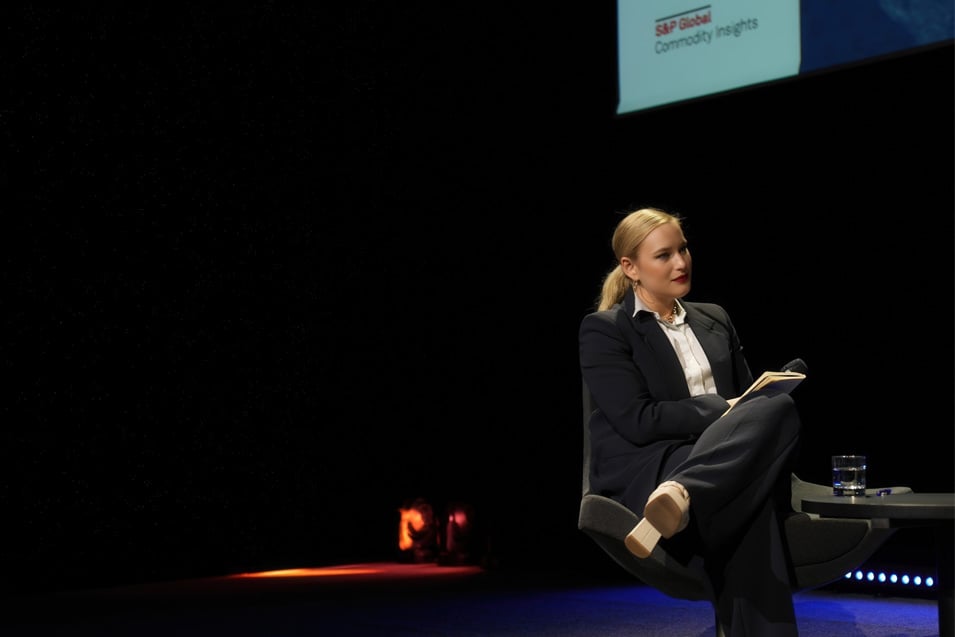
Answers are clear for Rachael Moreland, geologist and head of energy software and advanced analytics at S&P Global Commodity Insights. A product management thought leader, Moreland uses her expertise to advise energy companies, boards and leadership teams on technology strategies.
“Digital transformation is no longer optional for the upstream oil and gas industry; it has become essential for survival and growth,” she said. “This shift is driven by a convergence of economic pressure, overwhelming data complexity, rapidly advancing technologies and a workforce evolution.”
Moreland noted how volatile oil prices and an increasing demand for capital discipline are forcing companies to rethink how they operate. Digital solutions provide tools to reduce costs and maximize revenues.
“According to McKinsey and Company, digital technologies can reduce upstream capital expenditures by up to 20 percent and operating costs by as much as 30 percent, primarily by automating manual processes and enabling faster decision making,” she said.
Moreland explained how automation benefits not just companies but also the geoscientists who work there.
“We are in a day and age where data volumes in our industry are outpacing traditional methods. Subsurface professionals are expected to make sense of vast, complex datasets, including seismic, well logs and production data, often stored in disparate systems,” she said.
Moreland’s team at S&P Global follows the rise of dynamic reservoir models that self-update based on real-time production data, enabled by cloud platforms and AI. The models improve forecasting accuracy and development planning by providing continuous integration of live field data into predictive simulations.
They observed how one international oil company’s use of machine learning to rank exploration prospects in the Gulf of Mexico (America) led to higher success rates and accelerated project timeline, demonstrating how AI can enhance geoscientific workflows and investment decisions.
“Digital transformation is not a trend; it’s a strategic necessity. It enables geoscientists to shift from data wrangling to high-value interpretation, supporting faster and smarter exploration, and ensuring companies stay competitive in a changing energy landscape.,” she said.
“Those who embrace it now will be best positioned to lead the industry into its next era,” she added.
Improving Efficiency
Moreland described how AI and cloud platforms are driving a step-change in operational efficiency across the upstream oil and gas industry.
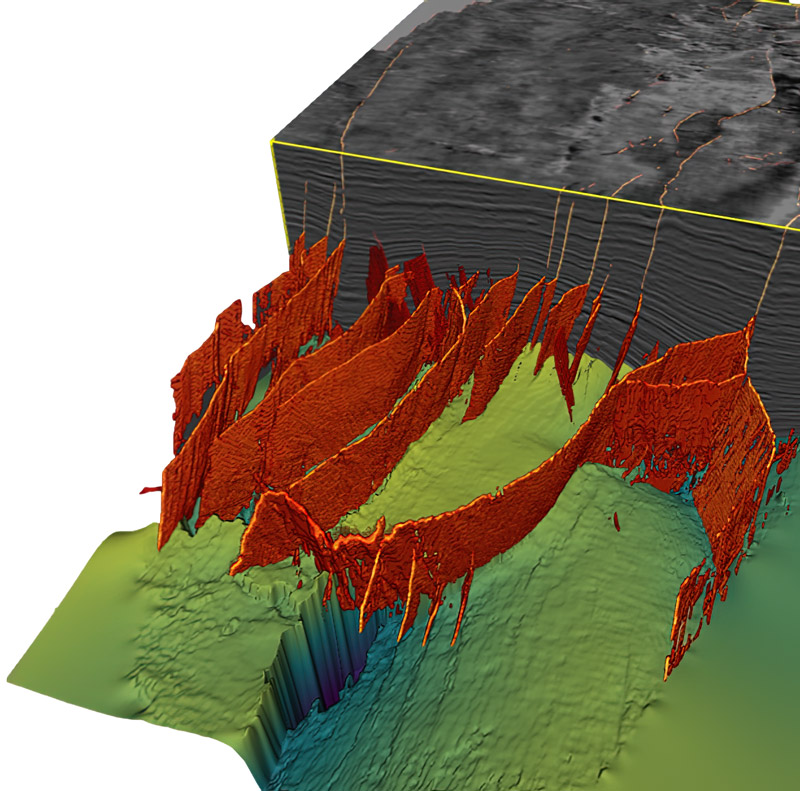
“By automating repetitive tasks like seismic interpretation and well log classification, AI frees geoscientists to focus on high-value analysis. At the same time, advanced analytics accelerates decision-making by surfacing patterns from vast subsurface datasets,” she said.
“Cloud platforms amplify these gains by providing scalable compute power and centralized data access, enabling near real-time collaboration across global teams. The cloud also reduces IT overhead by making technology more accessible to organizations,” Moreland added.
She cited the sample of a North American operator who implemented real-time analytics and automation tools in the Delaware Basin, achieving a 40-percent reduction in drilling-cycle times – an operational breakthrough that would be difficult to replicate without digital tools.
Benefits for the Environment
In addition to helping companies meet exploration and production metrics, digital solutions also assist in meeting environmental objectives.
“Digital solutions are critical to meeting growing ESG (environmental, social and governance) demands across this space,” Moreland said.
She shared how one national oil company’s deployment of automated methane detection and reporting systems in its onshore assets reduced emissions reporting time by 75 percent, improving both compliance and environmental performance.
“This is just one example of how digital tools can enhance environmental performance while also enhancing operational efficiency,” she said.
Advice for Organizations
Moreland said that exploration and production companies aiming to compete in today’s data-rich environment must take deliberate steps to modernize their technical infrastructure while investing in upskilling their workforce, specifically training geoscientists and engineers to work with digital tools.
“There should also be a priority around building a a robust data foundation. This includes consolidating subsurface data into cloud-based platforms with standardized formats, coupled with accessible application programming interfaces,” she said.
“Companies should invest in AI, not just in research and development, but operationally, by embedding machine learning models into workflows. Organizations should work towards establishing governance around data quality, model validation, and ethical AI use to ensure trust and scalability,” Moreland continued.
“Combining strong data infrastructure with empowered, digitally literate teams creates a sustainable competitive edge, enabling more informed capital allocation in a rapidly evolving industry.”
Employees’ Views on AI
Moreland shared how energy industry professionals at all levels are embracing transformative technologies.
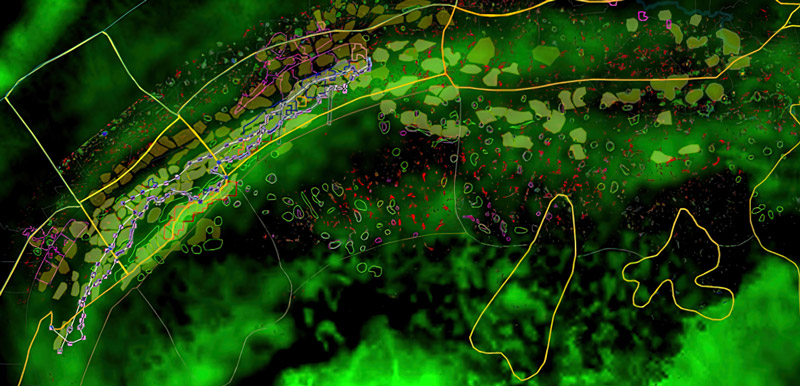
“Artificial intelligence and automation are rapidly maturing and proving out business cases across the industry,” she said. “In a 2023 report, a large Permian Basin operator found that 92 percent of their oil and gas executives believe digitalization is critical to achieving long-term business goals.”
She described how digital technologies assist employee recruitment, retention and integration.
“The industry is undergoing a workforce shift, with many experienced geoscientists retiring and new hires expecting digital-native tools,” she noted. “Digital platforms help close this experience gap, streamlining onboarding while reducing legacy processes requiring mass amounts of manual effort.”
Responding to Concerns
While many geoscientists embrace digital technologies like AI, others feel uneasy, wondering if the rise in AI will replace jobs.
“AI is not here to replace geoscientists, but to amplify their impact,” she said. “In fact, the most successful digital transformations in E&P have shown that AI works best when it augments human expertise,” Moreland said.
She cited the example of a large IOC who used deep learning in seismic interpretation to reduce manual fault picking by more than 60 percent, allowing geoscientists to spend more time on geological reasoning and play assessment.
“Similarly, AI-driven tools for well-log classification or reservoir modeling automate repetitive tasks, but they still rely on expert input to train models and validate the results,” she said.
Moreland said as the volume and complexity of subsurface data grows, the need for skilled geoscientists is increasing, not decreasing, and the nature of the role is evolving.
“The geoscientist of the future will be a hybrid professional: deeply grounded in geoscience, fluent in data and analytics, with the ability to collaborate across a muti-faceted team,” she said. “AI is not a replacement; it’s a catalyst for innovation and a more dynamic role for geoscientists.”
Never Too Late
Moreland has reassuring words for seasoned professionals who spent their career using more traditional tools: “It’s never too late to learn, especially when your experience is your greatest asset. In geoscience and the broader E&P industry, the value of domain knowledge cannot be overstated.”
She acknowledged that technologies like AI and cloud computing might feel unfamiliar at first, but they are tools designed to enhance expertise, not erase it.
“The most effective digital solutions in our industry succeed because they are guided by seasoned professionals who understand the geology, the physics, and the context behind the data,” she said.
“We’re seeing geoscientists with decades of experience successfully re-engage with their careers by learning to work alongside these technologies. Many of them aren’t coding algorithms, but they are interpreting model outputs, questioning the AI predictions, and shaping better tools through their insight. The goal isn’t to become a data scientist overnight. It’s to become a more empowered geoscientist who can make faster, more confident decisions with the help of intelligent tools,” she explained.
Moreland has specific tips for industry veterans who are ready for a new phase in their career or who wish to stay relevant in the digital age.
“The industry needs experienced professionals to help guide the responsible use of these technologies,” Moreland said, emphasizing the word “need.”
“The risk is really in letting your expertise go underutilized. By taking small steps, like attending training workshops, collaborating with data teams or just getting comfortable with digital tools, you’re not only extending your career, but helping to lead the next generation forward,” she continued. “Digital transformation is less about age and more about mindset. Curiosity to learn will always matter more than how long you’ve been in the field.”
Advice to Future Generations
Moreland also has tips for students interested in a career in the energy and geoscience industry.
“This is an incredibly exciting time to enter the field,” she said. “The industry is undergoing a digital transformation, which means there are more opportunities than ever to contribute to innovation and shape the future of how we explore and produce energy.”
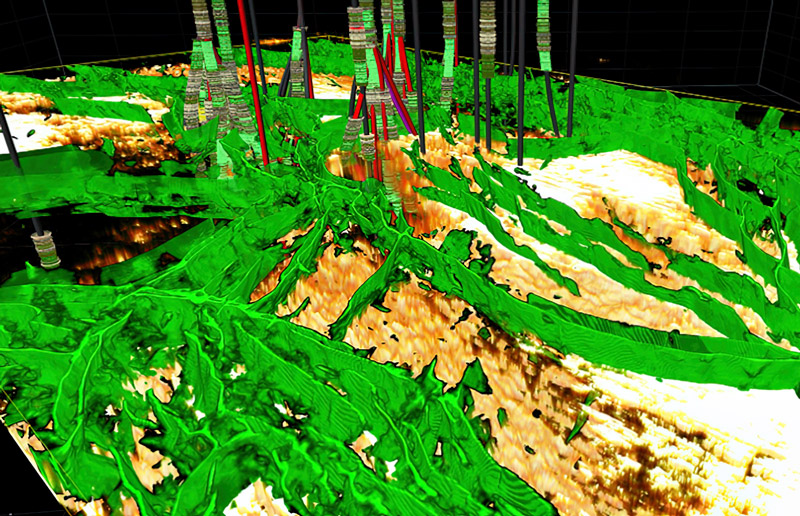
She recommends building a strong foundation in geoscience fundamentals and complementing it with skills in data science, programming (especially Python), and GIS or 3-D modeling tools.
“Understanding how to work with large datasets, interpret machine learning outputs and keeping an open collaborative mindset will make you highly valuable,” she said.
ICE Rio 2025
Moreland will share her insights with professionals and students attending AAPG’s International Conference and Exhibition, taking place in Rio de Janeiro Sept. 30-Oct. 3.
She will speak to students and young professionals at a pre-conference symposium on Sept. 30 and deliver the all-convention luncheon presentation on Oct. 2.
Moreland looks forward to attending both sessions and to interacting with ICE participants.
“ICE in Rio offers a unique opportunity to engage directly with geoscientists, engineers and technical leaders who are navigating the industry in real time. I wanted to contribute to that dialogue by sharing global perspectives and practical insights on how digital technologies are reshaping workflows across the industry,” she said.
“It’s also a chance to learn from local innovators and highlight Brazil’s leadership in driving forward digital exploration and production practices. More than anything, this is about creating a space for knowledge exchange, so we can all move forward, together, into the next era of energy and geoscience,” she added.
Moreland invited ICE Rio attendees to join the luncheon for a clear, practical look at how data, automation, and AI are already transforming exploration and production workflows and what this means for geoscientists today.
“Whether you’re just beginning to explore digital tools or already working in hybrid technical-data roles, this session will give you a deeper understanding of how to apply AI and automation without losing the value of geoscientific judgment. We’ll also explore how digital transformation is reshaping careers throughout the industry, so you’ll walk away with insights not only for your projects, but for your professional growth as well,” she said.
“This session is a chance to engage in an honest, forward-looking conversation about how geoscientists can lead through change and help shape the future of energy exploration. If you’re curious about what’s next for the industry, and how you can be a part of it, this is the session for you.”
ICE Rio luncheon session “E&P Technology Outlook: How Data, Automation, and AI are Reshaping the future of the industry,” takes place in the Alhambra Room of the Windsor Barra Hotel on Thursday, Oct. 2 from 12:15 p.m.–1:45 p.m. Learn more and register at iceevent.aapg.org.