In the early morning hours of July 4, residents, vacationers and campers in Central Texas slept soundly in their beds. Many might have dreamed of a long holiday weekend enjoying friends, family and fun.
Mother Nature had a different plan. Torrential rain fell for hours and the mighty Guadalupe River overflowed its banks, rising more than 25 feet in two hours.
The resulting flash floods killed at least 135 people, a third of them children, including young girls and counselors from Camp Mystic. Most of the deaths occurred in Kerr County, located 65 miles northwest of San Antonio, in the heart of the Texas Hill Country.
Call of Duty
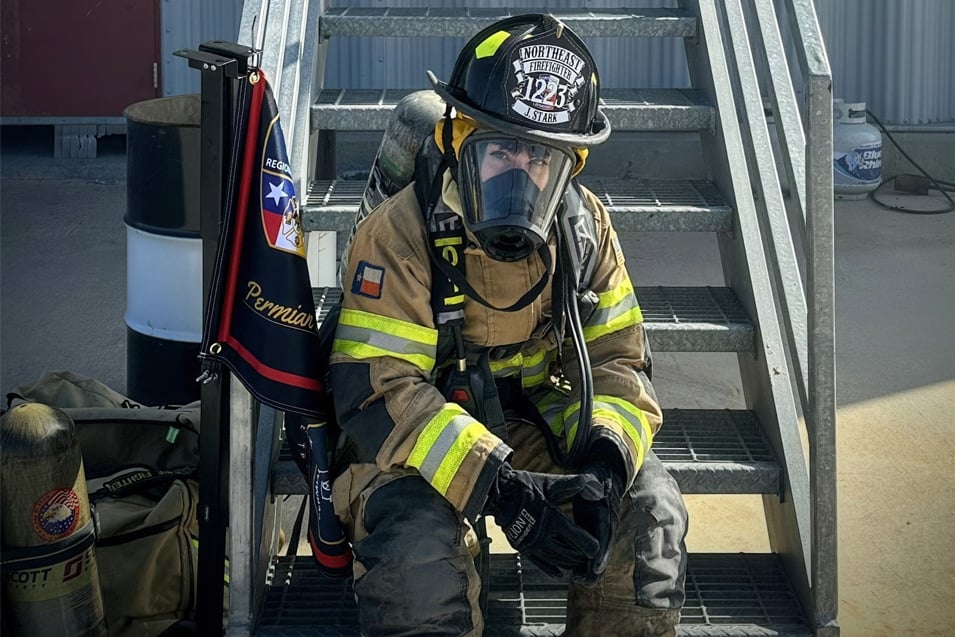
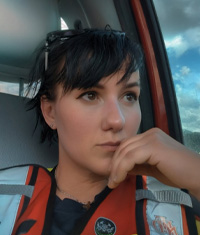
As floodwaters raged, a notification went out to Jerrika Stark, AAPG member, University of Texas Permian Basin geology student, and volunteer firefighter/EMT from Midland.
“I was at home fixing a leak in my ceiling when I received a call from a fellow firefighter explaining what had happened,” she said. “We were alerted that teams would be sent out for support. I finished fixing my ceiling, started packing, and explained to my girls that I had to deploy for a little while.”
At that time, she didn’t grasp the gravity of the situation.
“I do not usually watch the news, and I was preoccupied with a house repair. I was not initially shocked because I knew the weather was bad and flood warnings and flash flooding were likely,” she said. “I later became dismayed when I surveyed the area and heard about the number of people affected.”
Assisting in the response was a natural fit for Stark, who spent 20 years with search and recovery operations in the U.S. Air Force. She joined a team of first responders that led a SAR mission along the Guadalupe River.
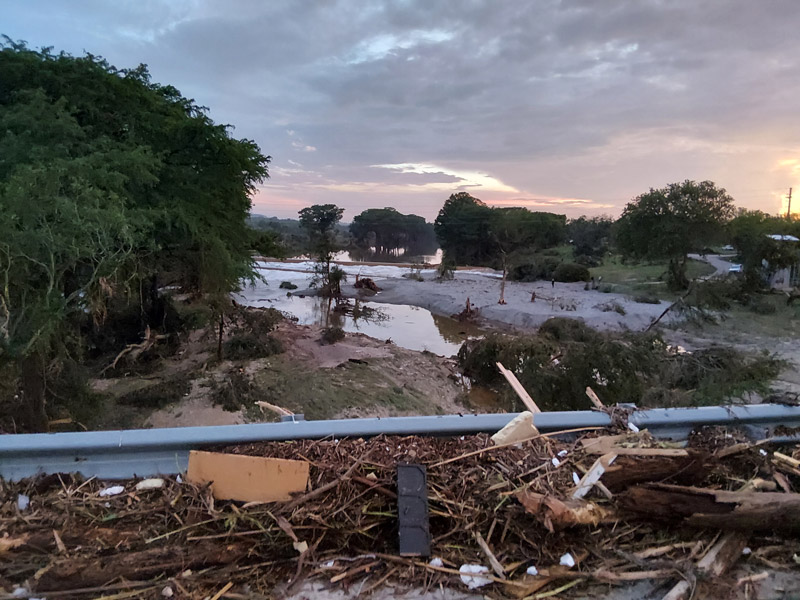
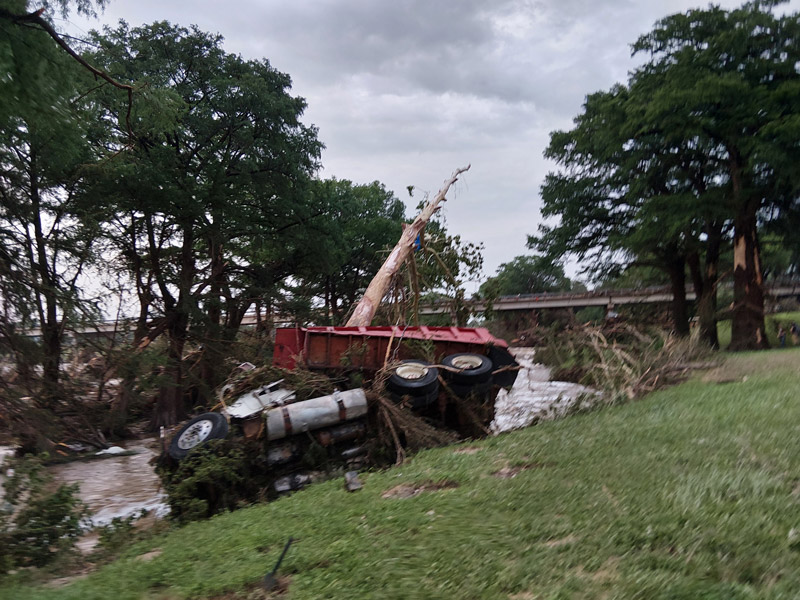
“Our teams worked from dawn to dusk, combing and clearing debris along the banks and within the river to identify personal effects and locate missing individuals, helping to bring peace to a devastated community,” she said.
From Helpless to Helpful
John Casiano, AAPG president-elect and San Antonio native, planned to spend Fourth of July weekend camping with his family along the South Llano River near Junction, Texas, about 45 minutes northwest of Kerrville.
“That Thursday night (July 3) it just would not stop pouring down rain,” he said. “I got the flood warning on my phone that night. I didn’t sleep.”
Casiano canceled the camping trip, booked a hotel room in Junction and made plans to spend time with friends from college. He heard something about flooding and girls who were lost but did not have much access to information.
“My phone signal wasn’t great, and we were trying to recover from all the rain we had to deal with ourselves. Wrapped up in our own little world, we continued with the festivities on the Fourth,” he said.
The Friday night firework show went on as scheduled in Junction, and Casiano did not realize the severity of the situation until Saturday.
“I was blown away,” he said. “We drove home back to San Antonio and saw how wide the Guadalupe River got as we passed over on I-10. It had of course already crested, but the damage was obvious.”
Casiano returned home and started watching the news.
“I couldn’t sit at home and watch. I decided to go back out to the flood area,” he said. “I’m old enough to remember at least three big floods like this. The timing and holiday made this one even more tragic. I felt helpless at home. That feeling didn’t go away when I got out there.”
Cleaning Up
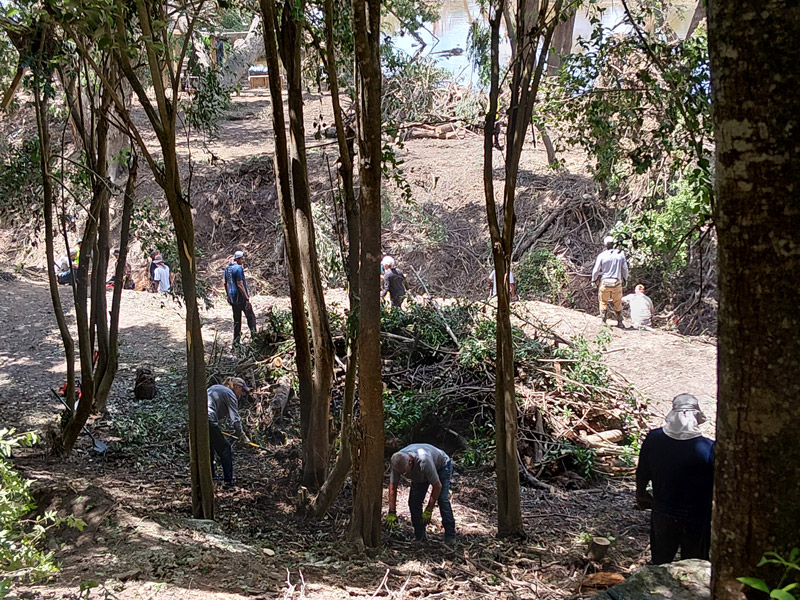
Casiano traveled to Center Point, Texas, 10 miles South of Kerrville, and joined thousands of volunteers assisting with the response.
“It was a simple job description – go through the debris; try to find life,” he said. “I didn’t know whether to run from pile to pile or peel and cut away every piece of debris. And we didn’t know if parts of the river were already gone through or not.”
On his second day out, Casiano responded to a Facebook post requesting search and cleanup at Camp CAMP (Children’s Association for Maximum Potential), a facility that provides recreational opportunities for individuals with medical conditions or disabilities.
“They were expecting campers the following week,” he said. “Apparently, this is a unique camp that campers really look forward to in their challenging lives.”
Casiano remembers two items he found while cleaning up the camp’s riverfront.
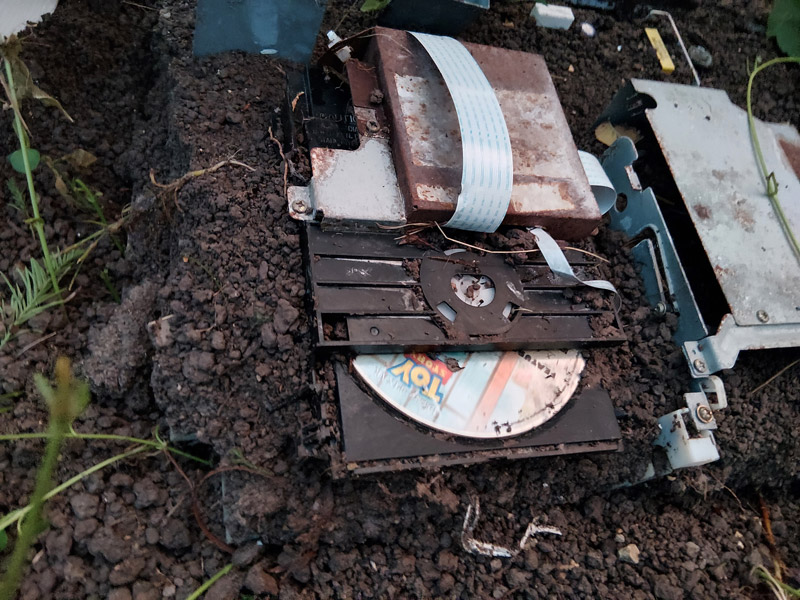
“I found a small action figure – Jesse from ‘Toy Story’ – and a photo on strange paper. I think it was from those novelty polaroid cameras they make now. It was a group photo of a bunch of girls, probably from Camp Mystic,” he said.
Casiano gave the items to one of the volunteer coordinators and kept working.
“It’s odd, for me at least, that sadness of the photo and the toy was washed away when I looked up and saw all the people out there working together helping. There were over 300 people helping at the camp that day,” he said.
“I feel like when all is cleaned up and everyone is taken care of, and all the busy work is done, people are going to have a lot of grieving to do,” he added.
Chilling Memories
Meredith Faber, AAPG member and geologist at Aramco Americas, followed news reports from her home in Houston and recalled experiences as a student living in Central Texas.
“I’m finding it hard (for some reason) to look at footage of the raging Guadalupe River, flooded well beyond its banks, knowing that where I learned to be a field geologist, which included many, many areas along the river itself, is now the scene of so much heartache and destruction,” she said.
“There’s a reason why the area along the Balcones Escarpment, which basically parallels Interstate 35, is called ‘Flash Flood Alley.’ The rocky terrain combined with a shallow, semi-arid soil that doesn’t absorb water means that rainfall flows downhill quickly and rivers rise fast.”
Faber became well-acquainted with flooding during her years as a geology student at Trinity University in San Antonio.
“I spent many an undergraduate class absolutely sodden because it was impossible to get from lower campus (in the old quarry) to upper campus (on the quarry rim) in the rain without getting soaked. Every staircase to upper campus turned into a waterfall, and several inches of standing water would pool in the lower campus parking lots,” she recalled.
“For those of us in lower campus dorms, instances of exceptionally heavy rainfall, such as what the remnants of Tropical Storm Barry produced during the early morning hours of July 4, 2025, were a dorm-wide rallying cry to aid our first-floor neighbors in rescuing as many personal items off the floor as possible before their rooms flooded,” Faber elaborated.
Remembering the 2002 Canyon Lake Flood
Faber was a student during the Canyon Lake Flood in July 2002, when 15 inches of rain fell in San Antonio and more than 48 inches fell near Comfort, Texas.
“The volume of water that inundated the area caused the lake to overflow its spillway for the first and only time ever,” she said. “The torrent carved out a huge gorge and washed out the road below the rolled-earth Canyon Dam. Miraculously, the dam held. Nine people died in the flood.”
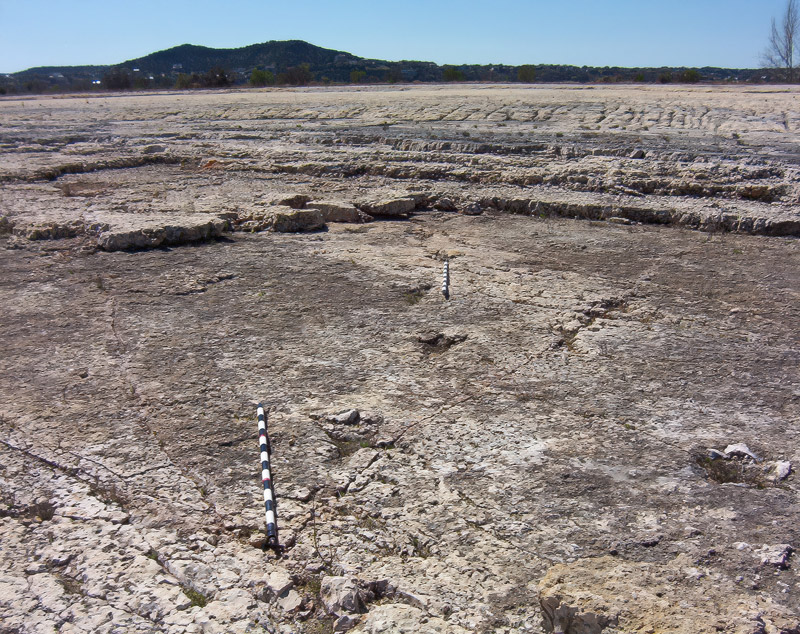
In the aftermath of the 2002 flood, the U.S. Army Corps of Engineers gave the Geological Sciences Department at Trinity special permission to enter Canyon Lake Gorge.
“One of the first things we saw were these therapod (three-toed dinosaur) tracks,” she said. “I snapped a photo after we laid meter-long stadia rods along the trackway.”
Reliving the experience, with a greater loss of human life, is difficult for Faber. She shared a summary of the damage, which extended beyond Kerr County.
“Although Guadalupe did not reclaim what it uncovered in the spillway 23 years ago, it took 119 human lives along with countless cherished pets, family homes, vacation cabins, RVs, campsites, vehicles, equipment and local institutions,” she said.
“The wall of water that raced downstream, now laden with the shattered remains of several riverside communities across three Texas counties, caused Lake levels to rise almost 15 feet in the 15 days following the flood, but the Dam held. 108 souls, including a Trinity student and the daughter of a Trinity staff member, were lost and two victims are still missing in Kerr County alone,” Faber continued.
“The remaining nine perished in Kendall County. An additional 20 fatalities occurred along the Colorado River due to flooding caused by the same storm system and two more are missing in Travis and Burnet Counties,” she said.
Seeking Understanding
In the weeks following the disaster, Faber published her thoughts on social media and responded to individuals who contacted her with questions and comments about how the flood happened and if some of the deaths could have been prevented.
“As geologists, we can use our understanding and experience of the natural world to help the general public understand Mother Nature’s cruelty,” she said.
“The anger, grief and disbelief that follow in the wake of any natural disaster in which there is loss of life spurn furious accusations, unfounded theories and misinformation that cast blame far and wide before even the first headstone is laid,” said Faber. “However, while it is always important to acknowledge and seek to improve systemic failures that contributed to tragedy, in the frantic search for explanations, we forget that we are always in range of the slings and arrows of Mother Nature, and Mother Nature can be cruel.”
The same “cruelty” was perpetrated again only days after the Central Texas Floods when historic flash flooding swept through the Village of Ruidoso, N.M. and left three people dead.
“Geology and extreme weather will continue to conspire in simultaneously awe-inspiring and tragic ways, but each terrible event is also an opportunity to educate others on having a healthy respect for an indifferent Mother Nature in order to stay safe outdoors,” said Faber.
“As important as it is to show up, physically and financially, for bereaved communities in need, it is equally important to offer the hope that future events of this type can be mitigated if people are empowered with the knowledge they need to survive and misinformation, in whatever form it takes, is thoughtfully and compassionately challenged with fact. It will not be an easy task, but we owe it to those affected by natural disasters to try.”
Geologists and Disasters
As a geology student and first responder, Stark believes geologists have a crucial role in planning for natural disasters and recovery efforts.
“Having geologists and hydrologists study the area’s unique geology can enable the development of predictive models that anticipate different scenarios, helping communities prepare and respond effectively,” she said. “Additionally, geologists play a vital role during disaster response by assessing river flow, debris movement, sediment transport and deposition. Their expertise can be instrumental in locating potential survivors and supporting search and recovery operations.”
Impact on the Geological Community
Stark said the Central Texas flooding brought “devastating loss” to the geological community.
“We lost one of our own, Shellie Crossland, who served as executive director of the West Texas Geological Society. The community is deeply saddened by the sudden passing of such an inspiring leader, a passionate geologist, and a dear friend to many. Shellie was a wonderful person and a role model I greatly admired,” she said.
“Just recently, we were discussing the upcoming registration for the WTGS Fall Symposium, and it’s hard to imagine the event without her. Additionally, we mourn the loss of some of her family members. Midland, Texas, has a large and close-knit geological community, and Shellie’s passing has left a profound impact on us all,” Stark added.
Personal Reflections
Stark said that serving as a first responder provides a constant reminder of human mortality.
“When we shake hands with a person, we are shaking hands with a mortal. It is a thought that never leaves my mind,” she said.
“It was eye-opening to see so much devastation claiming so many lives and causing so much destruction, and then watching humanity come together in such unity, it reminded me that we are delicate and fragile humans, and we are no match for the forces of nature. We need each other. All of us. All the time. This also made me want to study more about unique geological settings to plan disaster management,” she added.
Stark said while disasters show the worst face of nature, they often bring out the best in communities.
“Humanity will always face natural disasters, and despite our best efforts to prepare, there will be complex and unexpected challenges that are impossible to foresee. While the devastation was overwhelming, I witnessed something even more extraordinary: the selfless dedication, humility, empathy and love of people who came together from all corners to offer help,” she said. “They carefully navigated through the destruction to bring comfort where it was needed most and contributed to rebuilding a community that had suffered great loss. This spirit of unity extended beyond the river’s banks; it was a collective strength shared across the nation. In a world often marked by division and anger, we demonstrated that love and compassion can unite us in times of need.”
Casiano shared similar sentiments.
“Living in Central Texas, in and around Texas Hill Country, the rivers are a part of our culture,” he said. “The way the local community came together should make us proud. Those Texans are tough and gritty. They will recover together.”
Casiano shared how his volunteer experience gave him an increased appreciation for first responders.
“We are blessed to live in a place to have all these highly skilled people among us. The helicopters, the boats, the emergency services were there and saved lives. There are heroes in uniforms and heroes within families who saved lives and gave their lives for their neighbors. Nothing I did compares at all,” he said.
Faber had a special message for communities affected by July’s flooding.
“To Kerr, Kendall, Travis, Burnet, Williamson and Tom Green Counties in Texas; Lincoln County in New Mexico, and anyone affected by these tragedies, you have endured more in a month than anyone should in a lifetime,” she said. “To be so betrayed by the places you call home, camp or vacation spot is the worst kind of injury. There are no words to adequately express how sorry I am for your losses.”
Hope for the Future
Faber said she finds an apt metaphor in the symbol the people of Kerrville have chosen to represent the resiliency of their community in the wake of the flood.
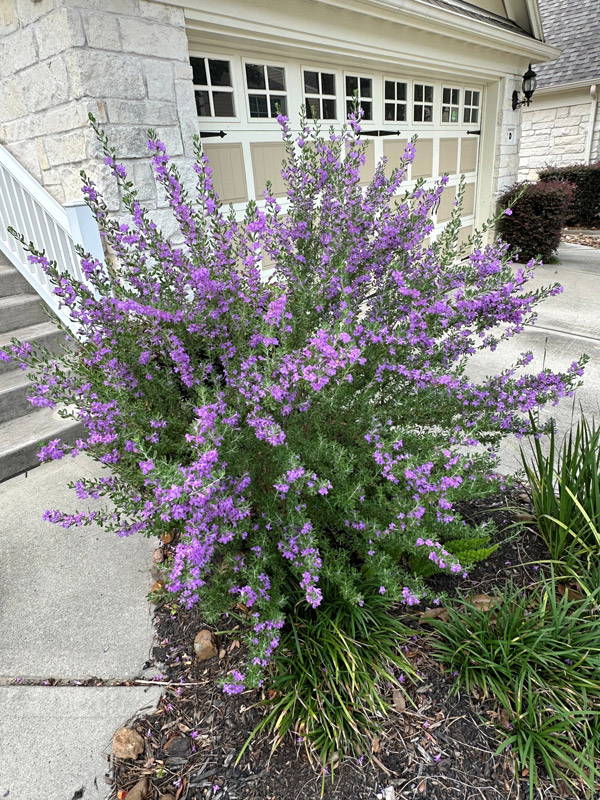
“The Texas sage, Leucophyllum frutescens, is the official State Native Shrub of Texas. This hearty plant can tolerate extreme heat and is nicknamed the ‘barometer bush’ for its tendency to bloom in anticipation of, or just after, rain. Despite all that has happened, and in the oppressive heat of a Texas summer, ‘barometer bushes’ across Texas are defiantly resplendent with purple blooms,” she said.
While caring for her bush, she encourages others to help.
“If you are in a position to give, please consider supporting flood recovery efforts in Texas and New Mexico.”
She recommended the Central Texas Flood Recovery Fund (OneStarFoundation.org/Central-Texas-Flood-Recovery-Fund) for Texas and Community Foundation of Lincoln County (CFOLC.org/shelterfund) for New Mexico.
Casiano has simple takeaways for his friends and colleagues: “Take care of one another and respect your surroundings, have a safety plan. God Bless Texas.”